Is there any indication to close the PDA?

Yet another trial of PDA treatment and attempted closure with a null result.

Baby-OSCAR was a UK multi-center masked RCT of ibuprofen treatment of 23 to <29 week infants who were screened with echocardiogram within the first 72 hours of life, and randomized if the PDA diameter was >1.5 mm (Gupta S, et al. Trial of Selective Early Treatment of Patent Ductus Arteriosus with Ibuprofen. N Engl J Med. 2024;390(4):314-25). The echo criteria included the need for pulsatile left-to right shunting and no evidence of pulmonary hypertension.

There were few other eligibility restrictions. 3861 babies had echocardiograms for determining eligibility and 1271 had large enough PDA to be eligible, most of the failure to enrol was parental refusal, and the groups were well balanced, with a final sample size of 653.

The primary outcome was the dreaded “death or BPD”, meaning an oxygen requirement at 36 weeks or death before 36 weeks, babies who did not require oxygen after an O2 reduction test were considered “mild BPD” and not considered an adverse outcome. Babies on high-flow cannulae with 21% O2, however, were all considered to have severe BPD and did not have an O2 reduction test.

The primary outcome was not different between groups; the major outcomes are shown below:
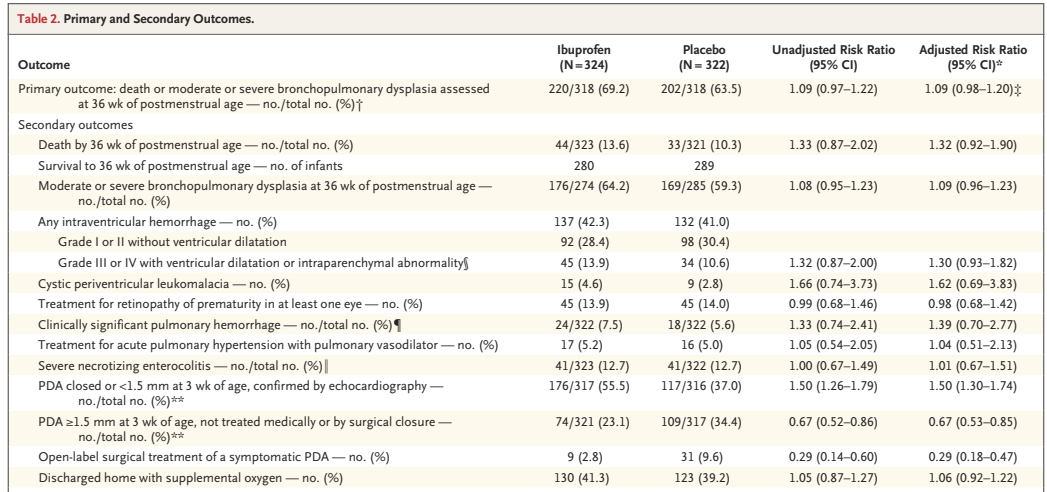
As you can see there were more adverse outcomes in the ibuprofen group for just about every outcome.

I don’t understand, yet again, why mortality is only reported up to 36 weeks. There are no data I can find anywhere in the publication or supplemental materials about overall mortality. The results presented don’t, as a result, answer the most important question of all, “does early ibuprofen treatment of a large PDA have an effect on survival?”

You can’t even back-calculate survival to discharge from the home oxygen numbers, as 130 ibuprofen babies went home in oxygen, which is reported as being 41.3%, but that can’t be quite right; 130 is 41.3% of 315, which is less than the number randomized in that group (324), but is greater than the number of 36 week survivors (280). Perhaps 35 babies were resurrected after 36 weeks, and went home without oxygen? Similarly 123 control babies went home on oxygen, which is reported as being 39.2%, giving a total number of babies discharged of 314, but only 289 survived to 36 weeks.

All we know about mortality, therefore, are the numbers who survived to 36 weeks, and we have to hope that there wasn’t an imbalance of deaths between 36 weeks and discharge. According to the supplemental data, two secondary outcomes were determined at discharge, NEC and home oxygen, so the denominator, alive at discharge, should surely have been reported.

By the protocol of the Baby-OSCAR trial, open label treatment with ibuprofen could be given if the following were present:

  1. Inability to wean on ventilator (ventilated for at least 7 days continuously) and any of: inability to wean oxygen; persistent hypotension; pulmonary haemorrhage; signs of cardiac failure
    AND
  2. Echocardiographic findings of a large PDA (PDA ≥ 2.0 mm with pulsatile flow) AND
  3. Echocardiographic findings of hyperdynamic circulation or ductal steal (refer to Baby-OSCAR ECHO workbook).

I’m not sure what “signs of cardiac failure” means, I haven’t seen a definition in the protocol. There were 15 ibuprofen and 33 controls who received open label treatment without satisfying these criteria. In total 14% of the ibuprofen-treated and 30% of the controls received open-label treatment including both the by protocol and outside of protocol open-label use, the timing of which is shown in this survival graph

Despite the limitations of the design and the study report, there is no evidence of any benefit of early ibuprofen treatment of PDA of over 1.5 mm diameter, compared to selective later treatment. Subgroup analysis of the larger ducts, the babies receiving assisted ventilation, and by gestational age show no group with a benefit in either BPD or death. The most immature babies almost all have BPD, and there is therefore no difference in their primary outcome.
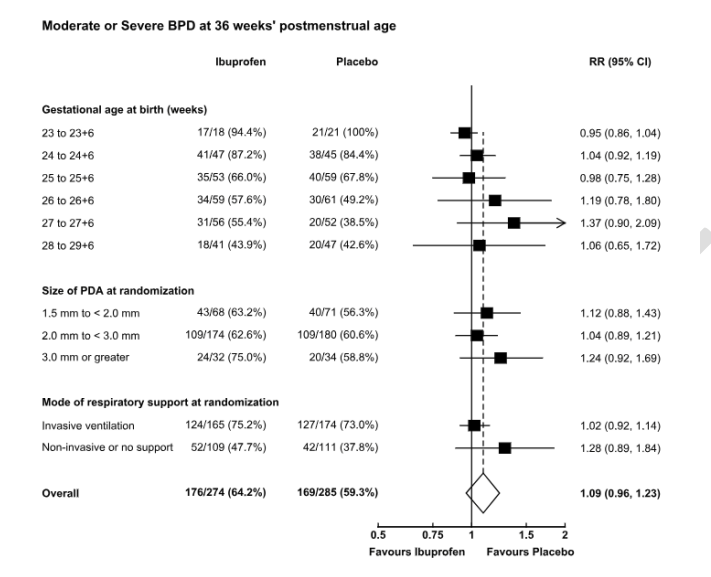
Much like the Beneductus trial there was actually more BPD in the treated group, a relatively minor difference in this trial, and a larger difference in that other trial, which otherwise has a number of similarities to Baby-OSCAR. Both required a PDA >1.5 mm diameter within 72 hours of birth, without signs of pulmonary hypertension. The average GA in each study was 26.1 weeks (even though Baby-OSCAR included 28 week babies, and Beneductus was <28 weeks, probably because there were more 23 week GA babies in Baby-OSCAR). One big difference with Beneductus, is that only one control infant had open-label PDA treatment in that trial, and with less cross over they showed a greater difference in BPD. Need for home oxygen is a much more clinically important outcome, and it seems to me to be very high among the babies in this trial, at about 40%, but was almost identical between groups.

The editorial accompanying the trial publication notes that there is very little evidence of any situation in which medical or surgical PDA closure improves clinical outcomes. However, it also includes the following “With more than half of the enrolled patients born at less than 26 weeks’ gestation and an absence of notable serious adverse events, early parenteral administration of the drug appears safe in this high-risk population and may ultimately reduce the need for surgical or transcatheter closure”. Which I think is a bizarre statement. Surely, if there is no apparent benefit, the fact that it is “safe” is irrelevant, even if it were true. And, even though I am very critical of the use of BPD as a measure of lung injury, the results from these 2 recent trials show an increase in BPD. The two previous trials of ibuprofen in the Cochrane review of early PDA treatment, in the subgroup of “very early treatment” (<72 hours of age), only included a total of 128 babies, one of which was a trial in China of oral ibuprofen, the other being Afif El-Khuffash’s pilot trial with 60 babies. Those two studies showed a possible decrease in “Chronic Lung Disease”, but are overwhelmed by the results from these 2 latest trials, which suggest that early ibuprofen treatment is not safe.

The editorial also begs the question of what is a “need” for surgical or transcatheter closure. Across Canada in the last 10 years, the percentage of babies <33 weeks who have had a surgical PDA closure has fallen from 3% to 1%, and among those who have a recorded diagnosis of a PDA has fallen from 10% to 4%. The best way to avoid surgical PDA closure may well be to just avoid surgical PDA closures.

One potential benefit of early PDA closure from previous studies was an apparent impact on pulmonary haemorrhage. Martin Kluckow’s trial of early indomethacin treatment showed a reduction in this serious phenomenon. The results of this new trial show no benefit for this outcome, the haemorrhages just look like they tend to occur later. The first column below is the ibuprofen group, the 2nd column are the controls, there were a few more pulmonary haemorrages in the ibuprofen group (blood in the endotracheal tube with a respiratory deterioration), and they occurred later.

You could also ask if having the pulmonary haemorrhage later might be a benefit, as the serious intracranial haemorrhages, which often occur at the same time, might be less frequent if the pulmonary haemorrhage occurs after day 3 to 6, but as the main table of the results above shows, there were actually a few more serious intracranial haemorrhages with ibuprofen than with control.

As far as I can tell then, trying to integrate these new data into the large literature that already exists, there is no clinical situation in which using medication to close a patent ductus arterious has been shown to improve clinically important outcomes.

The most evidence-based approach to the PDA therefore, appears to be to just to leave it alone.

It is possible that there exist clinical situations in which closure of the PDA is justified, but I think it is incumbent on anyone who thinks that is true to perform studies to prove that you improve clinically relevant outcomes with treatment in those situations. It may be, for example, that babies with a large duct with a large difference between left and right ventricular outputs and diastolic steal in the abdominal aorta would benefit from ductal constriction with early ibuprofen treatment, even though it is not very effective in closing the PDA.

But there are currently no subgroups in whom treatment has been shown to have more benefit than harm. Perhaps this lack of benefit is because ibuprofen is not very effective, but the only other options would be to either return to indomethacin, which is not much different in efficacy, or to routinely close by catheterisation or surgery. Those options are not realistic for the large majority of sick tiny preterm infants.

There are already centres who have decided to rarely, if ever, treat the PDA. In Montreal, for example, we have a difference in treatment approaches between our hospital (Centre Hospitalier Universitaire Sainte Justine, CHUSJ) and McGill, where they have decided to be extremely conservative, and have progressively reduced their rate of PDA treatment to close to zero. The two groups have just published some long term follow up results of babies <29 weeks, (Cervera SB, et al. Evaluation of the association between patent ductus arteriosus approach and neurodevelopment in extremely preterm infants. J Perinatol. 2024) over the period of the study, 2014 to 2017, the rate of PDA treatment fell from 33% to 0% at McGill, and remained much higher at CHUSJ. The new publication reports the neurological and developmental outcomes, which are close to identical between the 2 centres. Among the large number of comparisons the only one which is a bit different is the mean motor composite score, but the proportion with scores below various thresholds were identical, and all the cognitive, visual and other outcomes are very similar. The shorter term results show there is somewhat more BPD (using the usual diagnostic criteria) at CHUSJ, despite a much higher rate of PDA treatment, which was almost all with ibuprofen; over the years of that study we also had a 6% rate of PDA ligation, which has since fallen to about 0.

As mentioned above, there appears to be no longer any evidence-based indication for ibuprofen use to treat the PDA. Despite large numbers of trials, and multiple different attempts to determine whether we can improve outcomes with ibuprofen, or with acetaminophen/paracetamol, I am left wondering in what circumstances treatment is justifiable.

There will probably be other trials, and I would guess they will have to include older infants with persistent very large shunts, and will examine effective ways of closing the PDA, such as by catheterization. For now early treatment with ibuprofen appears to be relatively ineffective in closing the PDA, ineffective in improving any clinically important outcomes, and appears to lead to worse pulmonary outcomes. It will be essential to find out what the impact on mortality was in the Baby-OSCAR trial, and more clinically important respiratory outcomes.
Posted in Neonatal Research | Tagged , , | 3 Comments

Time to open the DOOR

I have written many times about the problems with classical composite outcomes in neonatal research. “Death or BPD”, “death or NDI”, or sometimes “death or NEC or Sepsis or BPD or severe IVH” have been used as a way of combining adverse outcomes that we want to avoid, and accounting for the fact that death is a competing outcome for many negative outcomes. The enormous problems with such composites is that they give equal weight, when evaluating an intervention, to the components of the composite. A baby who survives to 36 weeks but needs oxygen is considered equivalent, in terms of the analysis of the results, to a baby who dies.

This has led to a number of serious problems in interpretation of results, to the extent that interventions may, for example, decrease mortality, but if they have no impact on BPD the results may be considered null and “not statistically significant”. Composite outcomes have sometimes been used as a way of increasing power, but in reality they do not necessarily increase power. Especially if the components change in different directions, or if the most important outcome is less frequent than the less important components; in such instances power may actually be decreased.

I have suggested, in the past the Win Ratio approach, one way of planning and analyzing trials, in which outcomes are evaluated in a prioritised fashion, and death is considered the worst outcome, followed by survival with very severe BPD, followed by survival with less severe BPD… etc. Subjects can be compared in pairs to see which has the better outcome, this Win Ratio approach has been used in some trials, especially in adult cardiology studies. It is an approach which is most easily used if subjects are randomized in pairs. In more standard large RCTs, each subject in group 1 has to be compared to every subject in group 2, and the maths and the statistical analysis becomes more complex.

An alternative which has been used mostly, I think, in infectious disease research, is called the Desirability Of Outcomes Ranking. This article, for example, discusses how to design and analyze a trial using this approach (Ong SWX, et al. Unlocking the DOOR-how to design, apply, analyse, and interpret desirability of outcome ranking endpoints in infectious diseases clinical trials. Clin Microbiol Infect. 2023;29(8):1024-30). It was designed as a way of analyzing trials where there are a few deaths, some patients survive with complications, and others survive without serious complications. Ranking these outcomes according to their desirability. Exactly how to rank the outcomes, which also include, for example, treatment failure where the antibiotics don’t eliminate the infection, is an ongoing question, but should include important input from patients, or in our case, parents.

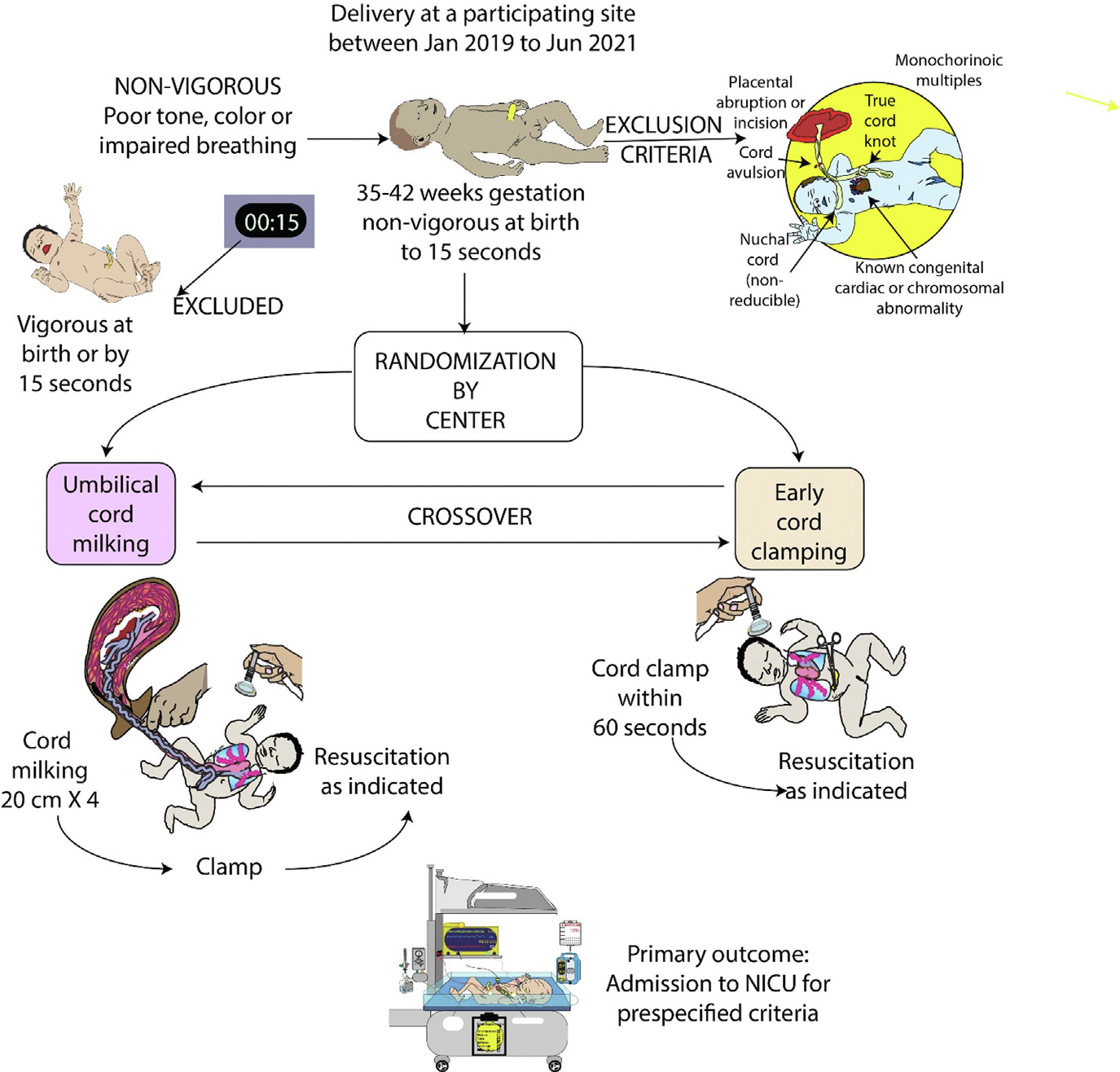
As usual, Anup Katheria is ahead of the game, and he has just published a reanalysis of the MINVI trial. This was a cluster randomized trial of cord-milking in term and near-term babies who were non-vigorous at 15 seconds of life. A cartoon of the protocol, from the original publication (Katheria AC, et al. Umbilical cord milking in non-vigorous infants: A cluster-randomized crossover trial. Am J Obstet Gynecol. 2022) is reproduced below.

The primary outcome of the MINVI trial was NICU admission for any of the following reasons “respiratory distress (tachypnea, grunting, or retractions), bradycardia or tachycardia, hypotonia, lethargy or difficulty arousing, hypertonia or irritability, poor feeding or emesis, hypoglycemia, oxygen desaturations or cyanosis, need for oxygen, apnea, seizures or seizure-like activity, hyperbilirubinemia, and/or temperature instability”. Although there were some apparent benefits of cord milking in the results, the primary outcome was 23% (cord milking) vs 28% (early cord clamping) and considered not ‘statistically significant’. Many of the individual reasons for NICU admission were slightly lower in the cord milking group.

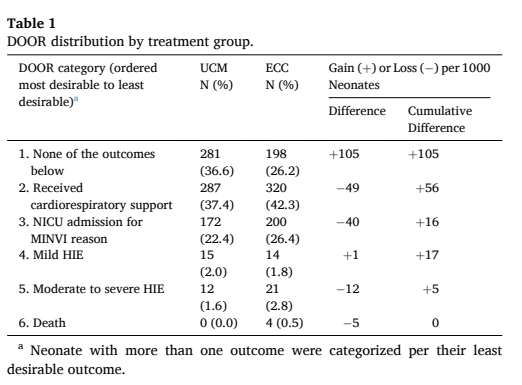
This reanalysis (Katheria AC, et al. Application of desirability of outcome ranking to the milking in non-vigorous infants trial. Early Hum Dev. 2024;189:105928) used a DOOR approach. Which depends on a list of ranked outcomes which are shown below in the first column of the table; the table also shows the numbers and proportion of babies in each of the two groups, Umbilical Cord Milking (UCM) and Early Cord Clamping (ECC) who have that outcome as their worst outcome.

The DOOR analysis entails a calculation of how likely it is that a member of the UCM group will have a better outcome than a member of the ECC group. If the interventions are equivalent, then the possibility will be 50%, 95% confidence intervals can be calculated, and if they do not include 50%, then you can conclude, with 95% confidence, that the results are different. You can see in the figure below that the overall DOOR ranking was more likely to favour ECM, with the percentage of the comparisons between UCM and ECC babies favouring UCM being 56%, with 95% CI of 53 to 59%, and each component of the score favouring UCM, except for mild HIE being equivalent.

The last author of this new paper with Anup Katheria has been heavily involved in developing this approach in infections disease research, and they have an extra twist in those studies, that, if there is a tie in outcomes, you can take into account the duration of antibiotic use. Getting an equally good clinical outcome with a shorter course of antibiotics is considered an advantage. I think they mostly invented this wrinkle for the cute acronym RADAR (Response Adjusted for the Duration of Antibiotic Risk) Evans SR, et al. Desirability of Outcome Ranking (DOOR) and Response Adjusted for Duration of Antibiotic Risk (RADAR). Clin Infect Dis. 2015;61(5):800-6. I’m not sure how this could be adapted to our population, but I like the idea that if you get equally good outcomes with less intervention, that is a good thing.

I know there are other groups that are already considering this approach, which I think could be easily adapted to be a much better primary outcome variable for clinical trials in neonatology. It clarifies the difference in outcomes between groups, giving greater weight to worse outcomes. How to develop the prioritised list of outcomes, and what order to place them in, should definitely be done in collaboration with parents.

Posted in Neonatal Research | Tagged , , | 1 Comment

To bolus or not to bolus? Not really a question…

Many preterm babies receive boluses of normal saline, often during the first 24 hours when their blood pressure is lower than desired. I have 3 serious questions about this.

  1. Are they indicated?
  2. Do they work?
  3. Are there adverse effects?
  1. Do hypotensive newborn infants have low blood volume?

The rationale for giving a fluid bolus is that the infant may be hypovolaemic, if they are, then you really don’t want to start other therapies if you could simply correct the hypovolaemia. I have some sympathy with this idea, I certainly wouldn’t want to start an epinephrine infusion if all the baby needed was to have 10 mL/kg of saline. But what is the likelihood that a hypotensive very preterm baby may have a low blood volume? There are a couple of studies that have attempted to measure circulating blood volumes in preterm babies, neither show any correlation between volume and BP, or volume and the occurrence of hypotension. Both studies were performed before widespread use of delayed cord clamping, which is very likely to make the association even rarer.

Generally then, no; preterm babies with hypotension are unlikely to be hypovolaemic, and after DCC extremely unlikely to be hypovolaemic. Unless the baby had a cord prolapse, vasa praevia, or was unable to have DCC for some reason, I don’t think we should even consider hypovolaemia. It is a rare reason for babies to be hypotensive after birth.

What about sepsis?

This is a trickier issue, the haemodynamics of neonatal sepsis have not been studied in as much detail as I would like, there are a few studies, which have studied mostly infants with Gran-negative sepsis, who may develop shock from the haemodynamic responses to endotoxins, or as a result of systemic inflammation.

It has become a sort of gospel in treatment of sepsis in older patients that they need huge amounts of fluids, 60 ml/kg is often given before patients are considered fluid unresponsive, at which time inotropes may be added to their therapy (this is what the current CPS recommendations for sepsis treatment in children state). But more recent trials in adults with septic shock are casting doubt on this approach. Two new large RCTs (here and here) have shown no harm from a restrictive approach to fluid management compared to liberal fluids. Admittedly to be enrolled in those trial the adults had to have already received a litre of fluid, but that is an awful lot less than 60 mL/kg. An updated meta-analysis including those trials confirmed a lack of difference with liberal compared to restrictive fluid management. Indeed the only large RCT I am aware of in children with septic shock showed an increase in mortality with fluid boluses.

As there is no good data in babies with septic shock, I think that an initial bolus of 10 mL/kg is reasonable, but may not actually turn out to be a good idea, after that the approach should be based on improving overall perfusion if it is impaired, increasing BP, if it is low and associated with poor perfusion, and/or improving perfusion of vital regions. Overall haemodynamic evaluation with functional echo, and regional evaluation with NIRS might help, but that is about as evidence-based as one can get. I start steroids early in treatment of septic shock, although I don’t know for sure that is right, 2 to 6 hours after starting hydrocortisone at lowish dose (2-3 mg/kg/day) things are usually getting better.

2. Do fluid boluses increase BP?

To return to our hypotensive preterm without evidence of sepsis, there is very little evidence that boluses even increase blood pressure. With the knowledge that BP is likely to trend upward anyway, you can only really answer this question with an RCT, but to my knowledge there has never been an RCT of bolus vs no bolus in hypotensive preterms.

Years ago, I did a little before and after study where we gave 15 mL/kg of 5% albumin to hypotensive preterms, and showed that mean BP increased by a mean of 2 mmHg for about 20 minutes, before returning to baseline, echocardiography at the time showed an increase in left ventricular output, but not right ventricular output, which means, in preterm babies with an open PDA, that the only thing the boluses did was to increase ductal shunting without improving systemic flow.

There are a few other short term haemodynamic studies showing very similar findings, i.e. increase in ductal shunt, little or no effect on BP.

3. Are there adverse effects?

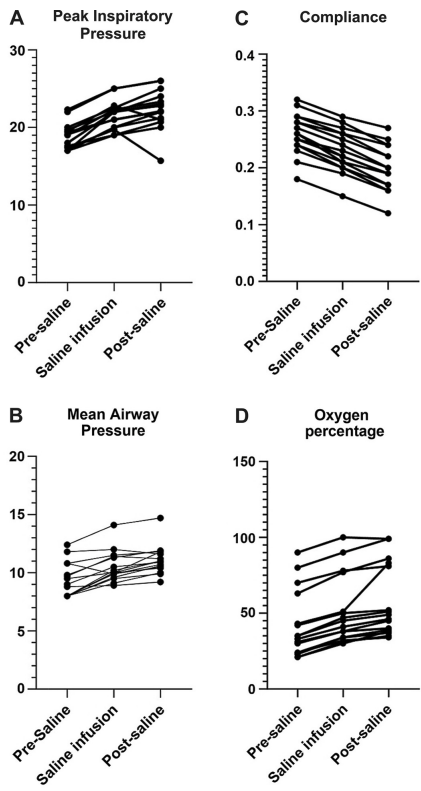
This new publication (Sehgal A, Gauli B. Changes in respiratory mechanics in response to crystalloid infusions in extremely premature infants. Am J Physiol Lung Cell Mol Physiol. 2023;325(6):L819-L25) is what triggered this blog post, Arvind Sehgal and Bishal Gauli from Monash in Melbourne, recorded dynamic pulmonary mechanics from the VN500 ventilator before, during and after administration of a crystalloid bolus that had been prescribed by the clinical team.

Ventilator setting remained the same in these babies <29 weeks who were on volume guarantee ventilation. So a change in dynamic lung compliance will lead to a change in peak inspiratory pressure if the baby’s efforts remain similar.

There was a trivial increase in BP with the boluses, 2 mmHg, which may well have been due to the variable nature of BP. As you can see, there was a worsening of dynamic compliance, leading to an increase in PIP, associated with an increase in FiO2.

The most likely explanation is an increase in pulmonary interstitial liquid, perhaps secondary to the increase in ductal shunting.

In view of the lack of evidence of hypovolaemia, the lack of response in BP, and the adverse effects, fluid boluses should generally be avoided in hypotensive preterm infants.

Posted in Neonatal Research | Tagged , | 3 Comments

Early routine surfactant, method and outcomes

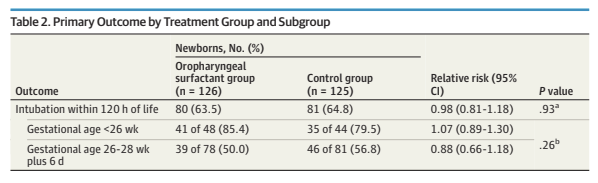
Two important new studies of the use of very early routine surfactant, compared to later selective surfactant if necessary. The first I will discuss is the one that didn’t seem to improve any important clinical outcomes (Murphy MC, et al. Prophylactic Oropharyngeal Surfactant for Preterm Newborns at Birth: A Randomized Clinical Trial. JAMA Pediatr. 2023 the POPART trial). 252 infants of less than 29 weeks (mean GA 26 weeks) were randomized prior to birth in 9 university hospitals in 6 European countries, co-ordinated by Colm O’Donnell in Dublin. The intervention was the instillation of 120 mg of Poractant into the pharynx for infants <26 weeks, and 240 mg for those 26-28, this was done without any suctioning, and prior to any positive pressure, ideally before clamping of the cord at 30 to 60 seconds after delivery. Only a small number of babies were protocol violations, being intubated outside of protocol defined indications. After the oro-pharyngeal surfactant, babies followed standard stabilisation, including intubation if required, and any baby thought to need surfactant was treated with the usual surfactant dose thereafter (either by intubation or LISA).

The primary outcome was intubation for respiratory failure in the 1st 120 hours of life, with fairly objective criteria, even though the intervention was, unsurprisingly, unmasked. As you can see here, there isn’t a hint of a difference between groups.

The only difference in secondary outcomes was an increase in pneumothoraces in the surfactant group, 17% vs 6%, not likely to be a random difference. Clinical BPD (70 vs 69%) and physiologic BPD were also just about identical, there was a minor difference in NEC, favouring the control group, and in home oxygen, favouring the surfactant group. Mortality was identical also, 18% in each group.

The rationale for the trial was based on previous pre-clinical data in rabbits showing that the administration method does lead to pulmonary surfactant deposition, and an old RCT in 328 babies of 25 to 29 weeks GA, with a dry powder surfactant which is no longer available, called ALEC (Artifical Lung Expanding Compound, which was developed by Colin Morley) in the Ten centre trial of artificial surfactant in very premature babies. (Ten Centre Study Group. Br Med J (Clin Res Ed). 1987;294(6578):991-6). In that study the prophylactic administration was performed in the delivery room, in a similar way to the POPART trial. In the Ten Centre trial, mortality was lower with surfactant. ALEC was a mixture of two phospholipids, DPPC and PG, and was eventually taken off the market as it was, overall, somewhat less effective than liquid surfactants containing protein.

Why ALEC would work, and lead to lower mortality, but poractant would not, and lead to increased pneumothorax, is not clear to me. Clearly, in the last 35 years many things have changed in neonatology, (I have witnessed all of them!) the Ten Centre group studied 328 babies of 25 to 29 weeks gestation, of whom 19% of the ALEC group and 30% of the controls died, with an overall mean GA of just under 28 weeks. Unfortunately there are some problems with the study design of that trial, it started as a much smaller pilot trial published in the widely circulated journal (!) known as “Colloids and Surfaces”, the results of which were published after about 35 babies of 25 to 29 weeks were reported, and there were 5 deaths in the control group, and 0 in the ALEC group. The later publication in the BMJ appears to have included and re-reported the outcomes of those pilot trial babies, as well as a much larger group added on after the initial benefit was shown. Routine early CPAP was not typically used in the Ten Centre study, perhaps that is why early prophylactic ALEC surfactant was effective, in comparison to standard care, which did not include routine early CPAP.

The mortality is overall about 50% higher in the old study, despite a substantially lower GA in the new trial, demonstrating some of the amazing improvements in survival over this time period. Overall respiratory and ICU management is so much better, that there are no apparent benefits from this intra-pharyngeal prophylactic approach. The controls in the older study did not receive routine CPAP, but in both control groups in the 2 new studies, controls routinely were supported with CPAP.

One thing which is not mentioned in the POPART manuscript, or in the protocol, is the use of caffeine, which although frequently given early, is not often given in very early life.

That is one of the 2 major differences between PROPART and CaLI, the routine administration of intravenous caffeine in the 1st 2 hours of life, the other difference being direct intra-tracheal surfactant administration by the LISA procedure, after the caffeine.

In the CaLI trial, which is unfortunately not open access (Katheria A, et al. Caffeine and Less Invasive Surfactant Administration for Respiratory Distress Syndrome of the Newborn. NEJM Evidence. 2023;2(12)), it was funded by Chiesi, I would have thought they could pay for open access as well! 180 babies between 24 and <29 weeks were randomized. The protocol was as briefly outlined above, Caffeine and CPAP versus Caffeine, LISA, and CPAP. To be enrolled, babies had to be breathing and stable at 5 to 60 minutes of age, if enrolled, babies were then weighed and had IV access inserted. LISA followed at least 5 minutes after the 20 mg/kg load of caffeine citrate. In the CPAP group, early postnatal caffeine was also given, which was intended to be before 2 hours of age in both groups.

Randomization was performed at an average of 7 minutes of age, the caffeine was given at a median of about 50 to 60 minutes, and the LISA performed in the LISA group at a median of 1.5 hours, IQR 0.9 to 2. The primary outcome of the trial was the diagnosis of respiratory failure in the first 72 hours of life, the criteria for which were an FiO2 of >40%, respiratory acidosis with a PCO2 >65 on 2 gases, or lots of apneas.

The primary outcome was dramatically reduced by Caffeine plus LISA, compared to Caffeine alone. 23% vs 53%, the benefit was very similar in the 2 GA strata, 44% vs 80% in the 24 to 26 wk group and 14% vs 51% in the 27 to 29 weeks group.

I am actually a bit confused about what exactly was the primary outcome. In the text of the document it is written, “The primary outcome of the trial was the frequency of neonates requiring endotracheal intubation or meeting respiratory failure criteria between the two groups (caffeine and LISA vs. caffeine and CPAP) within the first 72 HoL” but then the tables just mention intubation, and babies in the caffeine plus CPAP group could have had LISA without necessarily being intubated. In the table showing the primary outcome results,

the implication is that all the babies counted were actually intubated, even though LISA was permitted in the caffeine alone group. LISA is not much used in the USA currently, so perhaps all the “intubation or respiratory failure” babies were actually intubated. There were only 3 deaths, all in the CPAP without LISA group.

Among other outcomes, there was no sign of adverse effects, and the proportion of babies in oxygen at 36 weeks fell from 35 to 21% in the LISA group. I previously discussed the presentation of these results at the PAS earlier this year, and how Anup Katheria, the first author and PI, put the results together with the OPTIMIST trial. There aren’t yet any data on more clinically important long-term respiratory outcomes with the CaLI approach, but follow up is planned, and, if such outcomes are improved, we will have to figure out the best way to implement the approach. I’d love to figure out how to reduce the discomfort/pain of laryngoscopy, without any respiratory depression, and be more comfortable at performing LISA in the 50% of babies who would never have needed intubation.

CORRECTION: post changed 15 December 2023: The post initially read that the protocol violations in POPART were of babies “being intubated before the POPART intervention”. Colm O’Donnell has informed me that I misinterpreted the violations, the protocol violations were all babies who received the intervention, but were intubated outside of protocol indications, such as because they were “very small” or “needing a lot of oxygen”. As Colm also points out, if there was insufficient surfactant reaching the lungs to improve lung function, then how could the increase in pneumothoraces be blamed on the intervention? (I paraphrase), he is right of course, it doesn’t make much sense, so I guess the difference in pneumothorax rates may just be an accidental occurrence. As for caffeine timing, it isn’t known exactly when the babies in POPART received their caffeine, but they probably mostly received it quite early….

Posted in Neonatal Research | 1 Comment

Umbilical cord management at birth for preterm infants

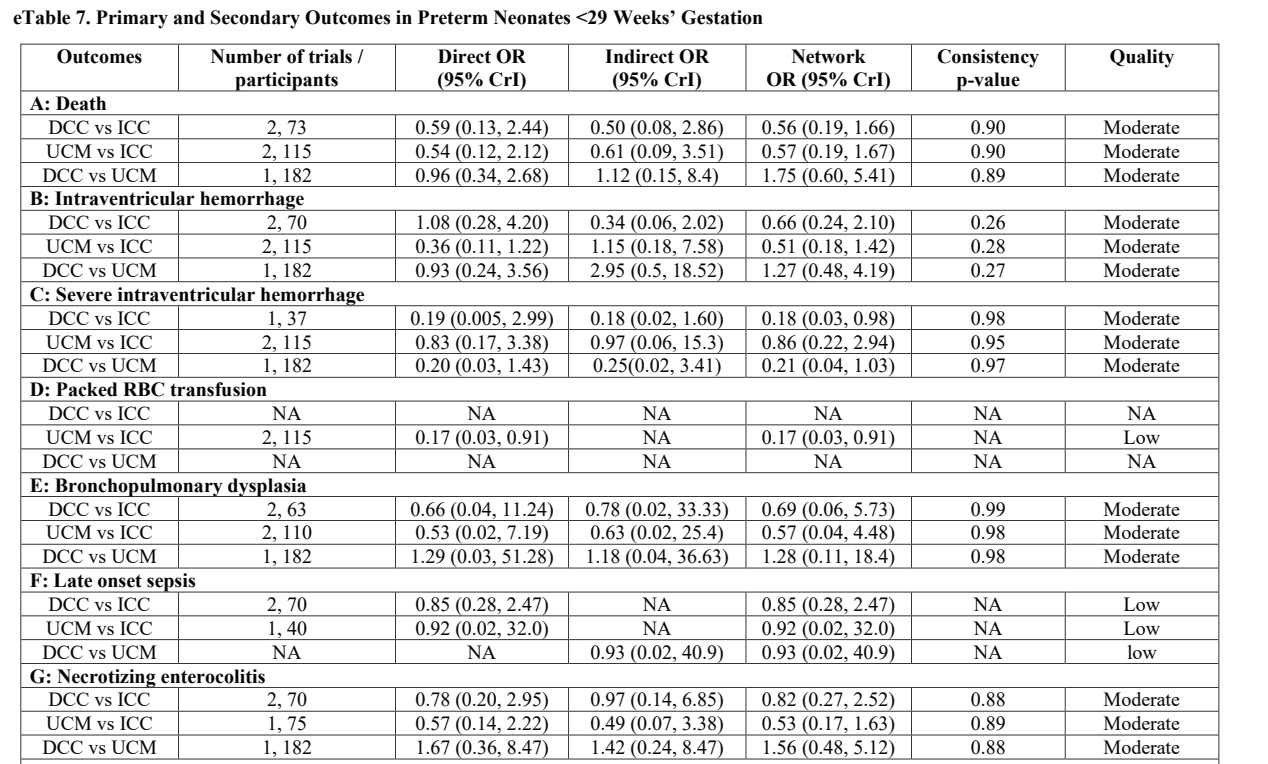
The Lancet just published back-to-back articles from the iCOMP collaborative reporting the results of the Individual Patient Data Meta-analysis of trials of differing cord management techniques in preterm infants. There were 48 trials with a total of 7000 patients in the IPD which made 3 comparisons Delayed compared to immediate clamping, and each approach compared to cord milking. Seidler AL, et al. Deferred cord clamping, cord milking, and immediate cord clamping at preterm birth: a systematic review and individual participant data meta-analysis. Lancet. 2023.

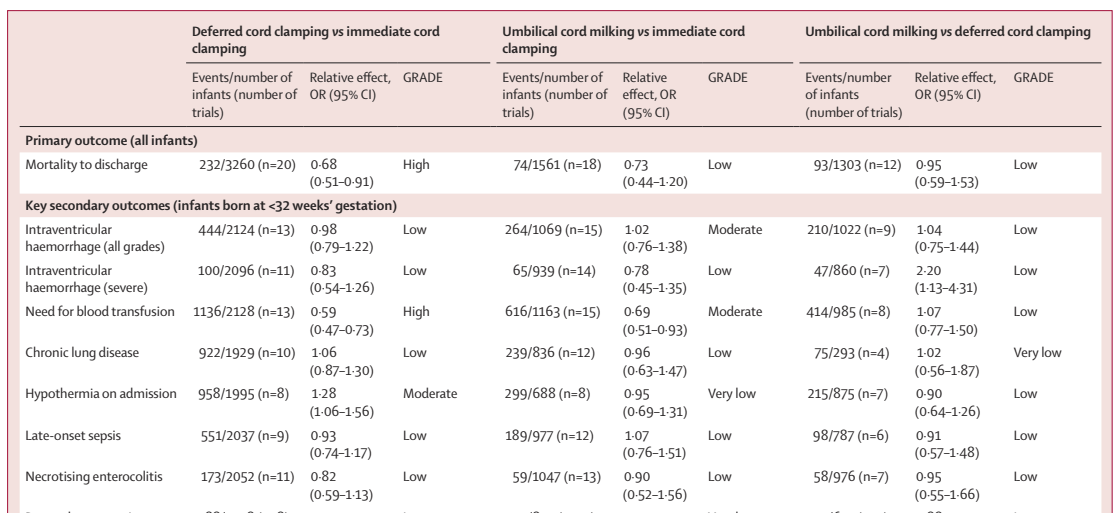
The data were analysed by subgroups above and below 32 weeks. Above 32 weeks there was very little evident impact on the outcomes that they analyzed, IVH, need for transfusion, NICU admission, and temperature on admission; which is what you would expect. The advantages in larger babies are probably more long term, with higher iron stores and less later anaemia.

Below 32 weeks the results can be seen below: clear advantages of DCC compared to ICC; no major advantages of cord milking compared to ICC; and the major difference between DCC and milking being more severe IVH with cord milking.

For the first comparison, 80% of the weight of the meta-analysis of mortality comes from 3 trials, APTS 58%, a trial from Egypt which is inaccessible, (not listed on Pubmed, or in Embase, and the journal does not appear to have a website, so I am unsure how iCOMP even found it!), weight 14%, and the UK CORD pilot trial (8% weight). The remaining are all small trials with between 4 and 50 per group. The CORD pilot trial was a trial of at least 2 minutes of DCC, with resuscitation, if needed, with the cord intact.

Other analyses performed included the impact of multiple delivery (only available for 4 trials, many trials have excluded multiples) and of gestational age. Neither of these factors appear to have an impact on the advantages of DCC.

The second paper tries to evaluate the data regarding how long to delay cord clamping (Seidler AL, et al. Short, medium, and long deferral of umbilical cord clamping compared with umbilical cord milking and immediate clamping at preterm birth: a systematic review and network meta-analysis with individual participant data. Lancet. 2023), dividing the studies up into 3 groups, 15 to 45 seconds, 45 seconds to less than 120 seconds, and 120 seconds or more. Almost all of the information for the longest delayed group comes from the same UK CORD pilot trial, the other trials with longer delays had more predominantly mature infants, and therefore few events. In particular there were very few severe IVH, so they don’t even report that, in the UK trial there were 6 and 7 severe IVH in the two groups, and the other trials had tiny numbers of babies at risk, or excluded the most immature, or had 0 events.

The analysis of the longest duration of delay therefore relies almost entirely on the results of the CORD pilot trial, which was a well-done trial, delaying cord clamping for at least 2 minutes, and even longer if the physicians felt comfortable waiting for longer, up until there was no evident pulsation. Babies needing resuscitation were treated next to the mother on a hard surface. Many babies in the DCC group actually had clamping earlier as can be seen here:

Many of the early clamped babies in the DCC group of the CORD pilot trial had good reason for early clamping, such as abruption, or the baby being born with the placenta, but many were because the “cord was too short” which, the authors note, became less frequent with time, or for “clinical decision”, which is not further explained.

I remain somewhat sceptical about Network Meta-Analyses, especially for indirect comparisons, where interventions that have not been directly compared are evaluated against each other as if they had been. The huge advantage of a true RCT, that all confounding variables tend to even out, those which you know about as well as those you don’t, is lost with an indirect comparison, such as in an NMA. No matter how much effort is put into correction for baseline imbalances, there always will remain the possibility of residual confounding.

The results of the NMA for these 3 outcomes (all are compared to ICC as the reference group) suggest that the longest delay gives the most mortality benefit. But I don’t think that this should lead to everyone aiming for 2 minutes in every baby. Only one tiny trial directly compared short duration DCC to longer duration. But the NMA, showing the biggest reduction in mortality with the longer delay, is mostly dependent on the trial of Duley, which, individually, showed a small reduction in mortality with longer delay in clamping, which may have been due to random variability. Although this trial had more deaths in the ICC group, the difference in deaths was almost entirely among larger babies of 26 to 32 weeks (8/108 deaths compared to 1/107) and may have been a random occurrence in a smallish trial.

The NMA gives sufficient evidence that further trials examining the relative impacts of 60 to >120 seconds of DCC are warranted. The ABC3 trial was presented recently at the JENS meeting in Rome, it was a trial in very preterm infants comparing an approach similar to what many are currently doing, that is, immediate clamping if the baby needs intervention and DCC of 30 to 60 seconds if the baby is doing well. This approach was compared to DCC and clamping being performed after the baby was stabilised, with a good heart rate and oxygenation, resuscitation if needed was performed with the cord intact, and clamping could be delayed up to 10 minutes. There were no differences in the outcomes reported at presentation of the results, mortality or IVH. I think we should therefore wait until this, and other ongoing trials are published, before longer delays in clamping, and resuscitation with an intact cord becomes the standard.

Take home messages: for mildly preterm infants at low risk of IVH, DCC is preferable to ICC, but milking may be a reasonable option if DCC is not feasible; for very preterm infants at risk of mortality or IVH, DCC is preferable to either ICC or milking. Longer durations of DCC, with resuscitation on an intact umbilical circulation, are not yet proven to further improve mortality or other clinically important outcomes.

Posted in Neonatal Research | Tagged , , , , | 1 Comment

Which Probiotic is Preferable?

The word “probiotic” is defined rather vaguely as a micro-organism which has beneficial health impacts. I think it is obvious that there is a huge difference between fungi that are found in the intestinal microbiome of adults, and the lactic acid bacteria which are major components in the young infant.

Even that term “lactic acid bacteria” includes organisms which are dramatically different. Lactobacilli, of the phylum Firmicutes (also called Bacillota), are gram positive rods which are facultative anaerobes, and have limited synthetic capacity, fermenting hexoses to produce lactic acid. Bifidobacteria are Bifid gram positive rods, hence the name, they are often portrayed as tiny little ‘Y’s, and are from a different phylum, the Actinobacteria (or Actinomycetota). They are obligate anaerobes, and have varying abilities to metabolise Hexoses, but remarkable abilities to metabolise oligosaccharides (Human Milk Oligosaccharides, HMOs) that are present in large quantities in breastmilk, but which humans lack the ability to digest.

The only reason these HMOs are present in breastmilk is to feed the Bifidobacteria, which, when they are established and reproduce, come to dominate the intestinal microbiome of the breastfed baby. In particular, a subspecies of B Longum, known as Bifidobacterium Longum ssp Infantis, is a micro-organism that seems to have co-evolved with humans, and is able to digest just about the entire range of HMOs, of which there may be over 200. (Underwood MA, et al. Bifidobacterium longum subspecies infantis: champion colonizer of the infant gut. Pediatr Res. 2015;77(1-2):229-35). HMO composition of human milk is variable, but B Infantis has 24 glycoside hydrolase genes and, alone among GI commensals, possesses sialidases and fucosidases allowing it to digest all types of HMOs.

I don’t for a minute think that breastmilk composition and B infantis evolved in this symbiotic manner in order to prevent NEC! But the GI tract of the full term newborn, who had a possibility of survival, is a haven for nasty pathogens, that can thrive if they have access to food, and which sometimes need access to iron. Hence the presence of Lactoferrin in substantial quantities in breastmilk, which binds iron to keep it out of the clutches of certain Gram negatives, and allows very high bioavailability of breastmilk iron, shuttling it into enterocytes, via specific human lactoferrin receptors, that strip off the iron and resecrete the lactoferrin. Hence the presence of those HMOs, which feed bifidobacteria but for which many pathogens, such as E Coli, Clostridia, Enterobacter and Staphylococci, completely lack the enzymes required to feed on them.

During the evolution of humanity it looks like the constant pressure to avoid GI and systemic infections, in order to survive to be able to pass on our genes, led to this symbiotic relationship between breastmilk and B Infantis. It led to the evolution of breastmilk that is packed with molecules that can only be utilised by Bifidobacteria, and specifically with a high degree of activity by B Infantis. B Infantis can inhibit the growth of other organisms, as well as starving them by eating up all the HMOs, and reduces inflammation by damping down the activity of the TLR4. TLR4 has an affinity for G negative LPS endotoxin, and seems (probably, I guess, by accident) to be overexpressed in the very immature bowel (Meng D, et al. Toll-like receptor-4 in human and mouse colonic epithelium is developmentally regulated: a possible role in necrotizing enterocolitis. Pediatr Res. 2015;77(3):416-24).

B Infantis also seems to decrease gut permeability and translocation of pathogens, at least in part by stabilising tight junction proteins. (Bergmann KR, et al. Bifidobacteria stabilize claudins at tight junctions and prevent intestinal barrier dysfunction in mouse necrotizing enterocolitis. Am J Pathol. 2013;182(5):1595-606.)

When there are a lot of B Infantis about, their metabolic activity leads to production of acids, lactate and acetate, and other short chain fatty acids. Which leads to a low stool pH. A fascinating study published 5 years ago (Henrick BM, et al. Elevated Fecal pH Indicates a Profound Change in the Breastfed Infant Gut Microbiome Due to Reduction of Bifidobacterium over the Past Century. mSphere. 2018;3(2):10.1128/msphere.00041-18) traced the changes in stool pH over the last century, as recorded in various publications, and showed that stool pH in breast fed babies used to be as low as 5, and has increased to as high as 6.5. There is a clear correlation between this increase and lower colonization by Bifidobacteria.

The intestinal protection afforded by this normal microbiome is the reason behind the use of probiotics, my micro-review suggests strongly that B Infantis is the most promising candidate of all the strains.

Sanjay Patole and others in Perth have performed a number of meta-analyses of the clinical trials of probiotics in the preterm, and the most recent focuses on the trials that have used B Infantis, as either the sole probiotic, or as a component of a mixed probiotic preparation. (Batta VK, et al. Bifidobacterium infantis as a probiotic in preterm infants: a systematic review and meta-analysis. Pediatr Res. 2023).

As you can see from this Forest plot, there are a large number of trials, including B Infantis or without, with a total of over 14,000 babies. The trials which included a B Infantis in the treatment group had a reduction in NEC with the RR of 0.38 (0.27, 0.55 95% CI) compared to those with other organisms which had an RR of 0.59 (0.50, 0.70). The statistical test for subgroup differences suggest that this differential impact is unlikely to be due to random effects.

That SR also includes similar plots for overall mortality, preparations with B Infantis RR=0.65 (0.48, 0.88) compared to placebo, preparations without B Infantis compared to placebo, RR= 0.78 (0.67, 0.91). For Late-Onset Sepsis, RR=0.8 (0.63, 1.01) with B Infantis, compared to 0.86 (0.77, 0.97) without B Infantis.

The minor problem with this SR is that, as mentioned B Infantis is a subspecies of B Longum, the other subspecies being B Longum ssp Longum. A few RCTs have stated that they used B Longum, without specifying the subspecies, at least one of them used a mixture “Restore” that they report as including B Longum, when I went on the website of the company that produces Restore, they state that it is a B Longum ssp Infantis. However, the study had so few cases of NEC, 2 vs 1, (and is so badly written that I cannot tell whether group A or group B received the probiotics!) that it would make no difference to the meta-analysis. Another small trial used a mixture containing B Longum, but neither the publication nor the website of the company states which subspecies is in the mixture “Darolac”.

Indeed, this is a major problem in many parts of the world, the quality control standards and certainty of the identification of the strains in the various available products are often very poor. Mixtures may contain no live organisms, different organisms to those claimed, and/or pathogens. It is essential to find a preparation with the production standards required to ensure that you are really giving the organisms you want, and not others.

If B infantis, or other “probiotic” organisms, are able to enter the blood stream, which usually occurs only when the intestinal barrier has been breached, they do not produce lipopolysaccharide endotoxins, as do most pathogenic Gram negatives, which are responsible for much of the inflammation. Nor do they produce any exotoxins, as does Group B streptococcus and some Gram negatives. Which is why most of the babies described in the literature have had minor illness when they have a bacteraemia with these organisms, they just are not very pathogenic. It really is essential to make sure that you are not giving any of the bad bugs when you try and supplement with the good guys.

The most likely candidate, as a single strain of organism that could vigorously colonise the preterm intestine, digest HMOs, decrease inflammation, decrease intestinal permeability, inhibit the growth of pathogens, and has been shown to be a preferentially effective probiotic against NEC in this species selective Systematic Review is B Infantis. The very organism that the FDA has just forced off the market.

UPDATE: of note, David Mills, a real expert in this subject, sent a comment (and a reference) pointing out that many commercial probiotic preparations, that are supposed to contain B Infantis often do not! There may be other Bifidobacteria, such as a B Infantis that turned out to be B lactis, and there is even variation from lot to lot. This casts a shadow over the meta-analysis above, as it is possible that some of the preparations in the B Infantis group may not actually have contained B Infantis, clearly, all future studies must reliably ascertain the strain used.

Posted in Neonatal Research | Tagged , , , , | 2 Comments

Do probiotics only work in bigger babies? What is the risk-benefit of routine probiotics in the extremely preterm?

The recent statement from the AAP and a recent review article both state that probiotics only appear to be effective in babies over 1000g birthweight. This would be remarkable if it were true. I am trying to think of another intervention that is only effective in lower risk patients, and not in those at higher risk, and I am having difficulty. For most interventions, the relative risk is relatively stable across risk groups, that is one of the reasons for presenting RR rather than risk difference in meta-analyses, for example. The risk difference is highly likely to change according to the background risk.

In reality, most of the RCTs of probiotics have simply not reported their results divided by birth weight strata, but they have all included ELBW infants. Several trials have a mean birthweight of between 750 and 1000 grams, and thus more than half (probably) of their subjects below 1000g. Many others have mean birth weight between 1000 and 1200 grams, and have included many ELBWs. About 5/6 of NEC cases occur in babies <1000g (CNN 2021 report: 120 of 147 NEC cases in VLBW infants were in babies <1000g); it would be mathematically impossible for all the reductions in NEC due to probiotic prophylaxis to be among the >1000g infants!

This recent review article states the following, “Despite such evidence of significantly reduced NEC incidence following probiotic administration, most benefit accrues to infants with BW > 1,000 g”. They give 6 references to support this statement. Let’s actually look at that evidence. The first reference is to a network meta-analysis (Morgan RL, et al. Probiotics Reduce Mortality and Morbidity in Preterm, Low-Birth-Weight Infants: A Systematic Review and Network Meta-analysis of Randomized Trials. Gastroenterology. 2020;159(2):467-80) that does not mention subgroup analysis either by birthweight or gestational age. Not a good start. I checked the supplementary material also of that publication, and there is no such subgroup analysis.

The second meta-analysis referenced (Thomas JP, Raine T, Reddy S, Belteki G. Probiotics for the prevention of necrotising enterocolitis in very low-birth-weight infants: a meta-analysis and systematic review. Acta Paediatr. 2017;106(11):1729-41) found 5 RCTs that reported the efficacy of probiotics on NEC in the ELBW subgroup, 4 of which also reported subgroup all-cause mortality. Those 5 trials include a total of 1600 infants. If we actually look at these trials and their results, we find that all of them had similar outcomes in the <1000 and >1000 g subgroups. They all showed fewer cases of NEC with probiotics in the <1000g infants, although the differences were not “statistically significant”, the included studies either had very small sample sizes, or were the large UK study (weighted at 70% in the MA) in which there was only a very small effect of the B breve in the larger babies also. In other words, none of those studies give any credence to the idea that probiotics are more effective in larger babies, and less effective at <1000g. The other references given, in that recent review article, are to that same individual trial from the UK, and to the heavily criticised AAP statement, which relies on the same references.

In addition, the article references a cohort study from Perth, which showed a reduction in NEC among the <1000g babies from 19% to 5%! The relative risk was the same among the ELBW infants, and the VLBW infants as a whole; therefore the absolute risk reduction was greater in this subgroup, among the ELBW infants the NNT to prevent one case of NEC was 8.

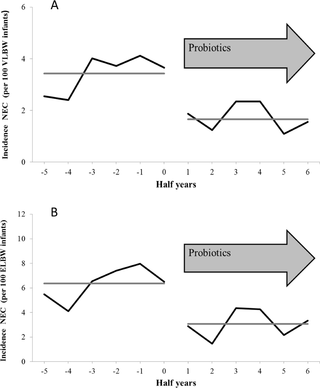
They also use, to support the statement that most benefit accrues to the larger infants, a reference to the large German Neonatal Network study (Denkel LA, et al. Protective Effect of Dual-Strain Probiotics in Preterm Infants: A Multi-Center Time Series Analysis. PLoS One. 2016;11(6):e0158136) which showed the same relative reduction in NEC among the ELBW and the VLBW (Hazard ratio in each subgroup was 0.48), and therefore a much greater absolute risk reduction among the ELBW. In that study the HR for mortality was 0.59 among ELBW infants with the use of probiotics (Infloran in the GNN units). The figure below shows the impacts in the VLBW (A) and ELBW (B) groups after the introduction of probiotics, which occurred at different points in the different participating NICUs.

Finally, that review article includes, as a reference to support the statement that probiotics are only effective above 1000g, the cohort study from the Canadian Neonatal Network, which only included babies under 29 weeks (Singh B, et al. Probiotics for preterm infants: A National Retrospective Cohort Study. J Perinatol. 2019). That study showed “The adjusted odds ratios of NEC (0.64, 95% CI 0.410, 0.996), mortality (aOR 0.41, 95% CI 0.26, 0.63), and a composite of NEC or mortality were significantly lower in the Probiotic Prophylaxis group”.

The most recent Systematic Review and Network Meta-Analysis that has been published, and which I have already discussed in the blog, (Wang Y, et al. Probiotics, Prebiotics, Lactoferrin, and Combination Products for Prevention of Mortality and Morbidity in Preterm Infants: A Systematic Review and Network Meta-Analysis. JAMA Pediatr. 2023) includes 80 RCTs with probiotics in one arm and placebo or no treatment in the other arm. I haven’t had time to look at why the difference in numbers of trials included, or the characteristics of the 13 trials that are in the NMA but not in the latest update of the Cochrane review. Wang et al showed a reduction of severe NEC with an RR of 0.38 for multistrain probiotics, and 0.13 for multistrain probiotics with HMOs. The risk differences were 3% and 5% respectively, summarized across all of the included studies in those 2 categories.

I find it very frustrating that the lack of subgroup data is interpreted, both by the AAP, and by other review articles, as meaning that probiotics may not work under 1 kg. The few RCTs that have reported such subgroups are either extremely small trials, or trials in which the effect in larger infants was very small, but in the same direction as the effect in the smaller babies. As I wrote at the start of this post, 5/6 of NEC cases occur in babies <1000g, it would be mathematically impossible for the reductions in NEC caused by probiotic prophylaxis to be confined to the larger babies, even if probiotics completely eliminated NEC in the larger babies.

Clearly there are enormous numbers of ELBW infants in RCTs that were just not reported separately. In the latest Cochrane review, 57 RCTs are included in the meta-analyses. But only 10 of them had data that could be included in the subgroup analysis of “ELBW or extremely preterm” babies (<28 wks), even though all of the trials included such babies. The total numbers randomized in the 57 trials included are over 10,000, but only 1800 were separately reported as subgroups in this category. The Cochrane review analysis of this subgroup, then, includes 6 further trials than the Thomas SR mentioned above, but excludes Lin’s trial (I can’t immediately see why Lin was excluded, as they did report outcomes by birthweight strata). The additional trials were all extremely small trials, with between 0 and 2 cases of NEC in each one, apart from Wejryd E, et al. (Probiotics promoted head growth in extremely low birthweight infants in a double-blind placebo-controlled trial. Acta Paediatr. 2019;108(1):62-9) which was a study of 134 ELBW infants randomized to receive L reuteri or placebo, in whom there were 7/68 cases of NEC in the probiotic group and 8/66 in the controls.

What about other therapies that we use, and which everyone employs regardless of whether the babies are over or under 1000g?

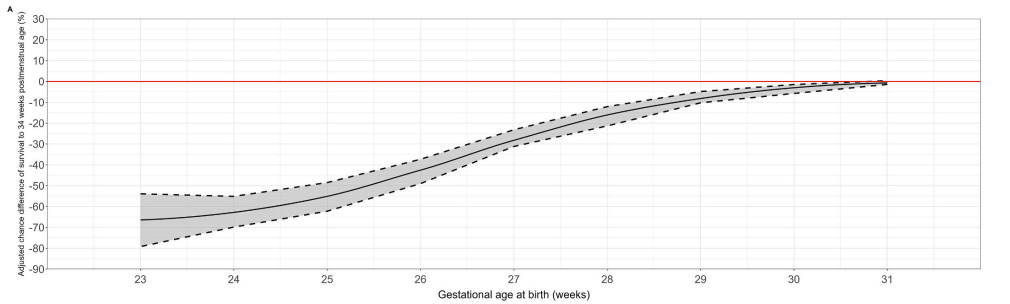
Lets consider delayed cord clamping in the very immature infant. The extensive NMA of Jasani et al examined the data available under 29 weeks which is presented in their supplemental information

As you can see, there is no reliable evidence that DCC is safe or effective < 29 weeks GA. None of the outcomes are even close to statistical significance, with wide confidence intervals of the OR on either side of 1.0.

Should the AAP not follow the same reasoning as for probiotics, and note that DCC is of unproven value for infants <29 weeks?

I am obviously, (I hope it’s obvious), being sarcastic here to make a point. If we remember, the largest and best of the DCC trials in the preterm, the APTS trial, enrolled only infants <30 weeks gestation, but they did not report the <29 weeks group as a separate group. Therefore, when the authors of the NMA searched for data on known subgroups < 29 weeks they were unable to find more than a tiny amount of information. I don’t think there is any doubt that DCC has the same benefit among infants <29 weeks as it does if you put the cutoff at 30 weeks.

How about caffeine? The evidence supporting the efficacy of caffeine therapy for clinically important outcomes is largely based on the CAP trial of infants under 1250g birthweight. We did not report the effects on the subgroup of those of under 1000g. The Cochrane review has no data for babies under 1000g.

This is horrifying! We are using this medication, which is proven to work in babies <1250 g, to treat large numbers of babies <1000g but “current evidence does not support the use of caffeine for babies <1000g”, we could say, if we followed the same reasoning as for probiotics. The most immature babies are probably at greatest risk of the potential long term adverse effects of adenosine receptor blockade, should we not demand more placebo controlled trials of caffeine among the most immature babies? And stop using caffeine until we have the results?

Should the AAP also not follow that same reasoning for caffeine as they do for probiotics, and note that there is no reliable information about the efficacy and safety of caffeine in infants <1000g? FDA approval of caffeine is solely for infants >28 weeks. Many babies have died after receiving caffeine, some of whom were tachycardic, a known possible complication of caffeine. Indeed in the only, very small, trial of the approved version of caffeine in the USA, “Cafcit”, there were many more cases of NEC in the caffeine group. I am certain that there have been many infants who received Cafcit then developed NEC and died, should the FDA not follow the same reasoning, and warn everyone that use of caffeine <28 weeks is not approved and threaten the manufacturers with dire consequences if they continue marketing the drug for use in the extremely preterm?

Of course, we know that there were many <29 weeks babies in the trials of DCC, and there is no reason to believe it improves outcomes only among the bigger babies, despite the lack of data on the specifically <29 week subgroup. Many of the infants in the CAP trial were <1000g, and we have no reason to suppose that caffeine only works at >1000g.

In the same way, there have been thousands of babies <1000g in the RCTs of probiotics, and there is no good reason to suppose that they are only effective in larger babies. The absolute benefits of probiotics are likely greater among infants <29 weeks, or less than 1000g. That indeed is what the 2 cohort studies referred to above showed.

Overall, according to the pooled data from the latest NMA, for every 1000 babies who receive probiotics there will be about 30 fewer cases of NEC, 16 fewer deaths, and 25 fewer cases of late-onset sepsis, taking the data from the trials of multistrain probiotic mixtures.

The incidence of sepsis caused by the probiotic organisms is at present uncertain, there have been a few reports, which have been summarized, but the denominator for this total of 32 cases is uncertain. But, even if the incidence is high, at say 1% of those receiving probiotics, it remains the case that overall there are fewer deaths, and almost certainly less total late-onset sepsis. That incidence would mean that for every 3 cases of NEC prevented, and for every 2 deaths prevented, there is one case of probiotic bacteraemia, which is usually easily treated with beta-lactam antibiotics.

The risk-benefit of probiotics is clearly in favour of continuing routine administration in the very preterm, and there is no reason for excluding the extremely preterm from those benefits.

Please read this impassioned article by a mother who lost her son to complications of NEC, she went on to found the NEC society, dedicated to “Building a world without NEC”. A goal we can all adhere to, and one which has just moved further away because of the actions of the FDA.

Posted in Neonatal Research | Tagged , , , , , | 1 Comment

More thoughts about the “toxicity” of donor milk, a case of Reverse Causation

After my recent post, about the study which suggested that donor milk was killing babies, I have been taking a deeper dive into the article, as I prepare a letter to the editor.

Only 2 small subsets of the infants in the database were analyzed, of the 36000 babies in the database, 1000 received only MBM and DHM, and never received any fortifier or formula from the day of birth until death or discharge. They had an enormously high mortality. They were compared to 7100 babies who received MBM and formula. That group had a mortality which is similar to other published recent standards, a survival of 69% at 24 weeks for example, similar to the 70 to 80% survival for 24 weekers during the same years in the CNN.

The most likely cause of this increased death rate in the MBM + DHM group is Reverse Causation.

Dying will make you more likely to be in the MBM + DHM group, rather than the other way around.

Deaths in extremely immature babies usually occur early. Most babies do not receive fortifier in the first few days of life. Indeed many centres wait until an infant is on full feeds, or receiving 100 mL/kg/day, for example, before starting to fortify their milk. Death before receiving much feeds, if the baby is in a centre that provides DHM to very preterm babies, and does not immediately add fortifier, will place them in the MBM + DHM group.

Survival until on mixed feeds, with either fortifier, or the addition of formula, will therefore place a baby in one of the other groups.

I started to realize this by noting that the the major causes of late mortality were not much different between groups (NEC mortality 4% vs 0.5%, and late onset sepsis episodes, 8% vs 3%) even if all the septic babies died, there is still an enormous difference in mortality. Also, when I looked in the supplemental data there was another group of 1128 infants in the patient flow chart that were “nil by mouth over the entire stay” (NPO).

If the authors of this study did the same analysis of the babies who were NPO, I think we would find that their mortality was extremely high (maybe even higher than the MBM+DHM group!); not because being NPO caused them to die, but because dying put them in the NPO group.

Just as it is unlikely that receiving DHM was a cause of the increased mortality in the MBM + DHM group, but dying early put them in the MBM+DHM without fortifier group.

We have no idea of the survival of the other groups of different feeding approaches, but my guess is that they would mostly be similar to the MBM + formula group in the publication, as they will have survived long enough to receive fortifier.

There is another group of 484 infants referred to as “Did not receive any Own Mother’s Milk” which is differentiated from the other groups such as “exclusively formula fed”. Presumably the “did not receive MBM” group only ever received unfortified DHM. My guess is that babies whose mothers did not provide MBM, and who died before the milk could be fortified, would be more likely to be in this group. So this group probably had a very high mortality also.

The authors really need to redo this completely. They could present survival curves, which I bet would clearly show that the divergence in the mortality occurred very early. They could restrict the analysis to those babies who survived until they were off TPN, or were on full feeds, or whatever the database will allow.

Right now these data are unreliable, and risk creating major concerns about an intervention that the reliable data have shown to be safe and effective.

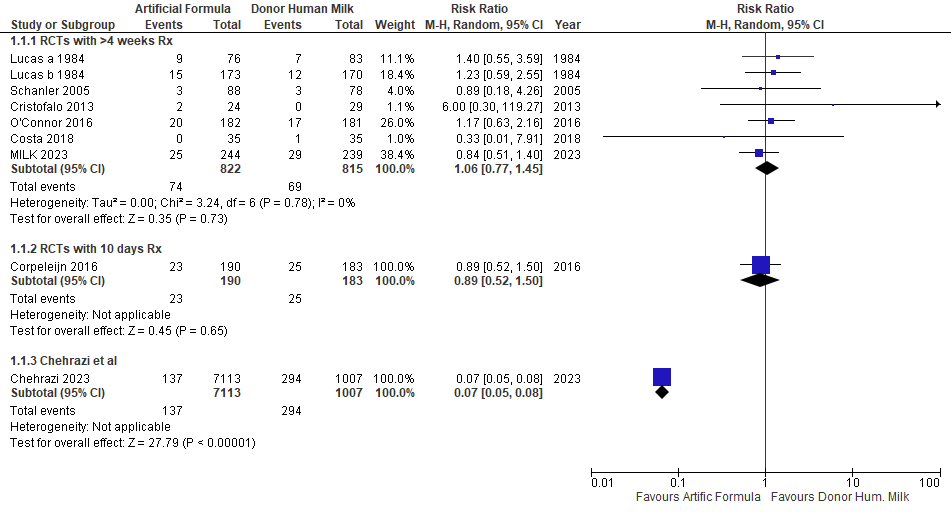
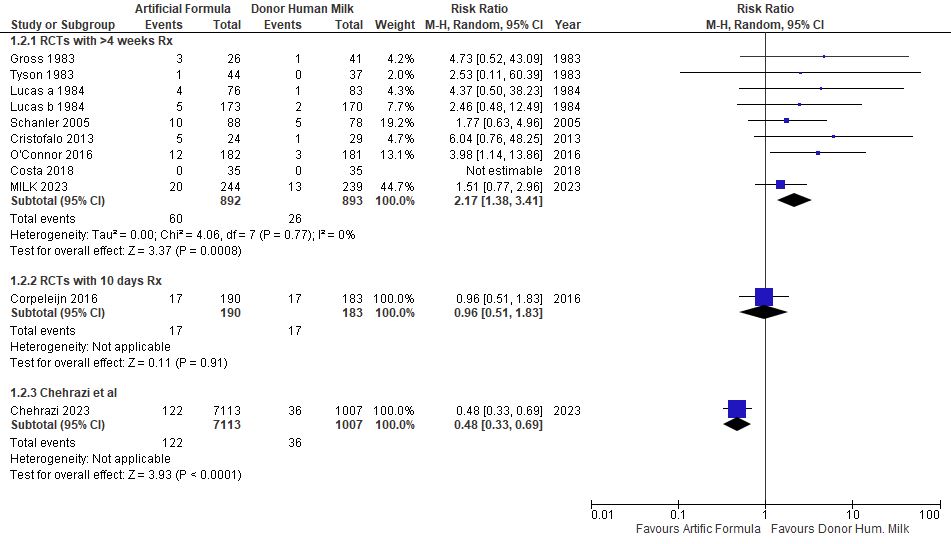
I have compared the results of this database analysis to the previous RCTs. With the addition of data from the MILK trial of the NICHD network, which has been presented, and the results are available on clinicaltrials.gov. That RCT in 483 infants <29 weeks who were not expected to receive MBM, compared formula to DHM, and showed no difference in mortality, but more NEC in the formula group, and no impact on long term developmental or neurological outcomes. I added their data to the studies in the Cochrane review, and put the Corpeleijn study in a separate group (as they gave DHM for only the first 10 days of life).

I know the authors of Chehrazi et al would never claim that it is equivalent to an RCT, but I just wanted to demonstrate how aberrant these data are.

Here is the comparison between the all-cause mortality in the RCTs and the new study

And here are the NEC results (of course Chehrazi et al reports only surgical NEC)

Both figures show that the Chehrazi data are profoundly different to the reliable data from the RCTs, which remain the only way to show causation, in the right direction!

Posted in Neonatal Research | Tagged , , , | 1 Comment

Manipulating the Microbiome

Not with human milk based fortifier, but with probiotics.

This post is a sort of intersection between some of my recent posts, human-milk based fortifier does not appear to have a positive effect on the intestinal microbiome. But exogenous probiotics do.

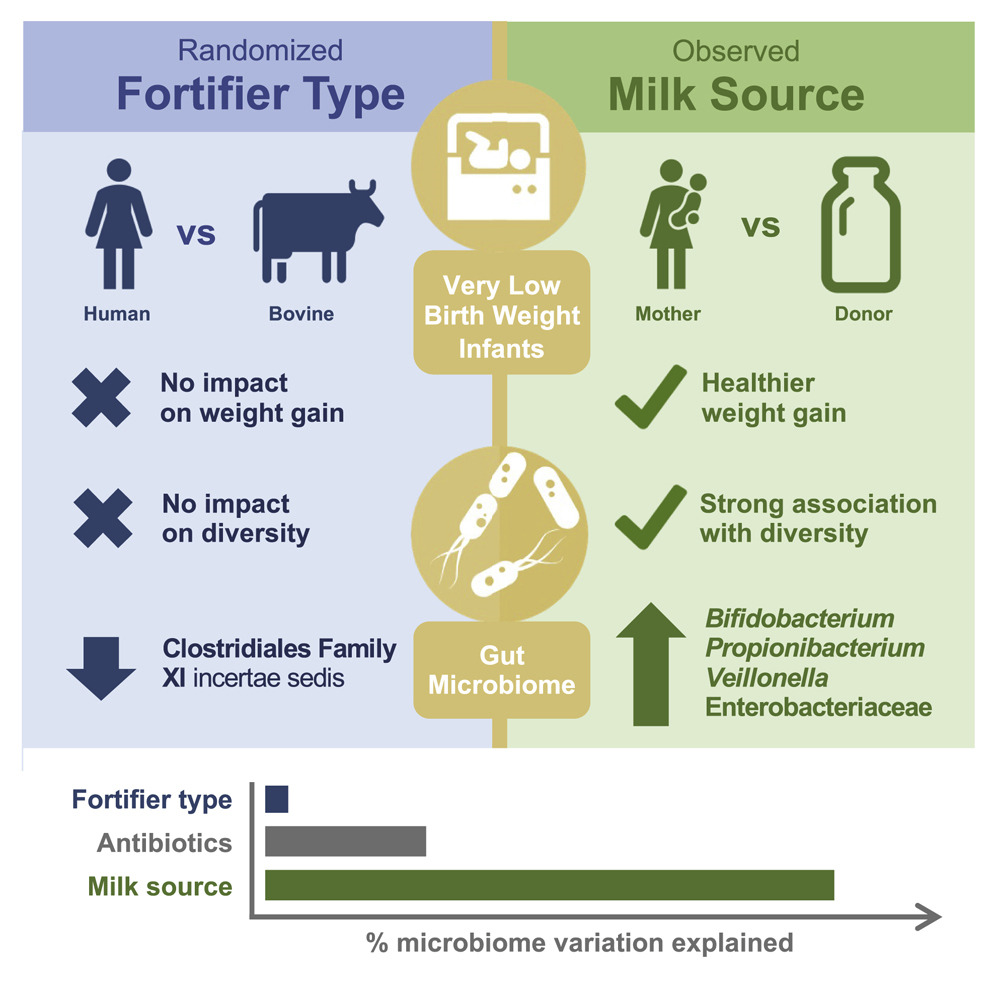
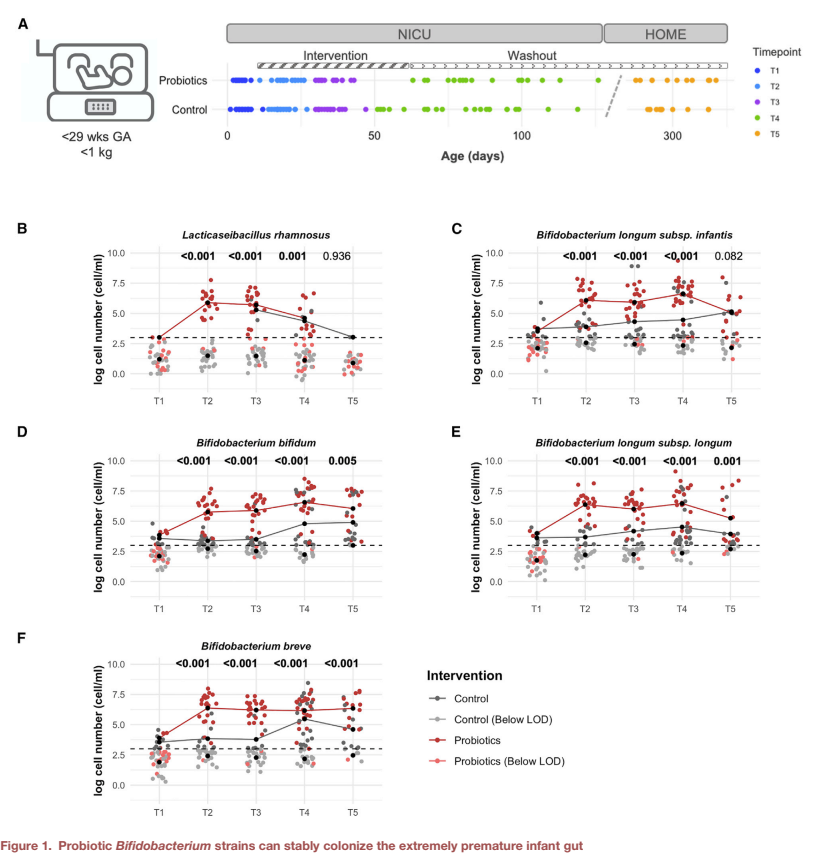
A recent randomized trial was performed by the Winnipeg group. They took babies who were receiving mothers milk, who were supplemented with donor human milk when needed, and randomized them to either standard fortification with a bovine milk based fortifier, or to a fortifier derived from human milk (supplied by Prolacta). It was a small study (30 babies per group) powered for microbiome changes, not for clinical outcomes. Kumbhare SV, et al. Source of human milk (mother or donor) is more important than fortifier type (human or bovine) in shaping the preterm infant microbiome. Cell Rep Med. 2022;3(9):100712.

In this trial, babies did not receive exogenous probiotics. As you can see from the graphical abstract, which is a bit simplistic for an abstract of a scientific paper, but fine for a tag in a blog, they showed no difference in microbiome composition between the groups. In a secondary analysis, the major influence on microbiome development was how much mother’s own milk they received.

In this trial the babies did not receive exogenous probiotics, just what was in their mother’s milk, or in the environment. As should be obvious, the babies all developed an intestinal microbiome, which was strongly affected by the source of the main milk feeds, but not, it appears, by the fortifier that was added to the milk.

In contrast, several other studies have examined the effects of probiotic mixtures on the intestinal microbiome.

In this randomized trial, for example, (Samara J, et al. Supplementation with a probiotic mixture accelerates gut microbiome maturation and reduces intestinal inflammation in extremely preterm infants. Cell Host Microbe. 2022;30(5):696-711 e5) the investigators in Calgary showed major impacts on the development of the microbiome (with the same probiotic mixture that we use), in 57 babies <29 weeks gestation. Even without the probiotics, the control infants sometimes became colonized with some of the same bugs anyway. T1 was prior to probiotic administration, T2 and T3 were during treatment (or equivalent age) T4 was 2 weeks after the probiotic mixture was stopped and T5 was at 6 months of age.

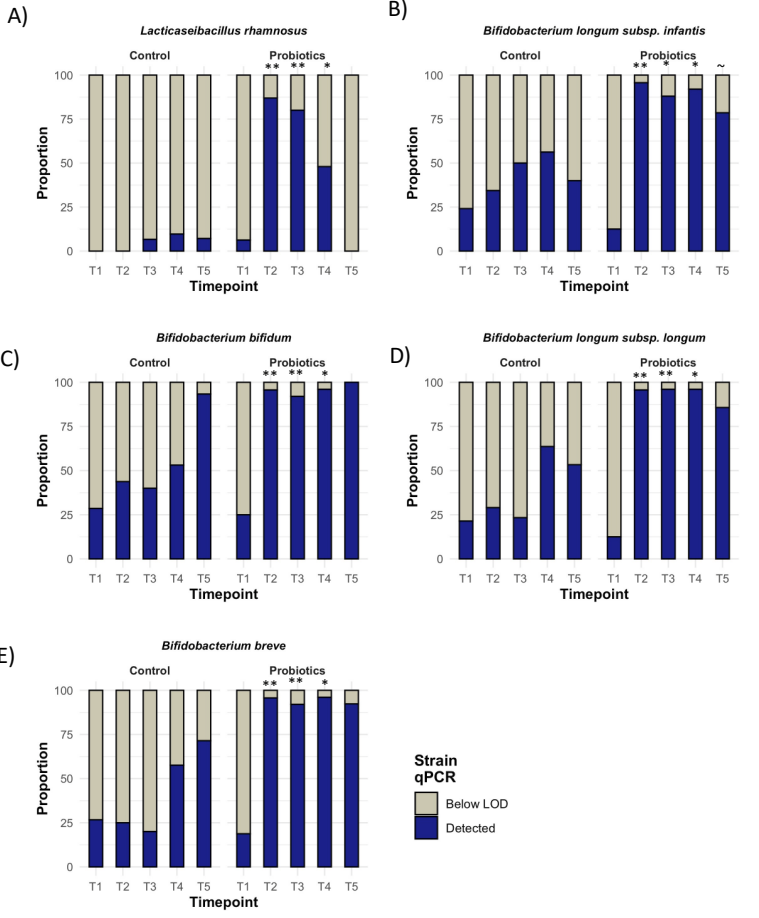
Another figure, from the supplemental data, shows the data more simply as the proportion of samples positive for each organism.

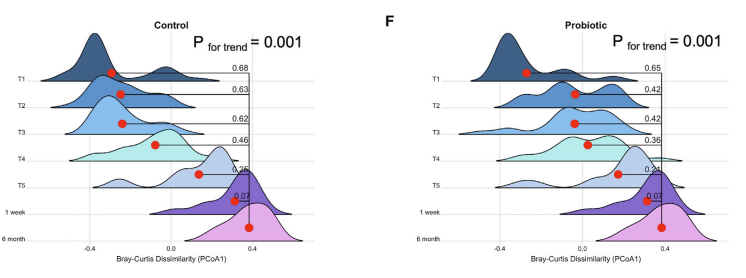
The authors of this study also note impacts of the probiotics on the GI microbiome beyond simply being present in the poop. As they put it, the probiotics “promote a microbial community with high interconnectivity and stability”. I don’t pretend to understand all of the complex analysis that they performed to come to this conclusion, but they did make some pretty graphics. In this graphic, they compare the microbiome composition, using something called the Bray-Curtis Dissimilarity, over those same time periods, then introduce intestinal microbiomes from healthy breastfed term babies, (about whom I struggled to find any details, eventually finding a note that they are a subset of data from another study, in Philadelphia, of vaginally delivered term babies which is investigating antibiotic impacts on the microbiome). The two curves at 1 week and 6 months, in the lower part of these figures, are identical curves from that other study.

The probiotic treated babies were more similar to the healthy breastfed babies, from the first sample after receiving probiotics.

This probiotic mixture, given to very preterm babies has measurable, apparently positive, impacts on the intestinal microbiome. In the other study, Human-milk based fortifier had no measurable effects. What is absolutely sure, they all have a huge variety of bugs in their intestines!

Posted in Neonatal Research | Tagged , , , , | Leave a comment

Interesting study, impossible results. Donor breast milk is not toxic.

Is it possible that giving artificial formula to babies will prevent 90% of the deaths of very preterm babies, compared to using donor human milk? (Chehrazi M, et al. Outcomes in very preterm infants receiving an exclusive human milk diet, or their own mother’s milk supplemented with preterm formula. Early Hum Dev. 2023;187).

The results of this study are nonsensical. If you were to accept the results of this study, then donor breast milk is the most dangerous thing we can give to preterm infants, and the more immature you are, the more dangerous it is. The study implies that all preterm infants should receive at least a bit of artificial formula, that way survival would be dramatically better!

This publication is based on data collected from the NNRD in the UK, a database of clinical information; they compared outcomes from babies under 32 weeks gestation who received only mother’s breast milk (MBM) and artificial formula, to those who only received MBM and pasteurized donor milk. There were initially 36,000 infants in the database, 8,140 of them were selected for this study based on the feeds they received, which were recorded every day. The first group received some MBM, and in addition received solely artificial formula and never received donor human milk (7,133 of them); the comparison group only received pasteurized donor milk (n=1,007) when they needed a supplement and never received bovine-milk-based fortifier (or artificial formula).

All cause mortality was 29% in the donor milk group and 1.9% in the artificial formula group.

What?

There is something seriously wrong with these data.

In Canada in the same years 2017 to 2021, among all admissions to the CNN NICUs of less than 32 weeks, mortality was between 8.3 and 7.4%. The selection of cases for this study has somehow managed to derive a group with dramatically higher, and another with dramatically lower, mortality than the CNN.

The babies who were selected to be in the human milk group apparently never received any fortifier. Which is very strange. Do large numbers of UK neonatal units treat babies of 22 to 28 weeks gestation without ever fortifying their feeds?

According to the results section, there were also 2,123 babies who never received either formula or donor breast milk, only getting MBM, and there were 9,965 who got a combination of MBM, donor milk and formula. Which leaves another 17,845 babies, who received what? The only group left seems to be exclusive formula feeding, According to this study, almost 50% of very preterm babies in the UK during this period received no MBM at all. This seems unlikely.

In the comparison group, babies received MBM and some formula, which could perhaps have been a single feed of formula, or the majority of their feeds as formula, there is no mention of fortification in this group. Infants with a single feed of fortified breast milk and the remainder being formula are placed in this group, as are infants with 99% of their feeds as unfortified breast milk, and a single formula feed.

The use of pasteurized donor milk was between zero and 43% by NICU. In our NICU, use of artificial formula in babies under 29 weeks is about 0%, since the breast milk bank opened in 2014, all babies receive MBM supplemented with donor milk up to 34 weeks, at which time they will receive formula if the baby needs a supplement. Are some NICUs in the UK selective, and choose which babies will get artificial formula?

If we look at the babies of 25 weeks gestation (results from their table 2, with some simple back calculations), there were 75 in the breast milk group (MBM and donor) who never received any fortifier, and their survival without NEC surgery was 29%, there were 167 who got at least a bit of formula, and survival without NEC surgery was 83%.

Taking this at face value, the most effective thing we could do for survival in extremely preterm infants is to give them all some formula!

The graph below shows the difference in survival, by gestational age, between the two groups, showing that there is a progressively greater difference in percentage survival as GA decreases, with a suspiciously smooth curve, and an impossibly huge difference at 23 weeks. At 23 weeks there is an extremely low survival with exclusive milk feeding of 15%, but 2/3 survival if they got some formula.

I think the most likely problem with the study is that the data about feeding composition are erroneous. The source of the data is described thus : “The NNRD is a National Information Asset containing a standard data extract (the Neonatal Data Set, an NHS Information Standard; DAPB1595) from the Electronic Patient Records of all admissions to National Health Service (NHS) neonatal units”. The accuracy of the information therefore depends on the accuracy of what is in the electronic patient records, and the precise, accurate transfer of those data from the NHS record to the NNRD, and then the coding from the daily record in the NHS record to the final group assignation in the NNRD.

At some point every single day’s record in the electronic patient record, of what source of feed was given to the baby, which may be 200 or more complex data points, is interpreted and parsed into a single variable in the NNRD. There are so many potential errors in this process that I don’t think it is possible to trust that the group assignment is reliable, without some major data verification.

Who enters the daily feed composition into the electronic record? How is it verified? What method is there for checking the accuracy of those data. If the baby had MBM for 145 days, then a day with both MBM and donor milk, and 10 days with fortified MBM, can the authors say for sure which group they would be in?

There are some other weird things about this publication.

  1. Admission body weight z-scores were similar between groups, at -0.3 versus -0.1. Discharge weight z-scores were supposedly a mean of 2.5 in the donor milk group and 4.4 in the formula group. These are the biggest preterms at discharge ever reported in the world literature. Really? 4 standard deviations above expected weight at discharge?
  2. The dietary data were collected until discharge, even though the main outcomes are determined at 34 weeks. An infant who received one feed of formula at 37 weeks (for example) would therefore be included in the formula group, whereas the human milk group apparently never received any formula, or any fortifier, from the day of birth until their discharge home.
  3. The authors state that there was significantly less BPD in the human milk group. But they calculate BPD as a proportion of the admitted babies, even though a lot of them were dead by 36 weeks! If you recalculate BPD among survivors to 34 weeks (which is in the results, although there were a few more deaths between 34 weeks and discharge (9 vs 55), I don’t know the number of survivors at 36 weeks) BPD was 18.6% in the human milk group and 19.6% in the fortifier group. In other words BPD among survivors was identical.
  4. Treated retinopathy is also calculated as a proportion of admitted babies, if you calculate as a proportion of babies who survived to discharge, it was 1.1% (rather than 0.8%) in the human milk group, and 2.3% in the formula group, which might still be “statistically significant” I don’t know. There is a typo in the 95% CI of the published unadjusted risk difference in treated RoP, which were -2.1 to “-0.0.8”, so probably very close to being non-significant.

This paper should be retracted. Unless the authors can assure readers that the group assignments were accurate. There should be an external audit of the group assignment for a couple of hundred babies, otherwise we can have no confidence in the results.

They should also redo the analysis based on what feeds were received up to 34 weeks. They could also look at the dose response. Even though they do not know the actual volumes of each source of milk given, the number of days on which a baby received each feed type would be a reasonable proxy. If they could show that the more days that a baby received donor milk was associated with a gradually increasing risk, then this could give a degree of confidence in their analysis.

I do agree with the authors that the data regarding the benefits of human door milk is somewhat soft. But this article does not help. As it is, I have no confidence that these data are reliable, or that these analyses reflect reality.

Posted in Neonatal Research | Tagged , , , | 6 Comments