The jaundiced eye of the beholder

Well, this is disappointing, the amazing results from Iowa regarding the outcomes of infants born at 22 and at 23 weeks gestation have now been published in the February print edition of the Journal of Pediatrics. What is disappointing about it is the editorial comment from Dr deRegnier (deRegnier R-A. The eye of the beholder: Periviable outcomes in Iowa. The Journal of Pediatrics. 2020;217:1-3). In it, she suggests that “The reported outcomes will be interpreted as good or bad through the eye of the beholder”.

I don’t know what kind of beholder would see the survival of babies as a bad thing, even if the survival means that some of them might have cerebral palsy or developmental delay. (Watkins PL, et al. Outcomes at 18 to 22 Months of Corrected Age for Infants Born at 22 to 25 Weeks of Gestation in a Center Practicing Active Management. J Pediatr. 2019).

This is a group of babies, previously left to die and thus with a 100% mortality rate, who, the group in Iowa has shown us, can be rescued by high quality perinatal and neonatal care with the survival of 14 of 20 infants born at 22 weeks (14/24 if non-resuscitated babies and those not surviving initial resuscitation are included) and 41/50 at 23 weeks (14/52). Among the survivors evaluated, 11% had “severe NDI” which seems to have been almost entirely due to a Bayley-3 cognitive score less than 70.

The majority of survivors had no problems or minor problems. If there is an eye that beholds that as being a bad thing, then maybe the eye should be “plucked out” (sorry for the Christian reference; I am an atheist but with a Christian/protestant heritage).

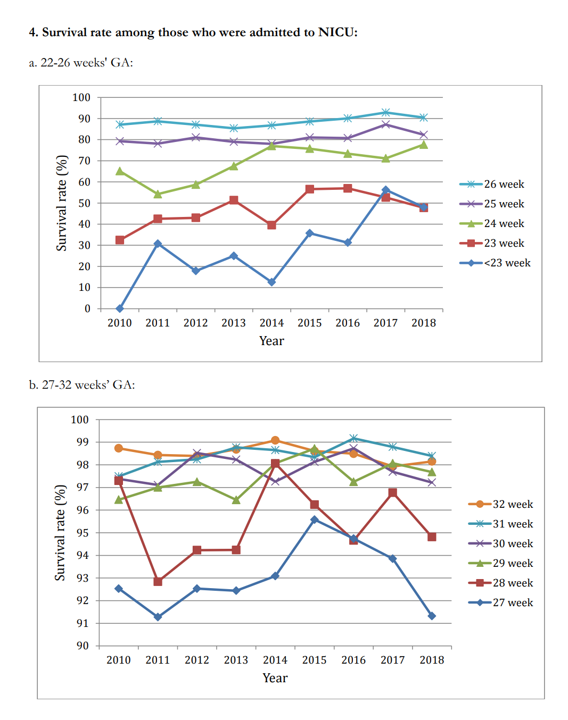
Any reasonable human eye would surely behold a 60 to 70% survival, with encouraging long term outcomes, as a good thing. Other networks are also seeing progressive improvements in the survival of infants born at 23 weeks or less (the Canadian Neonatal Network for example) look at the figure below (from the 2018 annual report) for the survival among actively treated infants at 23 weeks and <23 weeks. Only 30% of babies under 23 weeks received active treatment, and there wasn’t much change in that over these years, but among babies born at 23 weeks the proportion receiving active treatment increased from about 60% to 70-80% over this period.

One day we hope to replicate the amazing success in Iowa, which I think only a very jaundiced eye could think was not a major advance in neonatology.

Posted in Neonatal Research | Tagged | 3 Comments

Giving bad news as it happens

A new publication from my great group at Sainte Justine. Lizotte MH, et al. Techniques to Communicate Better With Parents During End-of-Life Scenarios in Neonatology. Pediatrics. 2020:e20191925.

We have already published about what residents think about being part of a resuscitation simulation that fails. What we showed was that residents appreciated a resuscitation scenario where the baby dies despite them doing the right thing. (Lizotte M-H, et al. Trainee Perspectives on Manikin Death During Mock Codes. Pediatrics. 2015;136(1):e93-e8). What I mean by that is that one problem with resuscitation simulations is that usually, (for pedagogical purposes) if the trainee follows correct procedures, the patient recovers. In real life (IRL as the younguns say), you can do everything right, but the baby dies anyway. How do we teach residents the best way to convey the worst news possible while it is actually happening? And what is the best way anyway? In that previous study, residents noted that a simulated resuscitation that included simulated discussions with parents would be a good idea.

The idea behind the study was this: IRL sometimes babies die despite competent resuscitation. When that happens, it is usually without any preparation, and everyone is traumatized, the resus team and the obstetric team, but especially the parents. Can we describe, and then teach, the best behaviour in the worst of circumstances?

Our team decided to include bereaved parents, and not just medical ‘experts’, which was a very risky undertaking. Asking parents who had lost a child to evaluate the behaviour of medical trainees during the simulated death of a newborn had all sorts of potential problems; again we are ‘lucky’ to have Annie Janvier as part of the team; she has created links with many parents, including those who have lost a baby, and encouraged them to be part of our team improving quality in neonatal resuscitation. We had several levels of screening before finally collaborating with 6 bereaved parents in this study.

We were very careful to inform parents what they were getting into, to give them examples of what they might face, and then show them sample, fake, videos. At each stage, there were parents who didn’t feel able to continue, but finally, we were very fortunate to have several parents who wanted to help us teach residents how to give the worst possible news to parents.

In our simulation centre, we had 31 clinicians, who have to do neonatal resuscitation as part of their work, perform an extensive resuscitation where the manikin was programmed not to respond. Simulated parents were present and the resuscitation and the interaction with the parents was videoed and evaluated.

I can’t embed the video abstract here, but you can go and see it at this link: https://pediatrics.aappublications.org/content/early/2020/01/23/peds.2019-1925.long

Where you can watch Annie do her bit, and Ahmed join in speaking really quickly to be under the time limit.

We analyzed the interactions with the actor parents before, during and after the resuscitation, and then asked all the evaluators who they thought were the best communicators. The evaluators included a clinical psychologist, nurses, an NNP, an obstetrician and a few neonatal providers in addition to the parents and the 2 actors.

The scores given by the parents were routinely a bit lower than the providers, and the actors scored most people higher. There was a lot of agreement about who were the best communicators; we then analyzed the details of how they interacted with the parents to identify simple teachable skills that were associated with being a good communicator. Many of those skills were overtly identified by evaluators as being positive.

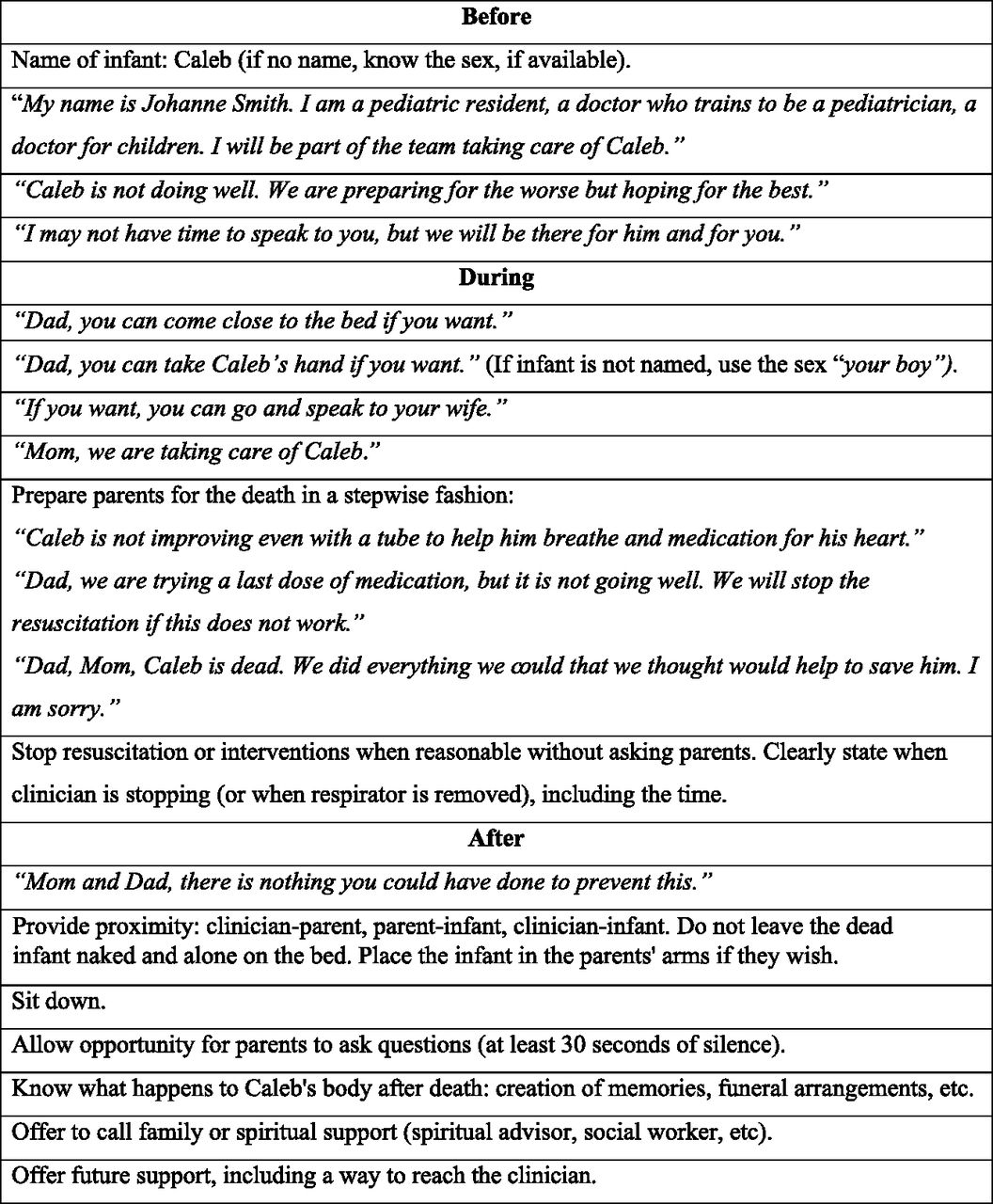
These are what we identified as positive behaviours and examples of things to say to the parents.

Interestingly many of the residents did not know the details of what happens to the body after death, some were juniors who had never really been involved in a death yet during their training; others had, but often still didn’t really know what the procedures were. The nurses all knew in detail.

Many of these behaviours are simple to learn and remember, some of them you probably already do, if you are involved in looking after critically ill children. But on a busy night on call, when you need to get back to the NICU for your other patients, and you are already tired and a bit frazzled, we can all forget things which in our best moments would be natural. I’ve been involved in many baby deaths. Most parents only experience it once. Being compassionate, supportive and caring are essential, and most of us in the field are there because we have those characteristics in our natures. Following these simple suggestions will help parents to feel cared for at the worst time in their lives.

Posted in Neonatal Research | Tagged , , | Leave a comment

Preventing prematurity for pennies, and perinatal death.

This is amazing and somewhat surprising, at least to me. When I saw the title of this article, Low-dose aspirin for the prevention of preterm delivery in nulliparous women with a singleton pregnancy (ASPIRIN): a randomised, double-blind, placebo-controlled trial. I scanned over the methods and read the results, expecting to see yet another article with a null result. Maybe I am getting cynical but the idea that you could find a way to improve perinatal outcomes in the developing world at an affordable price seemed just inherently unlikely.

How wrong I was! After seeing the results I rushed back to the methods and read in much more detail. In seven sites in 6 countries (two in India and one each in the Democratic
Republic of the Congo, Guatemala, Kenya, Pakistan, and Zambia) 12,000 nulliparous women with singleton pregnancies were enrolled between 6 and 14 weeks of gestation and received 81 mg of aspirin or a placebo every day until they reached 37 weeks.

Preterm birth decreased from 13.1% with placebo to 11·6% with aspirin (RR 0·89 [95% CI 0·81 to 0·98]). There were also reductions in perinatal mortality (0·86 [0·73–1·00]), fetal loss (0·86 [0·74–1·00]), early preterm delivery (<34 weeks; 0·75 [0·61–0·93]), and delivery before 34 weeks with hypertensive disorders of pregnancy (0·38 [0·17–0·85]). Other adverse maternal and neonatal events were similar between the two groups.

I can’t see any real downside to introducing this intervention everywhere in low- and middle-income countries, other studies in multiple pregnancies are needed, and among singletons, a comparison with higher doses is required. I also don’t understand why this should work in nulliparous women, but not in multipara, so either trials in multiparous women should be performed, or there is some reason which I don’t understand to not do so.

On the maternal side, there was a small reduction in maternal hypertensive disorders, and no clear adverse impact.

A relative reduction of 14% in perinatal mortality, from 54/1000 to 46/1000 is an enormous change in mortality, with a potential to save hundreds of thousands of lives every year.

Even writing that makes me feel a bit humble; perinatal mortality of 54 per 1000, that is more than 5%! A small reduction in that mortality is a huge potential impact around the world.

I must, at this point, feel grateful to the sponsors of this study which was funded by the NIH. A study which might well have no real impact in the USA, but which was funded by the NICHD, and includes as one of its authors, almost hidden among the others the amazing Wally Carlo. This study is one reason to continue to hold in high esteem the principles on which the USA was founded, and its profile around the world. Even if these days it is hard to believe that those principles are being pursued, this study is proof that even in the heart of darkness there continues to beat a great light.

Posted in Neonatal Research | 1 Comment

Cephalhaematomas, just leave them alone?

I remember going from Edmonton to Ukraine, to Kiev, not long after Chernobyl, as part of what started as the Chernobyl Children’s Project and had by then been renamed “Osvita”, “education” in Ukrainian. There are many Albertans of Ukrainian background, including paediatricians, and the project was set up as an international program to promote collaboration after the break-up of the Soviet Union.

One of the interactions I had with the neonatal physicians there was at the bedside of a baby with a large cephalhaematoma. They asked me what we would do in Canada, and I said: absolutely nothing. I was informed that their practice was to drain the haematoma as if not there was “a risk of serious infection”. I told them (with a touch of superiority, given my first-world education) that, no, draining it introduced a risk of infection, and it would be better just to not touch it.

I realized afterwards that they had just been quoting what they had been taught, and I was just quoting what I had been taught, but that I didn’t actually really know who was right! (Except, of course, for the fact that I am always right….).

Large cephalhaematomas can take months to completely resolve, and in the meantime, marginal calcification can occur, and deformation of the skull can sometimes follow. A new publication reports the results of needle aspiration of large cephalhaematomas still present after 2 weeks of age without signs of resorption. (Blanc F, et al. Early needle aspiration of large infant cephalohematoma: a safe procedure to avoid esthetic complications. Eur J Pediatr. 2020;179(2):265-9). They note that there were no complications, they did this with local anaesthesia and sucrose, and it might actually, I think, be a reasonable idea.

One of the problems I see, with this common situation, is that almost all of the references given in the article are case reports. I cannot tell from the literature how often a cephalhaematoma might cause problems in the long term, with or without drainage. Of course, a randomized controlled trial would be the way to answer the question of what to do, but I have no idea how you would calculate the sample size. You could just guess a number and say if after a hundred babies in each group didn’t show a difference, then the choice of intervention could be left to the parents. Lacking that (which I think is unlikely to happen) some large case series with and without drainage could at least give us an idea. For such a common problem which probably causes parents to worry, and which also makes babies’ heads look funny, it would be great to have some good data.

Posted in Neonatal Research | 1 Comment

Does acidosis affect contractility of the neonatal heart? And does bicarbonate help?

I sometimes write posts which are not based on a new publication but to address a clinical issue that I think is important, and may not be clear to everyone. Often triggered by something that has happened in my own practice.

If you are a specialist in the domain you probably already know that the answers to the 2 parts of the question in the title are 1: very little, and 2: probably not.

To give a bit more detail:

The impacts of acidosis on myocardial function were first investigated to my knowledge in the 1960s in several papers published mostly in the American Journal of Physiology, it was shown that acidosis decreased contractility of isolated myocardial strips and ventricular preparations. If you go back to those articles you can find what we would consider medically profound extreme acidosis, pH typically of 6.0, induced often by adding HCl to the fluid surrounding the preparation.

Clearly, hydrochloric acid acidosis is not common in clinical practice, and a pH of 6.0 is usually only found post-mortem.

More recent studies have investigated more clinically important types of acidosis, more reasonable pH ranges, and the relative impacts on adult and neonatal myocardium.

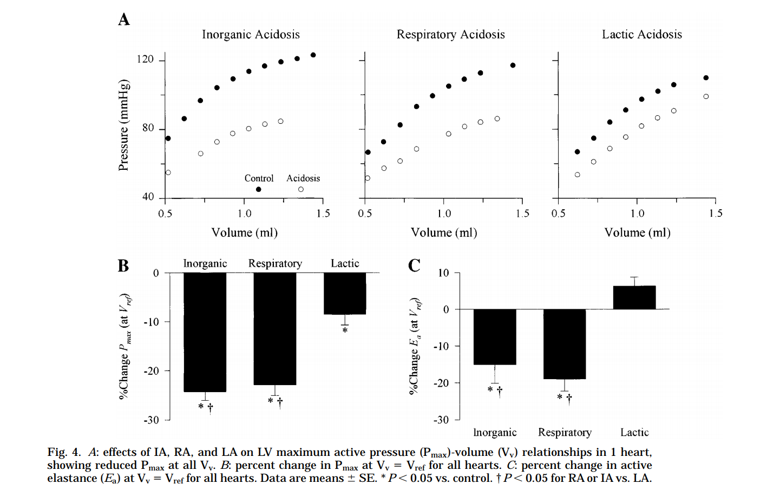
Here is one example, using an isolated perfused adult rabbit heart, with a pH of 7.4 for the controls and pH=7.03 for each of the 3 models of acidosis. (Berger DS, et al. Disparate effects of three types of extracellular acidosis on left ventricular function. Am J Physiol. 1999;276(2):H582-94). As you can see respiratory acidosis had impacts similar to the HCl, leading to a 22% reduction in maximal pressure generation, whereas lactic acidosis only reduced pressure generation by about 8%. Elastance of the ventricle (the inverse of compliance) was not affected by lactic acidosis.

Even in the adult, therefore, organic acidosis has a much more modest effect than inorganic acidosis (there are other studies showing essentially the same thing), and respiratory acidosis is much more potent. Studies of hypercarbia without acidosis, on the other hand, show a smaller effect which is not sustained. The impact, as are most things related to contraction of muscles, seems to be mediated by changes in calcium flux. That becomes important when you start to think of neonatal myocardium, because it is very different.

Excitation of the cardiomyocyte is coupled to contraction by the flux of calcium into the cell which normally stimulates calcium release from the sarcoplasmic reticulum, the link between the sarcolemmal membrane and the SR being the t-tubule. There is also trans-sarcolemmal Na/Ca exchange which kicks in. T-tubules are absent in the newborn and there is very little SR, which basically means that you cannot extrapolate anything about myocardial function from the adult to the newborn. SR is probably still quite important, and recent data show a high concentration of calcium within the relatively sparse SR. However all the mechanisms underlying calcium flux are quantitatively, if not qualitatively, different, and you really need to test any intervention or abnormality in neonatal myocardium before assuming that it applies to the newborn.

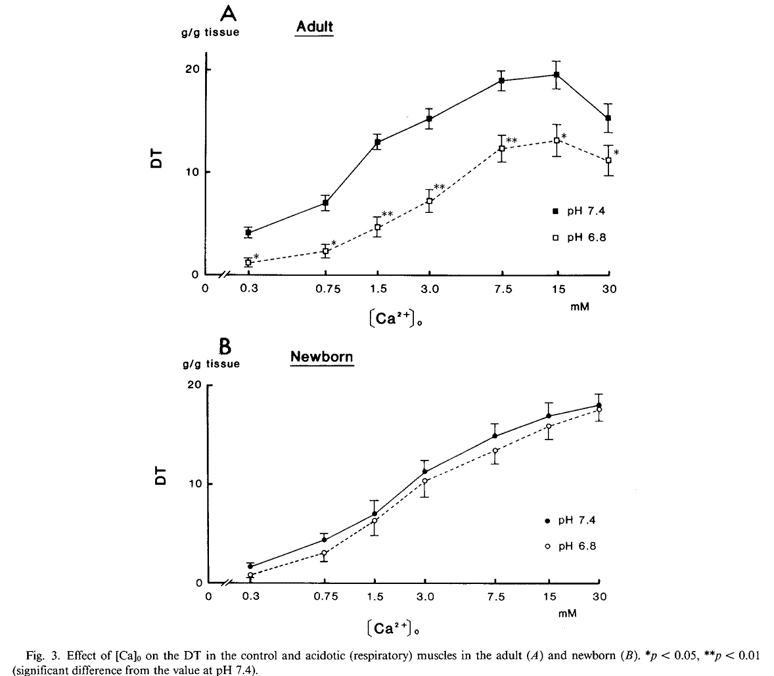
This figure, as one example, (Nakanishi T, et al. Effect of acidosis on contractile function in the newborn rabbit heart. Pediatr Res. 1985;19(5):482-8) shows the impact of respiratory acidosis pH=6.8 on the calcium tension relationship in rat hearts, compared ot the adult. There is almost no detectable impact of a very low pH in the newborn.

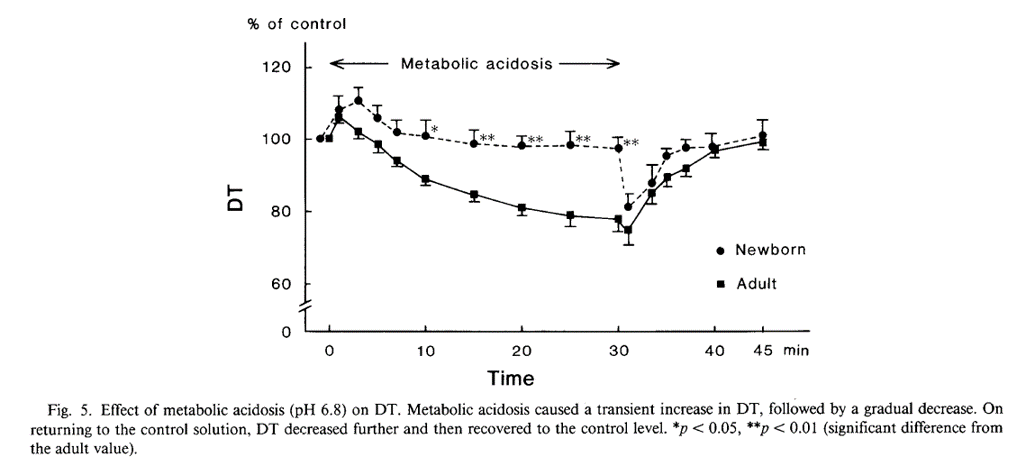
In the same study, Toshio Nakanishi and his co-workers induced a metabolic acidosis (which was an inorganic acidosis) and found no effect on the neonatal myocardium

At the end of the acidotic period, there was a fall in developed tension (DT, a measure of contractility), which occurred when the acidotic perfusing solution was changed back to a neutral standard solution, containing bicarbonate. (The fall in DT at this point might be relevant, see below).

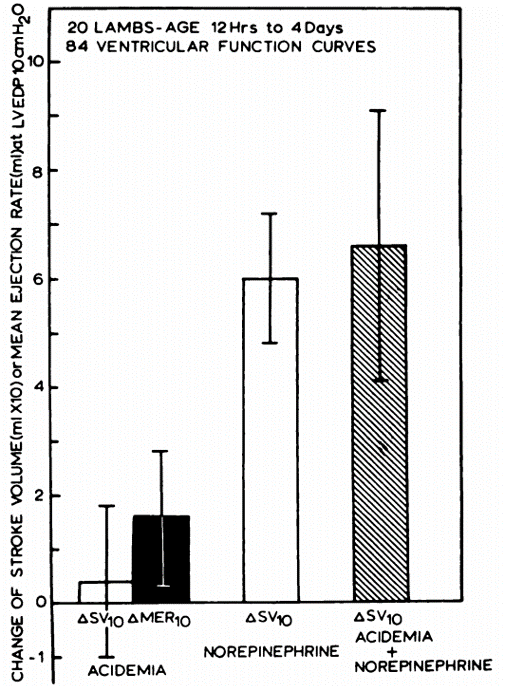
Despite my comments at the start, even in the 1960s there were studies using medically relevant models of acidosis, such as this one from Yale (Talner NS, et al. Influence of acidemia on left ventricular function in the newborn lamb. Pediatrics. 1966;38(3):457-64)
using an in situ heart preparation in newborn lambs,

SV10 is the stroke volume, MER10 is the mean ejection rate, and you can see that acidosis, which was induced by infusion of lactic acid to a pH of 6.9, had no effect on cardiac function, and no effect on the response to norepinephrine, if anything, the SV response to norepinephrine was greater with acidosis.

Does Bicarbonate improve cardiac function in acidosis?  Bicarbonate plus acidosis, of course, generates CO2 (HCO3- + H+ = H2CO3 = H2O + CO2) which diffuses rapidly across cell membranes and reacts with water to generate carbonic acid, reversing that equation, which releases H+. Bicarbonate administration, therefore, worsens intracellular acidosis when you administer it to acidotic subjects. It doesn’t seem likely that it would improve myocardial function.

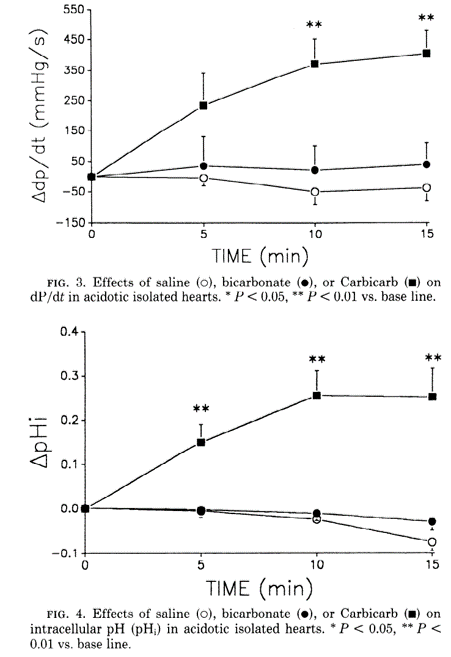
Indeed most of the studies confirm the lack of benefit or an adverse effect. In this study for example, (Shapiro JI. Functional and metabolic responses of isolated hearts to acidosis: effects of sodium bicarbonate and Carbicarb. Am J Physiol. 1990;258(6 Pt 2):H1835-9) pH was progressively reduced to 6.8 by using buffers with lower bicarbonate concentrations, and then either saline, bicarbonate or carbicarb (an iso-osmolar mixture of NaHCO3 and Na2CO3 which buffers acid without producing CO2) were added. As you can see, Bicarbonate caused intracellular pH to fall slightly and had no effect on contractility (dp/dt max) whereas carbicarb did the opposite.

I don’t think there are entirely similar studies in the newborn, but there are studies in intact animals which generally show that metabolic acidosis is associated with an increase in dp/dt max, as they are intact animals it may be that there are changes in preload associated with this, so it may not be entirely a contractility change, but there is at least no evidence of a depression of contractility in these models. Basir MA, et al. Effects of Carbicarb and sodium bicarbonate on hypoxic lactic acidosis in newborn pigs. Journal of investigative medicine. 1996;44(2):70-4. Nudel DB, et al. Comparative effects of bicarbonate, tris-(hydroxymethyl)aminomethane and dichloroacetate in newborn swine with normoxic lactic acidosis. Dev Pharmacol Ther. 1993;20(1-2):20-5.

In these models, the increase in cardiac output or dp/dt max occurring with acidosis decreased when bicarbonate was administered.

So to summarize, metabolic acidosis in the newborn has little or no effect on myocardial contractility in several mammalian animal models of isolated myocardial preparations (lambs, rabbits and rats). Even in the mature myocardium, the impact of organic acidosis is relatively modest. And there is no evidence that response to catecholamines in the newborn myocardium is affected by acidosis.

In that context looking for a benefit of bicarbonate in the newborn would be a bit of a lost cause, which may be why there are no relevant studies that I could find. But even in the mature myocardium, the impact of bicarbonate use during acidosis has usually been shown to be a negative effect on contractility. What data there are in the newborn intact mammalian models show that cardiac function in some models is actually increased in acidosis, and decreased by the use of bicarbonate.

Posted in Neonatal Research | Tagged , , | 1 Comment

Do Probiotics work in the UK?

Seems like a dumb question I know, if they work in one country, surely they should work everywhere? It is sometimes difficult, however, to institute change based on studies that are done elsewhere, usually because there is an idea, or some evidence, that risk factors and other co-interventions may be different in published trials from local practice. Based on the results of the high-quality PIPS trial (multicenter RCT in the UK testing B. breve against placebo for prevention of NEC which did not show an impact), many centres in the UK have been reluctant to introduce probiotic supplementation.

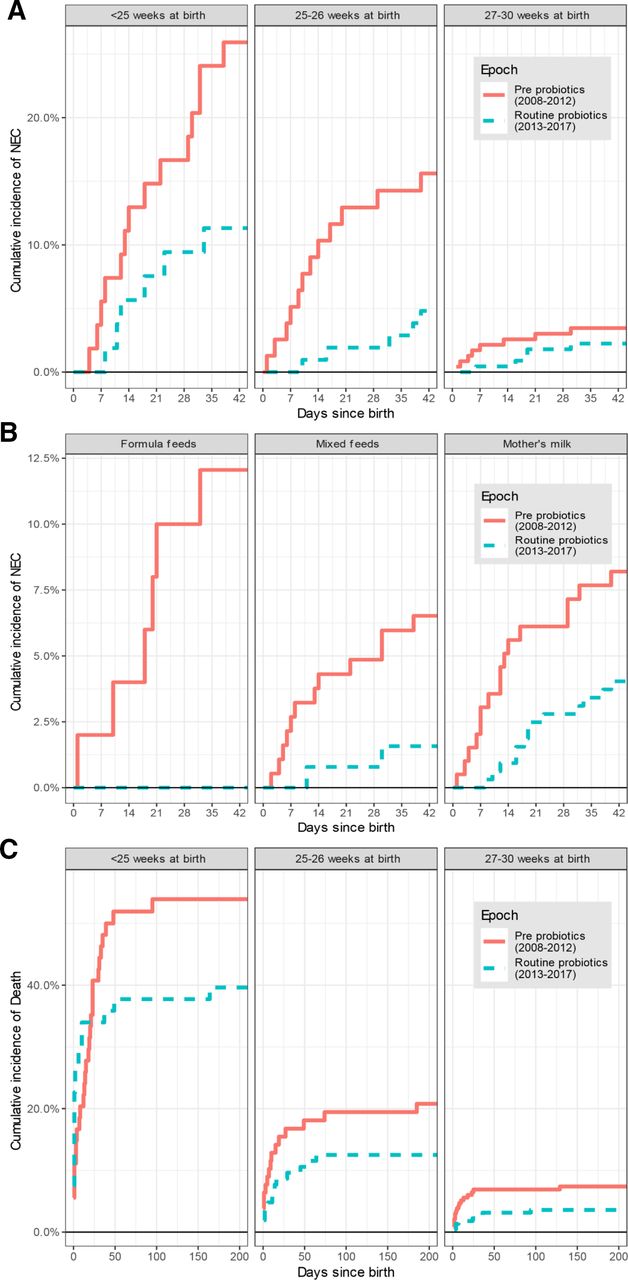
A newly published cohort study from Norwich shows that there are some UK centres that have nevertheless introduced routine probiotic supplementation (Robertson C, et al. Incidence of necrotising enterocolitis before and after introducing routine prophylactic Lactobacillus and Bifidobacterium probiotics. Arch Dis Child Fetal Neonatal Ed. 2019:fetalneonatal-2019-317346). In 2013 they introduced probiotic prophylaxis, and they have seen an immediate and persistent reduction in NEC, using, at first, a preparation with 2 organisms, and more recently a preparation with 3 organisms, including a B longum sbsp infantis. They found more than a 50% fall in NEC after introducing probiotics, a decrease which was sustained, and did not seem to be associated with any other changes in practice. Breastfeeding frequency was stable, and they performed multiple analysis to try and confirm whether or not the probiotics were likely to be the main change associated with NEC reduction, no other obvious explanation was found. They evaluated the effects in multiple subgroups.

For the impact of diet, there were no cases of NEC among babies who received exclusively donor milk, but before you get excited about that, there were only 9 of them; there also weren’t many who got only formula (the group with the most dramatic impact in the figures above); 50 infants pre-probiotics, and 23 post. The majority had either exclusive breast milk or a mix of breast-milk and other sources.

There is some reason to believe that B. infantis is one of the most important of the probiotic organisms, and systematic reviews now generally show that a combination of probiotic organisms is more effective than a single strain. (Hagen PC, Skelley JW. Efficacy of Bifidobacterium Species in Prevention of Necrotizing Enterocolitis in Very-Low Birth Weight Infants. A Systematic Review. J Pediatr Pharmacol Ther. 2019;24(1):10-5).
Many of those combinations contain a Bifidobacterium which is at least similar to B infantis.

Promoting and supporting colonization with B. infantis and doing what we can to normalise the intestinal microbiome of the very preterm infant is a goal which seems to bear fruit. Finding better ways of doing this and reducing colonization with pathogens are important goals for the future. Testing the appropriate prebiotic molecules to support the growth of B. infantis, such as 2′-fucosyl-lactose should be a priority.


Posted in Neonatal Research | Tagged , | Leave a comment

Breathe baby, breathe!

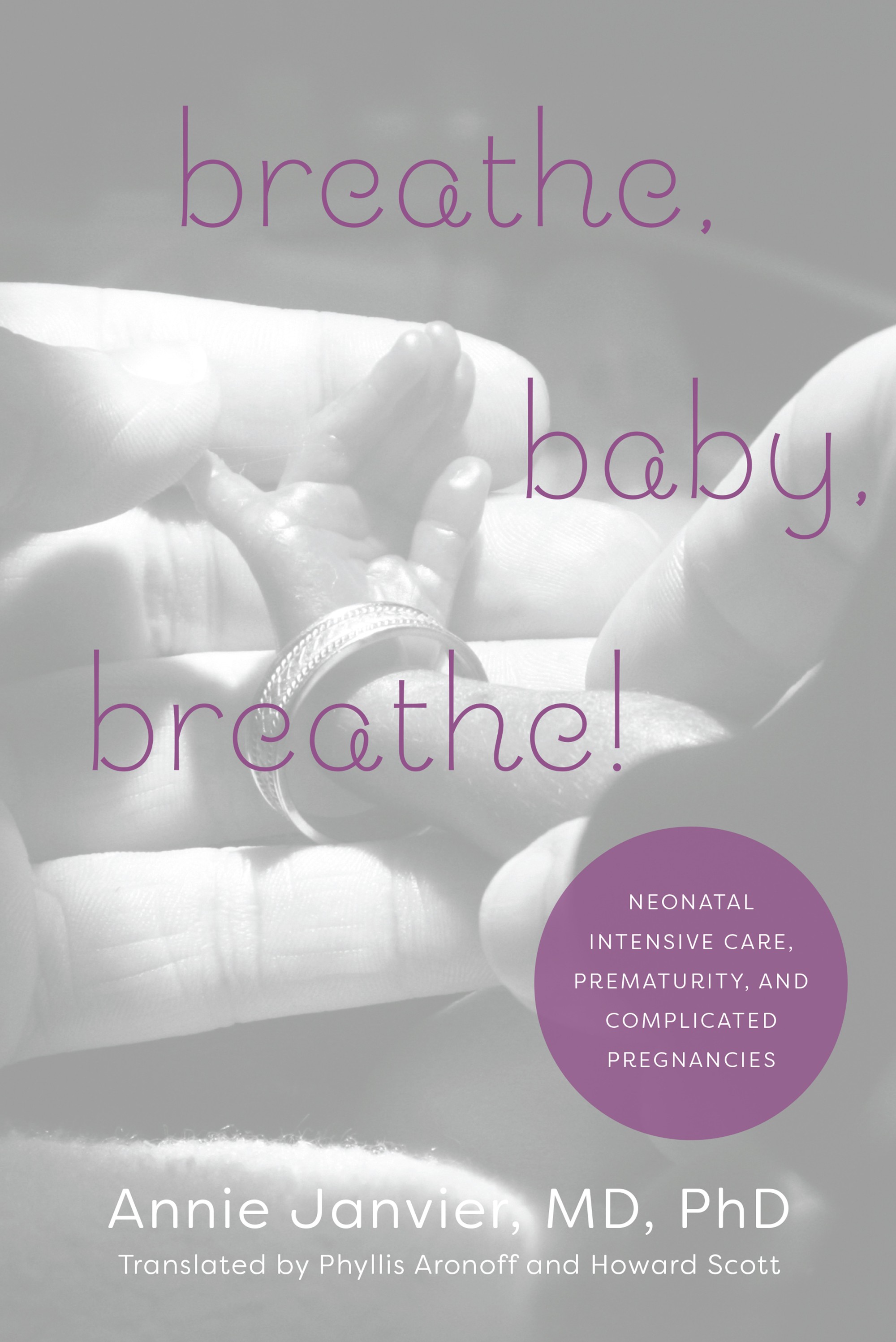
Annie’s book is now available in English.

It is a distillation of the notes she made while our daughter was in the NICU, as well as additions written later, chapters written by caregivers, reprints of some of Annie’s narrative articles, and even a poem.

It is published by the University of Toronto Press. If you click here you will be taken to a page where you can order a printed book or an ebook. The front cover may look familiar, which means I am now a published photographer!

It is also available on Amazon, at least in Canada and in the USA and in the UK, there is also a Kindle edition on those websites. In other countries, I don’t know the availability.

The reviews on the U of T press website are copied below:

Breathe, Baby, Breathe! is incredibly honest, and there are times when you are brought to tears. Dr. Janvier not only discusses what it is like to be the mother of a premature baby, but its impact on her own sense of self-worth and the challenges to her family.”

Lainie Ross, Professor of Clinical Medical Ethics and Pediatrician, University of Chicago

Breathe, Baby, Breathe! is a book about resignation, resilience, and transformation.”

Nicolas Krawiecki, MD, Professor Emeritus of Pediatrics, Emory University

“Annie Janvier has written the best book by far about prematurity for parents and health care providers. As a neonatologist, bioethicist, and mother of an extremely preterm infant, her voice is unique, and we should all listen to her wise and eloquent words. Her intensely honest account of giving birth to Violette at 24 weeks’ gestation and her subsequent experiences as a mother in the NICU is quite remarkable. This amazing book is written from Annie’s heart but also from her brain and her gut.”

Edward Bell, MD, Vice Chair for Faculty Development, Department of Pediatrics, Professor of Pediatrics – Neonatology, University of Iowa Health Care

Posted in Neonatal Research | Leave a comment

Erythropoietin for brain protection in the very preterm? Not worth Penuts.

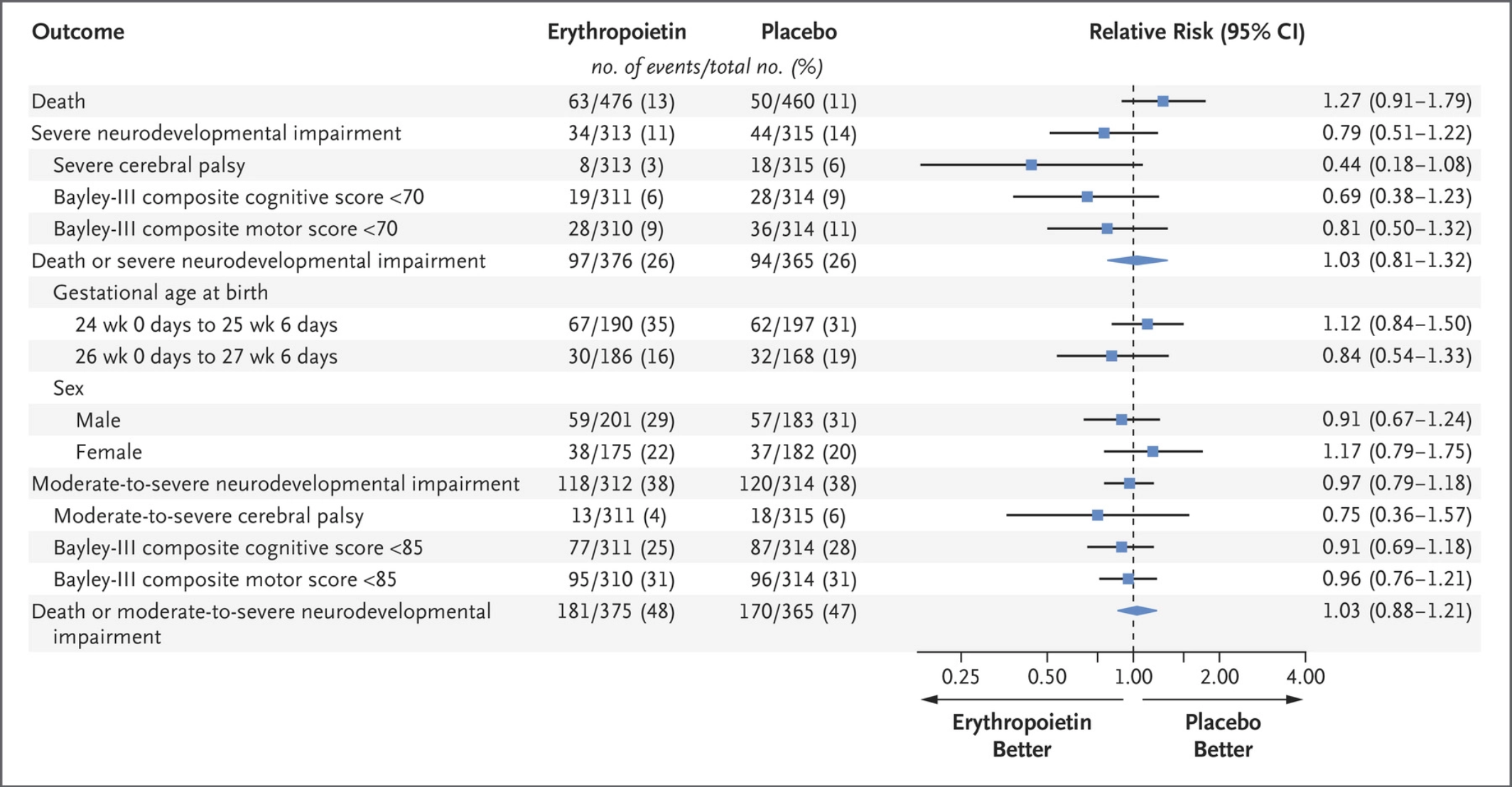
That isn’t a mis-spelling, just a bad attempt to play with the acronym for a good trial; the PENUT trial, just published in the (FP)NEJM. (Juul SE, et al. A Randomized Trial of Erythropoietin for Neuroprotection in Preterm Infants. N Engl J Med. 2020;382(3):233-43). This was a multicenter trial in infants of at least 24 weeks gestation and less than 28, who either received erythropoietin or placebo and were followed to 2 years of age, with a primary outcome of death or major neurological impairment or developmental delay (NIDD). Hence Preterm Erythopoietin NeUroprotection Trial.

The simplest way to state the results is that they showed no effect; mortality was 13% with erythropoietin and 11% with placebo, and NIDD, among survivors who were evaluated, was 11% with Epo and 14% with placebo.

In more detail the intervention was 1000 U/kg iv every 48 h six times; then subcutaneous at 400 U/kg three times a week until 32 weeks 6 days, started within the first 24 hours of life. Controls received placebo injections, iv and then sham injections during the s/c phase, administered behind a blind by a research nurse. between 22 and 26 months of corrected age the babies had a neuro exam, Bayley-3 and MCHAT (autism screening tool).

Here it gets a bit confusing, there were 941 infants enrolled, randomized 1:1. The primary outcome is only available for 741, in what is called in the abstract a “per-protocol” efficacy analysis. Usually, that term is used when you do a secondary analysis, after the initial Intention-To-Treat analysis, and can be quite different from the ITT if there are a lot of protocol violations (which may be for good reasons). If substantial numbers of controls received erythropoietin, or active treatment babies didn’t get the assigned intervention, then an exploratory per-protocol analysis might demonstrate that the lack of difference between groups (as a hypothetical example) was potentially because of protocol violations, and that maybe the physiological impact would be positive if there had been fewer violations. I don’t think that is what they mean here, I think that they performed an ITT analysis (by which I mean that all babies were analysed according to their assigned group), but one which only includes those who had the neurodev evaluation at the right time.

As you can see in the CONSORT flowchart shown below:

21% of the surviving infants were “excluded”, that is the sum of losses to follow-up, a little over 10% in each group, and incomplete exams (3%), and those outside the 22 to 26 month window (about 6%).

The follow-up rate is certainly less than one would like, especially as non-followed babies are not necessarily the same as babies who are followed. (In some cohorts they tend to have worse outcomes, in others they tend to have better outcomes, it seems to depend on the structure of the health care system).

As you can see from this summary slide of the primary and secondary outcomes any differences between groups were fairly small, and it is possible that a higher follow up rate might have shown a difference in severe cerebral palsy, for example, but it is highly unlikely that the primary outcome (death or severe NIDD) would have been different.

As you can see from this slide the primary outcomes were for severe NIDD, including CP with a GMFCS more than 2, or low results on Bayley-3 cognitive or motor scores below 70. They are described in the text of the paper as being more than 2SD below the mean, but we well know that 70 is not 2 SD below the mean but more like 2.7 SD below the mean of a contemporary group of healthy full-term children.

It is interesting that the rate of Bayley-3 < 70 is lower than most reports for infants of this gestational age, 7.5% low cognitive scores if we put the groups together. The authors explain this by the exclusion criteria having left out the highest risk infants, but I am not sure: as you can see from the flow-chart, only 80 were excluded for “not expected to survive” which is certainly a higher risk group for death or severe NIDD, but the small numbers of other exclusions don’t explain the unusually good Bayley-3 scores. Maybe there is a socio-economic bias among the centres enrolling for this trial, or some other reason, or maybe the 20% not followed would have had worse Bayley scores, or maybe the centres just have good 2 year Bayley outcomes in general, which would be interesting.

In any case, the results are disappointing with regard to Epo, many people were hopeful that Epo therapy would be a partial help in overcoming the disadvantages of being born extremely preterm, the prior smaller studies and systematic review suggested a likely benefit. If you wonder about the dose used in PENUT, then other data provided show that there was at least an erythropoietic effect, active treatment babies were less likely to be transfused and received a lower total volume of transfusion.

The previous systematic review was heavily dependent on the results of Song et al (Song J, et al. Recombinant human erythropoietin improves neurological outcomes in very preterm infants. Ann Neurol. 2016;80(1):24-34). A study from Zhengzhou in China which I missed at the time, probably because it was published in Annals of Neurology, which included 668 babies under 32 weeks, most of whom were over 30 weeks gestation, and most of whom were boys (70%). They had very high rates of PVL (20% among placebo babies), RoP (26%), NEC (14%), Severe IVH (16%), and Sepsis (26%) despite the maturity of the subjects, and the dose was different from PENUT; 500 units/kg every 48 hours x 7 doses. The trial was registered in 2014 after it was performed.

I mention all those details as I think it is clear that the results of the Song et al trial cannot be extrapolated to other jurisdictions with very much lower rates of complications in infants of 30 to 32 weeks gestation. There are also reports of different rates of positive results in trials published coming from different countries, (Vickers A, et al. Do certain countries produce only positive results? A systematic review of controlled trials. Control Clin Trials. 1998;19(2):159-66). That review showed that 100% of published acupuncture trials from China were positive, and 99% of all published trials, of other interventions than acupuncture, from China had positive results. Publication bias may be part of the reason behind this, which is one of the reasons for demanding that all randomized trials be registered before they are started. If they are registered at the same time as analyzing the results or submitting the article there is little point to the exercise, as we will never have any idea which trials were performed, were negative or null, and were never submitted for publication or published.

That review of publication source and potential bias among results is now over 20 years old, has the situation changed? I think those performing systematic reviews need to know. If over 90% of RCTs from a particular source are positive, then within the review a sensitivity analysis excluding studies from that source would be an important part of ensuring the reliability of the results.

Posted in Neonatal Research | Tagged , , , , | 2 Comments

Gene therapy for SMA; who will win the lottery?

There are few things more disgusting than the obscene actions of drug companies that profit off the distress of dying babies and their families.

You might think that the price of a drug would be based on development and production costs and a reasonable profit margin.

You would be wrong.

Drug costs are based on how much the drug company think they can gouge out of our medical systems.

The dramatic, almost miraculous, impacts of gene therapy for Spinal Muscular Atrophy (SMA) made me hopeful that we could perhaps have a long term cure for this most atrocious of diseases. The reality is that the company that is profiting from the years of publicly funded research into SMA is only interested in their profits, and have no interest in the pain of families with a new diagnosis.

For those who are not specialists, SMA is a disease of the nerves which control movements, there are several types with the most severe forms appearing within the first few weeks of life and progressing to respiratory failure and death within a few months, milder forms can allow longer survival, and some more mildly affected people can live much longer lives. It is a recessive condition, so affected babies receive one abnormal gene from each parent, genes which control the production of a protein called SMN. SMN has multiple functions including in spinal motor neurones. If we could correct the genes at an early stage before there are secondary effects, then we could perhaps improve production of SMN, and correct the disease.

Let’s be clear, it is publicly funded research that determined which genes were implicated in this disease, in how the gene controllers were important, what were the precise abnomalities in gene transcription that lead to the reduction in SMN production, what are the relative importance of the SMN1 and the SMN2 genes etc.: the vector used for this disease was developed using public money, and the first trials of gene therapy with the vector in animal models were funded by the NIH as well a studies in transgenic mice which showed correction of the genetic defect and improvement in motor function followed vector injection. The actual product tested and administered to babies in the study that I talk about below was made in the Nationwide Children’s Hospital in Columbus OH, not in the labs of the company sponsoring the study. Interestingly, at least one of the authors on those animal studies was listed as being at the research institute of Nationwide, but the same author is now listed as being an employee of Avexis.

By engineering adenoviruses to carry a normal gene, it was shown in animal models that the motor neurone cells involved in the disease could be manipulated to produce more of the SMN, which might improve function, and finally initial trials in a small number of human babies seemed to be succesful.

Babies with a recent diagnosis were treated with a single intravenous infusion of the vector associated with an engineered human SMN gene and a gene promoter region. A recent publication following up the participants (Lowes LP, et al. Impact of Age and Motor Function in a Phase 1/2A Study of Infants With SMA Type 1 Receiving Single-Dose Gene Replacement Therapy. Pediatr Neurol. 2019;98:39-45) appears to show that those who were treated earlier had better motor outcomes, and those treated with less severe motor abnormalities at the time of treatment had nearly normal scores as they were followed up. The baby treated latest is the one who didn’t really improve on this figure showing the motor function of the participants, with higher CHOP-INTEND scores being better and 64 being the maximum possible score.

https://ars.els-cdn.com/content/image/1-s2.0-S0887899419302802-gr1.jpg

Of note the initial and the follow up studies were sponsored by the manufacturer, and many authors are employees of the manufacturer. In the follow-up paper they only report the outcomes of the 12 babies who received the higher dose, the 3 initial babies who received the low dose seem to have disappeared from the publications, including another publication about the general health outcomes of those 12 babies. (Al-Zaidy S, et al. Health outcomes in spinal muscular atrophy type 1 following AVXS-101 gene replacement therapy. Pediatr Pulmonol. 2019;54(2):179-85). That publication shows that the 12 higher dose babies were in dramatically better health than ever seen in babies with Werdnig Hoffman disease (as we used to call it), and some seemed to continue to improve, by about 2 to 3 years of age. They weren’t completely asymptomatic, many had episodes of needing BiPAP during hospitalisation for respiratory infections, for example.

It is possible that, in the more long term, the therapy will have a limited duration of action, maybe the genes inserted by the vector will be selected out over time, or who knows what else might happen. The longest follow up of the babies is still relatively short. Despite this the therapy has received regulatory approval and is now for sale in the USA.

Of course the producers of the therapy are pricing it to recoup their development and production costs but also to try and make it available for as many babies as possible… NOT!

Avexis the producer (which is part of the Novartis group) has the following nauseating statement on their web page :

Since 2013, AveXis has had one focus: bringing change to those devastated by genetic diseases.

The AveXis culture embraces this mission. As a compassionate and dedicated team, we are enthusiastic about the science behind our work, breaking barriers, and finding answers to difficult questions. We are dedicated to communities affected by rare diseases, and these patients and families are the motivation for everything we do

At least, it is nauseating when you compare those high-flown sentiments to the reality of their actions. The price set for what they are calling Zolgensma is 2.125 million dollars US, for what is intended to be a single, one-time-only dose.

And, in a twist that sounds like it comes from a dystopian Sci-fi novel, the company is holding a lottery to give away 100 doses of the drug to those who win the lottery who cannot otherwise access it, apparently only in countries where the drug is not licensed, which might actually be illegal in many places, and with no follow up of the lottery winners. Canadian parents are already trying to get in on the lottery, as Zolgensma is not currently licensed here.

What genius in the marketing department thought that a life or death lottery was a good idea? Had they just read ‘Hunger Games’, and thought, “wow that sounds like such a great way to do things, how can we use those brilliant ideas with our new treatment”?

Interstingly also, a web page which reports news from the pharmaceutical industry notes that the drug has saved many lives and the industry is ecstatic about their contribution to the health of humanity….. er, no. It notes that the drug made the company 160 million dollars in the first full quarter of availability; there is no mention of the human impact of the therapy, just that it is a good little money maker.

If there is enough profit margin in this drug to give away 100 doses (which clearly doesn’t mean giving away 213 million dollars, but probably willl mean a 213 million dollar tax write-off for the company) then why not reduce the price?

The incidence of severe neonatal SMA, so-called “SMA type 1” is about 1:10,000. With about 90,000 births in Quebec every year we should need to treat 9 babies a year, that would be about 25 million Canadian Dollars a year, for a population of 8 million. For the whole of Canada we are talking about 125 million dollars, and for the whole of the USA that would be about 1.2 billion dollars a year going into the pockets of Novartis.

There is no way our health care systems can bear this sort of profit-taking from industry. In addition to the already incredibly high costs of immune based therapies for malignancies, and other enormously expensive treatments, what will happen when gene therapy for cystic fibrosis becomes available. which is 10 times more frequent?

How can an intervention like this, developed entirely with public funds, be hijacked at the last minute by one of the world’s richest companies?

The only private funding in the development process, it seems, was for the uncontrolled study in 15 babies, which would be very surprising if it had cost more than a few hundred thousand dollars. They will have needed to invest to ramp up a production facility and have good quality control, and so on, but $2,125,000 a dose?

We need to rethink all this. The capitalist model of unrestricted profit-taking with pharmaceutical companies making whatever money they think they can get away with on the backs of dying babies (or adults, or the chronically ill), really needs to be changed.

I don’t know how the scientists involved in the development of this therapy, now working for Avexis, can sleep at night; I guess they now probably own their own yachts so the gentle rocking from the waves helps them to forget that they once had a conscience.

Posted in Neonatal Research | Tagged , , | 2 Comments

Oropharyngeal airways for resuscitation of the preterm? Throw them away!

When I saw the title of this new study I thought immediately this has to either be by Peter Davis or one or more of his disciples… former trainees, I mean. In fact it is both:

Kamlin COF, et al. A randomized trial of oropharyngeal airways to assist stabilization of preterm infants in the delivery room. Resuscitation. 2019;144:106-14.

A two center trial from Melbourne and from Edmonton randomized 137 babies of under 34 weeks gestation who needed face mask ventilation in the delivery room. The idea was to determine if routine use of an oropharyngeal airway (OPA) would improve ventilation and therefore improve the efficacy of resuscitation, the primary outcome variable was therefore the presence of obstructed breaths, as seen on a respiratory function monitor during assisted ventilation via face mask in the delivery room.

The main finding is that airway obstruction was much more frequent with the use of the OPA, partial obstruction of at least one attempted inflation occurred 70% of the time with the OPA and 54% without. Complete obstruction was a little bit more frequent without the OPA, but overall proportion of babies havaing any kind of airway obstruction episodes was 80% with the OPA and 64% without.

This points out how frequent airway obstruction is during resuscitation of the preterm infant, even teams with an acute interest in the mechanics of resuscitation find a very high frequency of airway obstruction. The respiratory function monitor looks more and more like a good option for these babies, it is sometimes difficult to know how well you are ventilating a baby, with our current approach trying to avoid overlarge tidal volumes and too much chest movement.

A supplementary finding is that it is often difficult to insert the airway

An attempt was made to insert the OPA in all 67 infants randomized to the intervention, with difficulty experienced in 15 (22%); these were exclusively related to airway opening and inserting the OPA above and behind the tongue. The OPA had to be either down or upsized in these 15 infants. No trauma (bleeding from oropharynx) was seen. Gagging was observed in 6 (9%). During PPV, the OPA was dislodged (pushed out by the movements of the tongue) in 23 (34%) infants. Operators were either unable to insert the airway and maintain the airway in position to provide PPV or felt more comfortable to remove
the airway in order to continue PPV in 19 (28%) infants.

I don’t really think you should throw away the OPA, but they should clearly be kept in reserve for rare cases. Remember the “A” in “Mr SOPA” does not mean an OPA, it means either intubation or LMA.


(I made an error in the title of the previous version of this post, which was oropharyngeal masks for resuscitation… oops!)

Posted in Neonatal Research | Tagged , | 1 Comment