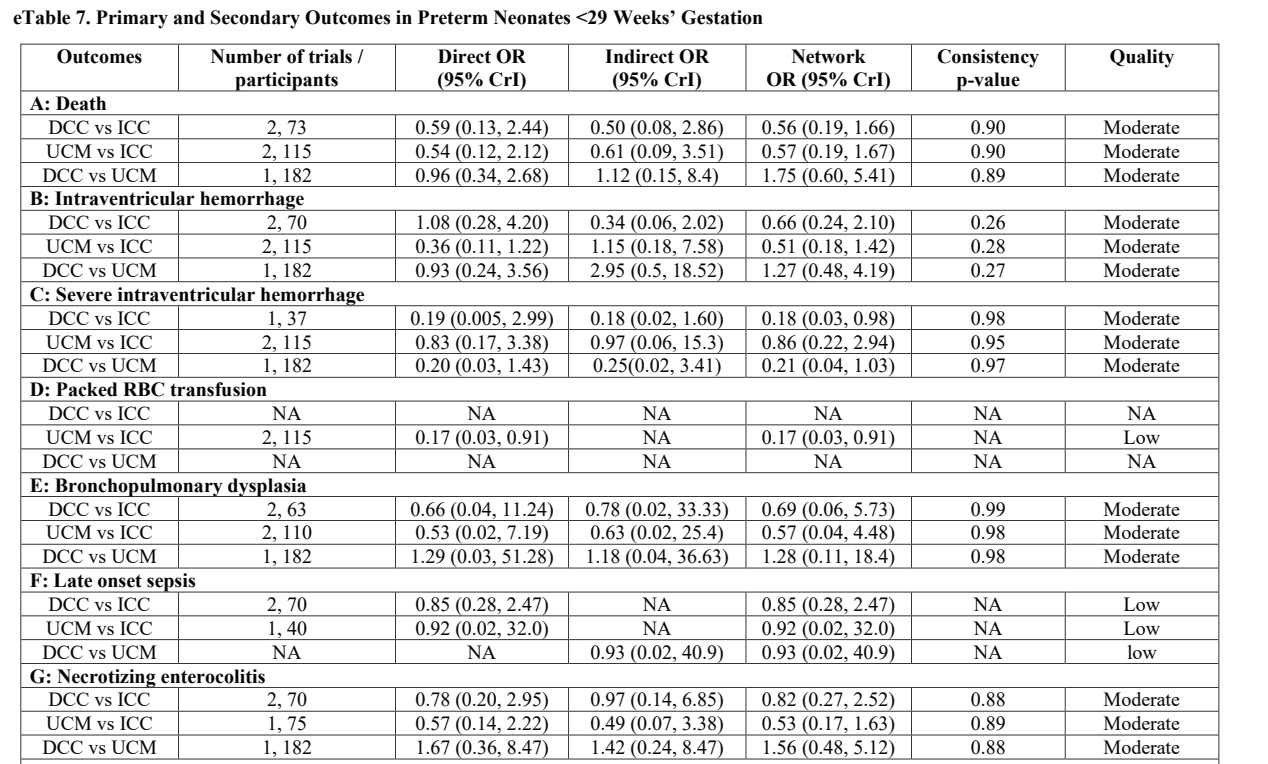
Preventing NEC : Gastric acid has a purpose, don’t block it.

As this series of posts have all had something to do with prevention of Necrotising Enterocolitis, I thought I’d write about some recent articles which refer to one of the risk factors for NEC, the use of acid suppression medications.

I’ve written previously about the risks of proton pump inhibitors (ppi) in young infants. They are a group of medications (along with Histamine receptor blockers) that I almost never prescribe. The commonest reason given for prescribing them seems to be gastro-oesphageal reflux, but of course they have no effect on reflux, just on the pH of the refluxed liquid, which is not necessarily a beneficial effect. If a baby had acidic reflux oesophagitis then maybe blocking acid production would be beneficial, but most reflux in newborn infants is non-acid, either neutral or alkaline. In fact, at least one animal study shows that ppis cause relaxation of the lower oesophageal sphincter, which might increase the risk of reflux!

A number of recent epidemiologic publications point out the complications associated with altering the gastro-intestinal physiology of a large number of babies. And the numbers are indeed large, prevalence of use in the NICU is not clear, but in France and in Scandinavia a substantial, and increasing, proportion of all young infants are exposed to ppi medications, somewhere between 2 and 5% of all infants!

We also should remember that we are really poor at diagnosing reflux. The only reliable way to know if a baby has an abnormal frequency of reflux is by impedance oesophageal recordings (multiple intraluminal impedance, mii), and a new publication has, yet again, shown that there is no correlation between a baby being irritable, or having arching episodes, and the presence of reflux events. (Njeh M, et al. The Irritable Infant in the Neonatal Intensive Care Unit: Risk Factors and Biomarkers of Gastroesophageal Reflux Disease. J Pediatr. 2023:113760). In this retrospective study they report over 500 babies who had pH-mii studies, and over 40,000 GER events with nearly 40,000 arching or irritability events. Their conclusion is quite clear ;

Acid GER disease is unlikely the primary cause of arching/irritability and empiric treatment should not be used when arching/irritability is present. Prematurity and neurological impairment may be more likely the cause of the arching/irritability. Arching/irritability may not be a concern in orally feeding infants.

So what are the complications of ppi use? The most immediately important in the NICU population is an increased risk of sepsis. This is true in older infants in the community (Lassalle M, et al. Proton Pump Inhibitor Use and Risk of Serious Infections in Young Children. JAMA Pediatr. 2023), in a nation-wide cohort study from France. It is even more striking among children in the PICU (Goyer I, et al. Proton Pump Inhibitor Use and Associated Infectious Complications in the PICU: Propensity Score Matching Analysis. Pediatr Crit Care Med. 2022;23(12):e590-e4), in this propensity score matched analysis, among children in the PICU, in Caen in Normandy,, who mostly received the ppi for stress ulcer prophylaxis, the risk of nosocomial infections was NINE times higher if they had received a ppi.

The other complication which has been confirmed in a recent study is an increase in the risk of fractures, this study is a propensity matched national epidemiologic study from the USA (Achler T, et al. Association of early-life exposure to acid-suppressive therapy and fractures during childhood: a retrospective cohort study. Arch Dis Child. 2023). This is probably due to effects of acid suppression on calcium absorption, which have been shown to increase osteoporosis risk in the adult.

Other studies from the last few years show an association of ppi use with the development of asthma, and with subsequent development of Coeliac disease, and the development of a variety of allergic diseases.

To return to the title of the post, does acid suppression increase the risk of NEC? PPI medications cause major changes to the intestinal microbiome (Levy EI, et al. The effects of proton pump inhibitors on the microbiome in young children. Acta Paediatr. 2020), and have been associated with LOS and NEC (See the following studies Manzoni P, et al. Exposure to Gastric Acid Inhibitors Increases the Risk of Infection, Patil UP, et al. Efficacy of and potential morbidities associated with the use of antacid medications, and this review article (Tan J, et al. A Review of Histamine-2 Receptor Antagonist and Proton Pump Inhibitor Therapy for Gastroesophageal Reflux Disease in Neonates and Infants. Paediatr Drugs. 2023;25(5):557-76). As there are almost no RCTs of these agents in the preterm infant, there is no reliable evidence of the size of the risk, but as that review article points out there is no evidence of any benefit either. The epidemiologic studies suggest that there is no benefit, including among babies with a clinical diagnosis of reflux.

One situation in which a ppi is frequently prescribed is after Gastro-oesophageal fistula repair. Oesphageal dysmotility is universal after such surgery, and there is a risk of developing anastomotic strictures. A ppi or another antacid medication are often prescribed after surgery, just in case the infant has acid reflux, and in case the reflux might increase the risk of stricture. A recent publication from my centre (Righini Grunder F, et al. Should Proton Pump Inhibitors be Systematically Prescribed in Patients With Esophageal Atresia After Surgical Repair? J Pediatr Gastroenterol Nutr. 2019;69(1):45-51) shows that routine prescription of a ppi does not prevent formation of strictures, and that many babies were probably receiving them for other symptoms, such as those due to tracheomalacia, for which they are probably ineffective.

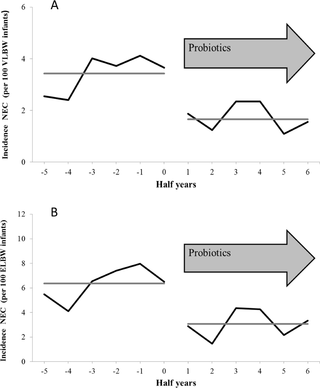
A final concern, ppi use induces hyperplasia of the parietal, acid-producing cells, by a secondary increase in gastrin production. Which means that there is often HYPERacidity when then are eventually stopped. Hence the title of the article from which this image is taken “Evidence That Proton-Pump Inhibitor Therapy Induces the Symptoms it Is Used to Treat“. They note in that article that Histamine-2 receptor blockade does the same thing.

My take home message? Don’t.

Don’t prescribe acid suppression therapy for suspected reflux.

Don’t prescribe acid suppression therapy for proven reflux, unless you can show acid oesophagitis

Don’t prescribe acid suppression therapy for prophylaxis against upper GI bleeding.

Don’t prescribe acid suppression therapy for preterm infants at any risk of NEC.


Posted in Neonatal Research | Tagged , , , | 2 Comments

The myth of the “exclusive human milk diet”; fortification options for breast milk.

The Exclusive Human Milk Diet sounds superficially immediately convincing: “We should only give milk products derived from human milk to human babies”.

But, is it more than just a catchy phrase? The major company which is responsible for producing a human milk based breast milk fortifier is heavily into promoting its use. They are certainly responsible for substantial profits for their shareholders. Unfortunately, many of the publications about the EHMD have been marked by important conflicts of interest, and, most importantly, they have not performed the most important relevant comparison. Which is, if you only use human milk (mother’s or donor) for every feed of the very preterm baby, is there an difference in clinically important outcomes between a multi-component fortifier derived from donor human milk, and one derived from bovine milk?

What does the evidence currently show?

Mother’s own milk, unpasteurized, is almost certainly associated with the lowest rate of NEC compared to other sources of milk. If there is insufficient mother’s milk, then pasteurized donor milk is the next best choice, leading to lower rates of NEC than artificial formula. I think this is now well-enough established, despite the limitations in the data, that I won’t even put the references in.

When it comes to breast milk fortification, is there any evidence to support the use of human milk derived fortifier compared to bovine milk derived fortifier, among infants who only receive human milk feeds?

There are only 2 relevant trials, one I have discussed previously, more than once, from Toronto, O’Connor et al, which randomized infants, who were all receiving only human milk feeds, to a bovine fortifier or a human milk derived fortifier, and found no effect on NEC or other clinically important outcomes.

The other is a Swedish trial which is now available as a preprint. Jensen GB Effect Of Human Milk-Based Fortification in Extremely Preterm Infants Fed Exclusively with Breast Milk: A Randomised Controlled Trial. Available at https://papers.ssrn.com/sol3/papers.cfm?abstract_id=4529245. This is the not yet peer-reviewed report of the results of a trial for which the protocol has previously been published. (Jensen GB, et al. Nordic study on human milk fortification in extremely preterm infants: a randomised controlled trial-the N-forte trial. BMJ Open. 2021;11(11):e053400).

In this new trial 229 infants <28 weeks GA were randomized before they reached 100 mL/kg/d of oral milk feeding. They all received mother’s milk or donor human milk, and the milk fortification was individualized, with standard fortification plus extra protein or fat as required, all of them being from human milk in the intervention group, or cow’s milk in the controls. The cow’s milk fortifier used was not standard between the 7 NICUs involved, but they continued to use whatever they were previously using. The study babies were not allowed to receive formula in either group prior to 34 weeks PMA.

The primary outcome was a composite of death, NEC, and late-onset sepsis, prior to discharge. All x-rays were independently analysed, and outcomes were assigned by investigators masked to group participation.

There was no difference in the primary outcome, nor in any component of that composite, in particular there was no difference in Necrotising Enterocolitis.

You can see the results below:

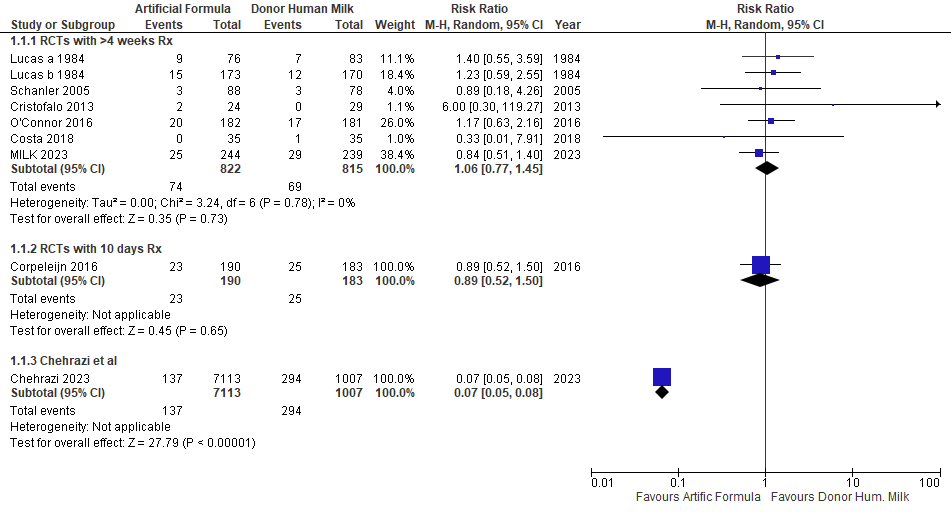
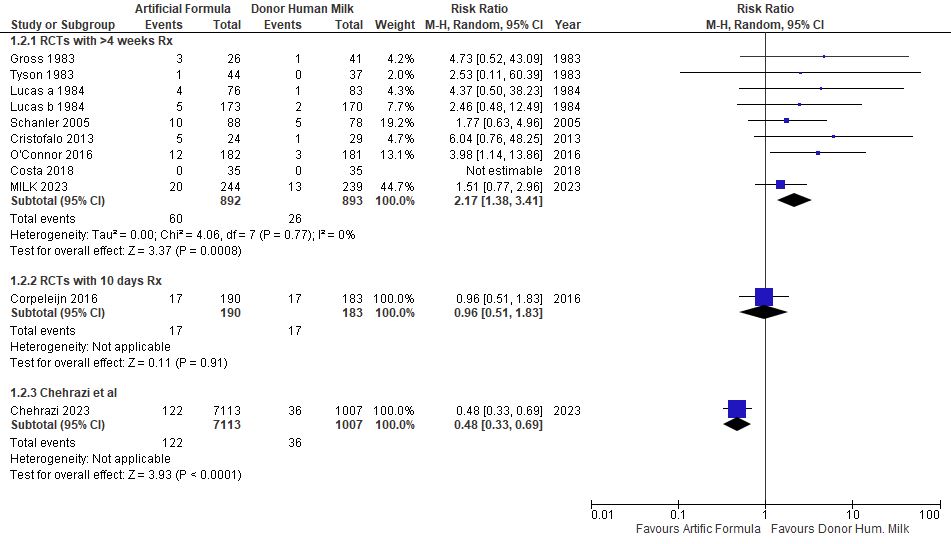
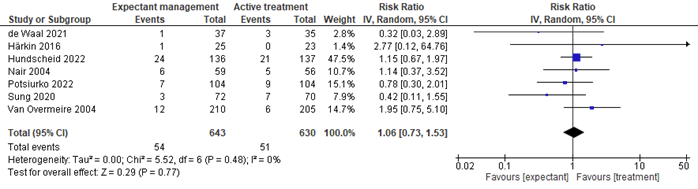
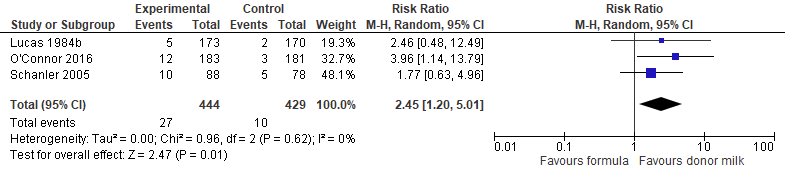
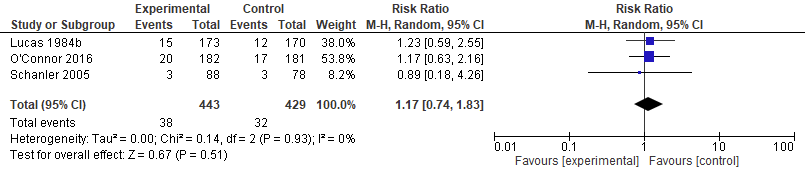
If I do a quick and dirty meta-analysis of the 2 trials, assuming there are no other studies that I am unaware of (yes, it does happen!), we can see the following outcomes, using a random effects model, and the RevMan version 5 software:

Necrotising Enterocolitis, Bell stage 2 or 3

Mortality

Late-onset Sepsis

There is no clear difference in any outcome between the different sources of breast milk fortifier.

A recent article claimed to show that human milk derived fortifier was cost-effective. The costs of the human milk derived fortifier, among the 7 hospitals involved, were between about 250,000 and 1.6 million annually, and they claim that there was an overall cost saving associated with the EHMD (of supposedly up to 3.4 million dollars a year, a number which is being touted by the major producer in their publicity). However, that publication was based on no presented data, just what participants in a round-table discussion said to each other; I really don’t understand how it got published.

In fact if you do an internet search you may well see the headline “Prolacta fortifiers save hospitals up to 34M annually”! Clicking on the link will make it clear that is up to 3.4 million (not 34), but nowhere is it clear that the cost savings are only if you compare using Prolacta products to using formula as supplement to mother’s milk.

I think it is, indeed, likely that an EHMD diet might save money if you compare it to using artificial formula, but that is not a choice which any of us would now make. As Human milk derived fortifier is very expensive, at somewhere over $10,000 US per baby, and there is no clear advantage at all over bovine milk derived fortifier, then it can’t possibly be cost effective in comparison to using a cow’s milk based fortifier.

There are several review articles, often, again, marked by conflicts of interest, which are sometimes not clearly declared, which suggest that it is important to avoid bovine milk proteins, to reduce NEC. That assertion cannot be supported by the literature. There are many differences between human milk as currently used (either fresh mother’s milk, or pasteurized donor milk) and artificial formula; the extensive processing of bovine milk to create sterile formula, and the lack of Human Milk Oligosaccharides in the product, the lack of human immunoglobulins, and many other differences may be much more important than the source of the protein. Preterm babies are immunologically incompetent; there is no primary reason to suppose that artificial formulas increase NEC because of the source of the protein, it may well be because of some of the many other differences between formula and human milk.

Another issue is that breast milk has become a saleable commodity in some places, the New York Times has an interesting article discussing some of the implications of this, one of which is that poorer mothers could possibly end up selling their milk instead of giving it to their own babies. In most places outside of the USA breast milk donation is an altruistic act of lactating mothers, to whom we should all be immensely grateful.

To be strictly evidence-based, as I always strive to be, the current evidence (as you can see in the Forest plots above) continues to have wide confidence limits, and is therefore consistent with either a substantial increase or decrease in NEC with human fortifier compared to bovine. If the producers of human milk based breast milk fortifier want to continue to promote it as a way of reducing NEC, compared to a human milk diet fortified with bovine fortifier, then they should be forced to perform an adequately powered trial.

Even a 25% reduction in NEC would be of major clinical benefit, and a reduction from 8% to 6% might be cost effective too. It would also be within the confidence limits of the currently available data. Such a reduction could be sought with a RCT with a sample size of about 2,500 per group. If that was prohibitive, and I don’t think it should be given the enormous profits possible if they could prove efficacy for reducing NEC, then focusing on a higher risk group, such as the <26 week infant, and hypothesizing a larger decrease such as reduction of 40%, could give a more manageable sample size. A reduction from 10% to 6% would need a sample size of about 700 per group, with a power of 80% and an alpha of <0.05.

As the evidence currently stands, I consider the myth of the Exclusive Human Milk Diet : BUSTED.

Posted in Neonatal Research | Tagged , , , , , | 11 Comments

Necrotising Enterocolitis: impacts of feeding patterns

A new review article published in J Perinatol makes many claims about feeding patterns and NEC, but I think has seriously misinterpreted the literature (Assad M, et al. Dilemmas in establishing preterm enteral feeding: where do we start and how fast do we go? J Perinatol. 2023;43(9):1194-9). It is a little strange, that only 9 months ago a very similar publication, with a very similar title, appeared in the same journal, (Patel AL, Taylor SN. Dilemmas in initiation of very preterm infant enteral feeds-when, what, how? J Perinatol. 2023;43(1):108-13) and came to many different conclusions.

Trophic feeding

In the new article, the authors suggest that trophic feeding is advantageous, but that, of course, depends on what you compare it to. Trophic feedings are clearly preferable to a period of fasting, in terms of the physiologic responses, and do not increase (or decrease) NEC compared to a period of fasting. There is a Cochrane review, which dates from 2013, and showed no substantial benefit or risk of early trophic feeding, compared to a period of fasting: one further study, published since then, (Tewari et al 2018) also showed no adverse effect. In terms of limitations, few babies of high risk were included in those trials, and they tended to have very slow rates of feeding advancement once feeds were increased. Assad et al list the probable benefits of trophic feeding, but do not clarify that that is in comparison with a period of fasting.

Feeding patterns after a trophic period

Once you start to feed after a period of trophic feeding, the new review contrasts the study by Berseth 2003 to the trial of Salas 2018, suggesting that the results are not consistent. It is not surprising that the results were not consistent, however, as the trials were vastly different. The comparison made by Berseth was a period of trophic feeds, compared to immediate feeding advancement, among infants who had been starved for an average of 9 days after birth, and sometimes as long as 31 days! Indeed, the only study of different feeding patterns, or rates of advancement, that has ever shown an impact on NEC is that study by Berseth. Which means that if you are going to starve your babies for a week, then a period of trophic feeds is probably a good idea before increasing them. But most of us don’t do that anymore (or never did!).

The Salas study, in contrast, shows that among babies who were npo for 1 to 3 days after birth, immediate advancement, compared to 4 days of trophic feeding, did not lead to more clinical problems. There isn’t much other data comparing a period of trophic feeding to immediate progressive feeding increases.

Early feeding advancement

There are several trials that have investigated the impacts of starting feeds early, to starting them later, without a period of trophic feeds, in other words with an immediate start of feeding advancement. One of the best was limited to only very high risk babies, with SGA and abnormal antenatal dopplers. This was the ADEPT trial (Leaf 2012 in the figure below), which showed that the babies in either group had a lot of difficulty with feeding tolerance, but that there was no difference in outcomes of NEC, or survival, by group assignment (starting enteral feedings and immediate advancement at 2 days compared to at 6 days.) The Cochrane review showed no impact of delayed progressive feeds, compared to early progressive feeds, the Forest plot below is for the outcome stage 2 NEC, and shows that earlier feeding does NOT increase NEC.

Speed of feeding advancement

Once you start feeds, then the rate of increase has NO impact on NEC from any of the randomized trials. That is the other very misleading statement in this new review, the figure and the text suggest that slower feeding advancement leads to “possibly less risk for NEC” and “less risk for feeding intolerance”. Neither statement is supported by the literature.

The Cochrane review shows no hint of an increase in NEC with more rapid feeding advancement, the actual proportions with NEC are very slightly lower among those with more rapid feed increases. Similarly, there is no evidence that slower feeding advancement improves feeding tolerance. Feeding intolerance is, of course, a very difficult thing to quantify, but this is certainly consistent with my observations, some babies have regurgitations during the first few days of feeding, no matter how quickly you aim to advance the feeds. The comparisons in the various RCTs have usually compared a slower rate of feeding advancement to 30 mL/kg/day, occasionally as fast as 35 to 40 mL/kg/day.

This new review article sees to be based on personal preferences and inbuilt prejudice, with no evidence-base for many of the statements made. The following feeding plan is based on the conclusions of my review of the literature, and is very similar to the conclusions of an excellent published review from 4 years ago, (Kwok TC, Dorling J, Gale C. Early enteral feeding in preterm infants. Semin Perinatol. 2019;43(7):151159):

A feeding plan consistent with the best evidence

Some of the evidence is admittedly limited for some comparisons, especially in the very highest risk populations. Babies in shock or on inotrope/vasopressors could be an exception to the following plan, and they could be either kept fasting, or on low volume trophic feeds, but there really is no evidence to decide how to feed such babies, who may have reduced intestinal blood flow, and a limited capacity to increase flow after feeding.

There is no evidence that prolonged fasting, several days of trophic feeds, or slower advancement of feeds have any benefit in terms of NEC or feeding intolerance. Arriving at full feeds more slowly, however, does increase the duration of TPN, and all the associated complications, including late-onset sepsis (although, to be as stringently evidence-based as possible, the evidence for a reduction in LOS with more rapid advancement is uncertain).

Enteral feeding should be started on the first day of life, with maternal breast milk if at all possible. Feeds should immediately be advanced, by at least 30 mL/kg/day if tolerated, to between 160 and 200 mL/kg/day.

That’s it. Simple really! Give it a try.

In the new publication, there is a cute figure which summarizes the misinformation, and which I have, unfortunately, seen shared approvingly. With apologies to the authors, who I’m sure have the best intentions, I have corrected the figure to make it evidence-based.

Posted in Neonatal Research | Tagged , , | 4 Comments

Long break, same preoccupations!

I had a long break from blogging over the summer, and, as I return to action, I note that there are some really high quality studies which have been performed or are in progress. But I continue to lament some of the primary outcomes chosen. I am not alone in being very concerned that the classical neonatal outcomes, which combine death with another outcome of either clinical importance, or sometimes of questionable clinical significance, are so ingrained in our research design practice that they are difficult to alter.

As one example, a really important study, by a researcher, and research group, for which I have enormous respect, has just published their 2 year outcomes (Dargaville PA, et al. Two-Year Outcomes After Minimally Invasive Surfactant Therapy in Preterm Infants: Follow-Up of the OPTIMIST-A Randomized Clinical Trial. JAMA. 2023). Of course, you can guess, the primary outcome of the long term follow up was “death or NDI”!

Often this outcome is chosen for 2 reasons, 1. they are competing outcomes, in the sense that if you are dead you can’t have developmental delay, and 2. it improves the power of the study.

Both of these reasons are flawed.

  1. There are many other competing outcomes, and there are many ways of analyzing them that take into account their relative importance. The Win Ratio, that I have written about a few times, is one such, but other methods exist. It is possible, therefore, to analyze the effects on survival, and other “competing” outcomes, without treating them as equivalent.
  2. Power is only increased if the outcomes vary in the same direction. And indeed, the reason for using these composite outcomes is sometimes because of concern that they might change in different directions! If they do, then power is reduced.

As an example of this, the primary outcome of the early stage of this trial (Dargaville PA, et al. Effect of Minimally Invasive Surfactant Therapy vs Sham Treatment on Death or Bronchopulmonary Dysplasia in Preterm Infants With Respiratory Distress Syndrome: The OPTIMIST-A Randomized Clinical Trial. JAMA. 2021;326(24):2478-87) was, if you remember, “Death or BPD”, and there was a small increase in death, and a larger decrease in “BPD”, which led to, overall, the results of the trial being considered “null”, that is, there was no significant difference in the primary outcome. There were 485 infants randomized, and the results showed the following:

Death or BPD occurred in 105 infants (43.6%) in the MIST group and 121 (49.6%) in the control group (risk difference [RD], -6.3% [95% CI, -14.2% to 1.6%]; relative risk [RR], 0.87 [95% CI, 0.74 to 1.03]; P = .10).

Some journals would probably not have allowed the details that followed to be in the abstract, details which show that mortality was 2% higher, but BPD was 8% lower with MIST compared to standard care.

Incidence of death before 36 weeks’ postmenstrual age did not differ significantly between groups (24 [10.0%] in MIST vs 19 [7.8%] in control; RD, 2.1% [95% CI, -3.6% to 7.8%]; RR, 1.27 [95% CI, 0.63 to 2.57]; P = .51), but incidence of BPD in survivors to 36 weeks’ postmenstrual age was lower in the MIST group (81/217 [37.3%] vs 102/225 [45.3%] in the control group; RD, -7.8% [95% CI, -14.9% to -0.7%]; RR, 0.83 [95% CI, 0.70 to 0.98]; P = .03). Serious adverse events occurred in 10.3% of infants in the MIST group and 11.1% in the control group.

This is to me a good example of why not to use such composite outcomes. I don’t know what a win ratio type analysis (or another way of prioritising a composite) would have shown, but the published analysis implies that death and needing oxygen at 36 weeks are equivalent, and that MIST had no effect.

The new publication of the 2 year outcomes reports, as the primary outcome, “death or NDI”, (they actually call it “NDD” or neurodevelopmental disability, in this trial) which triggers the same kind of reflection as previously. Because of the variety of sites involved in the trial, and the variety of follow up therefore available, the definitions of so-called NDD are different to anythong previously published, and are as shown in the table below, from the online supplement. The “PARCA-R” is a parent questionnaire, the abbreviated questionnaire was an alternative 6-question instrument, used when the PARCA-R was not available.

Did anyone think that being dead and having one of these characteristics were equivalent bad outcomes? I also wonder why use a measure of neuro-development as the primary outcome for the trial at all, I certainly didn’t think it likely that MIST, even if beneficial for respiratory outcomes, would have an impact on developmental outcomes. And I have to repeat another of my pet peeves, why refer to these outcomes, low scores on the BSID cognitive or language composite, or PARCA-R scores <70 as a “cognitive impairment”? I must insist that such low scores are not impairments. An impairment is “Any loss or abnormality of psychological, physiological, or anatomical structure or function” according to the WHO definition. Slow language development does not qualify.

Despite all these concerns, I think surveillance of developmental outcomes in a study like this is important, just to make sure that there is nothing unexpected. And, indeed there were no differences in the various domains of neurological abnormalities or developmental progress between MIST and control groups.

Important long term respiratory outcomes are vital for studies such as OPTIMIST, and they are described in this new publication.

There were another 5 deaths in each group between 36 weeks PMA (the deaths reported previously) and 2 years of age, so by 2 years of age, 12.9% of the MIST babies, and 10.5% of the controls had died.

I am not sure who developed the list of outcomes, and whether parents were involved in choosing them, but the reported respiratory outcomes probably all had a measurable negative impact on the baby and/or the family.

As you can see, these aspects of respiratory health, as reported at 2 years of age, are all better in the MIST group than the controls. To recall, the study babies were between 25 and 29 weeks gestation, were on non-invasive respiratory support with >30% oxygen in the first 6 hours of life. Babies in the control group had a sham MIST procedure and then returned to CPAP or NIPPV, and in both groups they were intubated for surfactant if they subsequently needed more than 45% oxygen (or >40% and a worried neonatologist!). There was a dramatic reduction in the proportion of babies needing intubation in the first 3 days, from 72% to 37%, with the MIST approach.

At a recent meeting I heard some comments about the value of the comparison in this study, but I don’t think we should criticise the authors for not having done a different trial! These long term results confirm that MIST/LISA at 30% oxygen is better than being intubated for surfactant at 45%, in terms of lung injury. Is MIST at 30% preferable to INSURE at 30%? Or preferable to MIST at 45%? This study cannot answer those questions.

Of note, infants in the trial were not permitted premedication, other than sucrose and/or atropine for the MIST procedure. Laryngoscopy is painful and unpleasant and leads to hypertension, bradycardia, desaturation and increased intra-cranial pressure. I hate the idea of non-premedicated laryngoscopy, but I don’t know what approach is the best, we need good trials of premedication for MIST/LISA. Finding a cocktail which will allow continuous spontaneous respiration, while decreasing the pain and adverse physiologic changes should be a priority.

Posted in Neonatal Research | Tagged , , , | Leave a comment

Probiotics. What now?

Many of you will have seen or heard of the FDA warning about probiotics in preterm infants. In a letter (I am not in the USA, so I am not sure exactly who this letter was sent to, or the regulatory implications of such a letter) signed by the director of the “Center for Biologics Evaluation and Research” and the acting director of the “Center for Food Safety and Applied Nutrition”, they state the following:

The FDA is warning that preterm infants who are given probiotics are at risk of invasive,
potentially fatal disease caused by the bacteria or fungi contained in probiotics

A preterm infant, birthweight <1000 g, who was administered a probiotic, Evivo with MCT Oil (Infinant Health), as part of in-hospital care, developed sepsis caused by the bacterium Bifidobacterium longum and subsequently died

The letter continues to state that there are no probiotic products approved for NEC prevention, even though they are aware that such use exists. They quote the AAP statement, which I have discussed in some detail before “https://neonatalresearch.org/2022/05/09/aap-guidance-on-probiotics-as-wrong-headed-as-a-head-can-be-wrong/“, you can probably tell from the title of that post what my opinion is about the statement!

I find this approach of the FDA bizarre.

Despite decades of research into the risks and benefits of probiotics in very preterm babies, the FDA have failed to provide any leadership in the development of the best formulations. 11 years ago, Annie Janvier, John Lantos and I wrote an article pointing out the strong evidence of benefit, and the inaction of the regulatory bodies in many countries. Since then the evidence base has enlarged and strengthened.

Almost simultaneous with the FDA letter a new systematic review and network meta-analysis was published (Wang Y, et al. Probiotics, Prebiotics, Lactoferrin, and Combination Products for Prevention of Mortality and Morbidity in Preterm Infants: A Systematic Review and Network Meta-Analysis. JAMA Pediatr. 2023). There are many such reviews that have appeared over the years, this is one of the most useful. However, it continues to suffer from the same issue that limits the original data, which is the variety of different formulations, with multiple different mixtures of probiotics, or different single probiotics. I think it is evident that some probiotics are likely to be more effective than others, with the Bifidobacterium longum ssp Infantis, being the best candidate for the most likely effective single organism, and some data showing that combination products overall are more effective than single strains. Perhaps because many of the combination products have included B infantis. An NMA is obviously limited by what is available as published studies, and studies comparing a Lactobacillus alone, to B infantis alone, or either of those to a combination product, are sadly lacking. We also really need better research investigating HMOs (Human Milk Oligosaccharides) in addition to probiotics, for which the data are currently limited, but promising..

I reproduce some of the results of that “NMA” below, I have edited to make it easier to read for my blog, and just show the relative risks, not the Risk Differences (RD).

A total of 106 trials involving 25 840 preterm infants were included. … multiple-strain probiotics were associated with reduced all-cause mortality compared with placebo (risk ratio [RR], 0.69; 95% CI, 0.56 to 0.86)

Multiple-strain probiotics alone (vs placebo: RR, 0.38; 95% CI, 0.30 to 0.50) or in combination with oligosaccharides (vs placebo: RR, 0.13; 95% CI, 0.05 to 0.37) were among the most effective interventions reducing severe necrotizing enterocolitis. Single-strain probiotics in combination with lactoferrin (vs placebo RR, 0.33; 95% CI, 0.14 to 0.78) were the most effective intervention for reducing sepsis.

There is little in neonatology that is as effective, as well investigated, or as safe as probiotics, in studies with 25 thousand babies, a reduction of the risk of death using the most effective combination by 30% is hugely important. Probiotics are, by any measure that you can imagine, incredibly safe. To be sure, as the FDA letter relates, there are case reports of sepsis with probiotic organisms, most of which were easy to treat, and not followed by mortality. Even in the case they use as the basis of their letter, interestingly, they do not state that the infant died “as a result of” his/her sepsis, but rather that he/she “subsequently” died.

Why have they made such a fuss about 1 tragic case? There are many more cases of sepsis which follow prolonged antibiotic use, and most antibiotics are not specifically licensed for the newborn, why no letter to avoid antibiotics in the preterm? Renal failure, NEC, and intestinal perforation following ibuprofen use may occur, and there is no good evidence that ibuprofen closure of the PDA reduces mortality (or indeed any adverse outcome), but they nevertheless approved intravenous ibuprofen in 2006.

This FDA letter will probably substantially increase mortality among very preterm babies.

In the litigious environment of the USA, I could certainly understand if a hospital stopped using probiotics, or decided to not introduce them. As a result NEC rates will increase, and the mortality, and major long term sequelae which follow NEC will surely worsen.

Surely the FDA, and other regulatory bodies, should evaluate the benefits, as well as the risks, of an intervention before issuing such guidance. As neonatologists, and as clinical researchers, we do this all the time. When we introduced routine probiotics in my NICU, 12 years ago, we did so after searching for the safest product, with the strains that were most promising, and came up with a product which has a natural product number from Health Canada, which implies that the manufacture follows Good Manufacturing Practice guidelines, among other requirements. We started a quality surveillance project to ensure that the expected results were indeed seen. The product still contains live micro-organisms, of course, and we have had some cases of sepsis, which we are in the process of publishing. Any effective probiotic will occasionally cause sepsis in this immune incompetent population. This is indeed why efforts to normalise the microbiome are so important, and why routine probiotic supplementation DECREASES invasive sepsis (vs placebo RR, 0.33; 95% CI, 0.14 to 0.78).

I think the balance between an occasional case of lactobacillae or bifidobacterial sepsis, and a substantial decrease in E Coli and other invasive sepsis, a decrease in NEC and surgical NEC, and a decrease in overall mortality, is a balance that is a clear net benefit for the very preterm infant.

We can estimate an incidence of sepsis from probiotic prophylaxis at about 1 case per 500 treated infants (which is a guess, but seems to be reasonable based on our own experience and the systematic review from last year (Kulkarni T, et al. Probiotic sepsis in preterm neonates-a systematic review. Eur J Pediatr. 2022;181(6):2249-62)), with 2 deaths in the 32 babies that they reported, we can guesstimate a ratio of lives saved with probiotics, to lives lost due to probiotic sepsis, of about 150 to 1.

(The new NMA shows a 2% Risk Reduction in mortality with probiotics: among 7,500 babies, there would therefore be 150 fewer deaths; from the proposed incidence of probiotic sepsis above, and 1 death for every 15 cases, there would be perhaps 1 death from probiotic sepsis).

I think those are risks that could (should?) be discussed with parents, and, I find it hard to believe that there are many who would not take them.

I nearly called this post, “Probiotics: the FDA will kill hundreds of babies”, perhaps that would have been a better title!

Posted in Neonatal Research | Tagged , , , , , | 6 Comments

“Death or NDI” does it matter… to anybody?

Despite the evidence that “NDI” is of little interest to parents, we continue to focus on it in outcome studies, and even equate it with death.

Unfortunately, this new study, using the substantial resources of the NICHD NRN and their enormous database asks the question what happens to “death or NDI” according to the use of postnatal steroids? (Jensen EA, et al. Assessment of Corticosteroid Therapy and Death or Disability According to Pretreatment Risk of Death or Bronchopulmonary Dysplasia in Extremely Preterm Infants. JAMA Netw Open. 2023;6(5):e2312277).

If you are going to combine outcomes like this, they should surely be of somewhat similar importance. I think everyone would find it ridiculous to ask what is the incidence of the outcome “death or sleep disturbance”, or perhaps “death or halitosis”.

If I needed a colonic surgery, and the surgeon told me there were two different surgical approaches, one gave a risk of “death or colostomy” of 30%, whereas the other had a risk of “death or colostomy” of 20%, but didn’t tell me what the risks for each individual part of that outcome were, I think I would be angry! I would certainly want to know which approach gave me the greatest risk of dying, and what were the likelihoods of a colostomy after each surgery. Even if I was appalled at the idea of having a colostomy, it would take an enormously greater chance of having a colostomy to outweigh a modest increase in the probability of dying; but that should surely be my choice to make, and I could not make the decision without knowing of the size of the two risks, individually.

In this new publication what they call NDI (or even worse, in the title and the figure titles, just “disability”) is either cerebral palsy, or a score on the BSID version 3 of <85 on either the cognitive or motor composite. I refer you back to my most recent post, which describes a study recounting, in scenario form, what a score <70 on those scales represents, of course, a score of <85 is a much less important finding, and probably has no impact on the infant’s life of any significance. To equate that with death seems to be… questionable. To recount briefly what that other study (which is open access) showed, respondents almost universally did not think a scenario describing a child with a BSID3 language, motor, or cognitive composite score <2 SD below the mean was a severe health problem. Nevertheless in this new article, an infant with a motor or cognitive composite score <1 SD below the mean is classified as having “moderate to severe NDI”.

The question, which is an important one, is when it is appropriate to consider the use of postnatal steroids.

Does anyone ever sit down with a parent to tell them about the combined risk of either dying or having a BSID 3 cognitive or motor score more than 1 SD below the mean? It probably does sometimes occur that someone in the care team will talk vaguely about the risk of “dying or being very handicapped” but a low BSID3 score does NOT equate to disability, or impairment, or handicap! It is a sign of a developmental progress below the average of a standardized population norm, that is all. It can be a useful evaluation of current developmental progress, but it is NOT A DISABILITY.

But, surely, the important question is not “what is the use of PNS at this stage for this baby likely to do to their risk of “death or NDI”? The question should be, what is the likely impact on death, and, if the baby survives, is this use of steroids likely to adversely impact their development or motor function at long term, and by how much?

I don’t think there has ever been a study that showed improved developmental or motor outcomes with the use of postnatal steroids. They have all, to my knowledge, shown either no effect, or adverse impacts. Some analyses have shown that steroids may decrease mortality, when used in groups at high risk of dying.

I think it is likely that use of steroids when the infant is a low risk of death will probably have little effect on mortality, and may expose them to the adverse developmental impacts, whereas, when the risk of mortality is high there may be mortality benefits, and the adverse developmental effects become of less importance for decision-making. One of Lex Doyle’s studies was a meta-analysis of steroid use and death or long term developmental/neurologic impacts, that study showed that trials which examined the use of steroids given early did not improve mortality but when given later there was a tendency to a reduction in mortality, CP was increased by steroids in both groups of studies, but was increased more in the early treatment trials.

A similar analysis could have been a useful result of this study; to show separately the associations between postnatal steroid use and mortality, according to risk profile, and then also the association with both developmental progress and CP among survivors.

As we don’t have that, we can make a few observations: of note, the total dose and/or duration of steroid use are not in the database, just the date of initiation and type of steroid (dexamethasone or hydrocortisone). The analysis was restricted to babies whose steroids were started between 8 and 42 days of age. Using propensity score matching, the babies were matched with others who never had postnatal steroids.

As you can see, the babies were at high risk of dying and at high risk of needing oxygen or respiratory support at 36 weeks PMA. What they call “moderate to severe CP” is CP with a GMFCS of 2 or more. Again, of note, parents do not consider CP with a GMFCS of 2 or 3 to be a significant health problem, and adults with CP evaluate their quality of life, using validated scoring systems, as identical to controls.

There are multiple graphs showing the correlation of risk for “death or BPD” with risk of “death or NDI” or with “death or CP”, but as none of them show what the impact is on death, we have to assume that the lower risk of “death or NDI” (as shown in the figure below for example) is probably mostly a lower risk of death. Maybe the greater benefit of starting hydocortisone is because there were fewer kids with “NDI” after hydrocortisone use than with dexamethasone use, or maybe it is better at preventing death. Who knows? You cannot tell from this publication.

Of note, a baby who was initially treated with hydrocortisone, then switched to dexamethasone would be classified as a hydrocortisone treated baby in this figure.

Unfortunately, there are no data in the publication or in the supplemental data to help anyone making a decision about steroid treatment in an infant with evolving chronic lung disease.

Posted in Neonatal Research | Tagged , , | 1 Comment

What outcomes matter to parents?

Following on from my 2 recent posts, a new publication from the CHILD-BRIGHT network in Canada, (Synnes A, et al. Redefining Neurodevelopmental Impairment: Perspectives of Very Preterm Birth Stakeholders. Children. 2023;10(5) Open Access). CHILD-BRIGHT being a slightly tortuous acronym derived from Child Health Initiatives Limiting Disability—Brain Research Improving Growth and Health Trajectories. The article reports a study in which they asked a large number of stakeholders, mostly parents of extreme preterms, about whether they considered a particular outcome to be “a severe health condition”. This question was asked about 11 different scenarios, and respondents were also asked to rate the health of the child from 1 to 10.

The scenarios were constructed in order to reflect what are considered to be “severe NDI”, some examples are below, the terms in parentheses were not shown to participants, who all received a randomly selected 5 scenarios from the 10 that were created, the first 4 of which are shown below, who had isolated problems, everyone also received the scenario of a child without any delay or impairment.

Some of the scenarios had problems in more than one domain.

The figure below shows the proportion of respondents who thought that the scenario was a severe health condition. The infant with a cognitive delay, scenario 3, designed to be more than 2SD below the mean of the normal population on their BSID3 cognitive score, was considered a severe health condition by only 4.6%.

The babies with delay in both language and cognitive development, or with cerebral palsy, with or without a language delay, were more likely to be considered to have a severe health condition.

There was little difference in the rankings, or in evaluations as a “severe health condition” between parents, health professionals, respondents who themselves had been born preterm, teachers or others.

You might think that scenario 3 is not what you would yourself consider a severe health condition; surely that is not what is meant in follow up studies as being a “severe NDI”? It is important to recognize that the first and last authors of that study are 2 of the powerhouses of neonatal follow up in Canada, Anne Synnes and Thuy Mai Luu, and that the scenarios were carefully constructed to accurately reflect current definitions. As they state in the discussion:

“Stakeholders, parents, and clinicians generally rated the clinical scenarios more favorably than expected. This is important because the term “severe neurodevelopmental impairment” is used to make professional recommendations about life and death decisions. These outcomes are also used to communicate with parents and prepare them for the future. Our results identify the potential for miscommunication when the term “severe” is used.”

To emphasize, these scenarios reflect outcomes for which the label of “severe NDI” is applied in follow up studies. These scenarios reflect outcomes for which we may then discuss with parents the options of ending life-sustaining treatments.

Even I, as a long time critic of “NDI”, was taken aback by this study; the descriptions of actual children, satisfying criteria for “NDI”, sometimes in more than one domain, should give us all pause. Do we really think that limiting care for a baby, because of an increased risk of one of these outcomes is appropriate? That is not to say that occasional babies have outcomes more dramatic than these. There are occasional babies with profoundly limited function. I don’t know if there are reliable ways to predict those outcomes in the neonatal period.

Until follow up studies start to report on functional outcomes, using scales such as the GOS-E, that I recently mentioned, it will be impossible to know whether there are factors that we can use in the neonatal period to predict outcomes that are valid reasons for withdrawing life-sustaining interventions.

Posted in Neonatal Research | Tagged , | 1 Comment

Shifting the uncertainty a little further: severe early ultrasound abnormalities in the preterm. part 2

In this post, I continue to discuss some of the issues raised in our recent article: Chevallier M, Barrington KJ et al. Decision-making for extremely preterm infants with severe hemorrhages on head ultrasound: Science, values, and communication skills. Semin Fetal Neonatal Med. 2023:101444. My musings here are not identical to what you will find in that article, which I encourage you to obtain and read.

When it comes to more severe abnormalities. it remains the case that the prevalence of major disability correlates poorly with the Papile grade of IVH. This is in part because of some diagnostic ambiguity; some grade 2 hemorrhages are followed by early ventricular dilatation and may be reclassifed as grade 3 hemorrhages. In addition grade 3 hemorrhages are usually lumped with grade 4 hemorrhages in follow up studies, and it is thus not clear if their prognosis is better or worse, or similar. Also, grade 4 hemorrhages vary enormously from small localised intracerebral bleeds to massive bilateral hemorrhage.

There are a couple of published severity grading systems, the Bassan and Al-abdi systems, which have been evaluated in independent cohorts. Both show that there are smaller grade 4, or intraparenchymal, hemorrhages which have very little effect on outcomes. As IPH becomes more extensive the range of outcomes tends to shift to more cerebral palsy, and greater impacts on development. Even the most severe IPH are by no means universally followed by profoundly impaired futures.

A huge limitation of this field is that outcomes are usually defined by performance on standardized testing of developmental status, usually at 18 months to 2 years of age, and not by the impacts on function. I am very uncomfortable with the idea of taking a potentially life-shortening decision based on the probability that an infant may have a low BSID score.

A better way of thinking about how impairments impact patients and their families, that I find very insightful, is to think about the F-words. (Rosenbaum P, Gorter JW. The ‘F-words’ in childhood disability: I swear this is how we should think! Child Care Health Dev. 2012;38(4):457-63). The F-words refer to important features in the lives of children with all types of disabilities.

Function, Family, Fitness, Fun, Friends and Future.

They are interrelated, of course, as this diagram from that publication tries to illustrate

Of Note: this brilliant article is open access, please download, read, and distribute!

Function is a broad term referring not just to impairments, but to capacity and performance, which are related but distinct concepts, for example, even with limited capacity for certain tasks, the performance of an individual can be improved by practice and exercise.

In our recent article, about the outcomes of children who survived after end-of-life decisions, we used a functional outcome scale to describe how the children were doing, which I think is much more useful than scores on developmental screens, or even on IQ tests, when we are discussing values and quality of life. That system, the Glascow Outcomes Scale-Extended (GOS-E) has the following grades : GOS-E of 1 is a “normal” functional outcome, 2 is “normal” function with ongoing medical needs, 3 is permanent impairment, but with a prospect of independent living, 4 is disability with likely supervised living in the future, 5 is disability requiring assistance with activities of daily living, 6 is disability requiring assistance with activities of daily living needing the permanent presence of another person, 7 is complete dependence on another individual with no possible communication, 8 is death.

As mentioned, I don’t think that Bayley scores (or IQ results) are relevant for decision-making for whether or not we should continue life-sustaining treatments or not. Functional outcomes are much more important, and the little data available suggest that the general public agree with that. In an interesting study questioning adults on-line, Dominic Wilkinson and his group described several scenarios, all based on recent high-profile legal cases in the UK, and they asked the respondents whether they thought life was of value for the infant, and whether withdrawal of intensive care was permissible. Most of the respondents in the UK agreed that, for an infant with no awareness of their surroundings, or with only “possible” awareness, life was of little or no value, and that withdrawal of care was either permissible or mandatory.

The following was one of their cases, a child with profound limitations,

The large majority of respondents thought the this child’s life was of benefit to them, and 75% thought that continuing intensive care was morally obligatory. Only 12% stated that if it were their child they would want treatment withdrawn.

Such profoundly limited function, equivalent probably to a GOS-E 6 or worse, is very rare in our preterm population, with or without intracranial bleeds. But it is impossible to find any literature correlating severity of early ultrasound abnormalities with a functional outcome evaluation that is really relevant to decision making.

What we are, therefore, currently faced with, is trying to predict whether outcomes will be so poor that continuing intensive care is questionable, and is something to be discussed, but based largely on guesswork, and on the risks that a baby will have “NDI”, but even “severe NDI” is far from what the general public think is a good reason for withdrawing Life-Sustaining Interventions.

If we display data such as that from Radic et al, the outcomes of their grade 4 group, if they were normally distributed, the developmental screening test scores would look like the orange curve below. The majority of the babies are to the right of the 70 line, and therefore not “severely impaired”

We could display the data from that study in arbitrary categories of severity, which follow-up studies are very keen on doing, in which case they would look like this:

These are the results (Radic et al) from the surviving babies who had follow up, which I estimated from the figure in the publication. Severe NDI in that study was severe CP [severely impaired ambulation or nonambulatory] and/ or developmental scores > 3 SD below the mean, and/or bilateral blindness.

As you can see, few babies with grade 3 bleeds have the “worst” grade of outcomes, less than 15%, and only 24% of those with grade 4 bleeds had “severe disability”. I can’t help but state this again, a low score on a developmental screening test is NOT a disability, or an impairment! Some children with such low scores will indeed eventually prove to have a “loss of function” which is an abbreviated definition of an impairment, and in some cases this might lead to a “limitation in activity or participation” an abbreviated definition of disability. But many will not.

That graph shows, yet again, that a serious abnormal finding on an early head ultrasound, shifts the uncertainty, at least regarding probable future developmental screening test results, but there will always be a large range of possible outcomes for an individual.

Here are similar data, just for the most severe IVH, from Desai et al

Again, only a minority (25%) of infants with a history of IPH (or IVH4) had “severe NDI” defined as cognitive scores of >3 SDs below the mean, GMFCS level IV/V CP, and blindness (vision, <6/60). Cognitive scores in this study were either Griffiths or BSID2 or BSID3.

The rare baby who is so profoundly affected that the general population would consider it reasonable to consider limitation of Life Sustaining Therapies, is probably in a subgroup of the “severe NDI” category. The proportion of babies with an IPH who have outcomes that are so severely impaired will therefore be rather less than 20%. Can we figure out which babies with IPH might end up with such poor outcomes?

Are more extensive IPH better for predicting severely abnormal outcomes? Both the ELGAN cohort, and the study by Nathalie Maitre have shown that bilateral IPH is a better predictor of CP than unilateral IPH, but not all of which was severely disabling CP. Two other studies found very poor association between Bassan scores of the severity of IPH and developmental scoring at 2 years, the Al-Abdi score seems slightly better correlated with developmental scores than Papile categories, but the differences are minor. There doesn’t seem to be any good data relating IPH severity to longer term intellectual outcomes, nor to important functional abilities.

Our problem, then, is not just the uncertainty inherent in trying to predict the future for an individual, (the kind of problem that many physicians, such as oncologists and surgeons, are often faced with), but a serious lack of relevant information. How often does a particular head ultrasound abnormality (such as an extensive unilateral IPH, for example) actually lead to serious functional limitations, with an impact on abilities to communicate? I don’t know, indeed no-one does.

I think it is really important to remember the following:

  1. most babies with “NDI” are classified as such because of low scores on the BSID (or other developmental screening test)
  2. most babies with low BSID scores at 2 years do not have life-changing impairments, they don’t even have scores on IQ tests which are low if you retest them at 5 years, if you look at the figure below taken from the 5 year follow up of the CAP trial, you can see that most babies with “severe DI” that is a Bayley MDI >2SD below the mean, had an IQ on the WPPSI-3 above 70 (all those with dots within the red parallelogram).

3. Most babies with low BSID scores function very well, and have a normal quality of life.

I don’t mean to suggest that having a low score on an IQ test is a sign of a serious impairment warranting limiting LST! It is just one illustration of the limited value of early developmental screening tests for the long term.

Finally, all that we can really say for more serious abnormalities on early head ultrasound is that they shift the uncertainty a little bit more than minor abnormalities. Developmental progress is pushed more to the left, and more babies fall into arbitrary categories of moderate or severe delay.

What those categories mean to parents will be the subject of the next post…. coming soon.

Posted in Neonatal Research | Tagged , , | 3 Comments

Shifting the uncertainty: early head ultrasound abnormalities, and counselling parents. Part 1

Routine early head ultrasound is the de facto standard of care in preterm infants. Recent statements from learned societies usually recommend head ultrasound at around 7 days of age, and many centres do them earlier than that.

Older statements suggested that the reason for early routine ultrasound was to decide about the appropriateness of continuing intensive care, more recently they tend to suggest their importance for finding treatable abnormalities, such as IVH with an increased risk of post-hemorrhagic hydrocephalus, and for predicting outcomes.

In a new publication we tried to summarize the data about prognosis of serious abnormalities on early head ultrasound, and then provide some guidance about how to discuss findings with the parents. Chevallier M, Barrington KJ et al. Decision-making for extremely preterm infants with severe hemorrhages on head ultrasound: Science, values, and communication skills. Seminars in Fetal and Neonatal Medicine. 2023.

When we look at the entire literature which has examined associations between abnormalities on brain imaging (ultrasound or MRI), we find very little information that we can use to talk to parents about the implications for their individual baby. Most studies have investigated, and shown, some sort of overall group correlation between worse imaging findings and poorer outcome. For example, with large enough datasets, one can show that there is a statistically significantly worse outcome among babies with a grade 1 or grade 2 hemorrhage compared to babies without hemorrhage.

I submit that this information is of extremely limited value for counselling individual parents. Here is the Forest plot from a recent meta-analysis of the impacts of grade 1 and grade 2 hemorrhages (which is to say hemorrhages confined to the sub-ependymal region and/or blood within, but not distending, the ventricles)

The plot shows the adjusted Odds Ratios for having what is labelled “moderate-severe NDI” is probably about 1.35. Which looks really bad.

Perhaps we should tell parents after the ultrasound: “your baby had a grade 2 IVH, she now has a 35% greater odds of having a moderate to severe handicap than if she did not have the IVH”…. Or Perhaps Not.

The prevalence of what is called “moderate-severe NDI” is 20% with a grade 1 to 2 hemorrhage, and 17% without a hemorrhage, if we add all these studies together. Of note the data from Bolisetty which are used in this graphic and analysis are actually the data for “isolated” grade 1 and 2 IVH, which is those which were not followed by PVL, porencephaly, or ventricular dilatation. That eliminated 40 of their 336 grade 1 and 2 IVH. Other studies have used the worst head ultrasound findings, or have not stated if they eliminated some of the cases post-hoc if they developed other brain injuries. The data from Sharkaran et al actually include all grades of IVH that did not develop post-hemorrhagic hydrocephalus, therefore including some grade 3 and 4 hemorrhages, rather than just grades 1 and 2.

Perhaps we should tell parents after the ultrasound: “your baby had a grade 2 IVH, her relative risk of having a moderate to severe handicap is 18% higher than if she did not have the IVH”…. Or Perhaps Not.

The majority of so-called “Moderate-Severe NDI” is low scores on developmental screening tests, which, in the studies in these Forest plots, was either Bayley Scales of Infant Development version 2, or version 3 or Griffiths, or, in some studies, both BSID 2 and 3 were used depending on the year. Ages of follow up were from 18 months to 3 years. The specific items which led to a classification of “Moderate-Severe NDI” were either BSID2 MDI <70, or BSID3 cognitive score of <70, or either scale of the BSID 2 <70, or either motor or cognitive score on the BSID3 <70, or a mixture.

So perhaps we should tell parents after the ultrasound: “your baby had a grade 2 IVH, her relative risk of having a low score on the developmental screening test is 18% higher than if she did not have the IVH”… Or Perhaps Not.

Or, as mentioned below, people generally understand absolute risks better than relative risks. A more appropriate way of talking about the impact of a low grade IVH could be “there is a chance of the babies developmental assessment at 18 months to 3 years giving a low score; having the grade 2 IVH increases this chance slightly, from 17 babies out of every 100 having a low score to 20 out of every 100”.

Let us try and think about what that means for the population, and for an individual.

The average BSID MDI score was about 97 for very preterm infants (<30 weeks) in the study included in the above systematic review from Nova Scotia (Radic et al) who did not have an IVH, and, if they are normally distributed, this gives the distribution of scores shown below as the blue line.

The babies with grade 2 hemorrhages have BSID scores shifted downward, according to the results of that study, to a mean of around 92, (but the infants were also less mature and smaller with more other complications), which gives the orange line. As a result the proportion of babies with scores < 70 increases, in that study from about 20 to 26%, for grade 2 IVH.

One could ask if the scores among former preterm babies are indeed normally distributed, and they probably are, with perhaps, in some cohorts, a slight skew at the bottom end. It is very hard to be sure, however, as the data are not usually given; even when the mean and SD of the scores are described, the actual distribution is very rarely shown. It is something which we did show in the report of the 2 year outcomes of the CAP trial, which showed a shift upwards of about 3 points of the mean BSID2 MDI score in the caffeine group compared to the controls. Below is the graph of the cumulative distribution of the scores. You can see, at the bottom of the curves, that they are truncated at 49, as the few untestable babies were all assigned a score of 49.

It certainly looks very similar to a graph of the normal distribution displayed in a similar cumulative fashion, such as the one below with a mean of 0 and and SD of 1.

The point I am trying to make, starting with the example of low grade IVH, is that the head ultrasound result just shifts the uncertainty a little. In a stable preterm baby with no other medical complications, having a grade 1 or 2 IVH does, probably, overall, have a minor impact on developmental progress in early infancy, if we examine a large number of babies.

What does that mean for the individual baby in their mother’s arms? How should we explain to parents, of differing educational and social backgrounds that the outcome of their baby is just as uncertain as it was before the head ultrasound, but the risk of having developmental delay is slightly greater, that the zone of uncertainty has been shifted downwards, a bit? Do most of us even understand risk?

Of course we are not alone, many other physicians and counsellors have to talk to their patients (or parents) about risks of long term outcomes. Usually, I think, they are talking about things which are not quite as nebulous as scores on developmental screening tests, rather they try to discuss prognosis for survival, recurrence, colostomy, amputation, etc. even then there is always uncertainty, and almost never an ability to state with confidence what will happen to the individual.

Parents “often lack the health literacy needed to understand the words that their doctors use when describing medical alternatives. Patients even have difficulty comprehending many of the educational materials they receive from health providers. Although an average American reads at eighth grade reading level, health education materials are often written at a high school or college reading level, making the information contained in them inaccessible to the targeted audience.

Second, many patients have low numeracy skills, leaving them less able to derive useful meaning from the numerical information often presented in such materials (eg, risk and benefit statistics). To put the issues of low numeracy into perspective, approximately half of the adults in the United States are unable to accurately calculate a tip, and 20% of college-educated adults do not know what is a higher risk—1%, 5%, or 10%. Thus, when an oncologist tells a patient that his or her 5-year chance of survival is 85% or if an educational pamphlet informs patients that the risk of nausea from chemotherapy is 55%, many patients will not understand such statistics well enough to use them as part of making an informed decision.

Fagerlin A, et al. Helping patients decide: ten steps to better risk communication. J Natl Cancer Inst. 2011;103(19):1436-43.

That article from Peter Ubel and colleagues has 10 recommendations, based on the literature on decision-making and patients’ understandings of risks.

  1. Use plain language to make written and verbal materials more understandable.
  2. Present data using absolute risks.
  3. Present information in pictographs if you are going to include graphs.
  4. Present data using frequencies.
  5. Use an incremental risk format to highlight how treatment changes risks from preexisting baseline levels.
  6. Be aware that the order in which risks and benefits are presented can affect risk perceptions.
  7. Consider using summary tables that include all of the risks and benefits for each treatment option.
  8. Recognize that comparative risk information (eg, what the average person’s risk is) is persuasive and not just informative.
  9. Consider presenting only the information that is most critical to the patients’ decision making, even at the expense of completeness.
  10. Repeatedly draw patients’ attention to the time interval over which a risk occurs.

I wonder how many of us really understand what “an adjusted Odds Ratio of 1.35 of moderate-severe NDI” really means. I don’t suppose any of us would actually use those words when talking to parents, but can you explain that in clear language, that someone reading at an eighth grade level (about 13 years of age for the non-Americans) would understand? If you can do so, then 50% of your parents would still not understand! (And half of them would not even know what 50% means!) It is not, of course, just understanding the words or the numbers, but the subtle concepts underlying uncertainty, and trying to comprehend what that might mean for one particular baby.

Perhaps my usual approach for a baby with a grade 1 or 2 IVH, is reasonable after all, of just telling the parents, “the small bleed we just saw has almost no impact on your baby’s long term prospects, (s)he will almost certainly function well and have a good quality of life” which is a phrase you can say for almost all our babies. What about more serious brain injury? Part 2 is coming…

Posted in Neonatal Research | Tagged , , | Leave a comment

PAS 2023, some supplemental selected stuff

As usual, the annual meeting of PAS had too many things going on simultaneously to be able to get to all the interesting looking neonatal research. But here are a few things, that were of interest to me, and which I either got to in person or wanted to.

How much CPAP after extubation?

The Éclat trial (happy to see a French trial acronym) studied babies <28 weeks who had received surfactant and were on caffeine and were about to be extubated. They were randomized to either standard CPAP pressures after their first extubation (6-8 cmH2O) or higher pressures (9-11). The primary outcome was extubation failure within 7 days, which was defined as the FiO2 increasing by 20%, or a resp acidosis (PCO2 >60 and pH <7.20), bad apneas or urgent need for re-intubation. This is their poster (from the PAS website), which shows there were many fewer extubation failures using higher CPAP, and no difference in other adverse outcomes.

With 69 per group they were not powered for many other outcomes, and it is interesting that the incidence of BPD is very high in both groups, but I don’t know what definition this was using, I would guess it included mild BPD.

Would you like a side order of budesonide with that surfactant?

The results of the Taiwanese trial (sadly lacking an acronym) which randomized infants to surfactant alone (Curosurf) or poractant with budesonide (0.25 mg/kg/dose) and allowed up to 3 surfactant doses in each group, were presented. To be eligible babies were <1500 g at birth and required intubation in the delivery room or within 4 hours after birth. There were slightly over 300 babies in the trial, and the primary outcome was “BPD or death”. The average GA was about 27.5 weeks in each group. Mortality was similar in the 2 groups at close to 10%. 60% of the surviving controls developed BPD, and 38% of the surviving budesonide babies, with, also, more mild cases in the steroid group, and more severe cases in the controls.

It looks like the steroids were more effective in the larger more mature babies, secondary analysis by weight stratified subgroup doesn’t shown an effect in the <750 g babies, but there were less than 40 per group who were this small, and very little power. Blood pressures were higher in the treated group, suggesting systemic absorption, which you would expect. Alan Jobe has shown in preterm lambs that the majority of administered budesonide enters the systemic circulation, less than half being left in the lungs. I didn’t see any data on late-onset sepsis, and long term follow up will be important, as it is very early steroid use which has been most strongly associated with cerebral palsy in previous studies of systemic use.

None of the previous trials of steroids which have shown a decrease in BPD, and which have followed the babies after discharge, have shown improved long term respiratory health. Long term respiratory outcomes will be essential.

This looks encouraging, and I know some centres are doing this already, we will discuss in my centre, but I’m not sure I’m quite ready to expose every intubated VLBW to steroids on day one. Awaiting the PLUSS trial with bated breath.

Optimistic for long term pulmonary outcomes

Peter Dargaville presented the long term pulmonary and developmental outcomes of the OPTIMIST trial of minimally invasive surfactant treatment. In that trial 488 babies of 25 to 28 weeks gestation were randomized to MIST or ongoing CPAP or nasal IMV (PEEP of 5 to 8) if they needed 30% oxygen or more in the first 6 h of life. The primary outcome was “death or BPD”; there were slightly more deaths in the MIST group (10% vs 8%) but less BPD among survivors, 37% vs 45%. “Death or BPD” was therefore a bit less frequent with MIST (44% vs 50%) but was “not statistically significant”.

The follow up of that trial up to 2 years of age gave this CONSORT flow diagram, showing that up to 2 years the mortality was very similar. For various reasons, especially COVID, in person follow up was only the minority, but they had on-line questionnaires filled in by parents, and all the developmental outcomes were similar between groups. The proportion of babies with language or cognitive delay was identical between groups.

In contrast the respiratory outcomes all look better in the MIST group.

There were questions about whether this was really a trial of early versus late surfactant, but as Peter rightly said, it was not! Control group babies did not all get surfactant, babies in both groups were intubated for surfactant if they reached 45% (MIST was not allowed) and after intubation further therapy was according to usual practice, so INSURE, or more slow weaning, or whatever your usual was were OK. Most babies were expected to be on caffeine, but it was not mandated by the protocol.

This is one of very few studies of respiratory interventions which seems to show clear long term respiratory benefits, beyond just the presence of a BPD diagnosis. 72% of the controls got intubated within 72 hours of birth, compared to 37% of the MIST babies.

MIST in the delivery room, with coffee!

Anup Katheria presented another trial of thin catheter administration of surfactant, this time being randomized in the first hour of life, once babies of 24 to 29 weeks were stabilised on CPAP, and had received caffeine. Controls also received caffeine, but no surfactant, 180 babies were randomized and the main outcome was need for intubation, determined by needing over 40% O2, or a respiratory acidosis or bad apneas. Babies with less-invasive surfactant and caffeine required intubation in the first 72 hours of life 23% of the time, compared to 53% of the time for the caffeine only group. The surfactant group did get their caffeine a bit earlier than the controls (at 52 minutes of age compared to 70 minutes). Death before discharge was rare in this study (only 3 babies died, all in the control group), and there seems to be less BPD in the surfactant group, 26% vs 39%, although the study was not designed to have power for the BPD diagnosis, it looks like there probably was an effect.

Anup Katheria helpfully listed the differences between his study and OPTIMIST

I really hate the idea of performing laryngoscopy without analgesia, and sedative premedications were not allowed in the OPTIMIST trial. I don’t know if they were allowed in CaLI, but if we can avoid intubation completely in a large number of LISA/MIST babies, which these survival curves below demonstrate dramatically, and therefore avoid prolonged desaturations, bradycardias and multiple intubation attempts, then maybe an un-premedicated less-invasive surfactant in early life will reduce, overall, the amount of pain experienced.

Putting things together

It is starting to look like very early minimally-invasive surfactant administration, perhaps routinely in the DR, and with very early caffeine administration, is the way to go. Not because it decreases “BPD” but because it seems that long term respiratory health is improved by avoiding intubation in the first few days of life (long term outcomes of SUPPORT and now OPTIMIST)

Perhaps early less-invasive surfactant should be co-administered with budesonide, but we should carefully consider that the NEUROSIS trial, of repeated budesonide inhalations starting during the first 24 hours, showed a small excess of mortality in the budesonide group. OPTIMIST also shows a small excess of mortality with budesonide. In addition, budesonide when mixed with surfactant enters the systemic circulation, and very early systemic steroids in preterm infants increase motor delay and cerebral palsy.

Of all the previous steroid trials that have shown reduced BPD and have also reported long term respiratory outcomes, I don’t think there is a single one which has shown improved longer term respiratory health.

Of course those studies are all contaminated by frequent treatment of control babies with steroids, so long term outcomes may be no different for that reason. On the other hand, potent systemic Steroids may decrease inflammation and thus lead to fewer babies needing oxygen at 36 weeks, but they also impair lung growth and interfere with lung development. I would like to see some evidence that long term respiratory health is improved before treating all babies receiving surfactant with budesonide, not to mention some evidence that there are no adverse effects on neurologic or developmental outcomes.

Posted in Neonatal Research | Tagged , , , , | 2 Comments