When should we transfuse preterm babies, and why?

I was one of the investigators in the PINT trial (Kirpalani H, et al. The Premature Infants in Need of Transfusion (PINT) study: a randomized, controlled trial of a restrictive (low) versus liberal (high) transfusion threshold for extremely low birth weight infants. J Pediatr. 2006;149(3):301-7. that we published 14 years ago. That RCT found little difference in any clinical outcomes between higher and lower transfusion thresholds among 450 preterm babies with a birthweight less than 1kg. Of note, there was no difference in NEC or other typical neonatal complications. The follow-up portion of that trial showed no difference in the primary outcome, but there was a hint on post hoc analysis that perhaps the Bayley version 2 MDI was less likely to be below 85 in the liberal transfusion group.

The only other sizable RCT in the literature, until now, enrolled 100 babies < 1300g birthweight, and again showed very little impact (Bell EF, et al. Randomized trial of liberal versus restrictive guidelines for red blood cell transfusion in preterm infants. Pediatrics. 2005;115(6):1685-91). That study was reported as showing a possible increase in the combined outcome of grade 4 IVH and PVL with restricted transfusion guidelines, but if you look at the results grade 3 haemorrhages were much more frequent in their liberal transfusion group (16% vs 2%) and if you examine all the significant brain injury together, there was no difference between groups.

Hence the need for more trials. At least 2 large multicentre RCTs have been performed, and the first to be reported is ETTNO (Franz AR, et al. Effects of Liberal vs Restrictive Transfusion Thresholds on Survival and Neurocognitive Outcomes in Extremely Low-Birth-Weight Infants: The ETTNO Randomized Clinical Trial. JAMA 2020;324(6):560-70). In this trial 1,000 babies < 1kg birthweight were randomized at less than 72 hours of age to receive transfusions when their hematocrit fell below either higher or a lower threshold. The thresholds were adjusted by postnatal age and whether the babies were “critically ill” or not. The schedule is here, and I am also including the notes, which describe the criteria for being “critically ill”.
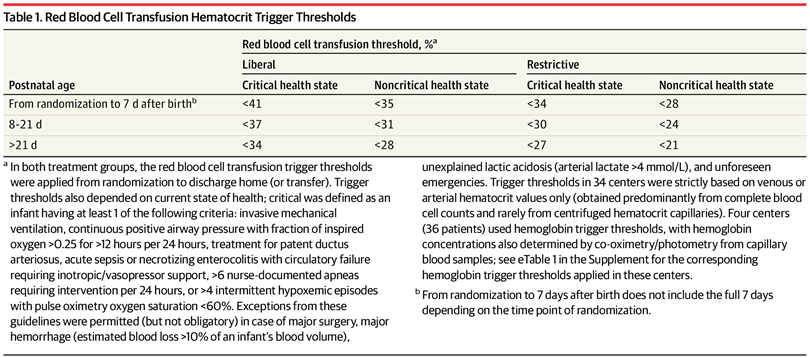
If you are not used to thinking in haematocrit, just divide by 0.3 to get the approximate haemoglobin.

In general, I think this schedule is reasonable for an RCT; to be doable, a large multicentre trial needs to have methods to which enough people will buy in, and to be relevant, the criteria have to be applicable in future everyday practice, even if you are not sure that some of it makes sense. You could certainly criticize why babies in more than 25% oxygen on CPAP need to have a higher threshold than babies in 21%; the concentration of oxygen being inspired has no impact on tissue oxygen delivery. Also, higher thresholds for babies with frequent apnea or frequent hypoxic episodes could be questioned.

The primary outcome of the trial was “death or neurodevelopmental disability”, you can probably already hear me screaming! (Softly, into my coffee). The neurodevelopmental part of that is also referred to as “cognitive deficit”. The developmental part of the outcome, which is, as usual, the biggest contributor to the outcome, is based on a Bayley version 2 MDI score of <85 at 24 months corrected age. It is, of course, ridiculous to refer to a low score on a developmental screening test as an “impairment” or a “deficit”, especially when 1 SD is chosen as the cut-off, using this terminology 16% of all human babies are “impaired” or have “a deficit”. Combing a lowish score on a developmental screening test with death as the primary outcome is really lumping together 2 things that should clearly be evaluated separately. Neither of the previous trials showed any tendency to impact mortality, the primary outcome of this trial could easily have been developmental delay or neurologic impairment at 24 months corrected among surviving babies. Combing 2 outcomes of such disparate importance risks diluting the real importance of a trial, if mortality had by chance been slightly higher in one group than the other, then a difference in the important long term outcomes could easily be hidden, or all sorts of other possibilities arise. I don’t think there is any a prior reason why both mortality and developmental progress at 24 months should be expected to change in the same direction by this intervention. Mortality is so much more important than having a low-ish Bayley score that the risk of missing an impact on survival by including it in a composite with a much more common outcome is really quesitonable.

I think this would have been a good trial to analyze survival separately, and then to examine long term impacts on development and on neurologic dysfunction. But; to stick with the analysis plan of the published primary outcome, there was no apparent difference between groups.

More importantly, as survival was about identical, (91% restricted vs 91.7% liberal) and there was less than 10% loss to follow-up, we can have a great deal of confidence in the developmental outcomes which were close to identical between the groups. Mean Bayley 2 MDI scores 92.5 in each group with very similar numbers below -1SD and below -2SD, cerebral palsy and PDI scores similarly were not different between groups, and the more rare components of neurologic dysfunction (visual and hearing impairment) were also very similar.

As for shorter term outcomes they are listed in this table
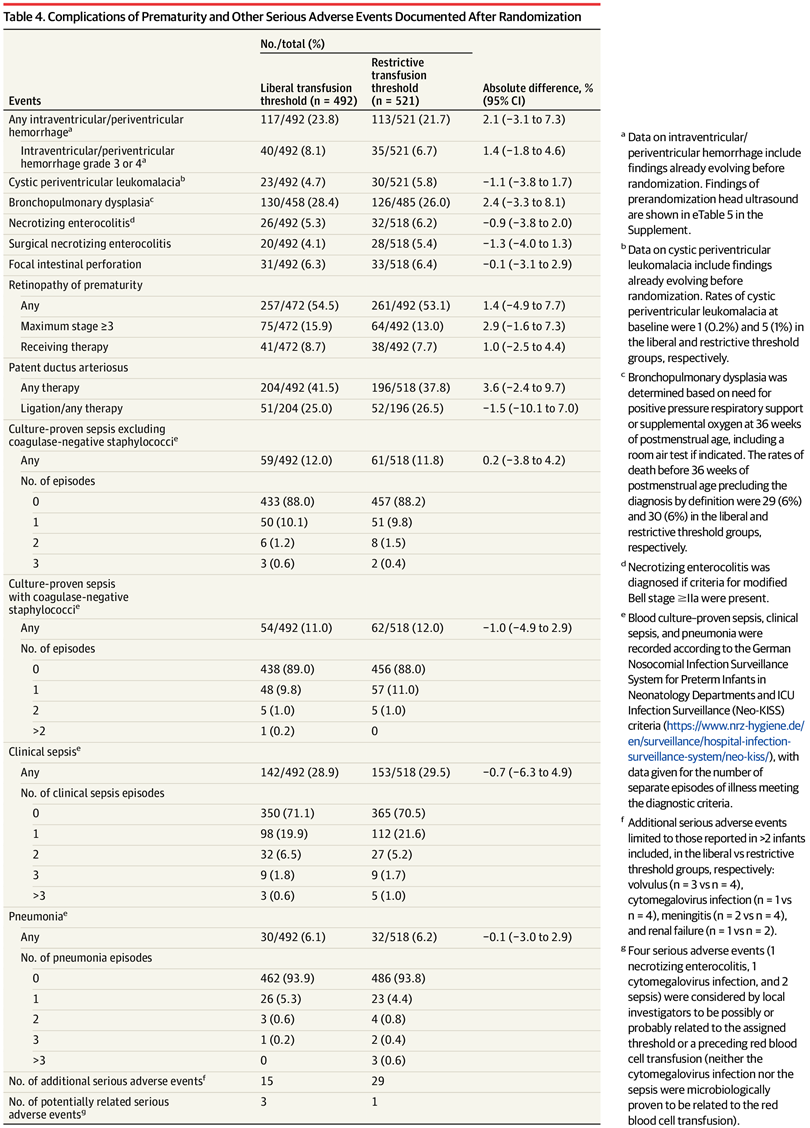
You can see that there isn’t really a hint of a difference between the groups for any outcome. Also not in this table, but in another, the duration of respiratory support was identical, the age that caffeine was stopped was the same.

I think the complete lack of impact on NEC is a good sign that transfusion-associated NEC is a mirage. Twice as many low threshold babies as high threshold babies never had a transfusion (40% vs 21%), overall they received double the blood volume. The supplemental data show the average hematocrits in the two groups which are not enormously different, with few values being below 27, but there are large differences in the number of late transfusions between groups. NEC was also similar between groups in the two previous RCTs that I mentioned at the start of this post.

One concern about this otherwise excellent trial is that 25% of babies had already received at least one transfusion with packed red cells before randomization. That seems like an awful lot of transfusions in the first 72 hours, I guess that, being enrolled between 2011 and 2014, there were probably a lot of babies that did not get a placental transfusion, but it still seems like a high proportion of early transfusions in these infants.

The implications for clinical practice are that either of the transfusion schedules, or something in between them, are appropriate for extremely low birth weight babies and will not likely have an impact on short or long term outcomes. To make it simple (I like to make things simple) critically ill babies who have a risk of limited cardiac output responses to anaemia could have a threshold for transfusion throughout their hospital stay of a haematocrit of 34 (haemoglobin of 110 g/L) and stable babies the threshold could be 28 (haemoglobin of 90 g/L) in the first week of life, falling to a haemoglobin of 80 in week 2 and 3, and 70 thereafter.


Posted in Neonatal Research | Tagged , , , , | 4 Comments

Outcomes of infants born at 22 weeks gestation; attitudes are the best predictor of survival

Among the most immature infants, mortality and morbidity are common even if they receive active neonatal intensive care, a new systematic review has attempted to find out how common. Backes CH, et al. Proactive Neonatal Treatment at 22 Weeks of Gestation: A Systematic Review and Meta-Analysis. Am J Obstet Gynecol. 2020. The authors of this study searched for publications detailing survival among infants who received active neonatal intervention. Sample sizes range from 2 to over 1,000, and definitions of what constituted active interventions varied between the component studies. The range of survival was between 0 and 100%, both of those extremes being from very small studies. As you can see from this figure, Ehret’s multicentre study contributed by far the most weight to the analysis, which overall shows somewhere between 1/3 and 1/4 babies survive with active treatment.

Ehret et al, the largest of the studies, with over 1000 22 weeks babies, showed that survival was 18% among the babies who received active neonatal care without the benefit of antenatal steroids, compared to 39% among those who received both antenatal steroids and active neonatal care. This systematic review confirms a higher survival at 22 weeks among babies who received antenatal steroids. It is possible, of course, that steroids are more likely to be given when other risk factors are absent and perhaps, therefore, are given to lower risk mothers; as observational data they cannot be relied on as absolute proof of efficacy. But it is also likely that when the Obstetric and Neonatal team have a positive attitude they are more likely to give steroids and intervene appropriately.

The difficulties that Carl Backes and his group had doing this study can be illustrated by the fact that the estimate of survival without moderate or severe developmental difficulties is 37%, which is higher than the estimate of overall survival, 29%! Clearly, this is because the studies evaluating development were taken from groups with higher survival. The quality of the data for the death and developmental delay outcome was very low.

A survival rate of somewhere between a third and a quarter is a baseline against which risk factors in addition to gestational age should be included (sex, estimated weight, chorioamnionitis), and, despite the group’s appropriate concerns about the quality of the data, it is a reasonable starting point from which to have conversations with prospective parents with threatened profoundly preterm delivery. If there is a possibility of active intensive care, then the systematic review confirms the value of antenatal steroid administration, which can be started immediately, and does not necessarily commit the team to active intensive care.

Travelling to centres with good outcomes among these babies, I am struck by the variety of clinical protocols and processes of NICU care, what the centres have in common is a positive attitude, that these babies can survive, even though mortality is high, and that a team approach with close collaboration with the obstetricians is key.

The attitude of Obstetricians around the world, and in the USA, varies from person to person and from perinatal centre to perinatal centre. But the attitude of the US obstetrics professional organisation, ACOG, as far as it can be gathered from their patient information page on their website /faqs/pregnancy/extremely-preterm-birth is very concerning, here is an extract:

What are the health outcomes for extremely preterm babies?

Medical advances have helped some preterm babies survive and overcome health challenges. However, the chances that a baby born extremely early will survive without disability are still small. With very rare exceptions, babies born before 23 weeks of pregnancy do not survive. Although survival rates increase for babies born between 23 weeks and 25 weeks of pregnancy, most survivors face serious, often lifelong disabilities. As gestational age increases, the outlook for preterm babies improves.

The copyright at the bottom of the page is dated August 2019. It needs an update! One in four is not a “very rare exception” and most survivors do not have serious disabilities, most have no, minor or moderate disabilities.

I think that active intervention at 22 weeks should not be universal, babies with additional risk factors may have a very low chance of survival, but this data confirms that survival rates that are a reasonable justification for active intervention are possible in more than one centre. Tertiary/quaternary perinatal centres should train and put in place procedures for active care of babies thought to be at 22 weeks, or be prepared to transfer mothers to centres that have a positive attitude and teams ready to actively intervene.

Posted in Neonatal Research | Tagged , , | 2 Comments

Omega-3 fatty acids, hype, and hope, and disappointment.

Omega-3 fatty acids seem to be important for many functions, and currently many babies, especially preterm babies appear to be deficient compared to babies born at term. There has been much research into these dietary components, and they certainly are essential for normal cell membrane function and much else. The big questions are: how much do we need? Which ones do we need?

I even performed a study myself years ago among newborn piglets, we divided them into 3 groups who either stayed with the sow or were placed on intravenous alimentation with either regular intralipid or with a home-made mixture which included fish oil derived omega-3s. We showed a lower pulmonary vascular resistance among piglets getting the menhaden oil lipid (with extra omega-3s), which were similar to sow’s milk, they also had a more normal hypoxic pulmonary response, the intralipid piglets having exaggerated responses.

Many trials of supplementing these fatty acids, however, have been negative.

The most recent disappointment comes from the MOBYDick trial, a pan-Canadian RCT among mothers who delivered very preterm (23 to <29 weeks) and who were planning to give their breastmilk to their babies (Marc I, et al. Effect of Maternal Docosahexaenoic Acid Supplementation on Bronchopulmonary Dysplasia-Free Survival in Breastfed Preterm Infants: A Randomized Clinical Trial. JAMA. 2020;324(2):157-67). Nearly 500 mothers were randomized to a supplement of Omega-3 (DHA, docosahexaenoic acid) or placebo with the primary outcome being survival or needing oxygen at 36 weeks PMA. The trial was stopped early as a result of 2 things: interim analysis showed slightly worse primary outcome among the active treatment group; the N3RO study of postnatal supplementation of preterm infants was published showing somewhat worse bronchopulmonary dysplasia outcomes with supplementation compared to placebo
(Collins CT, et al. Docosahexaenoic Acid and Bronchopulmonary Dysplasia in Preterm Infants. N Engl J Med. 2017;376(13):1245-55). In the N3RO trial 1200 very preterm babies (<29 weeks)  were randomized to daily supplements with omega-3s (60 mg/kg per day), the primary outcome was needing oxygen at 36 weeks. BPD by the physiological definition was more common with DHA supplementation than with placebo (49% compared to 44%), and there was no sign of any benefit.

The N3RO trial was itself performed as a follow-up to the DINO trial, also from Australia, which was an RCT among 657 infants less than 33 weeks who were randomized to get a DHA supplement, or just standard DHA intakes. Of note in that study the mothers all received a tuna oil supplement, and the preterm formula given if the mothers were not breastfeeding, contained the concentration of DHA then recommended. The primary outcome of that trial was developmental progress at 18 months, but the Bayley scores were just about identical in the 2 groups. One of the DINO trials secondary outcomes was oxygen requirement at 36 weeks, which was lower in the DHA supplemented babies (18% vs 25%), which I guess was one reason for performing the N3RO trial, among a group of babies at higher risk for BPD. Of note the DINO trial was reported, even in the abstract as showing that the supplement “did not increase MDI scores of preterm infants overall born earlier than 33 weeks but did improve the MDI scores of girls.” However, when I look at the results, there doesn’t seem to be a statistical test of interaction between sex and assigned group, they did note a small increase in Bayley MDI of 4 points in the girls, and a very small decrease of 1 point among the boys, in the contest of an overall 1.9 point difference, which was consistent with a chance difference. We need always to be careful with subgroup analyses. It would indeed be remarkable if the differences between intervention and placebo were identical between boys and girls (or between redheads and blondes for that matter). We should expect different subgroups to have different results, what is important is whether those subgroup differences are themselves consistent with random differences, or are they different enough to suggest a real difference in effect between the subgroups. A statistical test of interaction should be performed, not just looking at the p-values of the individual subgroup differences. There are some other indications of a possible small benefit of higher dose DHA though, which fewer infants below thresholds of 85 and 70 on the Bayley MDI scores, especially among girls, but with the same caveat. Subgroup differences should, generally speaking, never be taken as strong evidence that one group benefits and another does not, but can form the basis for further investigations focusing on the apparently better subgroup. Also of note, even longer follow-up of the DINO babies to 7 years of age (Collins CT, et al. Neurodevelopmental outcomes at 7 years’ corrected age in preterm infants who were fed high-dose docosahexaenoic acid to term equivalent: a follow-up of a randomised controlled trial. BMJ Open. 2015;5(3):e007314) did not show any benefit of the high-dose DHA, there was even a suggestion of harm with girls scoring higher (worse function) on some of the parental reported scores.

With the results from N3RO, the safety monitoring committee of the MOBYDIck trial did some calculations suggesting that it was very unlikely that supplementation would be found to be beneficial by the end of the trial, and, being worried that there might be harm, they stopped the trial, which had originally been planned to reach 800 mothers.

I was disappointed at the early stopping of the trial, given that the “harm” which worried the investigators was a slightly prolonged oxygen requirement, which doesn’t necessarily translate into any clinically important adverse impact, but I can certainly understand their motivations. Survival without BPD was higher among babies of mothers receiving placebo at 62% compared to 55% with intervention. Death was actually less frequent with supplementation 6% vs 10% by 36 weeks, but BPD was quite a bit more common 41% vs 31%. The authors never note the number of deaths prior to discharge, which I submit is much more important and relevant that death by 36 weeks, they note 2 deaths (intervention group babies) between 36 and 40 weeks, so I don’t think the final death comparison, if we knew how many died before discharge, is likely to be much different.  One can ask whether, by early termination of the trial, did they miss the chance of finding better clinically important longer-term respiratory outcomes, or developmental or visual outcomes? Probably not. Follow up of DINO doesn’t seem to show any distinct advantage of direct DHA supplementation, either on respiratory hospital readmissions, atopy, visual processing (including acuity), or developmental progress, or school-age IQ.

Gunaratne AW, et al. Docosahexaenoic acid supplementation of preterm infants and parent-reported symptoms of allergic disease at 7 years corrected age: follow-up of a randomized controlled trial. Am J Clin Nutr. 2019;109(6):1600-10.
Molloy CS, et al. Long-term effect of high-dose supplementation with DHA on visual function at school age in children born at <33 wk gestational age: results from a follow-up of a randomized controlled trial. Am J Clin Nutr. 2016;103(1):268-75.

Of note, treating preterm born infants with 6 months of DHA when they become toddlers also doesn’t seem to help them either (Keim SA, et al. Effect of Docosahexaenoic Acid Supplementation vs Placebo on Developmental Outcomes of Toddlers Born Preterm: A Randomized Clinical Trial. JAMA Pediatr. 2018;172(12):1126-34).

And supplementing standard risk mothers with DHA during pregnancy doesn’t reduce preterm delivery. Makrides M, et al. A Randomized Trial of Prenatal n-3 Fatty Acid Supplementation and Preterm Delivery. N Engl J Med. 2019;381(11):1035-45.

So why all this disappointment? Maybe our babies are already getting enough, so even if intake and concentrations are low, they may be adequate for the majority of preterm infants. Maybe DHA by itself is not enough; Eicosapentaenoic acid (EPA) is good stuff too!FOr now, all we can say is that the new Canadian trial showed no advantage of maternal DHA supplementation, possibly a minor adverse effect on pulmonary outcomes, which is consistent with a minor adverse effect shown in the N3RO trial. No other good quality data show an advantage of maternal or neonatal supplementation.

Posted in Neonatal Research | Tagged , , , | Leave a comment

Screening for early-onset neonatal sepsis in the UK. NICE or not?

Evaluating a screening procedure for a rare serious phenomenon, such as early-onset neonatal sepsis, is tricky. A perfect screening process would catch all of the cases that require treating at an early stage and would be completely specific, thus eliminating treatment of non-infected babies. Even ultra-rapid PCR of a blood sample, covering all known pathogens, would not be perfect, as it would probably identify many infants with transient low-level bacteremia…

Given that there will never be a perfect test, we should ask how many infants who are not ultimately found not to be infected are we happy to treat for each infant who has sepsis, and how many infants with sepsis are we prepared to allow to go without early treatment in order to avoid treating many uninfected babies?

This is a variant, I guess of the number needed to treat, and number needed to harm calculations that we are now used to.

What I mean is “are we prepared to miss one sepsis in order to avoid treating 100 healthy babies?” or should the number be 1000, or even more? Treating babies unnecessarily means painful investigations and treatment, potential complications of peripheral or central venous access, usually separation of mother and baby, as most hospitals don’t keep babies with IVs in routine post-partum rooms with the mothers, disturbance of the microbiome of the infant, leading to increased risks of late-onset sepsis and NEC among preterm infants, and possible increased obesity, increased allergic disease, and disturbed hypothalamo-pituitary-adrenal responses, in the long term among babies born at term.

On the other hand risks of mortality from unnecessary treatment are extremely low, compared to the risks of untreated sepsis.

There are a number of studies looking at large databases and noting the number of patients screened, and the number of truly infected cases found compared to the number of babies treated, in particular using new sepsis calculators. If early-onset neonatal sepsis is less than 1 case per 1000 among full-term infants (as it is in most parts of the developed world) then such results may not be able to answer the question about numbers if cases potentially missed with much confidence.

Another way to address the question is to come at it from the other direction and examine the history of babies who do indeed prove to be infected to ensure that the different approaches to screening would have required a screen and pre-symptomatic treatment. This new article attempts to do just that. (Morris R, et al. Comparison of the management recommendations of the Kaiser Permanente neonatal early-onset sepsis risk calculator (SRC) with NICE guideline CG149 in infants >/=34 weeks’ gestation who developed early-onset sepsis. Arch Dis Child Fetal Neonatal Ed. 2020:fetalneonatal-2019-317165). In 5 maternity units in the South-West of England and Wales, there were 70 confirmed early-onset sepsis cases in term and late preterm babies over various periods spanning 2008-2017. The total incidence was 0.5/1000 live births.

Of the babies with sepsis, 31 became symptomatic and were treated after 4 hours of age, and neither the Kaiser Permanente Sepsis Risk Calculator (SRC) nor the NICE (National Institute of Clinical Excellence) guidelines, largely followed in the UK, identified them as at-risk.

There were 27 babies for whom both the NICE guidelines and the SRC suggested screening and antibiotics.

The remaining 12 babies were recommended to have screening and treatment by NICE guidelines, but not by the SRC.

So if we imagine a region with 100,000 term and late preterm births per year, and 80 of those babies with early-onset sepsis. About 30 of them will have clinical signs early and will receive treatment under any scenario, all of the guidelines are directed at the other 50. From this study it seems that about 2/3 of that group do not have identifiable risk factors and are not treated either under NICE guidelines or using the SRC approach, they develop clinical signs later.

The remaining 16 babies (very roughly) have a risk profile that suggests treatment using NICE, but not when using SRC.

Previous guidelines (such as NICE) lead to about 20,000 of the babies being screened and treated, in order to cover those 16 babies during the asymptomatic period. Using the SRC reduces this number to about 4,000.

In other words, if I have my estimates somewhere near right, another 16,000 sepsis evaluations and antibiotic treatments are required to cover the 16 babies who are identified as being at risk by NICE but not by the SRC.

I think we should question whether 999 unnecessary sepsis screens and antibiotic courses are justified by 1 baby treated during the pre-clinical period; especially as there are twice as many babies who are asymptomatic who are not screened at all, using any standard, which means we must remain vigilant for the occurrence of sepsis in all newborn infants, and be ready to screen and treat when signs of sepsis develop.

Only one death was recorded in this study, among a baby who had clinical signs from birth, none of the babies treated after they developed signs at >4 hours of age died.

One thing that struck me was the enormous proportion of neonatal sepsis caused by Group B Streptococcus in this study, which was 90%. As a disease that has almost disappeared in North America, I don’t think the conclusions of this study, or the rough calculations that I did, can be translated directly to my practice. The total incidence of EOS in Canada is currently much lower than that reported in this paper, probably about 0.1/1000 among term and late preterm babies, about 50% of which are GBS (Sgro M, et al. Population-based study of early-onset neonatal sepsis in Canada. Paediatr Child Health. 2019;24(2):e66-e73). In other words, early-onset GBS disease is about 1/10 as common here as in the south-west of the UK. Time for universal GBS screening in pregnancy in the UK, anyone?

This study, although not directly applicable everywhere, does confirm that there will be a few babies with early-onset neonatal sepsis that develop clinical signs after the first few hours of life, that are not identified by current approaches before they become sick. But they are very few in number, which means that staying vigilant for signs of sepsis is vital for all clinicians caring for newborns. Dramatic reductions in unnecessary sepsis screens and treatments can be accomplished with a small risk that some truly infected babies will present and be treated later.

The NICE guidelines give an NNT of about 250 (20,000 screened for 50 babies with EOS without early clinical signs), compared to about 50 for the SRC. Each one of the extra 16 babies identified by NICE guidelines requires an extra 1,000 screens and treatments.

Which is a lot.

Posted in Neonatal Research | Tagged , , | 1 Comment

RSV prevention, fewer jabs for babies?

With all the hype regarding COVID-19 and a vaccine that may or may not be coming soon, we can use the story of RSV as an object lesson. Why do we give passive immunization to preterm infants against RSV rather than a vaccine?

RSV vaccines have been produced in the past, but there was significantly worse illness among babies who became infected despite vaccination. The vaccine was an inactivated virus but triggered “a nonprotective antibody response and CD4+ T helper priming in the absence of cytotoxic T lymphocytes. This response to vaccination led to a pathogenic Th2 memory response with eosinophil and immune complex deposition in the lungs after RSV infection”. Which is a phrase that I quote directly from (Acosta PL, et al. Brief History and Characterization of Enhanced Respiratory Syncytial Virus Disease. Clin Vaccine Immunol. 2015;23(3):189-95.) because I understand little of it, immunology was invented after I went to medical school.

Anyway, I can understand that under certain circumstances a vaccine could make things worse. As far as I can see, the trials in which the enhanced disease that occurred in vaccinated children led to the trials being stopped, and I don’t think a vaccine has ever actually been licensed as a result. Which makes me grateful for the FDA and other agencies around the world that require good evidence prior to the widespread use of a drug or vaccine. (In contrast to the claims of the antivaxers). So prior to rushing to introduce a vaccine for COVID-19 we need to be sure that it is safe and effective. Especially as severe cases of COVID seem to be associated with excessive immune responses, so there is a real possibility that a vaccine could make things worse at least for some recipients.

Newer candidate RSV vaccines will also have to be tested in adequate trials before we can be confident that they work and are safe. Vaccinating mothers is one possible way of getting around some of the problems, (Madhi SA, et al. Respiratory Syncytial Virus Vaccination during Pregnancy and Effects in Infants. N Engl J Med. 2020;383(5):426-39), However in this trial among 4,500 mothers who either received a vaccine based on the RSV fusion protein (F) or a placebo at between 28 and 36 weeks gestation, the overall reduction in clinically significant RSV disease in their infants during their first 90 days of life was from 2.4 to 1.5%. Which was not enough to conclude adequate efficacy, there were some signs of benefit, in terms of hospitalisations and severe disease, but not much more than about a 40% reduction for either.

For now then, I think we will be continuing with passive immunization while other candidate RSV vaccines (and there appear to be several) are being tested. Unfortunately that currently means monthly IM palivizumab injections at an exorbitant price, and a lot of discomfort. One improvement in passive immunization would be an antibody with a much lower clearance, such as this one (Griffin MP, et al. Single-Dose Nirsevimab for Prevention of RSV in Preterm Infants. N Engl J Med. 2020;383(5):415-25) so that a single dose would last the whole RSV season. In this trial, 1453 infants who had been born preterm (29 to <35 weeks gestation) but were not eligible for RSV prophylaxis according to their local guidelines were randomized to receive one dose of the new long-acting antibody nirsevimab, or placebo in a 2:1 ratio, if they were under 1 year of age at the start of RSV season. The primary outcome was the occurrence of RSV disease needing medical attention during the first 180 days, which was substantially reduced from 9,5% to 2.6%, and hospitalizations for RSV bronchiolitis were reduced from 4.1 to 0.8%.

I have little trust when it comes to big pharma, and I give you this prediction, that nirsevimab will cost substantially more than palivizumab. Probably the producers will calculate the average number of doses of palivizumab that babies receive (which is probably about 3.5) they will then price nirsevimab to be 3.5 times more expensive than palivizumab, so that they will be able to tell you that there is a substantial saving in resources with the new drug (which would be true), and a reduction in pain and discomfort, but they will still be able to screw our health systems for as much profit as they possibly can! I used to think that drug pricing was based on development and production costs, with a profit margin added; how naive! Drug prices are based on the principle of AMAWCGAW (as much as we can we get away with, ©Barrington 2020), and I can’t see AzstraZeneca and Sanofi Pasteur deviating from that time-honoured principle.

I would love to be proved wrong.

Posted in Neonatal Research | Tagged , | 3 Comments

Why are so many mothers hypothyroid, and what should pediatricians do about it?

I don’t know if, like me, you are surprised by how often when admitting a baby, or doing an antenatal consult, mothers are taking thyroxine. It seems that there is an epidemic of hypothyroidism during pregnancy, and I am not sure what paediatricians should do about it.

A large proportion of these mothers were not on thyroid supplement prior to pregnancy, and seem to have so-called “sub-clinical hypothyroidism”. It is defined by a normal T4 with an elevated TSH and seems to occur with extremely high frequency, from 15 to 28% of all mothers in areas of the world where there is sufficient iodine.

I tend to have doubts about anything that occurs that frequently among otherwise healthy people as being a disease, it seems likely that, for most women with this “condition”, it is just a variant of normal, a review article from the BMJ from a few years ago (Wiles KS, et al. Are we overtreating subclinical hypothyroidism in pregnancy? BMJ. 2015;351:h4726.) stated the following:

 Evidence that this will cause adverse pregnancy outcome is inconsistent and conflicting. Equally, treatment with thyroxine has not been shown to be beneficial. While results of ongoing trials are awaited, thyroxine treatment is recommended in the absence of evidence of harm. However, the possibility of overtreatment in pregnancy should be considered. Monitor for iatrogenic hyperthyroidism with a repeat TSH four to six weeks after any change in thyroxine dose and be aware that most of these women will not need ongoing thyroid replacement after pregnancy.

I checked for recent systematic reviews of treatment of this and the latest ones that I could find include many observational studies, and a few small RCTs: the best SR, I think, includes only the RCTs, and is quite inconclusive (Yamamoto JM, et al. Impact of levothyroxine therapy on obstetric, neonatal and childhood outcomes in women with subclinical hypothyroidism diagnosed in pregnancy: a systematic review and meta-analysis of randomised controlled trials. BMJ Open. 2018;8(9):e022837). There is possibly a reduction in preterm delivery, but the confidence intervals are wide and include a 21% increase in preterm delivery. Some of the observational studies seem to show a reduction in pregnancy loss, but the RCTs have not really investigated this. There is a possible increase in NICU admission among babies from treated pregnancies by 23%, but again confidence intervals are wide and include a reduction in NICU admission. The total sample size from the 2 articles that were meta-analyzed is only just over 1000, which is disappointing for a “condition” that is so incredibly frequent and should be relatively easy to study. The overall conclusion of the SR is “no evidence of benefit of levothyroxine therapy on obstetrical, neonatal, childhood IQ or neurodevelopmental outcomes. Current trial evidence does not support the treatment of subclinical hypothyroidism diagnosed in pregnancy”.

To return to my main question, if a baby is born after maternal thyroxine treatment during pregnancy, should the paediatrician (or family doc) do anything different for the baby?

In this study from Sydney the authors had noted that many babies were getting thyroid function screening, despite the presence of a universal thyroid screen (Churcher LM, et al. Reducing unnecessary neonatal testing in infants of mothers with thyroid disease. J Paediatr Child Health. 2020) they instituted a new guideline based on the most recent evidence which is summarized on a card including these major points regarding babies born from a mother who was getting thyroid supplementation:

  • Additional tests are very rarely needed
  • The only groups that need additional screening tests for the baby are:
    • Maternal thyroid disease with orbitopathy
    • Maternal past/current treatment of Graves’ disease (radio-iodine or thyroidectomy)
    • Maternal anti-thyroid drugs – Carbimazole or PTU
  • Even these babies only need additional tests if maternal Thyroid Receptor Antibody is positive or unknown
  • The Newborn Screen is enough for all others

After producing this they noted a dramatic reduction in unnecessary thyroid testing of newborns. Without having to argue with the obstetricians about the need for 1 in 5 otherwise healthy mothers to be treated with thyroxine during pregnancy, it appears to have no adverse neonatal effects and does not require further testing or treatment of the baby.


Posted in Neonatal Research | Tagged , | 2 Comments

One Million Page Views!

I started this blog a few years ago as a replacement for my practice of sending an occasional email to local fellows and colleagues whenever I found an article particularly interesting or important. At the time I was thinking that it was worth the effort if there were 100 views per post. Well, nearly 900 posts later the blog just reached 1,000,000 page views! Thank you to all my readers.

I receive many positive comments from people around the world, which is gratifying, and despite a slow summer, for personal reasons there were no posts during June, the blog will continue as long as I have access to the neonatal literature and as long as I can think of comments that might help others. In the meantime, as a special treat for wildlife lovers, here are a few of my recent photographs.

This is a female Spruce Grouse that we surprised out foraging with her chicks, here is one of them: The day before, at the Cap Tourmente park, I noticed this purple finch

and a few minutes later on the feeders at the nature centre in the park, this Indigo Bunting arrived.

I have shown pictures from Cap Tourmente on the blog previously (see the Quebec Birds page under “Photos” from the main menu) it is best known for the huge flocks of Snow Geese that stop to refuel there during the autumn migration eating the rhizomes of the bullrushes. On this visit I was not expecting to see any as they pass their breeding season and summer in the high arctic, but there were a few around who had decided to stay in warmer climes.

Posted in Not neonatology | 7 Comments

Treating seizures in the newborn: phenobarbitone unexpectedly not so bad!

Or perhaps “probably better than the current fashionable alternative” might be a better title. Phenobarbitone (or phenobarbital, I will call it PHE) is one of the oldest anticonvulsants out there, and because of little good data, remains the drug of first choice for seizures in the newborn. We know, however, that it often doesn’t work very well, many infants continue to have clinical seizures after being loaded with appropriate doses, and even more continue to have electrical seizures.

Seizures are bad for your brain. Every article I read about this has some sort of qualified statements, such as “accumulating evidence suggests that…” or “there are indications that perhaps…” or as in this new study “there is mounting evidence that seizures themselves are harmful”. Is there any doubt? Having a good proportion of your neurones firing synchronously for no good reason other than to make you move clonically, or smack your lips, or even just to increase your cerebral oxygen consumption without clinical signs, is surely damaging. Of course the underlying disorder is the most important factor in outcomes, but the same disorder without seizures is always better than with them. Unless you have no neurones left to fire!

So let us take it as self-evident that newborn babies with asphyxia, or meningitis, or stroke, would be better off if they had fewer seizures, all other things being equal. Is there a medication that can reliably reduce seizure burden? If so we could then investigate what the impacts are on long term outcomes. I hope it is evident that a medication that reduces seizures will not necessarily improve outcomes despite all that I have said above, if there are other adverse impacts. We need to find the best medication that reduces seizures while improving long term outcomes.

What medications are effective in neonatal seizures? There are not many good trials, and those that exist are old, many without EEG monitoring as a routine. The older trials of PHE vs Phenytoin showed little difference between the two drugs, which begged the question whether they were both equally effective, or equally ineffective?

Newer agents hold the promise of being less toxic and possibly having beneficial impacts in the long term. The one which, by common acclaim of neonatal neurologists, has become the go-to anticonvulsant after PHE is levetiracetam, which I have difficulty pronouncing so I will call it LEV.

A few years ago we were starting to use topiramate as the second-line agent, and then, almost overnight LEV became the drug everyone was talking about, and it was introduced into our protocol as the second-line agent for infants continuing to have seizures after being fully loaded with phenobarbitone. Why LEV rather than the alternatives? I have to admit that it was fashion, rather than any compelling evidence! The article I am discussing today admits almost as much, that the evidence base for LEV use in the newborn was entirely from case series.  Nevertheless, there was so much hype about the potential benefits of LEV compared to PHE that the new RCT was designed to randomize more babies to LEV than to standard, phenobarbitone, therapy. Unfortunately, that design reduces the power of the study; for the same total number of babies in the trial, power is less if the numbers are substantially unequal.

(Sharpe C, et al. Levetiracetam Versus Phenobarbital for Neonatal Seizures: A Randomized Controlled Trial. Pediatrics. 2020) The NEOLEV2 trial.

Despite this primary reservation, the trial is an extremely important landmark, being a comparison of PHE with something else as first-line treatment of neonatal seizures. Bravo to the study group, this was a much-needed trial.

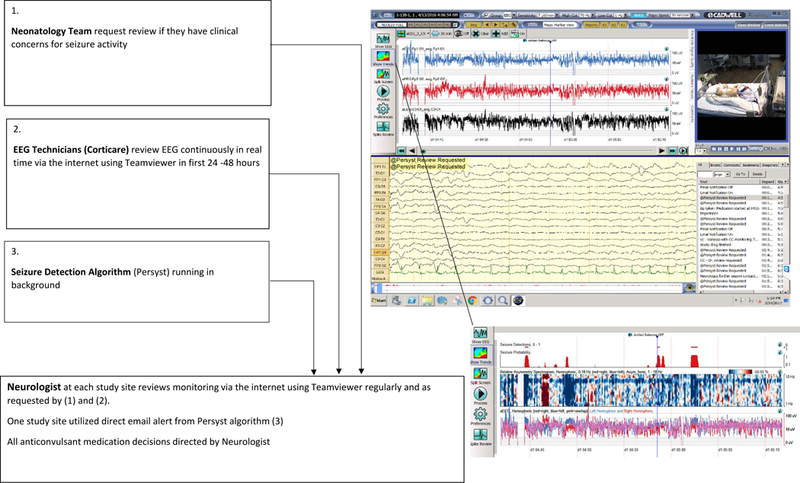
Full-term infants with continuous video EEG monitoring were entered if they had EEG confirmed seizures, I was unsure how they would do such a trial at first, in most places there is intermittent review of the EEG trace by various individuals, and sometimes the occurrence of seizures is not recognized until the next morning, for this trial they used a commercial service that “continuously” reviewed the traces. I’m not sure how this works exactly, how can you continuously review several EEG traces? Apparently, the commercial service employs EEG technicians at a distance to watch the wavy lines in real time as they are produced by the monitor. They mention the use of seizure detection software, but such software has low PPV and imperfect sensitivity in the newborn, so it was used to assist in seizure detection, rather than a diagnostic tool.

The babies had many different diagnoses, more than 50% were post-asphyxia, some had strokes or infections and a smattering of other diagnoses. EEG monitoring continued for 2 to 6 days after the trial started.

When electrical seizures were confirmed the babies were randomized. Here again I am a little uncertain, the article uses the plural ‘seizures’: how many seizures were required? Were infants randomized after a single brief seizure, or only after a series, and was there a minimum?

I know that most babies with HIE (54% of the study infants) have multiple seizures, and indeed most babies that we diagnose as having seizures for any reason have multiple episodes, but if you are ‘continuously’ reviewing the traces what happened when the techs saw the first seizure? Did they wait until there were a few more before calling the centre? There are some more details in an article they authors published about the EEG monitoring system (Sharpe C, et al. Assessing the Feasibility of Providing a Real-Time Response to Seizures Detected With Continuous Long-Term Neonatal Electroencephalography Monitoring. J Clin Neurophysiol. 2019;36(1):9-13). But that doesn’t answer some of my questions. They do discuss the automated seizure detection software, and confirm that there are many false positives, the big problem with the Persyst software is that it isn’t a specifically neonatal algorithm, and neonatal seizures are different, apparently, in an electrophysiologic sense.

One of the findings of the study underlines the difficulties involved, there were in the end 106 babies randomized (64 LEV, 42 PHE) but 12 of them were excluded after EEG review as they were not finally thought to have seizures prior to the medication being given. Unfortunately, this was more common in the smaller PHE group, with 9 being eliminated, and, with other issues making evaluation of the primary endpoint impossible in 11 other babies (8 LEV and 3 PHE), the final sample size was modest n=83 (53 LEV, 30 PHE).

The primary outcome variable for the study was complete elimination of seizures for a 24 hour period, the outcome was originally meant to be 48 hours but the authors clearly describe in the methods why and when it was changed.

Phenobarbitone was more effective. As you can see in the following figure, the initial load stopped seizures in 70% with PHE and only 21% with LEV. Giving the second dose (by protocol if seizures not controlled) added a few more in each group, so prior to switching to the other treatment (again, done by protocol) 24/30 PHE babies had shown efficacy compared to only 15/53 LEV babies. Even after the switch phenobarbitone seems more effective (though the numbers start to be quite small).

LEV was safer, with less cardiovascular or respiratory depression.

The results also don’t say how long it took to eliminate seizures, it is well known that clinical seizures tend to stop well before electrical seizures, which often continue for 24 hours after PHE is administered. I don’t know if the same thing happens with LEV.

What next? Long term follow up of the NEOLEV2 babies will be important, it would certainly be surprising if the LEV babies had better outcomes, but we need to know the size of any difference between groups.

Although there are concerns about PHE and long term impacts, PHE also has cerebral protection effects. In older children, much higher doses of PHE alone have been used to control refractory status epilepticus, without apparent damaging effects. If you remember the trial by Hall et al from 1998, asphyxiated infants who had not yet had seizures were randomized to 40 mg/kg of PHE or placebo, and they had better outcomes at 3 years of age. Hall RT, et al. High-dose phenobarbital therapy in term newborn infants with severe perinatal asphyxia: a randomized, prospective study with three-year follow-up. J Pediatr. 1998;132(2):345-8). But PHE wasn’t very good at preventing seizures in that study! The Cochrane review of barbiturates for perinatal asphyxia points out the limitations of the evidence, and the poor quality of the outcome data, both in that study and in the little other data available.

Given the potential benefit of PHE for long term outcomes revealed in those trials, and the advantage of PHE for seizure control in NEOLEV2, I think the next trial should have one arm with PHE dosing increasing beyond even 40 mg/kg. The authors of NEOLEV2 suggest that higher LEV doses should be investigated, but they don’t present any data about anticonvulsant efficacy and serum concentrations in this publication. It may be that LEV just isn’t very good for neonatal seizures, and pushing the doses higher won’t necessarily improve efficacy.

We certainly need larger trials, and trials large enough to examine effects between diagnostic subgroups, or perhaps which just enroll HIE, or HIE and stroke babies. The infrastructure put in place in San Diego and Auckland for this trial is interesting, and could potentially be enlarged, but the randomization of significant numbers of babies who were finally thought not to have had seizures is a problem. The authors note that some of the EEG techs reviewing the traces did not have much neonatal experience. Also interesting is that the EEG traces were all reviewed by 2 neurophysiologists to determine if the drug worked, in case of discrepant decisions a 3rd neurophysiologist reviewed the traces in order to tie-break. Such a review was required 22 times.

Over 1/4 of the time, experienced neonatal neurophysiologists couldn’t agree between themselves whether a baby’s seizures had stopped or not! Makes me feel better about having difficulty with the traces sometimes.

Posted in Neonatal Research | Tagged , , , , | 2 Comments

Antenatal steroids : good, bad, or both?

Antenatal steroids prior to very preterm birth save lives. Antenatal steroids prior to planned late preterm delivery reduce respiratory distress and increase hypoglycaemia. Might there be other long-term effects on brain structure?

There are now some animal models which suggest that antenatal steroids, in doses probably comparable to those given for threatened preterm labour, have measurable impacts on the fetal brain. The doses of steroids that are routinely used were guessed at from sheep studies by Liggins and Howie, and have not changed since, nor have different doses been subject to prospective trials. It is certainly a possibility that, even while reducing mortality and several neonatal complications, antenatal steroids might adversely impact cerebral development.

Hence the rationale for this study from Finland (Raikkonen K, et al. Associations Between Maternal Antenatal Corticosteroid Treatment and Mental and Behavioral Disorders in Children. JAMA. 2020;323(19):1924-33.0), using extensive population-based registries the authors analyzed the association between having a database entry which means antenatal steroid therapy (it is not stated if this might include mothers receiving steroids for other conditions, such as rheumatoid arthritis, or just antenatal steroids given for threatened preterm delivery, but it seems from their analysis that the large majority were courses of betamethasone for threatened preterm delivery) in the “Medical Birth Register” and the child having a code in the “Finnish Care Register for health care” which indicated a mental or behavioural disorder, according to ICD-10 codes. The codes were used to classify treatment episodes from “physicians in specialized care” in hospital inpatient or outpatient settings.

The authors found for the entire cohort an increase in the proportion of children with a code for a mental or behavioural disorder from 6.5% of those who were not exposed to antenatal steroids, to 12% of those who were exposed. For the primary outcome variable (which was having any of the target ICD codes recorded for a mental or behavioural disorder) this was true among infants who delivered at term, and remained true after correcting for multiple potential confounders. Preterm infants were also more likely to have such a code recorded if they had been exposed to antenatal steroids, but the impact disappeared after multivariate correction for the following factors :

maternal age at delivery, parity, mode of delivery, maternal smoking during pregnancy, prepregnancy body mass index, premature rupture of membranes, gestational diabetes, hypertension in pregnancy, any lifetime mental disorder diagnosis, child sex, Apgar score (maximum of 1 and 5 minutes), admission to neonatal intensive care unit, weight, and gestational age at birth.

The guts of the results are in this Forest plot:

If we focus on the major contributor to the primary outcome, “psychological development disorders” we see this :

There is an increase from 2.8 to 4% of this group of codes among infants who delivered at term after exposure to antenatal steroids, which remains after the above-mentioned adjustments, and an increase from 5.4 to 8.4% among preterm delivered infants, which disappears after adjustment.

Does this mean that antenatal steroids are having significant impacts on brain development? My major concerns with this publication are the potential for confounding by indication, and the relevance of the outcome variable.

As for the outcome variable, does having a discharge code for hospital visits that are diagnostic codes for ‘mental or behavioural problems’ really mean that the infants are having difficulties? How does such a finding relate to the impacts on the daily lives of the children? Do such children have more schooling problems? Or more problems in their families?

Antenatal steroids are given because of an increase in the risk of preterm delivery. Most of the exposed fetuses who eventually deliver at term were presumably exposed to ACS because of preterm labour, pre-eclampsia, preterm rupture of membranes, chorioamnionitis, severe growth restriction or other pregnancy complications. Thus the small increase in the proportion of children with the outcome codes (small but, on a population basis, very important) may be related to the occurrence of preterm labour, often triggered by inflammatory changes. In other words, it is possible ( I would even say likely) that these data are biased by confounding by indication.

A useful control/comparison group would be those who had a similar presentation but did not receive antenatal steroids, a group which probably does not exist in sufficient numbers.

Other data already exist, not referenced by these authors, that an episode of preterm labour, followed by delivery at term, is associated with poorer neurodevelopmental outcomes. (for example Paules C, et al. Threatened preterm labor is a risk factor for impaired cognitive development in early childhood. Am J Obstet Gynecol. 2017;216(2):157 e1- e7.) Presumably in that study also, an episode of preterm labour was associated with the administration of steroids.

So, if these data really reflect an adverse trajectory of brain development of the babies in the “exposed” group one of three possibilities exist. 1. Antenatal steroids have direct adverse effects on cerebral development. 2. Antenatal steroids are administered for many indications which themselves have adverse effects on brain development. 3. Some other factor is related to both adverse brain development and having an indication for antenatal steroids.

I think that from observational data we will never be able to answer the question of whether threatened preterm delivery, or antenatal steroids, or something else, is the factor which leads to health care encounters coded as a mental or behavioural disorder.

Antenatal steroids can be life-saving, and the lower the gestation the smaller the NNT to prevent one death. One way to answer the question about the potential adverse impacts of the intervention would be a long term outcome study among infants from the Gyamfi-Bannerman trial. In that trial, antenatal steroids prior to expected late preterm delivery reduced the number of babies needing CPAP by 20% (from about 13 to 10%).

Late preterm infants clearly have poorer developmental outcomes than babies born at term, and late preterm infants who are admitted to the NICU are worse off than those who do not need intensive care. So withholding antenatal steroids from them is something that we should consider very carefully, but if the NNT to prevent NICU admission is large, and there are potential adverse impacts on the remaining infants who do not necessarily have a benefit of the steroids then I think we could consider withholding antenatal steroids in those situations where the benefit is more questionable, in a Randomized comparison of long term outcomes. That will take a while to happen.

In the meantime, I think an analysis of observational data could be more informative if we analyzed the different subgroups of indications for antenatal steroids. If there is a consistent association of antenatal steroids with poorer outcomes among all indications, those that are associated with inflammation (PPROM and chorio for example) and those that are less inflammatory (PET and IUGR), then that would confirm that it might well be the steroids themselves, rather than the indication for steroids, that are the adverse factor.

Posted in Neonatal Research | Tagged , , | 4 Comments

Do estimates of survival change decisions made?

Kidszun A, et al. Effect of Neonatal Outcome Estimates on Decision-Making Preferences of Mothers Facing Preterm Birth: A Randomized Clinical Trial. JAMA Pediatr. 2020.

This is a short report of an interesting idea, published as a research letter. The authors from Germany randomized pregnant women hospitalised for threatened preterm labour, but who had already reached at least 28 weeks gestation, to respond to a scenario of an extremely preterm birth, at 22 or 23 weeks gestation, with either a 60% or a 30% survival rate. They were then asked whether they thought active intensive care provision or comfort care were preferable.

The attitudes toward intensive care provision for the very preterm infant were not different between the 2 scenarios, 47% would have wanted active intervention for the baby with a 60% chance of survival, and 50% for the baby with a 30% chance of survival.

We are advised by professional societies to make shared decisions with parents, prior to extremely preterm delivery, after ensuring that parents are well informed. These recommendations are often accompanied by long lists of potential complications and percentage risks that we are supposed to ensure that the parents understand prior to delivery. This new small, limited, study suggests that all of our information giving doesn’t have much impact, at least between these 2 percentage survival figures; what matters to the decisions which are made is the underlying attitudes of the parents. The authors state, without explaining where their conclusion came from that “an attitude that mere survival is at least as important as quality of life was associated with a preference for life-sustaining treatments”.

I think that we should use the antenatal encounter with potential extremely preterm parents to investigate their values, as much as that is possible, rather than trying to transfer complex information.

Many studies have examined ways to ensure that parents are well informed, but how much that numerical information impacts the decisions that are made is not clear. Decision aids are promoted by various groups as ways of ensuring that information is transferred, and they may indeed increase the amount of information retained by parents in the short term, but do they change decisions? One study from last year examined whether Decisional Conflict was affected by the use of a decision aid. This was an RCT using a decision aid that the authors have previously published. (Guillen U, et al. Evaluating the Use of a Decision Aid for Parents Facing Extremely Premature Delivery: A Randomized Trial. J Pediatr. 2019;209:52-60 e1).

I have previously criticized this specific decision aid for the numbers that are used to describe long term outcomes; the range of blindness for example for babies between 22 weeks and 25 weeks 6 days is shown as being 1 to 15%, I have never seen long-term data from this century showing a 15% incidence of blindness, the majority of studies give an upper limit of serious visual impairment of about 2 to 3%. Similarly, the decision aid includes a section about the risk of “mental disability” which is apparently something that happens in 18 to 54% of former preterm babies of this gestational age. Even the use of this term shows up the limitations of such decision aids, the person presenting the decision aid will have to explain what that term is supposed to mean, and their own prejudices and beliefs and values will become part of the discussion, a decision aid such as this is not value-free! I don’t think you can actually create a value-free aid unless you stick to objective outcomes such as death, and even then, whether death is the worst outcome, or whether some survivors would have been “better off dead” (and which ones) is something that medical caregivers and our patents/parents often disagree about.

The primary outcome of the Guillen study was whether the mothers were definite about their decision or remained uncertain, measured on a decisional conflict scale. The trial showed no difference in that primary outcome. About 200 mothers were recruited between 2013 and 2017, but it was actually the counsellors who were randomized (92 0f them). 123 babies finally delivered before 26 weeks gestation.

A secondary outcome of this trial was: understanding of the complications of extreme prematurity, measured using a 47-question true/false knowledge test. I can’t find an example of the test anywhere, but I wonder how anyone could have a good understanding of the complications of extreme prematurity after being presented with this aid! If the true-false question was “the prevalence of blindness among survivors born before 26 weeks is 1 to 15%” then retaining the knowledge provided by the decision aid would give you the wrong answer!

Even though parents may be more able to recollect the information they are given if it is presented differently (with the decision aid), that may have little or no impact on the decisions that are made, or how definite parents are about their decisions.

A contrasting question was asked by Marlyse Haward a few years ago: whether framing the same data as either positive or negative affected potential decisions made. Their group compared wishes for intensive, compared to comfort, care after receiving identical scenarios, one group received a document which mentioned the chances of survival and being without disability, the other received a document which described death and handicap rates. The information was identical except for the following section: “25 out of 100 infants will survive if provided intensive care. Of those who survive, 15 out of the 25 infants will not have severe developmental disabilities.” The negative version was: “75 out of 100 infants will die even if provided intensive care. Of those who don’t die, 10 out of the 25 infants will have severe developmental disabilities.”

In that study, 3/4 of the respondents (volunteers who weren’t in that situation) overall preferred active intervention and the remaining 1/4 preferred comfort care. When the same data were posed as positive, more respondents preferred active intervention than when the data were presented as death and disability. The impact wasn’t huge, but it seemed to be there.

Putting all these results together, it seems that the actual percentages of good and bad outcomes presented have very little impact on decision-making. The 2 things that matter are the pre-existing underlying values of the parents and whether the person doing the counselling thinks that the outcomes are good or bad.

One illustration of the importance of that second factor is found in the studies from the NICHD neonatal network. In some centres, 100% of babies who deliver at 22 completed weeks gestation receive comfort care. In other centres, 100% of those born alive get active intervention. I am sure that physicians and other caregivers in each centre believe that they practice shared decision making. I wouldn’t be surprised to learn that the counselling professionals in centres with universal intervention emphasize survival and good quality of life, whereas in the other centres they emphasize mortality, suffering and “mental disability”. Even if both groups describe a possible 30% survival, for example. (Of course, some centres just say “we don’t resuscitate at 22 weeks”).

Efforts to improve information transfer probably only improve information transfer, but don’t change the decisions, nor even how certain parents are about the decisions that they make.

I think repeating the German study with more extreme values of survival would probably reveal different preferences, but then the relevance to the real world decisions that we make would become less. Presenting survival of over 90% at 25 weeks among females with good prognostic factors, compared to below 5% at 21 weeks and 0 days for a growth-restricted boy might well reveal that parents respond to those figures with different preferences, but, in the range of outcomes where counselling and decision-making usually occur, the pre-existing values and beliefs of the parents are probably much more important than outcome percentages or lists of complications. And even more important is how those outcomes are presented, as being either a chance of a good life or a probability of suffering, death or disability.


Posted in Neonatal Research | Tagged | 1 Comment