Progesterone doesn’t prevent prematurity?

Progesterone analogues, including 17-OH progesterone caproate have been investigated over the last several years for prevention of prematurity. In the pivotal trial from 2003 17OHPC intramuscularly once per week was shown to reduce prematurity at less than 37 weeks, less than 35 weeks (from 31% to 21%) and less than 32 weeks, and to reduce complications of prematurity (NEC and IVH).

Since then the literature has been a bit mixed, with many studies of different ways of administering progesterones being performed, many with daily vaginal pessaires, and some with oral administration, as well as others with the 17OHPC. Many studies among different groups at risk of prematurity have been positive (twins, short cervix, early cervical dilatation, premature rupture of membranes) but a few have been negative, and many small underpowered trials have appeared.

The newest trial was an attempt to reproduce the first Meis trial (Blackwell SC et al. 17-OHPC to Prevent Recurrent Preterm Birth in Singleton Gestations (PROLONG Study): A Multicenter, International, Randomized Double-Blind Trial. American Journal of Perinatology. 2019).  An international RCT was performed with nearly 3 times the sample size of the previous study (n=1700), admission criteria were similar to Meis; that is a mother with a previous spontaneous preterm birth (with or without earlier rupture of membranes), and pregnant again with a singleton between 16 and 20 weeks of gestation.

Despite similar criteria for enrolment the actual placebo group rate of prematurity was much lower than Meis et al, at 11.5%. The intervention was identical, with 17OHPC weekly, and the outcome variables were also similar. The treatment group rate of prematurity < 35 weeks was practically identical to the controls, at 11.0%, that is there was no apparent treatment benefit.

Following this new trial an advisory committee of the FDA has recommended that the licence of 17OHPC be revoked in the USA. The submission of Public Citizen to that committee follows their tradition of brain-dead comments on pivotal perinatal trials. They state that the Meis trial was “seriously flawed”, but the only thing they note to support this statement is that an FDA statistician had stated that there wasn’t a second confirmatory study. No other “serious flaws” are described, and they quote the statistician as saying “The results of the analyses of the 32 and 35 week endpoints suggest their false positive rates could be as great as 1/40”, which is of course substantially better (p<0.025) than the 1/20 false positive rate that is usually required!

What about other trials? There are many systematic reviews covering various aspects of progesterone use. A network SR and meta-analysis was published this year (Jarde A, et al. Vaginal progesterone, oral progesterone, 17-OHPC, cerclage, and pessary for preventing preterm birth in at-risk singleton pregnancies: an updated systematic review and network meta-analysis. BJOG. 2019;126(5):556-67).

This was the result of the meta-analyses of delivery before 37 weeks. The earlier threshold chosen for this review was 34 weeks, and, for the 17OHPC, Meis reported prematurity <35 and <32 weeks, so the meta-analyses for delivery <34 weeks has very few patients, and doesn’t include Meis, it is basically just the Grobman trial which showed a small reduction with the drug.

As you can imagine the authors of the new trial were a little perplexed at the lack of effect, given the prior data. One of their suggestions is that, given the prior data regarding benefits of progesterones, many physicians were already prescribing them to the highest risk patients, and those who remained to be randomized had a much lower rate of premature delivery, which reduces power and perhaps selects a group with less progesterone responsiveness.

It remains a possibility of course that 17OHPC is not a very effective method of getting progesterones into mothers, and that the benefits shown in the Meis trial were indeed a “false positive”. Perhaps by chance they enrolled a control group which had a much higher rate of preterm delivery than the treated babies (which is a possibility but is unlikely), or perhaps there was some other bias in the study design, but I can’t see one.

Of course, it is also possible that the new trial is a false negative, the 95% compatibility intervals for the relative risk of preterm delivery before 35 weeks include the possibility that there is a 29% reduction (or indeed a 26% increase) in this outcome.

To keep this all in context of the entire literature about progesterones for preterm delivery, the comparative trials of vaginal progesterone and 17OHPC seem to show that the vaginal progestrone is the more effective of the 2, but includes numerous small trials and a couple of more moderately large trials, as you can see in the figure above. It is a treatment which has the advantage of avoiding weekly IM injections also. However, the confidence intervals are wide and only one individual trial showed a meaningful difference between the interventions, also the majority of the trials were unmasked, so the confidence in the advantage of vaginal progesterone is very low.

In fact if you critically look at the vaginal progesterone vs placebo trials it is only the smaller trials that show benefit, the 3 larger trials, Crowther, O’Brien and Hassan, don’t show very much.

I think the best way to settle this would be…. (drumroll…) another trial! I think that, in an ideal world (with very compliant mothers) we would perform a very large 3 arm trial with vaginal progesterone plus IM placebo, vs vaginal placebo plus IM 17OHPC, vs vaginal placebo plus IM placebo.

That won’t happen! So what could reasonably be done? I think it is probably inappropriate to take 17OHPC off the market; as well as the evidence of efficacy from one high quality trial with very high prematurity rates in both arms, there has been no real evidence of adverse secondary effects in any of the trials, including in long term baby follow up. Maybe this new trial will create enough uncertainty that a simpler trial than the one I suggested above could be performed, and try to enroll the highest risk mothers, but I am at a loss really.

The more I read about these trials, the more confused I get, and I end up being unconvinced by any of the data. The best 2 trials of all, I think, are Meis and the new Blackwell trial, and they come to different conclusions!

Posted in Neonatal Research | Tagged , , | 1 Comment

Eye exams for fewer babies

In Canada, the current Canadian Pediatric Society recommendations, dating from 2016 are to screen infants for retinopathy of prematurity with Gestational Age <31 weeks or Birth weight <1,251 g.

These recommendations are already somewhat more restrictive than other countries, in the UK the limits are 32 weeks and 1500g, and in the USA <30 weeks or less than 1500 g, plus selected very unstable babies up to 2000g.

The larger and more mature infants are known to be at lower risk than less mature babies. The question that was asked in the study reported in this new publication was whether we really need to screen all those babies. Sabri K, et al. Refining evidence-based retinopathy of prematurity screening guidelines: The SCREENROP study. Paediatrics & child health. 2019.

In this study using data collected by our Canadian Neonatal Network the risks of developing significant RoP and of developing RoP requiring treatment were modelled using multiple different risk factors. There were nearly 5000 screened babies, and they divided RoP into type 1 or type 2 according to ETROP guidelines. Type 1 ROP is defined as
any stage 3 or plus disease in zone 1, or stage 3 and plus disease in zone 2 (and is considered to need urgent treatment). Type 2 ROP is defined as zone 1, stage 1 or 2 without plus disease or zone 2, stage 3 without plus (and is considered to need close follow up to detect progression). Any baby with type 1 or type 2 RoP, or who had detachment without treatment, was considered to be Clinically Significant RoP (CSROP).There were about 460 babies overall with CSROP, and 250 who had intra-ocular treatment with laser or VEGf inhibitors.

The cohort was split into 2/3, used to derive a model, and another 1/3 to validate the model.

In the end only birth weight and gestational age were required to develop a model which identified babies whose risk of CSROP was 1% or more. Using cutoffs of 1200 g birth weight or 30 weeks gestation identified all of the babies with RoP treatment, while screening fewer babies, and including all the babies except one with CSROP, a baby who did not need treatment. If these limits had been applied to this, development, cohort 20% fewer babies would have been screened.

Applying the model to the validation cohort confirmed the findings, and required 30% fewer babies to be screened, without missing any CSROP, except for a baby of over 1800g and over 32 weeks who was screened for specific individual reasons and did not fit the current screening guidelines anyway,

RoP screening is time consuming and the medications and procedure can cause significant instability in the babies. It also hurts (mostly, I think, because of the lid retractors) and analgesic interventions are only partly successful. Sometimes back-transport to level two centers is delayed, or the babies are re-transported back to tertiary centers for their eye exams. Most centers that I know in Canada have a very busy group of pediatric ophthalmologists, with at least intermittent difficulty in assuring timely exams.

For all these reasons, if we can reduce the number of eye exams by eliminating those with very low risk of developing clinically significant RoP, that is surely a good thing.

We have to keep in mind, that on an individual basis there is still the occasional extremely sick baby with prolonged instability who may need to be screened who was larger or more mature than these limits, but the large majority of babies who are over 30 weeks and over 1200 g could be eliminated from screening programs.

Posted in Neonatal Research | Tagged | Leave a comment

Not futile any more; survival and long term outcomes at 22 weeks.

Imagine, if you will, that you work at a breast cancer center with moderately good results, but you have decided, as a group, to not offer therapy to women with stage 4- triple negative lesions. Survival is so low, you have decided, and the therapy so aggressive, that women should not be put through such a “futile” therapy.

But reports come in of other centers with survival well over 50%, long term outcomes which are excellent (as good as other types of breast cancer), and the short term complications of therapy which are similar to those of less aggressive cancer.

For the next woman who arrives in your center, what do you say? I think you would have 3 options:

1. “I know that in Superville they get good results, but they practice some sort of black magic: here in Ordinaryton we have decided that this is futile therapy so I am afraid you are going to have to die. We do have great palliative care though!”

2. “In Superville they are getting good results, so we are going to go ahead and do our thing too, let’s go!”

3. “In Superville they are better than us with other high-risk breast cancers also. We should gear up to offer therapy to women with triple negative cancers, let’s learn from Superville, and from the other centers who have also reported good results. Let’s make sure all of our team is up and ready. Let’s make sure we know how to do this the best we can. Let’s discuss each case individually with the patient, including all the details of the staging, and the risks of therapy and be ready to treat the next one who opts for intervention.”

It is fairly obvious what we should do to offer the best care (if transfer to Superville is not an option!) Just deciding that all such patients should die, while in several centers they can survive with a good quality of life, is not morally defensible.

Back to neonatology:

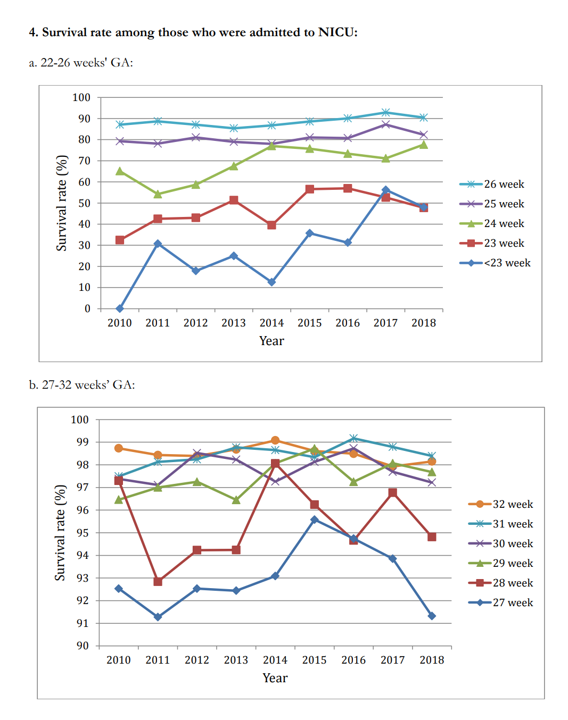
About a year ago I published a post talking about survival at 22 weeks gestation, a gestational age which is considered “pre-viable” by many practitioners, I noted that survival rates were high enough that “futility” could not be used as an argument against offering active support for such babies.

That post showed that several centers were achieving good survival at 22 weeks gestation. Total numbers of survivors were small, and very little follow up data was available.

The group in Iowa have just published detailed information regarding their outcomes, short and long term, over a 10 year period. Watkins PL, et al. Outcomes at 18 to 22 Months of Corrected Age for Infants Born at 22 to 25 Weeks of Gestation in a Center Practicing Active Management. J Pediatr. 2019. During that period active intervention was offerred whenever live birth at 22 weeks best-guess gestational age (BGGA), or more, was expected. The obstetricians offerred antenatal steroids and active surveillance. During that period there were 24 infants born alive at 22 weeks (I will concentrate on that subgroup, even though I know that intervention at 23 weeks is still not offered in many places. Some of the data are only available for the combined group of 22 and 23 weeks). Of those 24, 2 died before admission to the NICU, and 2 families opted for no resuscitation. None of the 22 week BGGA babies were delivered by Cesarean. This being from the USA, 7% of the mothers had no antenatal care prior to being admitted for threatened preterm delivery.

The obstetric team had time to give antenatal steroids to over 90% of the mothers, and half had more than 48 hours of coverage. Of the 20 babies admitted to the NICU, 14 survived to go home,  and the list of in-hospital morbidities and their frequencies for the 22 and 23 week babies together are similar to what you would expect for extremely immature babies, and are not noticeably different from the 24 and 25 week cohort, that they also report.

Survival to discharge is remarkably good for the overall 22-23 weeks cohort, as well as for the 24-25 weeks group, 78% and 89% respectively.

With regard to long term outcomes at 18 to 24 months corrected age, the majority of infants evaluated had no or mild “NDI”. In this study the Bayley 3 test was done, and if the cognitive score was over 85, and the child was free of CP (or had a GMFCS of 1), hearing or visual impairment, that was considered no or mild impairment. 70 to 84 on the cognitive scale, or CP with a GMFCS of 2 or 3, was considered moderate impairment, and lower scores or worse CP was considered severe. 82% of the 22 week group were no, mild, or moderate, “NDI”, with 2 of the 11 evaluated survivors having severe NDI. The proportions between the different weeks of BGGA are similar, but do look a bit worse at 22 weeks, the numbers are small to evaluate statistically, however.

As you might realize if you have seen Annie Janvier’s recent contribution to John Lantos’ ethics rounds series in Pediatrics. (Janvier A, et al. Does It Matter if This Baby Is 22 or 23 Weeks? Pediatrics. 2019). We have offered active intervention to several babies at 22 weeks BGGA at our center, with a few hiccups during the hospital course of the first one, which you can read about in those rounds, but there has been a gradual acceptance in the NICU that survival and outcomes are good enough to offer NICU care.

Starting to do this, and getting good enough at it that you can get good survival (both numbers and quality), requires an integrated approach with Obstetrics. Offering NICU care if the obstetricians are not prepared to give steroids, is not a reasonable approach and will not likely be successful. No center is going to have many such babies, even in Iowa they only average 2 per year at 22 weeks, so having pre-existing protocols and a joint approach, all ready for the next mother who arrives is essential. If your obstetricians are reluctant to give steroids, you can show them this figure from (Travers CP, et al. Exposure to any antenatal corticosteroids and outcomes in preterm infants by gestational age: prospective cohort study. BMJ. 2017;356:j1039).

This is a graph of the number needed to treat per extra survivor, according to GA at birth. Data are from the Pediatrix data warehouse, and the total n is about 120,000.

At 23 weeks you only need to give 8 courses of steroids per extra survivor, compared to almost 1000 at 34 weeks! That study collected no data at 22 weeks gestation, but I can’t see any reason why the curve, which seems to flatten off a bit at the bottom, would suddenly leap upwards again.

In addition to the collaboration with obstetrics, consistency of the clinical approach, and a positive attitude seem to be essential. Having visited both Iowa and Uppsala recently, I can tell you that those 2 centers clinical approaches have multiple differences. Incubator care, ventilation, blood work, just about everything, seems different. The most important factor that they seem to have in common is that the people looking after the most immature babies believe in what they are doing, talk together frequently about how to improve their care, and expect that the large majority of the 22 and 23 week babies will survive. That has to include the entire team, from nurses to admission clerks to respiratory therapists (if you are lucky enough to be in a country with RTs), and of course integrating the parents.

I don’t think it is morally defensible to just tell parents ‘we don’t do that here’, and particularly not ‘it is futile’. Decision-making based on individual risk assessment, with a realistic option of high-quality committed active care should be offered.

Posted in Neonatal Research | Tagged , , | 11 Comments

How fast to feed?

One of the recurring themes in this blog is that good, large enough, prospective RCTs do not necessarily reproduce the results of prior smaller trials, and often do not reproduce the findings of observational studies. Specifically, I have mentioned previously that observational studies suggesting that slow feeding advancement leads to less Enterocolitis in extremely preterm babies (NEC) than faster advancement have never been confirmed by prospective trials.

There were several trials of feeding advancement, of variable quality and relatively small sample sizes, before 2016, which showed no overall adverse impact of advancing feeds more quickly, but with sufficient uncertainty that a large simple pragmatic trial was warranted to address the question. The short term results of the SIFT trial have been presented and incorporated into the Cochrane review Oddie SJ, et al. Slow advancement of enteral feed volumes to prevent necrotising enterocolitis in very low birth weight infants. Cochrane database of systematic reviews (Online). 2017;8:CD001241.

Those results showed no benefit of advancing feeds more slowly (18 mL/kg/day) compared to more quickly (30 mL/kg/day) among nearly 3000 infants of less than 32 weeks, or less than 1500g birth weight. The findings incorporated into the Cochrane review include secondary outcome data on NEC and infections.

The primary outcome of the SIFT trial was survival without neurodevelopmental disability to 24 months corrected age.  In the latest FPNEJM the primary and the secondary short term outcomes are now presented in full. Dorling J, et al. Controlled Trial of Two Incremental Milk-Feeding Rates in Preterm Infants. New Engl J Med 2019;381(15):1434-43. 2800 infants were randomized when receiving less than 30 mL/kg/day and the intervention started when ‘the clinicians were ready to start increasing feeds’ which occurred at a median of 4 days of age. The more rapid increase group reached ‘full feeds’ which was defined as 3 days of receiving at least 145 mL/kg/d, after a median of 7 days, compared to 10 days in the slower group. I don’t understand this entirely; if the baby was on 10 mL/kg/d and tolerated all the feed increments, it would take 5 days to get to at least 145 mL/kg/d and then another 3 days would be needed before satisfying full feeds criteria, which takes us to 8 days minimum. Anyhow, this is a minor quibble, on average the babies in the slow advancement group  had 2 days longer with intravenous nutrition. I can’t see in the publication any definition of feeding intolerance, or if there were any attempted standardization of feeding approaches to decide whether to continue advancing feeds.I beleieve the investigators decided to leave most details of feeding approaches untouched, only mandating the attempted feeding volume changes, and counting on a very large sample size even out everything else.

NEC was very slightly less frequent with faster feeds (5% vs 5.8%, RR=0.90, compatability intervals 0.66, 1.24) and late onset sepsis or clinical sepsis were very slightly less frequent also (30 vs 31%, RR=0.96, compatability intervals 0.85 to 1.08).

The differences between groups in the primary outcome also were tiny, survival was 95% in each group and so-called disability was 31% fast, vs 28% slow. Survival without ‘disability’ was 66% for the fast feeders and 68% for the slow. I won’t go into the details of how the outcome assessments were performed, most were by parent report, others by direct observation and evaluation.

In subgroup analyses published in the on-line supplement, there is no clear evidence of a difference in NEC or of nosocomial infections by gestational age subgroup. Infants with reversed or absent end-diastolic flow on antenatal doppler ultrasound of the umbilical artery also had no clear difference (although in this subgroup faster feeding advancement had rather less NEC, 3.8 vs 7.1%, this may have been due to chance effects in this subgroup (435 babies) and the interaction term was compatible with a chance effect).

In the Cochrane review mentioned above data on ‘invasive infections’ are presented, which refers to culture-positive infections. The number of infants with at least one invasive infection was 247/1389 vs 267/1397 in the SIFT data included in that review (I can’t find those data in the new publication) that gives a relative risk, favoring faster feeds, of 1.07 (compatibility limits 0.92, 1.96) when the data from the other 600 babies included in all the other trials is added, the RR is 1.15 (95% limits 1.00, 1.32). Similarly the data from all trials in the meta-analysis, including SIFT data, show a slightly higher rate of NEC with slow feeding RR=1.07, 95% compatability intervals 0.83, 1.39).

SIFT is consistent with the previous trials, but gives enormously more precision to the estimates, it shows that feeding faster, up to a goal of 30 mL/kg/ has no adverse impact overall, or in any subgroup, compared to feeding slower (goal of 18 mL/kg/d). Even though the babies had a median of 2 days less of parenteral nutrition that did not lead to a clear reduction in proven and suspected infections, there seems to be a small reduction if all the available RCT data are analyzed.

Of note, the late-onset sepsis rates appear to be extremely high; 540 of the 889 babies under 28 weeks had a suspected or proven infection, or 61%. But of course that includes ‘suspected infection’ which basically means anyone with any sort of clinical deterioration that is treated with antibiotics for more than 48 hours. If I compare the total numbers of proven and suspected infections in the final publication (848) to the culture positive infections in the Cochrane review (514), then about 60% of their LOS is culture positive. If the same proportions hold in smaller gestation age groups, then about 36% of babies under 28 weeks had a culture positive sepsis. That approaches the kind of incidence of culture positive infections in other multicenter databases, but remains somewhat high. In the 2017 CNN report, for example, adding together the <25 weeks and the 25 and 26 week gestation babies ((i.e. the higher risk infants, excluding those at 27 completed weeks) the proportion with at least one infection, culture positive, is 28%.

The trial was powered to have a reasonable chance of showing a difference in sepsis, based on the assumption that 1000 fewer catheter-person days per 250 infants would lead to fewer infections. In fact there were about 500 fewer parenteral nutrition days (I can’t find the data for catheter-person days) per 250 enrolled infants, or about 5000 fewer days overall, which didn’t seem to have any measurable effect on infections. Even when looking at culture positive infections alone, there was really nothing there. There are a number of potential explanations for this. As I have mentioned before, the emphasis on catheter linked sepsis is excessive in the preterm infant. Many LOS are caused by enteric gram negative pathogens, and reducing CLABSI doesn’t necessarily lead to a reduction in overall sepsis, by a logical extension, reducing catheter duration may reduce CLABSI but without reducing overall infection rates. On the other hand the CLABSI rate per 1000 patients days is lower in the first week of catheter use compared to later, and the median 2 days of increased duration of parenteral nutrition may not have exposed the babies to much difference in risk. Sanderson E, et al. Dwell time and risk of central-line-associated bloodstream infection in neonates. J Hosp Infect. 2017;97(3):267-74.

What next? I think that a trial comparing the fast feeding approach in this study could be compared with an earlier start of advancement at a slightly greater rate. The comparison approach could be to enrol babies on day 1, start feeds immediately at 2 mL/kg q2h, and start advancement immediately at say 40 mL/kg/d. In my practice we now usually start feed advancement before 4 days of age, and, if the infant is not in shock, advancement starting day 1 would be just fine by me. We would have to use temporarily a bit more donor breast milk (PDHM), which could be a downside to advancing sooner. An earlier start to advancement might lead to a greater difference in catheter and parenteral nutrition duration, and, potentially, a subsequent impact on sepsis. Perhaps we might find less CLABSI, but no less systemic infection.

So far there is no good quality prospective controlled data that any approach to starting or advancing feeds has any impact on NEC.

The evidence-based strategies to reduce NEC are to promote and support MOM (mother’s own milk), have PDHM available when MOM is insufficient, to have a standardized feeding protocol, and to use a probiotic preparation with good quality control, which contains bifidobacteria and probably a lactobacillus or a streptococcus.

Posted in Neonatal Research | Tagged , , , , | 4 Comments

Should we try?

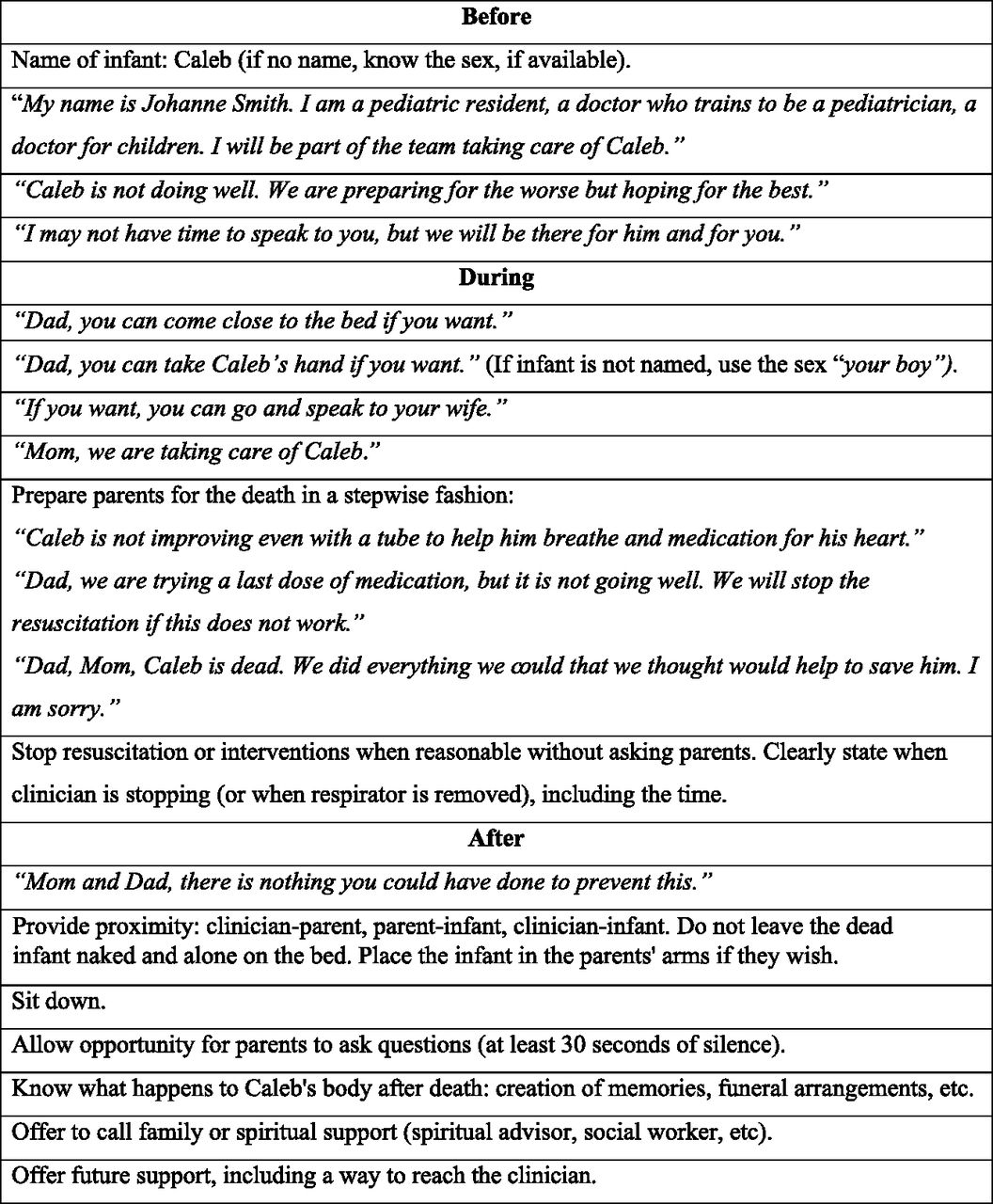
Arnolds M, et al. Worth a Try? Describing the Experiences of Families during the Course of Care in the Neonatal Intensive Care Unit When the Prognosis is Poor. The Journal of pediatrics. 2018;196:116-22 e3.

A few times a year many of us are faced with admissions to the NICU which have marginal chances of survival. That might mean a congenital anomaly with a limited chance of survival, a complex cardiac defect without a clear surgical option but with a chance of surgical palliation, or an extremely preterm baby with a predicted <10% chance of survival.

Sometimes, after discussion with the parents, we decide to institute active intensive care; In other cases the diagnosis and the prognosis become evident after hours or days of intensive care, and we realize that there is only a small chance of the baby surviving.

It would be interesting to investigate the impact of intensive care that ‘fails’ on families. How do they hold up later? Is there a lot of “decisional regret” where families are disturbed about the intensity of the care their baby received, only to die anyway?

A group of investigators from the University of Chicago (including Bill Meadow in one of his last contributions to the neonatal literature) recently published a qualitative study examining the experiences of families with extremely high risk babies. Families from one of two tertiary NICUs were interviewed while their child was sick, and most of them again interviewed more than 6 months later, 3 families had infants who had died, and 2 others were still hospitalised.

There are many things in the article that are worth reading, and anyone trying to support families of critically ill babies could benefit from the insights provided. But I want to focus on one thing, and that is the idea of decisional regret. Health care workers often think ‘if the parents really knew what was going to happen, they would choose differently’, indeed it is one of the things which underlies the moral distress that is experienced by people working in the NICU. Prentice TM, et al. The use and misuse of moral distress in neonatology. Seminars in fetal & neonatal medicine. 2017.

In reality, decisional regret regarding neonatal intensive care decisions is quite unusual, and seems to be more frequent among those who chose not to intervene than those who chose NICU, even when it goes badly in the end.

This publication supports that interpretation, even when the outcome is poor (extremely long hospitalisation, or death, or likely disability) parents were grateful for the care their baby received, and expressed that they had no regrets about the decisions made. Even when the prospects are poor, families generally appreciate that their infants was considered to be “worth a try”. A title which I would guess was suggested by Bill as a pithy summary of the entire project!

Posted in Neonatal Research | Tagged , | 1 Comment

Why is MOM best? part 2

MOM is best, because it leads to the lowest incidence of NEC; but why? (if you didn’t read part 1, MOM is Mother’s Own Milk)

The impacts of milk processing which create the differences in milk composition, detailed in my previous post, may be the link to the increased incidence of NEC. That effect could be mediated by changes in the intestinal microbiome. There have been several recent publications about this:

Cai C, et al. Feeding practice influences gut microbiome composition in very low birth weight preterm infants and the association with oxidative stress: A prospective cohort study. Free Radic Biol Med. 2019;142:146-54.
Parra-Llorca A, et al. Preterm Gut Microbiome Depending on Feeding Type: Significance of Donor Human Milk. Front Microbiol. 2018;9:1376.
Ford SL, et al. Improved feeding tolerance and growth are linked to increased gut microbial community diversity in very-low-birth-weight infants fed mother’s own milk compared with donor breast milk. The American journal of clinical nutrition. 2019;109(4):1088-97.
Zanella A, et al. Influence of own mother’s milk and different proportions of formula on intestinal microbiota of very preterm newborns. PLoS One. 2019;14(5):e0217296.

These studies are relatively consistent, although the complexity of microbiome data and the ways in which they should be presented and analysed are still developing, and can be quite confusing to a non-specialist, like me. Overall, the fecal intestinal microbiome in MOM fed infants is more diverse, as shown by increases in alpha diversity; which are measures of how many different bacteria there are and how variable they are. Differences in beta-diversity, which are ways of comparing these diverse bacterial communities, have been found between formula, human milk and donor milk.

One very recent interesting study by Zanella et al reported 5 groups of babies, with exclusive MOM (LME in the figures),  exclusive formula (FLE), about 50:50 (MFLM), predominantly MOM (>70%, PLM) and predominantly formula (>70% PFL). They showed a sort of dose response, this is a box and whisker plot of the number of OTU’s.

Figure 2: Number of Operational Taxonomic Units measured in fecal samples from preterm babies fed with different diets during 28 days.

Operational Taxonomic Units is a jargon used to avoid speaking about species, as the definition of a species among bacteria is not a settled issue, microbiomologists define an OTU according to the percentage of the bacterial DNA in the 16s RNA gene which is similar to others. In this study a similarity of 97% was required to define the OTU. So there are clearly many more OTUs, and more bacterial types, with exclusive MOM compared to other types of milk feeds.

This is their graph 1, showing the beta-diversity results.

Graph A represents clusters of microbial communities. Each point represents an individual sample, with colors indicating feeding treatments. Graph B represents measurement of multivariate dispersion for each treatment.

You can see that the different feeding types tend to cluster differently, with the Exclusive MOM group (LME) the most different to the others. Interestingly, in this study the human milk was fortified with a powdered fortifier FM85 (personal communication Renato Procianoy) when the infants were at 80% of their full feeds, so the addition of the bovine protein-based fortifier does not seem to affect the microbiome diversity sustained by MOM.

Other studies looking at donor milk also show differences, with higher diversity when receiving MOM than when receiving PDHM. This might in part be because MOM usually contains bacteria classed as probiotics (particularly bifidobacteria), which are eliminated by pasteurization.

What does all this mean?

MOM is best, as usual.

Although we don’t know exactly why, MOM, which is not pasteurized or otherwise manipulated, supports a microbial intestinal community which is more diverse, and contains more bifidobacteria and lactobacillae than other milk sources. PDHM seems to have intermediate effects on NEC and on the microbiome, while formula feeding leads to major impacts on the microbiome and on the incidence of NEC.

Why does this matter?

If the adverse impacts of formula feeding are not because of the source of the protein, but due to other impacts of the processing of the milk on protein structure, milk composition, and the intestinal microbiome, then it is possible that we could produce an MOM replacement, and/or a fortification method which was able to support optimal growth without an increase in NEC. We should investigate ways of processing donor human milk which lead to less impact on intestinal function, so that when we don’t have enough MOM we can find a replacement that is just as protective.

Much more robust data on the safety of bovine fortifiers, comparison of liquid and powdered fortifiers, and proof of whether or not human milk based fortifiers are preferable, would help to maintain optimal nutrition while assuring the best outcomes for our babies.

Posted in Neonatal Research | Tagged , , | Leave a comment

Why is MOM best?

Mother’s Own Milk (MOM) seems to be the best base for enteral nutrition of the preterm infant, in terms of the risk of infection, the risk of Enterocolitis (NEC) and, probably, long term neurodevelopment.

Reasonably good data show that replacing human milk with artificial formula, when there is insufficient maternal breast milk, leads to increased intestinal inflammation and NEC, compared to using pasteurized donor human milk (PDHM).

From observational studies, (which is all we’ll ever have, as you couldn’t ethically randomise babies to a PDHM supplement if there is enough MOM), PDHM seems to be less protective than MOM.

For the baby whose mother doesn’t produce any MOM, using PDHM rather than formula seems to be better for the outcomes of NEC, and probably late-onset infecions, among very preterm infants.

But why is that the case? What is it about MOM that leads to fewer of those complications? Is it just because nature loves mothers? Is it rather that there is something about MOM which is different?

Fortifying human milk with a bovine-milk based commercial fortifier, to increase protein, calorie and mineral supply, has never been shown to increase NEC or LOS, compared to either no fortifier, or to a human milk based fortifier.

I think it is important to specify that it is very hard to prove a negative, ‘that multicomponent fortifiers do not increase the risk of NEC’ for example, and we should remain vigilant regarding the power of the individual studies and of the accumulated evidence. The latest Cochrane review states that the included studies were small and of low quality and that there is ‘low-quality evidence that fortification does not increase the risk of necrotising enterocolitis in preterm infants (typical RR 1.57, 95% CI 0.76 to 3.23; 11 studies, 882 infants)’. Which means that a 57% increase in NEC was the most likely result of using fortifiers compared to not using them, which was far from statistical significance.

Since that 2016 version of the review there is at least 1 other RCT that seems to confirm those findings (still a very small study) Adhisivam B, et al. Does fortification of pasteurized donor human milk increase the incidence of necrotizing enterocolitis among preterm neonates? A randomized controlled trial. The journal of maternal-fetal & neonatal medicine. 2018:1-6.

Also published was what is, I think, the only RCT of babies receiving MOM who were randomized to human milk-based fortifier compared to a commercial bovine milk-based fortifier. O’Connor DL, et al. Nutrient enrichment of human milk with human and bovine milk-based fortifiers for infants born weighing <1250 g: a randomized clinical trial. The American journal of clinical nutrition. 2018;108(1):108-16.  Which showed no impact of the fortifier origin.

Why is MOM best?

Because of the frequent diagnosis of cow’s milk protein intolerance in children, (much more frequently diagnosed than proven, I might add), you might suppose that an immune response to exogenous proteins is a likely answer to the increase in NEC with supplemental formula feeds. But if that were the case, why is fortifier not implicated? Also in general, exposure of preterm infants to exogenous protein leads to tolerance rather than intolerance, and other immune phenomena are quite unusual in the newborn. For example. the widespread instillation of bovine or porcine proteins into the airways of preterm infants does not seem to be related to any later adverse immune events.

If the source of the protein is not the primary problem and, I reiterate, there is no good evidence that it is, but formula still causes an increase in NEC, then the emphasis on an ‘exclusive human milk diet’ may be wrong-headed.

There are a number of clues in the literature that suggest that other factors in the production of formula, and of PDHM, may have impacts on milk composition that may be important in the development of NEC.

First of all, let’s think about PDHM, this is a product made from batches of human milk, in most instances milk produced by mothers who deliver at term, having a lower total protein content than preterm delivering mothers. It is pasteurized, usually by classical Holder pasteurization, maintaining a temperature of 63 degrees for 30 minutes, which kills the vegetative forms of bacteria in the milk. It doesn’t kill spores, and the saprophytic forms can survive, which is why the milk in your fridge goes sour after a few days.

Holder pasteurization causes significant changes in protein structure, and the more thermolabile components may be completely or partially destroyed. A recent review article noted:

“Saccharides are not significantly affected by the heat treatment, as either free molecules or as part of biologically active compounds. The total lipid content is preserved by Holder pasteurization, as is its fatty acid composition…Consistently, fat soluble vitamins also seem to be unaffected, while water soluble vitamins, and vitamin C in particular, are generally reported as significantly decreased. The results concerning specific biologically active molecules (such as cytokines and growth factors) remain uncertain….Proteins are more significantly affected by Holder pasteurization. In fact, specific proteins with significant immunologic and anti-infective action (such as immunoglobulins and lactoferrin) are reduced by pasteurization. A substantial reduction in the enzymatic activity has also been observed” Peila C, et al. The Effect of Holder Pasteurization on Nutrients and Biologically-Active Components in Donor Human Milk: A Review. Nutrients. 2016;8(8).

Alternative ways of protecting milk composition while preserving bacteriologic safety are being investigated, including ‘high temperature short time’, high pressure methods, ultraviolet irradiation, and, potentially, ionizing radiation. (Wesolowska A, et al. Innovative Techniques of Processing Human Milk to Preserve Key Components. Nutrients. 2019;11(5).)

Holder pasteurization though, does not seem to affect the human milk oligosaccharides which are important for supporting growth of probiotic organisms. Hahn WH, et al. The human milk oligosaccharides are not affected by pasteurization and freeze-drying. J Maternal-Fetal Neonatal Med.2019;32(6):985-91.

Even the relatively innocuous Holder pasteurization has fairly dramatic impacts on milk composition. We can compare that to the extensive manipulation of cow’s milk required to produce commercial formula, including mixing of the source components (which include already processed fats, carbohydrate and proteins from various sources), homogenization, pasteurization, standardization, packaging and sterilization. For powdered formulas a freeze-drying or spray-drying step is also required, but final sterilization is very difficult, and they are not usually considered sterile. The final step of sterilization of liquid formulae may create glycated proteins which are not normally present in milk, and which are pro-inflammatory. (Erlanson-Albertsson C, Landin-Olsson M. Glycated proteins in infant formula may cause inflammation that could disturb tolerance induction and lead to autoimmune disease. Acta Paediatr. 2019;108(10):1744-6)….

more soon…


Posted in Neonatal Research | Tagged , , | Leave a comment

Dr William Meadow 1948-2019

A sad way to fire up the blog after a long summer break. My good friend and colleague, Bill Meadow, died a few days ago.

I first got to know Bill when I was junior faculty in Edmonton. At that time Bill was in Chicago as a young neonatologist who also did a fellowship in infectious diseases; we were both interested in hemodynamics, and using piglet models to investigate therapy. We would meet at what was then the SPR (society for pediatric research) and we would visit each others posters. When he came to mine I remember him saying “just tell me about the methods” so I would describe what we had done, and he would then predict what results we had found. He was, annoyingly, always right. In one meeting we were both presenting results of hemodynamic responses to group B streptococcus in newborn piglets, he was using live bacteria, and I was infusing killed ones. We had very similar results. He always wore, even in those early days (since 1984 or so), a distinctive leather hat, with a narrow brim. I guess it was sort of a lucky charm, and maybe a culture medium also! Our intermittent meetings were marked by the warmth of his personality and even though we only met academically, I started to think of him as a friend.

Bill’s subsequent research interests moved into bio-ethics, with his scientific approach, his piercing intellect, and his concern that babies get appropriate care, he was interested in data rather than opinions. One of his early ethics publications for example is this “Meadow WL, et al. Birth weight-specific mortality for extremely low birth weight infants vanishes by four days of life: Epidemiology and ethics in the neonatal intensive care unit. Pediatrics. 1996;97:636-43” where he described with good data that after a few days survival in the NICU, there was no longer a significant impact on mortality of the initial birthweight. The implication being that decision-making should be based on the baby’s current condition, and not differ between a “500 grammer” and a “900 grammer”.

One of his SPR podium presentations changed Annie Janvier’s career also, he had compared what obstetricians remembered about their own practice (with regard to giving antenatal steroids prior to preterm birth) with what actual practice had been. There were enormous discrepancies. At the same time Bill presented  data about how long it took to get antibiotics when a child presented with meningitis, compared to what the guidelines, and expert testimony say. The findings have implications for all sorts of expert witness testimonies; expert witness in malpractice cases should be based on facts not just opinions. The presentations so impressed Annie, that she went to ask him a question or two and he generously spent the next 90 minutes talking to her about her future, what she could research and how he could help her in the future. He became the co-supervisor of her bioethics PhD, and became a close friend to both of us.

Bill was someone who was generous, with his time and his expertise, compassionate, and completely intolerant of bullshit. Watching him moderate a discussion session was a delight, he would ask challenging questions with very straightforward language, and interrupt if you started to respond with high-blown ethical statements packed with acceptable euphemisms. He could re-phrase what you said and make you think about your underlying assumptions. Some people found that intolerable, he was even black-listed by one prestigious university hospital ethics group! One of the group that banned him had previously published an article containing this gem : “Phronetic comprehending calls for a creative construal of that which is meaningful (and meaning making) in a situation”. It seems for some people that clarity is a fault: not for Bill.

In contrast, people who are prepared to be pushed intellectually, challenged, and stimulated, rapidly grew to love him, many have continued to perform research in neonatal bioethics, which is much more evidence-based as a result of his efforts. There is an entire international network of Bill’s friends who continue to question orthodoxy, and who are themselves somewhat intolerant of b.s. and of mediocrity: the Bill Meadow diaspora.

In 2016, when we all knew he was sick, John Lantos organised a Festschrift for Bill, I presented a systematic review of the effects of a dose of Bill Meadow on a neonatal reserch subject. The conclusion was that a dose of Bill Meadow always clarified the situation, and improved care for babies. On one subject I disagreed a bit with the emphasis that he put on a particular outcome, so I quoted back to him one of his favorite phrases: “I love you Bill, but you’re wrong”. (He wasn’t often wrong).

His dedication to his patients was total, another of his simple, but important sayings was “Never abandon your patients”. No matter how tough it is, now matter how much you might disagree with parents, no matter how tired you are, always keep the babies at the centre of what you are doing. He was equally dedicated to his family, to his friends, and to his trainees (many of whom are happy to have become his friends).

Goodbye Bill, we miss you already.

https://www.uchicagomedicine.org/forefront/news/2019/september/william-meadow-obituary


Posted in Neonatal Research | 3 Comments

Are these data relevant to my practice?

A couple of recent published trials have made me wonder about that question, and how to assess if an impact suggested by the results of a trial might be relevant to how I practice, and would likely be reproduced if we introduced the intervention in our NICU.

The specific question raised by these two studies is, “When the control group of a trial has an adverse outcome more frequently that I see in my practice, can I expect the same relative effect if I apply the intervention to my patients”?

For example, in this randomized controlled trial of elevated midline head positioning of extremely preterm infants, (Kochan M, et al. Elevated midline head positioning of extremely low birth weight infants: effects on cardiopulmonary function and the incidence of periventricular-intraventricular hemorrhage. J Perinatol. 2019;39(1):54-62) the authors examined the impact on IVH of keeping infants less than 1000g birth weight in a seat at 30 degress of elevation with the head maintained in a midline position during the first 4 days of life, compared to supine positioning (without elevation) accompanied by changes in head position. The primary outcome of that study was the total frequency of peri- and intra-ventricular hemorrhage, which was actually a little higher with the head elevated, 34/90, compared to 31 /90 for the FLAT group. On secondary outcome analysis the distribution of  PIVH was different, with more intracerebral (grade 4) bleeds in the FLAT group than in the ELEVated group, 14 vs 6 (the incidence of grades 3 and 4 together, the more commonly used outcome, was 18 vs 11, or 20% vs 12%).

Which looks like an interesting difference if it can be confirmed. Lets assume for the moment that this is a real impact of the intervention, and not due to other effects, such as random differences (very likely in a small study), lack of blinding (impossible to do in a study like this), adverse impacts of the control intervention (possible, but a quite standard nursing approach is described), unmasked randomization (method of randomization is not adequately described apart from the “use of a randomization table”), baseline imbalance (there are some differences between groups) and other possible sources of bias. If we assume those things for the sake of this argument, we are still left in the controls with a very high incidence of intracerebral hemorrhage, 16%, among an otherwise unselected group of infants with a birth weight below 1000g, average 732 grams, average gestation 25 – 26 weeks, and an even higher incidence of grade 3 and 4 together of 20%.

In my practice, and in the CNN overall in recent years (annual reports are available on the website), the frequency of severe IVH (3+4) under 1000g is more like 11%. In the methods section of this article the authors note a recent incidence of overall IVH of 40% in their practice, and that “eighteen percent of these infants” had grades 3 and 4. It isn’t clear to me whether that means 18% of the ELBW, or 18% of the 40% who had IVH, which would be 7.2%.

In general, to be confident about the impact of an intervention, it is preferable to see at least one very large trial with narrow confidence intervals including babies from multiple centers. The alternative being several trials with different risks in the controls and similar relative risk reductions in order to conclude that something which appears effective in a very high risk population is also effective in a lower risk population.  That is the kind of information that we have for inhaled nitric oxide in term infants, for example. Here is the Forest plot for the iNO studies, as you can see, the larger studies had relative risks of “death or ECMO” between 0.56 and 0.74, and the confidence intervals all overlap substantially, despite differing control group risks.

The second figure is revised from the the term iNO Cochrane review, I have ordered the studies by the control group risk of adverse outcome, and shown the risk difference. As you might expect, the higher the control group risk, the greater, in general, is the risk difference, even though the relative risk, (or risk ratio) is similar. That is why you need to be sceptical when you hear statements such as “it has only been shown to work in high-risk groups”, as we used to hear about probiotics. It is much harder to show a “statistically significant” outcome when the baseline risk is lower. But if the relative risk reductions are similar across studies with different baseline risk, that is a good reason to think that the impacts are the same.

For this positioning intervention, which has significant impacts on care of these babies, the high incidence of PIVH in the controls, reducing to an incidence with the intervention which is more similar to other recent publications, is consistent with an impact of the intervention, but is also consistent with a randomly higher incidence in the controls than usual. This is why to me the meaning of the ‘18% of these infants’ is important, if, over several years, they have had an 18% incidence of severe IVH among the ELBW, and in this study it is similar at 20%, with a substantially lower incidence in the group who had the intervention, I think that is more likely that the reduction is a real impact of the intervention, (in contrast to having a usual rate of 7.2% that increased to 20% during the period of the study).

So what do other trials say? Well there aren’t any, I think. The 2017 Cochrane review found 2 trials comparing supine positioning with the head midline, to supine with the head turned to the side (total n=110), and found no differences of note in any outcome.

A potentially important study, which certainly needs to be repeated, and it would be nice to study head elevation and midline positioning as separate interventions.

The other trial that has made me think about this issue is the PREMILOC trial. (Baud O, et al. Effect of early low-dose hydrocortisone on survival without bronchopulmonary dysplasia in extremely preterm infants (PREMILOC): a double-blind, placebo-controlled, multicentre, randomised trial. The Lancet. 2016;387(10030):1827-36). In that trial, routine administration of hydrocortisone at low doses over a total of 10 days led to a reduction in mortality before discharge, and a reduction in oxygen use at 36 weeks compared to control in infants of 24 to under 28 weeks.

When trying to assess the relevance for my practice, I note that the study did not include any infants under 24 weeks, or with a birth weight below the 3rd percentile, or with ruptured membranes before 22 weeks, or with 5 minute Apgar under 4, or with congential anomalies detected prenatally. It was overall a very high quality multicenter trial including a little over 1000 babies.

One of the striking things in the results of that trial is the high mortality before discharge in the 24 and 25 week infants, which is 44% with placebo and 42% with hydrocortisone. In my practice and in the 2017 CNN report, mortality among infants at 24 and 25 weeks admitted to the NICU (data which include those other very high risk groups) is 20%. The incidence of severe IVH is also very high in PREMILOC  at about 25%. Even at 26 and 27 weeks mortality in both groups is higher than the CNN mortality, 7.6% HC and 15.3% placebo in the PREMILOC trial, compared to 6% in the CNN, again including growth restricted babies.

There are also other signs in the publication that the treatment approaches were substantially different to what we do in our practice, 35% of placebo and 30% of hydrocortisone babies were on inotropes at study entry, 43% in each group received insulin during the trial.

If I already have a mortality which is substantially lower than the intervention group in a trial such as this, am I likely to see an impact of the intervention in my practice?

The answer, I would say, is definitely a ‘maybe’. If the same pathophysiology for the adverse outcome exists, and if the underlying risk factors are similar (including aspects of obstetric management), then I might expect a similar relative reduction in mortality, and a smaller absolute reduction in mortality. Of course as the absolute benefit become smaller, the potential secondary adverse effects of the intervention become potentially more important, in this specific case the increase in late-onset sepsis may be more important in the calculation of the risk-benefit balance.

I am not saying that we should ignore the results of trials if there are details of management or outcomes that are different to local data, that would just lead to chaos and a complete rejection of evidence-based practice, I am saying that we need to be thoughtful about interpretation and application of trial data. If local approaches and outcomes are dramatically different from a published trial, the we should take into account the toxicity/adverse impacts of the intervention, and whether there are other data from a variety of populations that are consistent. To go back to the probiotics example, the relative reduction in the risk of NEC is similar across studies, suggesting a real impact overall, although there are differences between the studies they consistently found no adverse effects of priobiotic use. Even if you have locally a low incidence of NEC, it is likely that it will be further reduced by probiotics, without any increased risk, and without much cost.

For routine midline head-elevated positioning, or routine use of hydrocortisone in the 1st day of life, I will wait for more data from different groups with differing baseline risks before changing my practice.

Posted in Neonatal Research | 1 Comment

Pulse Oximetry screening; a bizarre decision in the UK.

Universal pulse oximetry screening for critical congenital heart disease is a simple cheap addition to universal hearing and metabolic screening with undeniable benefits. Infants with undiagnosed life threatening congenital heart disease can be detected prior to closure of the ductus arteriosus, and prior to discharge from hospital. Infants who have such critical disease can have intervention, including surgery, with a lower mortality compared to infants who present after discharge who are often in shock at the time of diagnosis. Many bodies, including the Canadian Pediatric Society have come out in favour of universal pulse oximetry screening as a result.

Despite all of the data about the beneifts of screening, in the UK the National Screening Committee has just recommended against inclusion of pulse oximetry screening in the national program of neonatal screening, which basically means the neonatal physical exam.

The main justification of this decision appears to be their evaluation of evidence about “harms” of screening. Potential harms are listed in the following way:

• A positive result from pulse oximetry will generate some harms, including: parental anxiety, a longer stay in hospital, possible transfer to the neonatal unit, further tests to assess for non-symptomatic conditions.
• For many of these babies the further investigations will be unnecessary and the baby will be identified as healthy. This is a false positive result.

They also seem to doubt the benefits of a true-positive screen:

• For babies with CHD or other non-cardiac condition it is not clear that investigations and identification of these conditions will lead to any better outcome than a diagnosis at the time the baby becomes symptomatic.

I find this decision bizarre given that the preferred method of the committee is therefore physical examination, which has a false negative rate in the UK of over 50%, and a false positive rate of about 50%. Those data are referred to in this report, as the best studies were performed in the UK, but the potential harms of physical examination (false positive rate high) and false reassurance of negative physical examinations is not considered. I think the routine physical examination is therefore far more questionable than routine pulse oximetry, for the detection of congenital heart disease.

In some studies, in fact, referral for neonatal cardiac ultrasound is not increased by routine pulse oximetry screening. It is just more appropriately targeted. As about 4 to 5% of newborn infants will have a murmur, referral based on the clinical exam leads to many more false positives, especially when the target condition is critical heart disease, than oximetry.

What I find most bizarre, is that between the actual report of the literature review, and the chapter which compares the findings of that review to the criteria for institution of a screening program, there is a huge disconnect. The addition of pulse oximetry screening to the neonatal exam seems to fulfill all the criteria in the list.

Criterion 5

This risk of discharge home without a diagnosis or of severe acidosis has been estimated to be reduced by around 60% with pulse oximetry.
The benefit of newborn screening will be reduced if antenatal detection increases significantly, however current models suggest that newborn screening will remain clinically effective and cost-effective for life-threatening or critical CHDs until antenatal detection rates are above 85-90%…
Non-cardiac conditions leading to low oxygen saturation, such as respiratory or infective illness, may be found in infants with low oxygen saturations (false positive screening results). The benefits and costs of further investigation and early diagnosis of such conditions requires further investigation before these diagnoses can be considered a benefit of screening.

I do agree with that last paragraph, babies with lowish saturations who have, for example, increased pulmonary vascular resistance may do well without intervention, just being the slowest percentiles for the resolution of their fetal pulmonary vasoconstriction. Some probably do benefit from finding low saturations, such as those with sepsis, but it isn’t clear from the literature exactly how many “false positives” actually have conditions that need, and benefit from, intervention. But I also don’t think you can write all the ‘false positives’ off as an undue risk of screening, at least some of the babies will benefit.

The consultation process included an in-depth examination of the ‘false positives’ from the UK pilot study. you can see that if you click on the ‘Notes from the Pulse Oximetry workshop’ on this page. That review examined what happened to the 239 babies with a positive screen (0.73% of the screens performed); there were 14 babies with congential heart disease. Being fairly conservative in their opinions, there were another 36 babies who had conditions requiring treatment. 32 babies had discharge delayed despite not having a treatable condition, and the remaining false positives went home as planned anyway.

Criterion 8

A pathway for clinical investigation after a positive screen result on pulse oximetry has not been clearly established or evaluated in practice. Essential considerations prior to implementation of pulse oximetry in a national screening programme would therefore be to agree a policy for
investigation to identify cardiac and non-cardiac causes of low oxygen saturation, including consideration of the resource implications and acceptability to parents.

Not really in agreement here, the first stage of evaluation of a baby with a confirmed positive screen should be a rapid expert cardiac ultrasound, if there is no structural heart disease, then the second step is not entirely clear, I would agree. Who needs evaluation in what order for what conditions? Do they all need a chest x-ray? Or blood culture) But eliminating critical congential heart disease is a clear priority as the first step on the pathway.

Criterion 10

…Early detection of life-threatening CHDs in asymptomatic newborns allows management aimed at preventing cardiovascular collapse before intervention, a particular risk for duct-dependent cardiac defects, and there is some evidence that this can lead to improved short and long-term outcomes after surgery.

Yep.

Criterion 14

Antenatal ultrasound, newborn clinical examination and pulse oximetry appear acceptable as  screening tests. However the acceptability of high false positive rates (which may raise anxiety) and  false negative rates (leading to false reassurance) requires further exploration for all screening modalities.

I don’t know the literature about parental anxiety from false positive oximetry screening, but there are several studies about parental impacts of false positive hearing screens, which are very reassuring. They show that false positive screens are not a major burden to families, and that they appreciate the value of screening despite the false positive test of their child. It is important to have good communication with the parents prior to or during the screen, with written and/or verbal information. The experience from the Birmingham study seems to show the same thing. (Powell R, et al. Pulse oximetry screening for congenital heart defects in newborn infants: an evaluation of acceptability to mothers. Archives of disease in childhood Fetal and neonatal edition. 2013;98(1):F59-63).

Most neonatal screening tests are trying to detect relatively rare phenomena, and false postives for almost everything (which may cause stress) are more common than true positives. In this light, the ratio of true positives to false positives for pulse oximetry screening is similar to many of the things we already screen for. For example for neonatal hypothyroidism screening there are between 2 to 3 times as many false positives as true positives, and if your program starts with T4 screens that ratio is even higher. The benefits of hypothyroidism screening are so evident that we accept a substantial number of false positives, and so do the parents.

As for false negatives, this is also an issue with other screens, such as hearing screening, and parental information is key. But is it truly an issue? If a child has critical congenital heart disease which is missed by a falsely negative oximetry screen, and then presents with a serious deterioration later on, are they worse off than if they had not had a screen at all? Are parents likely to say “he had a normal oximetry screen, so we won’t take him to the emergency room?” I think kids with a false negative screen will likely be in exactly the same position as non-screened kids, therefore without an adverse impact.

Criterion 15

Existing evidence suggests that the benefits outweigh the harms for newborn screening, when the screening test is clinical examination with or without pulse oximetry, and for antenatal screening, when the screening test is antenatal ultrasound.

Agreed

Criterion 16

The existing evidence strongly suggests that pulse oximetry in conjunction with clinical examination is more cost-effective than clinical examination alone. Further evidence, including estimation of  QALYs, continues to support this.

Strongly agreed!

The literature review does have a couple of strange features, including a figure showing a list of congenital heart diseases causing death in the first year of life, which is headed by ventricular septal defect. They don’t give the correct reference for the data from which the data are derived, and I can’t find any data in the references by Wren, that they seem to be referring to, that supports that figure. If the quality of the understanding of the problem is reflected by that figure (when did you last see an infant with a VSD die? Before 1 year of age? After excluding complex cardiac malformations which happen to include a VSD?) A fairly recent study from France, for example put VSD as the least likely to cause death before 1 year of age.

Overall I think the recommendation of this committee doesn’t follow from their review of the literature and their own pilot project. If you are in the UK you can make a comment before this is finalized, go the university of Birmingham website here, and follow the links.


Posted in Neonatal Research | Tagged , | 1 Comment