Glutamine supplementation, just when you thought it was solved…

Glutamine is one of the most abundant amino acids in our bodies, but there is relatively little in TPN as it is poorly soluble. During the first few days of limited enteral nutrition preterm babies receive little glutamine from any source, and this probably contributes to gut atrophy and perhaps to later feeding intolerance. So a number of studies have tried to supplement glutamine either enterally or in TPN. The Cochrane review shows no overall effect of either mode of supplementation (the latest version from earlier this year, has changed authors apart from Bill McGuire, and includes 11 RCTs with 2800 babies; pretty good evidence for the field of neonatology, and almost entirely negative).

Just published on-line in Pediatrics is a long term outcome study of one of the trials, with some elegant analysis of MRI data from the participants at about 8,5 years (de Kieviet JF, Oosterlaan J, Vermeulen RJ, Pouwels PJW, Lafeber HN, van Elburg RM: Effects of Glutamine on Brain Development in Very Preterm Children at School Age. Pediatrics 2012.). Only 53 of the 89 surviving infants were imaged, but the study shows some differences favouring the glutamine group. They did however perform 15 statistical comparisons between the groups, with no apparent adjustment for the multiple testing; and showed a larger hippocampus in the glutamine supplemented babies.

Now if you go back to their original publication, (van den Berg A, van Elburg RM, Westerbeek EA, Twisk JW, Fetter WP: Glutamine-enriched enteral nutrition in very-low-birth-weight infants and effects on feeding tolerance and infectious morbidity: a randomized controlled trial. The American Journal of Clinical Nutrition 2005, 81(6):1397-1404.) You find that the primary outcome variable was feeding tolerance. In a study with a total of about 100 babies of less than 32 weeks and less than 1500 grams they showed no effect on feeding tolerance. A secondary outcome of serious infections was however different between groups. They actually had an enormously high rate of serious culture positive infections, 75% in the controls and 50% in the glutamine supplemented group, despite  mean birth weight which was over 1.1 kg.

This new follow up study was therefore analyzed with infections as an important co-variate, and all of the differences in MRI findings are explained by the associations between infection and adverse brain development. Importantly the Cochrane review mentioned above does not show any effect of glutamine on infections. So this study was somewhat of an outlier, it does add weight to the importance of infection as an indicator for future cerebral developmental abnormalities, but does not mean that we should re-open the question of supplemental glutamine supplementation in the preterm. I still think that question is settled. Unless perhaps you have a 75% incidence of serious bacterial infections in your VLBW infants….
Posted in Neonatal Research | Tagged , , , | 2 Comments

Tocolytics and Network meta-analysis

What do you do if you want to know what is the best treatment for a condition, and treatment A and treatment B have both been compared to placebo, but have never been compared to each other in RCTs? If there are multiple options, rather than just 2, then it is usual that several have not been directly compared to each other.

One way to approach this is to do what is called a network meta-analysis, where you try and calculate the relative efficacy of each treatment, and then estimate whether A is better or worse than B. Is this valid? I am not sure… (and I am not alone Li T, Puhan MA, Vedula SS, Singh S, Dickersin K: Network meta-analysis-highly attractive but more methodological research is needed. BMC Med 2011, 9:79.) If the samples were very homogeneous and many details of the research protocols, such as timing and duration of intervention, timing and nature of outcome measures etc etc were identical, then a network meta-analysis might be enticing. Unfortunately that is not often the case.

A new network meta-analysis has been published (Haas DM, Caldwell DM, Kirkpatrick P, McIntosh JJ, Welton NJ: Tocolytic therapy for preterm delivery: systematic review and network meta-analysis. BMJ 2012, 345) examining the efficacy of tocolytics to suppress preterm labour and prevent preterm delivery. The analysis is interesting, but rather complex.  They first did systematic reviews of all of the pairwise comparisons for which there was trial data, then performed the network thing. The final evaluation gives a probability that a particular agent is the best, 2nd best, 3rd best and so on, for delaying delivery for a least 48 hours, for maternal side effects etc. They indicate that antiprostaglandin agents (mostly indomethacin, but 4 others have been studied and are lumped together as one category in this meta-analysis) are probably the most effective for delaying delivery for at least 48 hours, and oxytocin receptor antagonists are probably the safest (although the antiprostaglandin agents came close). The authors also confirmed that there is no clear evidence of clinical benefit, in terms of reduction in mortality or the risk of acute lung disease in the baby. A skeptical editorial accompanies the article (skeptical of the benefits of tocolytics, not of the systematic review). Having said that the evidence that these agents are no better or worse than placebo is fairly weak. The quality of the studies is generally good, as Dr Haas and co-workers showed in another recent publication, with the major exception that too many of them are too small, especially those comparing to placebo.

There has been a network meta-analysis in neonatology, only one that I am aware of, (Jones LJ, Craven PD, Attia J, Thakkinstian A, Wright I: Network meta-analysis of indomethacin versus ibuprofen versus placebo for PDA in preterm infants. Archives of Disease in Childhood – Fetal and Neonatal Edition 2011, 96(1):F45-F52). Published last year, and with a much simpler network, indomethacin and ibuprofen versus placebo. They seemed to demonstrate that both drugs are equally effective at closing the PDA, but that ibuprofen may lead to more BPD.

** Update ** I knew there was a recent article published about how to read and use a network meta-analysis, but my RAM failed me (my real actual memory) and my database search was fruitless, partly because the authors call this a multiple treatment comparison meta-analysis rather than ‘network’. Anyhow an addition to the JAMA series ‘A User’s Guide to the Medical Literature’ takes you through the topic in a very useful, usable, way.  (Mills EJ, Ioannidis JP, Thorlund K, Schunemann HJ, Puhan MA, Guyatt GH: How to use an article reporting a multiple treatment comparison meta-analysis. JAMA : the journal of the American Medical Association 2012, 308(12):1246-1253.)


Posted in Neonatal Research | Tagged , | Leave a comment

Weekly Updates #11

Back to mostly actual neonatology this week

Kumral A, Tuzun F, Yesilirmak DC, Duman N, Ozkan H: Genetic basis of apnoea of prematurity and caffeine treatment response: Role of adenosine receptor polymorphisms. Acta Paediatrica 2012, 101(7):e299-e303. The paper suffers from a complete lack of detail about how apnea was ascertained. As it includes preterm babies some of whom were probably less than 30 weeks gestation who are noted to be “without apnea” this could be a problem. Having performed prolonged recordings of hundreds of preterm babies, I would say that the baby less than 30 weeks who goes 24 hours without an apnea is a very rare baby indeed. Also the division of babies with apnea into caffeine responsive and unresponsive is not explained, no definition is given and no details of how this was ascertained. So with all those important caveats, it seems that there are adenosine receptor polymorphisms which correlate with being in their “with apnea” group, and correlate with being in their “caffeine resistant” group. That being in their caffeine resistant group correlates with having more BPD, and that the adenosine receptor types therefore correlate with BPD. So it may be that the adenosine receptor subtypes are important in variations in breathing control, and that as caffeine works by blocking the receptors, variations in the receptor might affect caffeine responsiveness.

Larsen BMK, Goonewardene LA, Joffe AR, Van Aerde JE, Field CJ, Olstad DL, Clandinin MT: Pre-treatment with an intravenous lipid emulsion containing fish oil (eicosapentaenoic and docosahexaenoic acid) decreases inflammatory markers after open-heart surgery in infants: A randomized, controlled trial. Clinical Nutrition 2012, 31(3):322-329. This small single center RCT had physiologic rather than clinical end-points, the concentration of TNF-α. The report lacks a good description of the eligibility criteria, including for example how old the “infants” were and whether they were already hospitalized and already on TPN when randomized, or whether TPN was started in both groups for the study (even the results only give the gestational age at birth, the postnatal age is not mentioned). Anyway infants who got pre-operative omega3 fatty acids in their lipids had lower pro-inflammatory cytokines after surgery than the controls who received omega6 exclusive fat.

Hillman NH, Moss TJ, Nitsos I, Jobe AH. Moderate tidal volumes and oxygen exposure during initiation of ventilation in preterm fetal sheep. Pediatr Res. 2012. 15 minutes of positive pressure ventilation with 6 to 7 mL/kg tidal volumes compared to CPAP increased pro-inflammatory cytokines in partially exteriorized preterm fetal lambs. 15 minutes of oxygen had no effect. 6 to 7 mL/kg is not a very large tidal volume, but it was administered in this study without PEEP, in a previous study they showed that PEEP was partially protective .

Posted in Neonatal Research | Leave a comment

Early Detection of Sepsis in the NICU

This came out before I started my blog, but think it is very important. I was reminded that I had never mentioned it on this blog when I met Joseph Randall Moorman at the airport on the way back from Istanbul. I think it is important because there is very little in recent years which has been shown in well-designed trials to reduce mortality in the NICU, but this innovative monitoring technique did.

I say innovative, but in fact people have been studying heart rate variability for years as an early indicator of various things, in this particular instance a reduction of baseline heart rate variability with an increase in transient decelerations as an early indicator of sepsis. Dr Moorman and his collaborators have been investigating this for years; they have developed ways of quantifying the changes which occur and expressing them as a relative increase in risk of developing sepsis in the next 24 hours.

In this study, (Moorman JR, Carlo WA, Kattwinkel J, Schelonka RL, Porcelli PJ, Navarrete CT, et al. Mortality Reduction by Heart Rate Characteristic Monitoring in Very Low Birth Weight Neonates: A Randomized Trial. The Journal of Pediatrics. 2011;159(6):900-6.e1) 3000 babies less than 1500 grams birth weight in 9 NICUs were put on a new monitor which records the index of heart rate characteristics (HRC). Half of the babies were randomized to have the information made available to the clinical staff, and the other half had the information hidden. The staff were trained to understand that when the HRC increased that was a potential indicator of early stages of sepsis. The use of an HRC index which is a relative risk, i.e. when the HRC is 2 the risk of sepsis is doubled, makes it very easy to understand and use as a part of clinical evaluation of the baby. A baby who otherwise looks perfectly fine and has a low pre-test probability of sepsis could just be evaluated and observed; for another baby at increased risk and some may-be signs of sepsis a full evaluation and starting antibiotics might well be appropriate.

The primary outcome variable for the trial was an increase in ventilator free days during the first 120 days of life. I am not sure why. The trial was powered for a 2 day difference in ventilator free days, they actually found a difference of 2.3 but it wasn’t “statistically significant” (see my previous post!)  I presume the variability in this outcome was greater than anticipated. There are a lot of things other than sepsis that affect ventilator free days, so choosing this for the primary outcome could really be questioned, it was probably a compromise between the statisticians, trialists and neonatologists. I would urge all of you to read the article, it is a model of a scientific report, concise, clear, with all the essentials, and a very nice discussion section of the pathophysiology. The one lack is that there is no discussion of why they chose this primary outcome.

In the control group 10.2% of the babies died. In the group with the HRC visible 8,1% died. This difference was statistically significant. The effect seemed more marked in the smaller babies.

The advantage of being in the HRC visible group was mostly among those who did indeed have an episode of culture proven sepsis. “The mortality rate in the 30 days after the first episode of proven sepsis was 10.0% in the infants whose HRC monitoring results were
displayed compared with 16.1% in the control infants,” the intervention group did get a few more sepsis work ups,  and a slight increase in antibiotic use.

Now what? I think this technology deserves to become widespread. I think that this particular algorithm is now better supported than any other monitoring technique in the NICU. I think that the company should licence the algorithm to other monitor manufacturers, who should buy the licence and make it available with software upgrades and new monitors at a reasonable price. I think that if anyone else wants to develop and try to sell their own algorithm, we should all be very wary, and recognize that this is the only HRC algorithm shown to reduce mortality, and anyone else needs to prove their own algorithms in a new large simple well-performed RCT. Like this one.

Posted in Neonatal Research | Tagged , | Leave a comment

Fiddling while the data burns

Two recent articles highlight one of the adverse consequences of our fixation on p<0.05. It became common during the 20th century to state that if your statistical test shows that the results you found are unlikely to be due to chance, at a level of less than 1 time in 20, then they were significant. The scientific community could easily have decided on 1 chance in 18 or 1 chance in 22, but 1 in 20 is a nice round number on a base 10 number system. (If we had evolved to have 11 fingers it would probably be 1 in 22!)

Anyway when you spend a lot of time and energy doing a research project, and you think you data are great, but the statistical test comes out as p=0.058 what do you do? There is an often unconscious feeling that maybe there was an outlier that you should eliminate, maybe the data should be analyzed by a different test, or you should transform it before doing the test. Low and behold, after several tries at fiddling with the data, the p value is 0.048 and you can use the hallowed word “significant”.

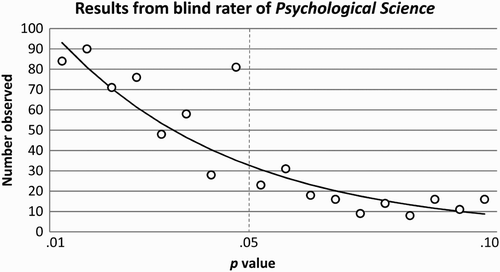
A recently published study provides some evidence that this actually happens. Masicampo EJ, Lalande DR: A peculiar prevalence of p values just below .05. The Quarterly Journal of Experimental Psychology 2012:1-9. They examined the main p-values reported in psychology journals, what they showed was something that shouldn’t happen, that p-values just slightly below 0.05 were more common than they should be.

That little circle just below .05 is way higher than it should be, people have been fiddling with their results! Imagine if we did have 11 fingers, a critical p value of .045 would make all those results non-significant.

Another new publication has suggested a way to show this, the authors reckoned that if people are fiddling, then there should be fewer than expected p values which are just above 0.05, as they will have been “adjusted” downwards. Gadbury GL, Allison DB: Inappropriate fiddling with statistical analyses to obtain a desirable p-value: Tests to detect its presence in published literature. PLoS ONE 2012, 7(10):e46363. So they developed methods to compare the proportions of p-values in different ranges, just above 0.05 and just below 0.1. Unfortunately their method only works on large data sets of p values, and can’t be used for an individual study.

The main reason this sort of thing happens, which distorts the medical literature, is the bias in publication of significant results, and the relative difficulty of publishing results if the p value is a bit too big. It was suggested years ago (Gardner MJ, Altman DG: Confidence intervals rather than p values: Estimation rather than hypothesis testing. Brit Med J 1986, 292:746-750, among others.) that we should stop publishing p values, and instead publish estimates of effect and confidence intervals. I think we could take this further, journals should review only the methods of a paper, if the methodology is sound, they could then commit to publishing, and afterwards see the results and discussion, for editing and formatting, and ensuring that the discussion is appropriate. They could demand that authors present estimates of effect and confidence intervals, and that any calculation of the statistical likelihood that the results are due to chance alone (significance testing) be presented without reference to any particular threshold.

Posted in Neonatal Research | Leave a comment

Weekly updates #10

Vanderbilt DL, Schrager SM, Llanes A, Chmait RH: Prevalence and risk factors of cerebral lesions in neonates after laser surgery for twin-twin transfusion syndrome. American Journal of Obstetrics and Gynecology 2012, 207(4):320.e321-320.e326. The authors followed children born after laser surgery, but only performed CNS imaging in those born before 32 weeks, and those more mature who had symptoms. So although described as a study of prevalence it is only a partial prevalence. There also wasn’t a standard protocol for imaging, so a 36 week infant with an cerebral infarct, who would be unlikely to have symptoms, which is not necessarily the case at all, might only have had an ultrasound, with a poor sensitivity for this kind of lesion. So not surprisingly the major risk factor for a cerebral lesion was prematurity.

Wheeler B, Broadbent R, Reith D: Premedication for neonatal intubation in Australia and New Zealand: A survey of current practice. Journal of Paediatrics and Child Health 2012:online. All Australian NICUs and transport teams give premedication prior to endotracheal intubation. Hooray! 80% of them have a written protocol. Hooray! More than half of them use morphine. Boo! (Morphine is the one opiate shown to not improve physiologic stability during intubation, its onset of action is 10 to 15 minutes, too slow for an acute procedure.)  Come on Aussies, you need to switch to something that works fast enough to reduce pain and improve stability during intubation.

Slater L, Asmerom Y, Boskovic DS, Bahjri K, Plank MS, Angeles KR, Phillips R, Deming D, Ashwal S, Hougland K et al: Procedural Pain and Oxidative Stress in Premature Neonates. The Journal of Pain 2012, 13(6):590-597. The authors measured indicators of oxidative stress before and after removing tape securing a dressing of a central line or arterial catheter. Signs of pain correlated significantly with indicators of oxidative stress.

Mann PC, Cooper ME, Ryckman KK, Comas B, Gili J, Crumley S, Bream EN, Byers HM, Piester T, Schaefer A et al: Polymorphisms in the fetal progesterone receptor and a calcium-activated potassium channel isoform are associated with preterm birth in an Argentinian population. J Perinatol 2012. We know that progesterone therapy reduces recurrence of preterm birth, this study suggests that prematurity is associated with an increased risk of having particular isoforms of the progesterone receptor, as well as a potassium channel. Also ethnic differences in these associations.

Grobman WA, Thom EA, Spong CY, Iams JD, Saade GR, Mercer BM, Tita ATN, Rouse DJ, Sorokin Y, Wapner RJ et al: 17 alpha-hydroxyprogesterone caproate to prevent prematurity in nulliparas with cervical length less than 30 mm. American journal of obstetrics and gynecology 2012. In this particular high-risk group without a previous delivery, (placebo controlled randomized trial in 660 pregnant women) progesterone didn’t work. About 25% had a preterm delivery in each group, confirming that they were indeed high risk.

Posted in Neonatal Research | Leave a comment

The Benefits of Chocolate (not quite neonatology, but relevant in the middle of a night on call)

A new publication in the Prestigious New England Journal of Medicine (that is how the news media always refer to it, I think they should change the abbreviation to PNEJM) Messerli FH: Chocolate consumption, cognitive function, and nobel laureates. New England Journal of Medicine, online first October 10, 2012,  shows that chocolate consumption per capita is very strongly correlated with number of Nobel Prize winners as expressed as a proportion of the population. The correlation is much better than you would usually find in an epidemiology publication. While the authors are appropriately cautious about implying causality, they do suggest that either chocolate makes you smarter, or that smarter people choose chocolate. Readily testable hypotheses, with large simple RCTs. I just don’t want to be randomized to placebo, thanks.

Posted in Neonatal Research | 1 Comment

Fresh! New! but not any better.

A new multicenter RCT in preterm infants has just been published. The ARIPI trial which was led by Dean Fergusson from Ottawa and included our NICU as one of the sites (Christian Lachance was our local lead investigator and is a co-author). ARIPI stands for Age of Red cells In Preterm Infants. The study was a response to many observational publications in older children and adults, that showed worse outcomes in intensive care patients when they receive older red blood cell transfusions (we rarely give actual blood any more, blood cells are divided up before we transfuse, so what you might call a blood transfusion is a suspension of red cells in a mix of plasma and some special solution to preserve the red cell function and stop the blood from clotting) compared to if they receive freshly donated red cells.

The trial compared what has become the norm in NICU; which is to give the first transfusion that a baby needs from a relatively freshly donated unit of red cells, then to give subsequent transfusions from the same unit until it is very old (often as much as 42 days); the investigators compared this to giving relatively fresh blood for every transfusion.

Very old red cells look weird under the microscope (see image below taken from an article in ‘Transfusion’ in 2006) and also don’t work very well as oxygen transporters. So the idea in older patients has been that these weird looking red cells actually induce inflammation without having a real benefit, But all of the adult and older child data is observational stuff, not a single prospective RCT. The idea was that giving fresh blood each time might improve all of those diseases that are related to inflammation and reactive oxygen species, but would have the downside of increasing donor exposure. I don’t know if anyone non-medical will have read this far 😉 but each new donor increases the risk of a viral infection such as hepatitis or HIV. But, and it is a big but, blood transfusions, or should I say red cell transfusions, are now incredibly safe. The risk of HIV is less than 1 in 1,000,000 transfusions. Blood transfusions are one of the safest things that we do in medicine, (despite the hysteria generated by politicians that means we now, in Canada, have to get individual signed informed parental consent on government approved forms prior to giving any kind of blood product) much safer than other routine therapy such as giving antibiotics, or intubating patients….

Anyway, to return to the new study, the idea was that the fresh blood arm might well have fewer complications than the ‘old’ blood arm of the study, and that this might overcome the very tiny extra risks of being exposed to more donors. The study was powered to show a 15% difference in a combined outcome of bad stuff death or one of 4 major morbidities : bronchopulmonary dysplasia, retinopathy of prematurity stage 3 or more, necrotizing enterocolitis stage 2 or more, and intraventricular hemorrhage grade 3 or 4.

What they found was…. (drum roll)…. nothing. That is right not any whisper of a difference in outcomes between the groups. The primary outcome was found in 52.9% versus 52.7%, BPD was as you would expect the commonest of the components of the primary outcome, 33% vs 32%, IVH was slightly higher, and retinopathy slightly lower with fresh red cells, neither remotely significant. Now you could argue that the study was underpowered. That a sample size of 377 infants doesn’t give you enough power to say with confidence that there is no effect. That is true, but we can say with confidence that there is no very large difference in outcomes, and that there is no difference in outcomes anywhere near as large as the observational studies suggested. You could also criticize the composite primary outcome variable, as lumping together a number of things with different pathophysiology that could go wrong with a preterm baby. But the fact remains that this was a very difficult study to get organized (but once the blood banks were interested, the logistics were easier than I thought they were going to be), and a difficult study to design and get approved and get funded.

So congratulations to the investigators. Now we know that our standard practice is not substantially worse than giving fresh red blood cells; even though we still don’t really know when to give transfusions! The study does show, yet again, that observational data are of very limited value, they can give you a pointer as to what we should study, but then the studies that we need to direct therapy, are large RCTs. Preferably really large. simple, multinational, RCTs.

Posted in Neonatal Research | Tagged , | Leave a comment

Probiotics: enough is enough

At the EAPS meeting in Istanbul, the Proprems trial results were just presented. Now this has not yet been subject to full peer-review, but as a report of a large multicenter RCT it is not likely that their main findings will change. The study was powered for a reduction in late-onset sepsis, which I would maintain was the wrong outcome, we already had good data that there is no effect of probiotics on this outcome from the 20 previous trials. However that was the decision of the investigators, so they had close to 550 babies per group: 1. placebo, 2. A mix of two Bifidobacteria,infantis and lactis, and Strep thermophilus.

The investigators had less definite NEC (grade 2 or more) than expected. 4.4% in the placebo group. Nevertheless they found even less NEC in the probiotic group (2.2%). Now I don’t have all the details or the exact sample sizes, but that reduction is pretty close to being significant at 0.05, and to be honest if it is 0.051 or 0.049 doesn’t matter a ha’penny (as an Mancunian might say).

The effect size of the Proprems trial on NEC, expressed as a relative risk, is well within the confidence limits of our expectations from prior systematic review (0.5 compared to 0.4; CI 0.29 to 0.55).  Now I don’t have all of the info about the trial and I don’t have the exact numbers, but slightly different exact numbers have almost no effect on the conclusions of an updated meta-analysis; the Proprems trial serves to narrow the confidence interval of the meta-analysis slightly. Shown below is an updated Forest plot using all of the available studies (Girish Deshpande is already working on doing this correctly, and most likely Khalid AlFaleh as well) but this is a very quick initial run at it, don’t quote me!Probiotics dec 2012

One of the interesting things that will no doubt be addressed by the authors is why the control group rate of NEC was so low? The ANZNN database reports previously showed that infants under 28 weeks (to be in Proprems you had to be under 1500 g and under 32 weeks) had a NEC incidence much higher than that, at around 10%. So either a lower risk group was enrolled, which is a possibility, or some other study characteristic decreased NEC in both groups. My first guess is that to be in Proprems you had to entered before 72 hours of age, so maybe infants who were more unstable and at higher risk tended not to be approached or did not consent.

In any case, one of the endless criticisms of previous trials was that they were in high risk groups. The new trial shows that probiotics work in a low risk situation also.

What now? All potential participants in other placebo controlled trials should be informed, MUST be informed, of this information. In a non-biased manner.

Are there still physicians who could honestly continue to randomize children to placebo? It has been many years since I would have been prepared to do so, and we have been giving probiotics routinely in my NICU now for 16 months. Our results, a prospective cohort study, are being prepared for presentation and publication as I speak, but they are not inconsistent with the systematic reviews.

Importantly NEC still exists, we might reduce it by about half with probiotics, but some babies, too many babies, still get this devastating disease. In fact it seems that the cases that we still get occur earlier than the mean age in the past (early analysis of my cohort study, to be confirmed), early onset NEC may not be affected by probiotics, perhaps the pathophysiology is different. Or maybe we need to be giving probiotics to the mothers before delivery to try and ensure normal early gut colonization, rather than waiting till they start feeds (which is our current policy) when they already have an abnormal microbiome, and it may take a while to replace the nasty little buggers with good friendly germs.

As for on-going and future studies? Enough is enough! We have more than enough data to stop randomizing babies to placebo. We need to start doing other studies to answer the important remaining questions:

  • Is one probiotic organism better than another?
  • Are 2 germs better than 1?
  • Do prebiotics make a difference? Giving probiotics with oligosaccharides that promote their growth might make them more effective, and help colonization to be more rapid.
  • Does the combination of lactoferrin and probiotics further enhance gut protection, and also reduce nosocomial sepsis, compared to probiotics alone?

Answering these questions will need very large trials, but current models of performing large trials make them very expensive, 3 million dollars for a trial of 1000 babies would not be unusual, our HIP trial of hypotension treatment in the preterm will cost about 5.6 million Euros for 800 babies. So we need to set up large permanent neonatal research networks that can perform trials that are simpler than in the past, on an ongoing basis, that are multinational, not just multicenter, that are freed from some of the excessive regulation and constraints that currently impede important research questions from being answered, but that still have mechanisms in place to protect babies from unexpected harms.

I can dream, can’t I?

Posted in Neonatal Research | Tagged , , | 2 Comments

The Nobel Prize in Physiology or Medicine

Alfred Nobel made his fortune, which he used to endow the Nobel prizes, from dynamite. He invented a way to stabilize nitroglycerine, which is very unstable and tends to explode unexpectedly. Towards the end of his life he was prescribed nitroglycerine as a treatment for his angina, which he found rather ironic; as he noted in a letter to a friend

“It sounds like the irony of fate that I have been prescribed nitroglycerine internally. They have named it Trinitrin in order not to upset pharmacists and the public.Your affectionate friend,

A. Nobel

Nitroglycerine works by releasing nitric oxide in the tissues, so when Furchgott, Ignarro and Murad won the Nobel prize in 1998 for the discovery of the importance of nitric oxide in blood vessels and, among other things, how nitroglycerine helps angina by releasing nitric oxide, the irony was compounded.

The newest Nobel prize doesn’t have that same resonance for me, I use nitric oxide for my patients, but I don’t know if I will ever use pluripotent stem cells derived from adult cells. Nevertheless one thing which is impressive is how fast an insititution can use the announcement of a Nobel prize to set up a new website! The same day as the announcement of the prize a web page has sprung up, from the insitution of one of the winners, I guess there must be money in there somewhere. The only other comment I have is that the other winner, John Gurdon from Cambridge UK has really bad hair.

Posted in Neonatal Research | Leave a comment