Heads up?

A new RCT published in the Journal of Perinatology suggests that a midline head position with head elevated at 30 degrees might reduce severe intracranial hemorrhage. (Kochan M, et al. Elevated midline head positioning of extremely low birth weight infants: effects on cardiopulmonary function and the incidence of periventricular-intraventricular hemorrhage. J Perinatol. 2018). The authors randomized 180 babies of less than 1 kg birth weight to either prone positioning with the head turned every 4 hours, or supine, with the head maintained in the midline, and placed on a wedge-shaped frame inside their incubator with a slope of 30 degrees.

They note in the introduction that maintaining the head in the midline has become part of some quality control guidelines for reduction of IVH. Even though that is true, I am not aware of any prospective trials that show an impact of head position on IVH, and the authors of this study do not quote any. There are several physiologic type studies that have examined the very short term consequences of different head position, but none have demonstrated that those changes are either persistent over 2 to 4 days, or aetiologically associated with intracranial bleeding. The Cochrane review of the issue (from 2017) found 2 studies that compared supine midline positioning to supine lateral head positioning (n=110 total), and found no evidence that there was an impact on the frequency or severity of IVH.

This trial report leaves several unanswered questions, partly because it doesn’t follow CONSORT guidelines. Specifically regarding randomization procedures, the randomization was “using a block randomization table” and was “performed using SAS V9.4” CONSORT guidelines do require the method of generation of the randomization sequence, but also require a description of the mechanisms of allocation concealment, and the implementation of the whole process.

The way it is reported leaves open the possibility that investigators knew which group the next patient would be enrolled in. There are also a few other things that are unclear, the report notes that there were 60 infants who were twins, and that they were randomized individually, but then in the final two groups there were only 29 twins. This seems to imply that infants were randomized, but then did not participate in the study, the major exclusion factor being that an investigator was not available to do the initial ultrasound, which was done immediately after the baby was in the randomized position. That also implies that once a baby was randomized and placed in the position, the ultrasonographers availability would be evaluated. This also leaves a chance for unconscious bias in enrolment.

The primary outcome variable of the study was “the incidence of PIVH”, (that is periventricular and intraventricular hemorrhage) although it is not named as being the primary outcome variable. The purpose of the study is described as being to determine whether the body position would “decrease in the incidence of PIVH” [sic] and the sample size was calculated based on a hypothesized decrease in PIVH from 40% to 20%.

I can’t find a registration record for this trial, which would list the primary outcome variable, and there is no registration mentioned in the manuscript.

Amazingly enough, there is no presentation in the publication of a statistical analysis of the primary outcome variable, in the abstract the primary outcome variable is not mentioned at all.

So here is the analysis of the primary outcome variable: there were 34 infants with PIVH in the head elevated group, and 31 infants with PIVH in the prone group; 38% vs 34%, a difference of 3.3% (95% confidence intervals -11%, +18%). This is clearly a result that could have arisen by chance, in other words this is a negative trial, and secondary outcomes that might be different between groups can only be hypothesis-generating.

Unfortunately the abstract only refers to 2 secondary outcomes, and doesn’t mention the primary. As there is no registration record or published protocol we do not know if those secondary outcomes were chosen after the results were examined or before. Those secondary outcomes are arguably more clinically important than the primary outcome; “grade 4” hemorrhage and survival. Both of those were slightly better in the head elevated group.

The incidence of “grade 3 and grade 4” hemorrhage in the prone/flat babies was 20%, and in the head elevated babies was 12.2%. I put those together to compare to recent data from the Canadian Neonatal Network, for which in babies less than 1kg the incidence of grade 3 and 4 hemorrhages  is around 10%.

Also of interest, all but one of the babies in this study each group of this study were intubated on day 1, and the authors never state if there was a minimum weight for eligible babies.

I think it is a real shame to take the time and effort to do a worthwhile trial like this, and not register it, not make the protocol available (either as supplemental information with the publication or by publishing it), and not report it according to CONSORT guidelines.

I would say that the results do show quite a high incidence of serious hemorrhages in the flat/prone group, and if the random allocation was indeed concealed, the trend to fewer serious hemorrhages in the elevated/supine/midline group is something that warrants further investigation.

Keeping the baby’s head midline, supine and 30 degree elevated positioning means that the infant can’t be prone, and they can’t go in kangaroo, at least not the way it is normally done. So we will need to know if this is a real effect, and if so which part of the positioning is important, elevation, supine positioning, or head midline. Many babies in the category of less than 1000g birthweight are at quite low risk of serious hemorrhage, larger inborn babies who have completed steroids, and especially those who are never intubated, uncommonly develop PVHI. A study in babies selected for higher risk would need fewer numbers, and might be easier to get completed in a reasonable time. The intervention is cheap so keeping organizational costs to a minimum might make a trial with a high potential impact, at relatively low expense.
Posted in Neonatal Research | Tagged , | 2 Comments

Active intervention at 22 weeks gestation, is it futile?

In order to respond to the question posed in the title we need first to agree on what “futile” means. It could mean “it never works” or, “it can work but the ultimate result is so bad that it isn’t worth doing”, or “it works so rarely that the effort and resources required are enormous, and it therefore isn’t worth doing”.

In neonatology, and clinical care in general, the term has been used to mean each of those 3 things (you could probably come up with other definitions), the response to the question depends on which you think is most appropriate.

Clearly “it never works” is not true, sometimes babies born between 22 weeks and 22weeks and 6 days do survive to go home.

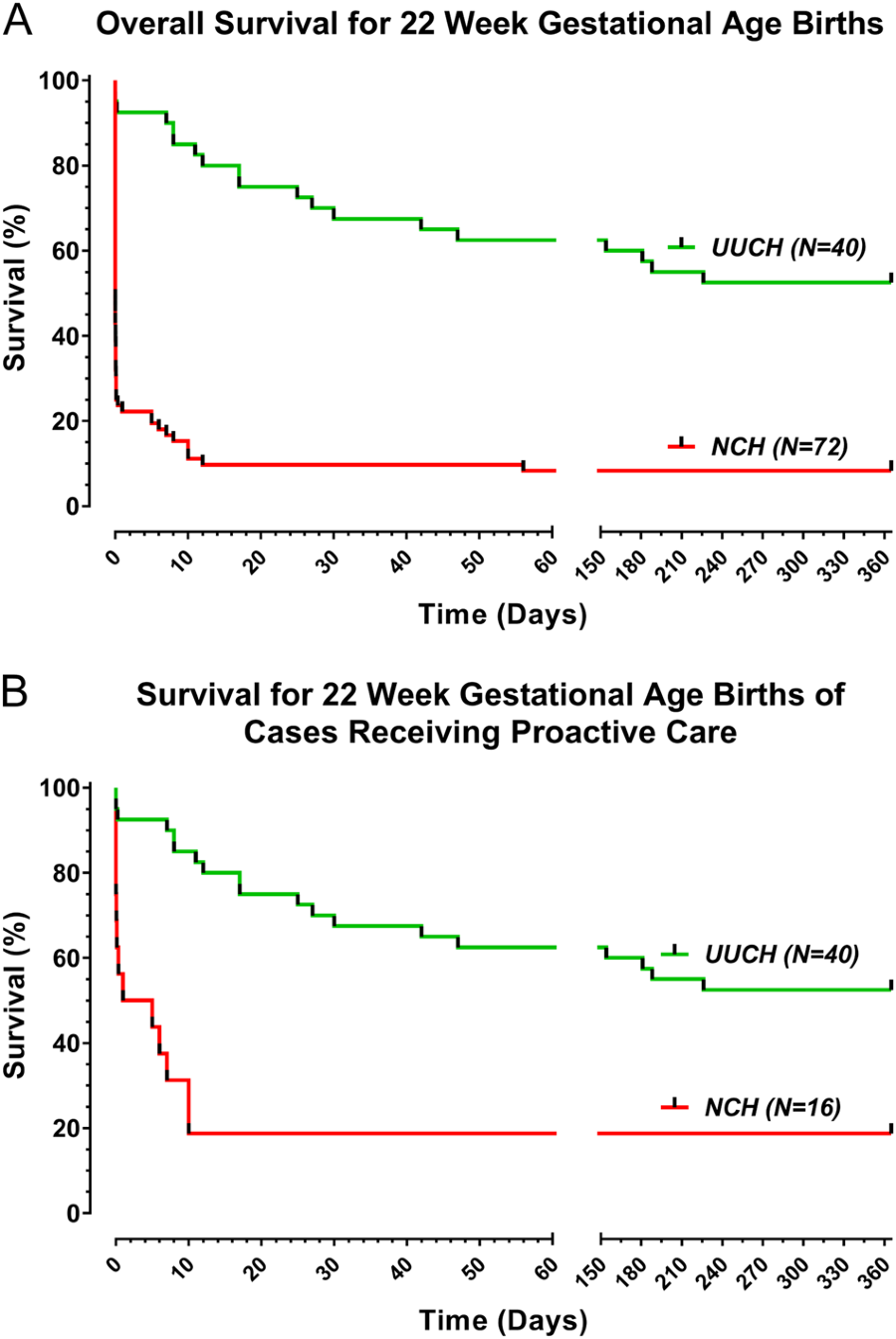
In fact the proportion of survivors can be impressively good. (Backes CH, et al. Outcomes following a comprehensive versus a selective approach for infants born at 22 weeks of gestation. Journal of Perinatology. 2018). In this article the authors compared outcomes between a center in Sweden (Uppsala) and one in the USA (Nationwide Children’s, Columbus Ohio). There may be multiple differences between the populations and the medical approach, but the authors focused on what is probably the most important, that is the proportion of mothers and babies with threatened profoundly preterm deliveries who received comprehensive active care.

You could probably characterise the approaches as “Opt-out”, in Uppsala, the default approach is to counsel the parents with the attitude that active intervention is usual and is encouraged by all the team, compared to “Opt-in” where the team attempts to obtain a consensus regarding active intervention, and the parental choice is the priority.

In the article the authors refer to these approaches as a comprehensive approach, and a selective approach.

In Uppsala over a 10 year period (2005-2016) there were 33 mothers who delivered 41 live born infants between 22 weeks and 22 weeks + 6 days best-guess gestational age. All chose active intervention, all received antenatal steroids (and 85% were able to have a 2nd dose), all had surfactant in the delivery room by a team being led by a neonatologist, and 38 survived to NICU admission, none had a cesarean delivery.

In Columbus over the same period there were 64 mothers who delivered 72 babies. Twenty percent (13) received steroids, and 9% (6) had 2 doses. There were 16 babies who had active interventions, 56% (9) had surfactant in the delivery room, a neonatologist was present 75% of the time (11) and 31% (5) were delivered by cesarean (another 2 mothers who did not have active neonatal care also had a cesarean).

Fig. 2

You can see from these survival curves the dramatic difference in mortality between the 2 centers when you include all the live born infants (panel A) or only the babies that received active interventions (panel B).

When the analysis was corrected for multiple risk factors, the relative impact of being born in a center with uniform comprehensive care was actually increased. In other words the babies in Uppsala receiving active care were not heavier, or with lower risk factors, in fact the opposite is true, birth weight averaged 489 vs 527 g and there were more twins. The Odds Ratio of survival after correction was 14.47 (95% CI 3.09, 68.7) in Uppsala compared to Columbus.

This post is by no means a criticism of Columbus, they seem to have an approach similar to many centers in North America, indeed, they are more open to active intervention at 22 weeks than some centers, which refuse to intervene. Their survival rate among actively treated babies is well within the range of those reported for good quality centers. I applaud them for collaborating in this study. Survival to hospital discharge was 53% in Uppsala, and 8% in Columbus, but 19% among those who received active care.

So it is clear that active intervention at 22 weeks cannot be called futile, if by which we mean it never works. But what about the “ultimate result”? This article also includes some follow-up data from all of the survivors at Columbus, and all but one of the survivors in Uppsala. In Columbus all of the survivors had moderate to severe impairment. In Uppsala 20 of the 21 survivors were evaluated, 11 had no impairment, 2 were mildly impaired, and 5 had moderate to severe impairment.

Is the team in Uppsala unique? Are they the only ones to achieve such results, such that we cannot think of extending their success elsewhere? The group in Cologne (Mehler K, et al. Survival Among Infants Born at 22 or 23 Weeks’ Gestation Following Active Prenatal and Postnatal Care. JAMA Pediatr. 2016;170(7):671-7) have published their results of an approach that lies somewhere between these 2 centers, that is a selective approach, but one that ends up with a higher proportion of active intervention. They report 45 live births at 22 weeks, 28 of whom received active interventions (62%), they had 61% survival among those 28 babies at  22 weeks, or 38% if expressed as a percentage of live births.

Are such results possible in North America?

I was just invited as a guest speaker in Iowa, at their first symposium on care of the periviable infant. This was a very high quality small symposium, presentations regarding approaches to the profoundly preterm infant, use of steroids, clinical practices, nursing practices etc. Much of the discussion after the talks was focussed around practices at the University of Iowa, because they have had a policy of encouraging active intervention for many years at 23 and then at 22 weeks. That policy has led to an amazing depth of experience, and a great wealth of knowledge.

Although they are currently trying to publish their results, and therefore there are not a lot of references that I can give, their results of survival among all liveborn babies at 22 weeks gestation, between 2006 and 2016 are 59%. In the most recent period that appears to be more like 65%. They are currently in the process of publishing some results, so I won’t give away any more details, but I am confident that the survival figures are accurate.

Centers who usually, or almost always, give active care to the most immature infants at 22 weeks have survival figures that are better than I thought was possible a few years ago. To achieve such a result you must have a coordinated approach with obstetrics, and administration of steroids whenever active intervention at that gestation is likely to occur. A positive attitude is very important, a belief that it is possible to have good survival, both in terms of percentages and in terms of quality of life of survivors. In Columbus there were a number of families in which there was “inconsistent care”, i.e. the approach of the obstetrical and neonatal teams differed, very often that is active intervention at birth but no steroids being administered, despite having the time to do so, but we don’t know that specifically from this study. The other point is that active intervention does not imply cesarean delivery, mode of delivery is a separate decision, and making that decision requires other considerations, such as the intended reproductive future of the mother. Very good survival without using cesarean delivery is possible.

Is there a downside? If you frequently institute active intervention in babies at such high risk, there will be many complications. As you can see from the data from Uppsala, there were several late deaths, one after 226 days of NICU care, whereas in Columbus death usually occurred early, the latest being at 10 days. The frequency of complications in all of these cohorts, (NEC, sepsis, BPD, RoP brain injury on ultrasound) is high. But survival at quite reasonable frequency is possible, in multiple centers, and many survivors do not have major impairment.

I don’t think that futility can any longer be used as an argument for not actively intervening at 22 weeks.

Posted in Neonatal Research | Tagged , , | 1 Comment

Prebiotics and preterms and probiotics.

A selection of recent publications, regarding the issues in the title, that I find interesting and which seem to tell a consistent story.

From Nick Embleton’s group the following interesting study (Stewart CJ, et al. Longitudinal development of the gut microbiome and metabolome in preterm neonates with late onset sepsis and healthy controls. Microbiome. 2017;5(1):75) As an aside, I hate journals that put the methods after the discussion, it makes publications that have no chronologic sense, and the methods are the most important part of an article. I think that peer review would be improved if the only thing the reviewer got to see before deciding whether an article was worth publishing or not, was the methods section. The only way to know if results are reliable, and a discussion is reasonable, is from the methods. It might be OK sometimes if everyone always uses the same methods for an in vitro assay, I guess, but the most important part of a study involving humans, or samples from humans, are the characteristics of those humans, how they were recruited, how samples were obtained etc. etc. (End of small rant).

In this journal the abstract doesn’t even have a section marked “Methods” the only thing we know from the abstract about what was done is the last sentence of the “Background” section : “We performed temporal bacterial (n = 613) and metabolomic (n = 63) profiling on extensively sampled stool from 7 infants with LOS and 28 matched healthy (no LOS or NEC) controls.” In the first publication from this study, the authors described sequential stool samples from 318 preterm infants, of which there were 7 cases of NEC, who were matched to 28 controls, by gestational age, birth weight, and delivery mode. In that publication they showed that there were several patterns of gut colonization (which changed over time) and that the pattern with the microbial highest diversity never preceded NEC. As far as I can tell the babies were all 30 weeks or less gestational age.

In the new publication they report similar methods for 7 of the infants who developed late-onset sepsis (culture-positive), again compared to matched controls without sepsis or NEC.

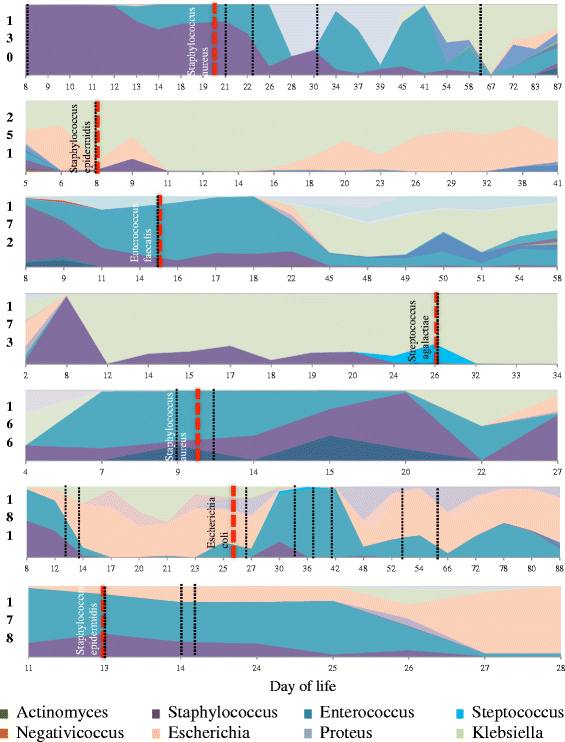
The gut microbiome of infants with LOS were highly individual and dynamic through time. The pathogen identified by blood culture was one of the most abundant OTUs in the gut microbiota at diagnosis, with the corresponding genus from the gut microbiome the most abundant in four cases and second most abundant OTU in two cases (Fig. 1). An exception was Staphylococcus epidermidis LOS in infant 251, which was the seventh most abundant genus at diagnosis. In all cases, the genera of the bacteria isolated in diagnostic blood culture were present prior to LOS diagnosis.

Here is that figure 1

Fig. 1

Area plots showing the temporal development of the microbiome in infants diagnosed with late onset sepsis (LOS). Dashed red lines represent the day of LOS diagnosis with the bacteria isolated from blood culture identified. Dashed black lines represent the start of an antibiotic treatment.

You can see here the case 181, for example, who had predominant E coli in the intestines prior to having sepsis with the organism, the same for case 172 and Enterococcus.

An OTU is an “operational taxonomic unit” and is a term used to define a group of bacteria that share the same 16s RNA sequences within a certain percentage similarity, (often around 98%) it is not exactly the same as a species or a genus.

They also showed that when you have lots of Bifidobacteria, you were a control, i.e. you didn’t get late-onset sepsis. The metabolomic findings in the gut seem to reflect the bacterial activity, at the time of diagnosis of sepsis, with Galactose metabolism being more active in the controls, and being associated with Bifidobacterial presence.

Jost T, et al. Impact of human milk bacteria and oligosaccharides on neonatal gut microbiota establishment and gut health. Nutr Rev. 2015;73(7):426-37. This is a review article from a Swiss group very active in the area, mostly interested it seems, in normal full term infants and how their gut gets colonized. They point out the importance of maternal-neonatal transfer of organisms such as Bifidobacteria and Lactobacilli. They discuss the presence of prebiotic molecules in milk, specifically those that are probably most important for maintaining the growth of probiotic organisms, the oligosaccharides, known as HMOs, human milk oligosaccharides, it seems to me from my reading that the HMOs which are the most important may well be the fucosylated HMOs, but sialylated HMOs might also be crucial, or the balance of different types.

Even though HMOs are a major component of breast milk, human infants can not digest them. They seem to be present solely to feed probiotic organisms, Bifidobacteria have specific glycosidases which digest HMOs, which most pathogens do not. The situation becomes even more complex in the preterm infant, in whom abnormal gut colonization with pathogens might actually be worse in the presence of some HMOs, which are neither fucosylated nor sialylated, those HMOs seem to be associated with increased growth of Enterobateria (the group that contains many familiar Gram-negative pathogens).

Breast milk from mothers who deliver preterm seems to have a lower and much more variable proportion of the HMOs fucosylated, whereas in term delivering mothers it was very consistent at just over 60%, in another study from the productive group at UC Davis.

Aakko J, et al. Human milk oligosaccharide categories define the microbiota composition in human colostrum. Beneficial microbes. 2017;8(4):563-7. This study showed that the different colostrum samples (from mothers delivering at term by elective caesarean) had differing concentrations of HMOs of differing types, and the types of HMOs were strongly associated with what organisms were most abundant in the microbiome of the mother’s milk. Overall, the more HMOs that were present, the more Bifidobacteria were present, and different HMOs seemed to be associated with different bacterial profiles.

Autran CA, et al. Human milk oligosaccharide composition predicts risk of necrotising enterocolitis in preterm infants. Gut. 2018;67(6):1064-70. Samples of milk being fed to VLBW preterm infants were collected, 10 of them developed NEC, 8 were stage 2 or 3. The milk they received prior to developing NEC had much lower concentrations of a specific HMO, disialyllacto-N-tetraose, compared to matched controls (5 per case). A few of the cases did in fact receive some formula (which you only discover by opening the supplementary materials), and I can’t see any mention of donor milk in the manuscript. The data do seem to suggest a fairly strong association between low maternal milk concentrations of this particular HMO and the development of NEC.

Meredith-Dennis L, et al. Composition and Variation of Macronutrients, Immune Proteins, and Human Milk Oligosaccharides in Human Milk From Nonprofit and Commercial Milk Banks. Journal of human lactation . 2017:890334417710635. Despite the title, this article is not really about the profit motive, it is about the composition of milk that came from 3 different sources, one the Mothers’ Milk Bank in San José, which uses standard Holder Pasteurization (62.5 degrees for 30 minutes), the second being Prolacta, which uses something called vat pasteurization (63 degrees for more than 30 minutes), and the 3rd Medolac, which uses a retort sterilization technique (121 degrees and 15 psi for 5 minutes). The group from UC Davis did extensive analysis of 3 samples from each source and found that the macronutrients were different: protein concentrations were highest with the Holder pasteurization technique (but the donor pool might have a few more mothers who delivered prematurely) and the fat content was lower with the retort sterilization.

For the immune proteins “The concentrations of IgA, IgG, and IgM were the lowest in the milk samples sterilized by the retort method (p < .05). Concentrations and abundances of lactoferrin, α-lactalbumin, α-1-antitrypsin, and casein (α, β, and κ) were the lowest in the milk samples that were sterilized by the retort method and highest in the milk samples pasteurized by the Holder method (p < .05).”

To return to the HMO topic of the day “The concentration of total HMOs was about 2-fold higher and approximately 50% higher in samples pasteurized with Holder compared with retort and vat methods, respectively (p < .05).”

You can’t ascribe all of the differences to the pasteurization/sterilization method alone, as there are other differences in sourcing and manipulating the milks that are different, but the milks were clearly not identical, and other studies also show that the treatment methods have differing, probably adverse, effects on milk composition.

This might, at least partly, explain why donor human milk doesn’t seem as good as raw mother’s own milk, as a prevention for NEC and sepsis.

To put all this together, prebiotic molecules, particularly specific HMOs, found in fresh maternal breast milk promote the growth of probiotic organisms in the breast milk. Together the probiotics and prebiotics in breast milk promote the development of a bowel microbiome that predominates in Bifidobacteria. Abnormal bowel colonization is commonly found in the very preterm baby, and some patterns, especially those lacking Bifidobacteria, are closely related to the development of late onset sepsis and NEC. Milk which is lower in some HMOs seems to be a risk factor for development of NEC. Maternal milk is quite variable in composition and microbiome, and some of that variability might mean that some mother’s milk is less protective than others. Donor human milk, has most of the microbiome destroyed (on purpose) and exactly how it is treated has differing impacts on composition, including on probably protective components. Further supplementation of maternal and donor human milk feeds with probiotics, prebiotics, and potentially other bioactive molecules such as lactoferrin is a reasonable approach. Probiotic supplementation is already shown to reduce NEC, and to a lesser extent late-onset sepsis, but many studies show a relatively modest contribution of administered probiotics to the preterm intestinal microbiome  We need to investigate supplementation of maternal (or donor) milk with prebiotics, particularly the right HMOs; we may be able to make human milk even more efficacious as a way of preventing these complications.

Posted in Neonatal Research | Tagged , , , , | Leave a comment

Supporting breast feeding : don’t dump the domperidone.

Breast is best, as I say repeatedly, and mother’s breast milk is the best of the lot; we should do all we can that is effective and safe to ensure that mothers of preterm babies can supply adequate milk for their infants.

(Picture from the Sick Kids www.aboutkidshealth.ca website)

For several years I have prescribed domperidone for some mothers, currently in collaboration with our excellent group of lactation consultants, in the hope that the apparent short term augmentation was a real effect. I was not that sure that the impact was enough, or safe enough, but it seemed to work, and I thought we needed better data.

Last year a publication from a Canadian multicenter trial Asztalos EV, et al. Enhancing Human Milk Production With Domperidone in Mothers of Preterm Infants. Journal of human lactation. 2017;33(1):181-7. showed an improvement in milk output with the drug. The study was stopped early because of the difficulties in enrolment, and only 90 of the 560 mother sample size was enrolled. The study enrolled mothers 8 to 21 days after delivery of a baby of less than 29 weeks, who were not producing enough milk to supply 100% of their baby’s needs (estimated at 150 mL/kg/d). They received either domperidone 10 mg 3 x per day, or placebo for 14 days, and then another 14 days of active drug in both groups. On day 14 there was a higher proportion of mothers in the active group who had more than a 50% increase in milk production (78% vs 58%). By day 28, when all were receiving active drug, there were no longer any differences between groups. No significant adverse effects were found.

The domperidone works, then, and promotes breast milk production, with an average of over a 200% increase in volume; the absolute number of mLs difference was not enormous. The results suggest to me that a mother who has been evaluated by a lactation specialist, and nevertheless continues to produce less milk than her baby needs between 1 and 3 weeks after delivery, and who is prepared to take a medication, then it will likely increase the proportion of her milk that the baby receives. If she isn’t sure about taking the drug she could wait another 14 days, and then be re-offered the medication, if she is still having problems, as it will probably still work.

Just in print is a systematic review of domperidone for this indication (Grzeskowiak LE, et al. Domperidone for increasing breast milk volume in mothers expressing breast milk for their preterm infants: a systematic review and meta-analysis. BJOG. 2018;125(11):1371-8) of which the Asztalos trial is the largest. The review is accompanied by a video summarizing the results, how very 21st century for those with short attention spans!

The total data set is less than 200 mothers, unfortunately, so the power to detect adverse events is low, however, a modest increase in milk production among mothers of preterm infants, all of whom were enrolled because of low milk supply, was consistent among the studies. The actual volumes involved were enough to have a valuable impact on the proportion of maternal milk received by the babies. No adverse effects in either mother or baby has been shown in the 5 included trials.

So don’t dump the domperidone!

Posted in Neonatal Research | Leave a comment

Not neonatology: Snow Goose migration

Every year at least 1 million Snow Geese migrate from the Canadian arctic tundra towards the Carolinas. Many of them stop in Quebec especially around the region of Cap Tourmente, not far from Quebec city. There they eat the rhizomes of the American Bullrush, which few other large creatures eat, the energy stores in the rhizomes are important for the calories they need for the migration.

I went last weekend to see the tail end (!) of the migrating hordes, here mixed with Green-Winged Teal (Canada’s smallest duck). According to the official count/estimate there were over 16,000 geese that day.

Most of the birds are like the white morph on the lower left of this photo, the dark morph makes up a few percent of the flocks.

They sometimes pose for a portrait.

And sometimes fly in huge clouds as they head to roost in the evening.

We were also fortunate to see one of the last Belted Kingfishers before the water freezes and they head southerly. The white dots on the photo are a few flakes of snow that were falling.

Posted in Neonatal Research | 2 Comments

Clunk/click every hip

For those of you who are not of a certain age, and brought up in England, that title will not mean very much. When seat belts in cars were first made compulsory in the UK there was a widely quoted government advertising blitz, with the sound of a car door closing followed by the sound of a seat belt being fastened, the motto of the campaign was “Clunk Click every trip”.

Résultats de recherche d'images pour « clunk click every trip »

(Those hands probably belong to Jimmy Savile, the spokesman of the campaign; who later, mostly after his death, became recognized as a serial sexual predator, whose victims were in the hundreds)

But back to neonatology and the tricky problem of detecting hip dysplasia. As a young trainee I was taught the Ortolani and Barlow manoeuvres, and to differentiate between a “clicky hip”, common and, we were taught, associated with ligamentous laxity due to fetal exposure to maternal progestins, and a “clunk”, a feeling of movement of the joint associated with dislocation/subluxation of an unstable hip or reduction of a hip already subluxated. When I was in that phase of my development, oh these many years ago, there was no such thing as hip ultrasound and we sent hips with suspected “clunks” for x-ray.

Despite 40 years of practice the number of babies in whom I have personally detected an abnormal hip, in the absence of other associated conditions, i.e. those who should be picked up by a universal physical exam screening program, is tiny, perhaps 2. To be fair, I haven’t spent much time covering the term nursery during those years. I certainly started to teach other juniors how to examine hips before I had ever detected a new case myself!

A new editorial (Hall DM, Sowden D. Hip hip: no hurray. Arch Dis Child. 2018)
points out that I am not alone, many junior pediatric staff never see a case, and in the lifetime of a family practitioner maybe they will see 2 or 3. The editorial was written to discuss a program in Scotland that reports some results in the same issue of ‘Archives’. (McAllister DA, et al. Enhanced detection services for developmental dysplasia of the hip in Scottish children, 1997-2013. Arch Dis Child. 2018). Two regions in Scotland introduced enhancements to the neonatal screening programs and showed a reduction in the need for surgical treatment of hip dislocation, whereas in other regions the number of surgical cases were stable. Unfortunately it is not entirely clear what the enhancements in service really entailed, in one region a physiotherapist personally examined many hips, and did a lot of teaching, awareness promotion, and a clinic for secondary examinations. In the other region a physician set up a specific clinic providing secondary examinations and ultrasounds and helped to train medical and maternity staff how to examine the hip. There aren’t many more details about what they actually did, how many patients they saw directly themselves, what proportion had ultrasounds etc. In the region with the physician 31% of the babies over a 9 year period had “expert examination and ultrasound” but it would be impossible to try to copy these programs without much more detail, or to know which parts are most likely to be important.

This graph shows the different risks of surgery for “DDH” developmental dysplasia of the hip, in the 2 regions with the programs, where roughly one fifth of Scottish babies are born, where surgery became less frequent, about a 50% drop, and the remainder of Scotland over the same years where it remained stable.

https://adc.bmj.com/content/archdischild/103/11/1021/F2.large.jpg

As far as I can tell surgery included both open and closed reductions of unstable hips, so it seems that these enhanced programs are associated with less surgical reduction, which is certainly a worthwhile goal, as long as all necessary surgeries are being done, and the long term outcomes are good.

A Cochrane review of hip screening programs was unable to find enough good quality evidence to inform evidence-based recommendations.

Many screening programs are introduced without the kind of hard evidence that is needed and should be required prior to subjecting babies to the intervention. Even though the evidence for pulse oximetry screening for critical congenital heart disease is to my mind now quite convincing, the way in which the process of evaluating the programs started was really not optimal.

A very large randomized trial comparing standard detection algorithms in the real world, compared to the new screening approach, either as an add-on or as a replacement, should be the way these things are introduced. Blinded performance of the add-on method in the standard screening group adds to the data that can be generated, but is not essential.

Several jurisdictions have now introduced universal hip ultrasound screening for developmental dysplasia. Again without the kind of high-quality evidence that would be preferable, I wonder, for example  if universal screening is better than just screening girls, or just screening girls who were in breech? I wonder what is the sensitivity and specificity of a clinical hip exam, and what would be the gold standard for such an evaluation, presumably hip ultrasound? But minor degrees of hip abnormalities on ultrasound are known to sometimes improve. I also wonder what the best outcome measure for such a study should be?

I think I would like to know, when comparing approaches to screening, which approach leads to the lowest proportion of children who end up with disability. If disability is equivalent with 2 methods, then a smaller number of surgeries required to achieve the results would clearly be a benefit, if those numbers are also equivalent, then few children with splinting and non-surgical interventions would be of value for the child and families.One problem with this of course us that, with modern surgical methods very few children end up with significant disability, so a study would need to be huge. As you can see from the graph above, requirement for surgery is somewhere between 0.5 and 1.3 per 1000 live births, so even s study investigating surgical rates would need to be very large.

One of the randomized trials, performed in Norway of a universal ultrasound screening program (Holen KJ, et al. Universal or selective screening of the neonatal hip using ultrasound? A prospective, randomised trial of 15,529 newborn infants. J Bone Joint Surg Br. 2002;84(6):886-90), found a reduction in the rate of late detected hip dysplasia with an RR of 0.2 (1 case out of 7,500 compared to 5 cases per 7,500) , which is a major reduction, but given the rarity of this outcome even such a large reduction may have been due to chance (95% CI 0.03-1.45).

A new publication from a center involved in a universal ultrasound screening program Biedermann R, et al. Results of universal ultrasound screening for developmental dysplasia of the hip. Bone Joint J. 2018;100-B(10):1399-404. reports the results of screening over 28,000 infants in their center. They report no cases of late diagnosis, an overall treatment rate (mostly Pavlik harness or a similar device) of 1% of babies, and 25 total (or 1 per 1000) who had surgery.

A review article published last year (Paton RW. Screening in Developmental Dysplasia of the Hip (DDH). Surgeon. 2017;15(5):290-6) came to the following conclusions :

  • Sonographic selective screening of all ‘at risk’ hips has not reduced the rate of ‘late’ presenting irreducible dislocation when compared to universal clinical hip screening.
  • The General Practitioner hip screening examination is ineffective in diagnosing many cases of pathological DDH in its present form.
  • Spontaneous resolution of clinical and sonographic abnormalities makes the diagnosis of ‘pathological’ hip dysplasia difficult.
  • Sonographic hip dysplasia is a poor outcome measure, as the most robust outcome measure continues to be irreducible hip dislocation.
  • The diagnosis of clinically normal but sonographically diagnosed abnormal hip joints may lead to over diagnosis and potentially over treatment of the condition.
  • Pathological DDH is mainly a female condition and most males are not ‘truly’ at risk if the hip joints are clinically stable.
  • Previously accepted risk factors are not ‘at risk’ i.e. CTEV (Congenital talipes equino-varus), Postural TEV (Talipes equino-varus) Oligohydramnios, Caesarean section, IUGR (intra-uterine growth restriction), Miscellaneous foot problems.

I agree with most of those points, but the evidence for some is weak, especially the first. Remeber that babies with any one of several congenital syndromes, and preterm infants are excluded from this discussion.

I think there is a case to be made for universal ultrasound screening, and the true impact on over-diagnosis and over-treatment is unclear, but very few cases are missed. On the other hand, screening all girls, all boys with a breech presentation, and all those with a first degree relative with a history of developmental dysplasia of the hip would dramatically decrease the number needing screening  with very little impact on the numbers detected.

Posted in Neonatal Research | Tagged , | 3 Comments

Moral Distress in the NICU, a webinar.

Trisha Prentice is a neonatologist in Melbourne who has been working with Annie Janvier and Peter Davis examining the occurrence and causes of moral distress in the NICU. They have already published a systematic review of the subject (Prentice T, et al. Moral distress within neonatal and paediatric intensive care units: a systematic review. Arch Dis Child. 2016;101(8):701-8) and the first in what will be a series of publications about her research (Prentice TM, et al. Always a burden? Healthcare providers’ perspectives on moral distress. Archives of disease in childhood Fetal and neonatal edition. 2018;103(5):F441-F5). Of which a one sentence summary is : all professionals in the NICU experience moral distress, that it is usually when parents want to continue care after the caregiver thinks that it would be preferable to redirect to comfort care, and most caregivers think that it is inevitable in a setting such as ours that moral distress will occur, and indeed it may have value as a stimulus for us to examine our preconceptions.

She will be presenting a webinar on Wednesday 24th of October at midday Kansas CIty time, as part of the excellent series of pediatric bioethics webinars run out of the Kansas City Children’s Mercy Hospital Bioethics Center, under the direction of John Lantos.

You have to register in order to participate in the webinars, which you can do from here https://www.childrensmercy.org/bioethics/webinars-and-podcasts/ but they are free and open to all.


Posted in Neonatal Research | 1 Comment

All that pneumatoses is not NEC

OK, I know pneumatose is not a verb, but I thought it was a cute title.

What is NEC, anyway? Necrotizing Enterocolitis, of course, you might reply. But it’s not as simple as that. The very preterm baby who deteriorates after being stable (usually after introduction of feeds), with abdominal distension, ileus, intestinal dilatation, obvious pneumatosis on x-ray, air in the portal venous system, who progresses to perforation and on laparotomy has skip lesions of necrotic bowel, such a baby is a clear case of classical NEC; but may be in a minority.

I have seen babies who present clinically exactly like that but on laparotomy had a strangulated internal hernia or other diagnoses. Full term babies also develop similar clinical and radiologic findings, but they almost always have other major risk factors. Infants with spontaneous perforation would have been classified as NEC in the past, but are now clearly recognized as a separate group.

Even among those with apparent ‘premie NEC’ there are major problems in diagnosis. Previous studies have shown that the radiologic diagnosis of pneumatosis is very uncertain, with inter-observer variability very high. A new study has looked at whether diagnosis of NEC made by local investigators can be supported when the files are reviewed by other experts.

Challis P, et al. Validation of the diagnosis of necrotising enterocolitis in a Swedish population-based observational study. Acta Paediatr. 2018.

This is a publication from the EXPRESS cohort that we have covered here on several occasions. Over a 3 year period all the babies of less than 26 weeks probable gestation born in Sweden were followed; and for many publications, they also followed stillbirths and counted mothers who were admitted with threatened extremely preterm delivery.

For this publication the data from the 707 live born babies was examined, and the 602 who survived more than 24 hours were included. All babies with a diagnosis of NEC in the database were reviewed, in addition any baby who had a sudden reduction in their feeding intake, to less than 10% of total fluid intake for more than a day (or if they never exceeded 10% in the first 10 days). The hospital records were obtained of these babies to see if independent neonatologists would confirm the diagnosis or not.

There were 39 babies identified in the database as being cases of NEC of which 16 after review were not definite cases of NEC, even 5 of the babies who had surgery were re-classified as no-NEC, 3 spontaneous perforations, one volvulus, and one meconium ileus.  Two babies were classified as no clinical suspicion of NEC, and 11 as possible NEC (referred to as Bell’s stage 1) which didn’t fit the case definition.

Among the 74 babies who had an episode of feeding reduction/interruption there were 4 with definite NEC, 2 had surgery and had reported findings consistent with NEC, 1 had NEC at autopsy, and 1 had clear x-ray findings. Another 7 babies were thought to have possible, stage 1, NEC and were therefore classified as no NEC.

This, to me, points out 2 things; firstly, sometimes data in clinical databases is unreliable, if a baby with findings on autopsy of NEC can be in the database as a case of ‘no NEC’, and a baby with volvulus is a case of ‘NEC’ then we have to be very careful to interpret our databases. Precise definitions, quality control of data entry, secondary verification of critical diagnoses, are important to improve reliability. Secondly, even for cases that are not clearly errors, in a diagnosis such as NEC there is a lot of inter-rater variability (or you might call it subjectivity) in deciding whether an x-ray shows pneumatosis, or other findings consistent with stage 2 NEC. One of the things that has changed (relatively) recently is the appearance of abdominal ultrasound to try to help in management of the condition. We have had cases which never had pneumatosis on x-ray, but an abdominal ultrasound was reported as showing “pneumatosis”, they were then entered into our database as cases of NEC, despite the fact that strict application of case definitions in use at the time did not include ultrasound findings.  The newer version of the definitions we use  now states “or other imaging modality” which I think is a mistake.

A recent systematic review of the diagnostic accuracy of abdominal ultrasound for diagnosis of NEC has been published. (Cuna AC, et al. Bowel Ultrasound for the Diagnosis of Necrotizing Enterocolitis: A Meta-analysis. Ultrasound Q. 2018;34(3):113-8). As all systematic reviews/meta-analyses it suffers from the limitations of the primary publications, but it does give some guidance as to the likely usefulness of the technique. The systematic review found 6 prospective cohort studies, with 462  infants with suspected NEC who had both radiographs and ultrasound studies. For such studies you have to decide what is the “gold standard” which is of course staging as Bell’s stage 2 or more using radiography. I can’t think of  a way of getting around this at present, but the “gold standard” is more like a tarnished silvery coloured metal. The review showed that among infants with confirmed NEC, ultrasound was relatively insensitive for most findings (portal venous gas, pneumatosis, free air, bowel wall thickening, bowel wall thinning, absent peristalsis, ascites and focal fluid collection) but was reasonably specific, mostly over 95%. The exceptions being pneumatosis at about 90%, and for bowel wall thickening at 67%.

So among the babies in these studies, even when there was a clinical suspicion of possible NEC, 10% of the time when the ultrasound showed “pneumatosis” the baby did not have a final diagnosis of Bell’s stage 2 NEC. 1/3 of the babies with bowel thickening did not have NEC.  I have seen kids having an abdominal ultrasound for other reasons, and having no symptoms, being reported as showing pneumatosis. In contrast I am sure there are babies where pneumatosis is not clearly seen on radiography, but ultrasound suggests that it is there, who do really have NEC. What is the place of ultrasound then? I think there are data that show that many more babies with NEC will have portal venous gas on ultrasound than on x-ray, and I think that finding is probably a very good indicator that they really do have the disease. Free air is a pretty definite indication that something serious is wrong(!) but is obviously not restricted to NEC; ascites with lots of junk in the liquid (to use the technical terminology) is usually not a good thing to find. Colour doppler investigation of bowel perfusion might help in decision making, but you really need to be a bit sceptical, I have seen more than 1 infant have a laparotomy, partly based on analysis of bowel perfusion, who had healthy looking bowel when the surgeons opened, and closed again, his/her abdomen.  Of course that can also happen without ultrasound/doppler, knowing when the bowel is necrotic, and needs to be resected, is notoriously difficult.

A much better way of clinically confirming mucosal injury, and its severity, would be great. Unfortunately all the biomarkers that I have seen investigated (from memory that includes calprotectin, PAF-1, fatty acid binding proteins, various interleukins, neutrophil surface markers, and Something About Amyloid called SAA) have been of very limited value. A recent review article about calprotectin suggests that one reason for that is that NEC is not one single disease, it may also be that, in my humble opinion, most biomarkers are a waste of time, if they are sensitive enough to be useful they are not specific, and if they are specific enough to rule out other diseases they are not sensitive! (a much more thoughtful review of biomarkers for NEC is available) A prospective study from Groningen looking at the usefulness of serial calprotectin for predicting NEC showed that levels are very high in preterm babies just after birth, and then vary widely, not being useful for prediction of NEC.

And of course all of these studies suffer from almost never being sure that a baby actually has NEC! The closest we really get to a gold standard diagnosis is in those babies who have laparotomy and bowel resection with pathology. In less severe cases the diagnosis will often be surrounded by question marks. The study from Sweden confirms this again.

There are only a few ways an immature bowel, with highly abnormal microbiome, limited circulatory reserve and underdeveloped Paneth cells (to name a few issues) can respond to an insult. Blood in the stools, ileus, and pneumatosis can occur in other conditions than classical premie NEC, and other associated conditions must be eliminated. The baby with a strangulated internal hernia did very well after the surprise finding on surgery, followed by resection and repair. In contrast babies with severe NEC requiring surgery continue to have a very high mortality, with about 5% in many series never going to surgery and dying, and 20% to 40% dying after surgery.

Those numbers are one of the reasons this subject comes up so often on this blog, and that doesn’t even touch on the adverse effects of the serious inflammatory insult and the associated nutritional difficulties on brain development.

Posted in Neonatal Research | Tagged , , | 1 Comment

Richard Ehrenkranz 1946-2018

I am very fortunate in many ways in my life, including having met, and become friends with, many of the greats of neonatology.

One of the those greats was Richard Ehrenkranz, a neonatologist who spent most of his professional life at Yale, and who was extremely productive. As a junior faculty, he worked with Laura Ment in the Yale neonatal neurology lab, and he became very interested in long term neurological and developmental outcomes of preterm infants.

He was a major part of the NICHD neonatal network, and helped the network become the force that it now is.

For the last 30 years or so he became the person to go to for evidence about the influence of nutrition of outcomes of extremely preterm babies. He used the NICHD neonatal database to show that nutrition in the first few weeks of life of the extremely preterm infant has lifelong impacts on how their brains develop.

He died this August, an obituary is here. His enormous contributions to the wellbeing of preterm babies can be seen here : https://www.ncbi.nlm.nih.gov/pubmed/?term=ehrenkanz+r

Thank you, Richard.

Good Bye.

Posted in Neonatal Research | 2 Comments

Mother’s milk is best, but how best to use it?

A survey of practices in Germany, Austria, and Switzerland (the German speaking part) demonstrates the range of practices for handling mother’s own breast milk in very preterm babies. Klotz D, et al. Handling of Breast Milk by Neonatal Units: Large Differences in Current Practices and Beliefs. Front Pediatr. 2018;6:235.

The authors wanted to know what the units did for CMV surveillance and inactivation, bacterial cultures and responses to cultures, and how they managed fortification. About half of the 300 or so units replied.

Most units performed some sort of maternal CMV screening, but 66% fed raw colostrum from sero-positive mothers for at least a couple of days. After that 58% performed some sort of CMV inactivation for milk from sero-positive mothers, either standard Holder pasteurization, high temperature short duration pasteurization, or freezing and thawing the milk, usually until about 32 weeks.

Nearly half of the units cultured the breast milk, and then either pasteurized it or threw it out based on bacteria found and bacterial counts; there were 30 different thresholds for those actions in the different units.

Fortification was individualized using breast milk analysis in only 16 units (5 of those in a trial, only 6 did it as a routine, the remainder in selected cases). Fortification was usually with commercial multi-component fortifiers, but additional use of protein was common, additional lipids and carbohydrates were also sometimes used.

Units started putting babies to the breast mostly at 32 weeks, sometimes at 33 or 34 weeks.

Practices in different parts of the world might well be very different to those in this survey, but the study pointed out to me how little we know about what we should really do about these issues. In some countries the national recommendation is to pasteurize all maternal breast milk before giving it to the most immature babies. Pasteurization inactivates CMV, and profoundly decreases bacterial counts, but has negative effects on several large proteins, including some of those which may be responsible for the advantages of maternal breast milk. Two trials comparing raw mothers milk to pasteurized mother’s milk (Stock K, et al. Pasteurization of breastmilk decreases the rate of postnatally acquired cytomegalovirus infections, but shows a nonsignificant trend to an increased rate of necrotizing enterocolitis in very preterm infants–a preliminary study. Breastfeeding medicine. 2015;10(2):113-7. A “before and after” study and Cossey V, et al. Pasteurization of Mother’s Own Milk for Preterm Infants Does Not Reduce the Incidence of Late-Onset Sepsis. Neonatology. 2012;103(3):170-6, a Randomized Controlled Trial) both show a trend to more complications if mothers’ breast milk is pasteurized.

Using mother’s own milk is an important factor in improving outcomes for very preterm babies, I think it is about time we knew how to do it.

What are the indications for pasteurizing mother’s own milk? How is it best done to be effective and have the fewest adverse impacts? For which babies do we need to adjust fortification, and is individual breast milk analysis significantly better than just adding more protein (or protein and fat, or…)? Does adding prebiotics improve outcomes? How can we normalize the development of the intestinal microbiome in addition to mother’s milk?

And,just as important:

How can we increase the percentage of mothers who commence breast milk production for their very preterm baby? How can we increase breast milk production over the long term? How can we increase the proportion of babies who go home receiving exclusively mother’s milk?

There are, fortunately, now many investigators around the world researching some of these issues (you can see a list of a selection of recent publications below; sorry I haven’t got time to put a URL attached to each one, but they are all listed in PubMed), but many important questions remain to be answered.

Parker LA, et al. Facilitating Early Breast Milk Expression in Mothers of Very Low Birth Weight Infants. MCN Am J Matern Child Nurs. 2018;43(2):105-10.
Romaine A, et al. Predictors of Prolonged Breast Milk Provision to Very Low Birth Weight Infants. The Journal of pediatrics. 2018.
Cuttini M, et al. Breastfeeding outcomes in European NICUs: impact of parental visiting policies. Archives of disease in childhood Fetal and neonatal edition. 2018.
Tshamala D, et al. Factors associated with infants receiving their mother’s own breast milk on discharge from hospital in a unit where pasteurised donor human milk is available. J Paediatr Child Health. 2018;54(9):1016-22.
Grzeskowiak LE, et al. Domperidone for increasing breast milk volume in mothers expressing breast milk for their preterm infants: a systematic review and meta-analysis. BJOG : an international journal of obstetrics and gynaecology. 2018;0(0).
Haiden N, et al. Comparison of bacterial counts in expressed breast milk following standard or strict infection control regimens in neonatal intensive care units: compliance of mothers does matter. J Hosp Infect. 2016;92(3):226-8.
Hannan KE, et al. Impact of NICU admission on Colorado-born late preterm infants: breastfeeding initiation, continuation and in-hospital breastfeeding practices. J Perinatol. 2018.
Kaya V, Aytekin A. Effects of pacifier use on transition to full breastfeeding and sucking skills in preterm infants: a randomised controlled trial. J Clin Nurs. 2017;26(13-14):2055-63.
Pannaraj PS, et al. Association Between Breast Milk Bacterial Communities and Establishment and Development of the Infant Gut Microbiome. JAMA Pediatr. 2017.
Heon M, et al. An Intervention to Promote Breast Milk Production in Mothers of Preterm Infants. West J Nurs Res. 2016;38(5):529-52.
Tully KP, et al. A Test of Kangaroo Care on Preterm Infant Breastfeeding. Journal of Obstetric, Gynecologic & Neonatal Nursing. 2016;45(1):45-61.
Peters MD, et al. Safe management of expressed breast milk: A systematic review. Women Birth. 2016;29(6):473-81.
da Cunha RDeS, et al. Breast milk supplementation and preterm infant development after hospital discharge: a randomized clinical trial. Jornal de Pediatria. 2016;92(2):136-42.
Belfort MB, et al. Breast Milk Feeding, Brain Development, and Neurocognitive Outcomes: A 7-Year Longitudinal Study in Infants Born at Less Than 30 Weeks’ Gestation. The Journal of pediatrics. 2016.
Kreissl A, et al. Human Milk Analyser shows that the lactation period affects protein levels in preterm breastmilk. Acta Paediatr. 2016;105(6):635-40.
Healy DB, et al. Structured promotion of breastmilk expression is associated with shortened hospitalisation for very preterm infants. Acta Paediatr. 2016;105(6):e252-6.
Post ED, et al. Milk production after preterm, late preterm and term delivery; effects of different breast pump suction patterns. J Perinatol. 2015.
Mörelius E, et al. A randomised trial of continuous skin-to-skin contact after preterm birth and the effects on salivary cortisol, parental stress, depression, and breastfeeding. Early Human Development. 2015;91(1):63-70.

Posted in Neonatal Research | Tagged | Leave a comment