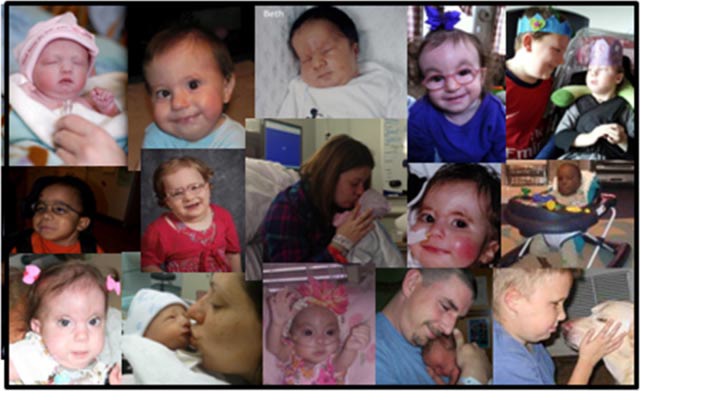
Parents advocate for equality for preterm infants

The president of the Canadian Premature Babies Foundation, Katharina Staub, has just had a letter published in the CMAJ. The letter was in response to the article by Dan and Beau Batton, and emphasizes many of the points that they brought up. It seems to be free access http://www.cmaj.ca/content/early/2013/10/28/cmaj.130268.citation/reply#cmaj_el_716559, and I would urge you to read it: the voices of the parents have often been missing form this debate, lets hope that is starting to change.

One point that Katharina makes very strongly is the way these position statements, and their recommendations for counseling, always include a long list of complications, potential impairments, and everything that limits the lives of preterm babies, but no balancing list of ‘what preterm babies and children can do, how they live happy lives and what they bring to their families and communities.’

Talking to parents and only focusing on the negative does not give a balanced view of the situation, and surely we must be balanced.

Posted in Neonatal Research | Tagged , | 5 Comments

Probiotics work, they really, really, work! (And they are safe)

The Proprems study that I have referred to a couple of times before has now been published. This was a multicenter RCT of a probiotic preparation in 1100 very preterm infants less than 1500 grams and less than 32 weeks. The primary outcome of the trial was late onset sepsis. We now have good evidence from a large number of randomized trials that probiotics have no effect on late onset sepsis, I guess when this trial was being planned that wasn’t so clear. The babies were enrolled before 72 hours of age, and received their probiotics whenever they were getting more than 1 mL of milk every 4 hours. The preparation contained 2 bifidobacteria (infantis and lactis) and a probiotic streptococcus, S thermophilus.

The results showed a reduction of necrotizing enterocolitis from 4.4% in the control arm to 2% in the probiotic group, which was statistically significant. So even in a low risk group, with high breast feeding rates (over 96%) and very high quality NICU care, probiotics do exactly what they have done in the other studies: a reduction of 50 to 60% in the frequency of stage 2 NEC.

In fact, and in contrast to what I said in the first paragraph, there was a small effect on late onset sepsis, a reduction which could have been due to chance, (p=0.16). I await the next Cochrane review to see if that changes the overall conclusion of no effect, but, if there is an effect, it is certainly not huge.

Interestingly the incidence of NEC in the ANZNN annual report, among babies less than 28 weeks in 2010 was 10.4%. This is very similar to the CNN annual report (we don’t divide up the GA exactly the same way, but NEC under 29 weeks in the new 2012 CNN report was 8.1%). So the babies enrolled in the Proprems study were a lower risk group, mostly by design I think, with a range up to 32 weeks GA, but it would be interesting to know the risk profile of the non-enrolled infants, perhaps in the next version of CONSORT a report of some basic summary characteristics of non-enrolled patients could be added.

The published trials of probiotics now include over 5000 preterm babies. There is not one report of an adverse event among the 2500 or so randomized to probiotics. We don’t have that sort of safety information for anything else we do in neonatology.

Another fascinating detail, the probiotic preparation used was ABCDophilus, which is manufactured in New Jersey by Solgar. Yes, made in the USA. (www.solgar.com).

Posted in Neonatal Research | Tagged , , | Leave a comment

GE Reflux… again

Esomeprazole is one of the Proton pump inhibitors that is quite effective at reducing gastric acid production. This RCT of 51 infants (preterms to 1 month of age) randomized babies that had symptoms that were interpreted as being due to reflux. The study was really nicely done, with video monitoring, Multichannel intraluminal impedance, and cardiorespiratory monitoring.

What did they show, well the esomeprazole did what it was supposed to and reduced the number of episodes of acid reflux. There was no change in overall reflux episodes, again as you would expect. Also, as I would expect, I don’t know if you are with me in this expectation but there was absolutely no effect on any clinical outcomes: just as much bradycardia, just as much desaturation, gagging, back arching, irritability and crying or fussiness.

This confirms what previous data have already shown. That there is no reliable clinical way to diagnose reflux (apart from actual vomiting), there is no clinical score or any other way to tell which babies might have acid esophagitis other than testing for acid and looking for esophagitis.

Symptoms thought to be related to acid tend to improve with time, but they don’t improve any faster if you block acid production.

Posted in Neonatal Research | Tagged , | 1 Comment

Personalized Medicine in the NICU

An article I wrote, with that title, as an open peer commentary in the American Journal of Bioethics has just appeared on-line. The first 50 people to click on the link at the bottom of this post below can get a free full text copy, but I would ask you to check first if your institution gives you free full-text access, and let those who don’t have that privilege have the great pleasure of getting a free copy of this insightful analysis. It is, however, a response to 3 articles about the SUPPORT controversy (all available, with all the responses, if you have access on the page here). Some of the other responses are (also) great, such as the uncompromising brief article by Bill Meadow, which is less than a full page, so you can see it all on the first page preview even if you don’t have paid access, also articles by John Lantos, Thor Willy Ruud Hansen, Dominic Wilkinson and his colleagues from Oz, and, of course, Annie Janvier.

Some on the other hand are just annoying, a couple of bioethicists state in an article entitled ‘SUPPORT Asked the wrong question’ that, because the systematic review and meta-analysis of the older oxygen trials was reported as showing that restricting oxygen did not ‘unduly’ increase mortality, it should have been obvious that an increase in mortality was a likely outcome. And the fact that the authors of the Cochrane review used the word ‘unduly’ meant that they were worried there might be a difference.

The authors of that commentary clearly don’t realize that neonatology has changed since the 1950’s, and that those articles are just not informative for today’s medicine. When the studies that Lisa Askie and colleagues reviewed were performed there was no continuous oxygenation monitoring. At all. Of any kind. Most mildly preterm babies died. There were no ventilators. Just read a little about the details of the methodology of those studies and you will realize that they have no relevance for current practice. In contrast there were recently published observational studies including thousands of very preterm babies in modern NICUs which showed NO increase in mortality when saturation targets were lowered. They even repeat some of the ill-founded and uninformed opinions of other non-neonatologist critics that demonstrate that they too have no idea how neonatology works, or how we regulate oxygen therapy.

tp://www.tandfonline.com/eprint/crs8MaXNEZ4DNqDUaQI8/full

Posted in Neonatal Research | Tagged , , | 1 Comment

Are we Civilized?

I have always thought that one very important test of a truly civilized culture is how a society treats those who are less fortunate. An editorial in the Lancet (thanks to Nick Embleton for alerting me to it) takes up the same theme and uses the example of the preterm baby.

Kadaga R, da Silva JB, Featherstone L: Caring for preterm babies is a test of how we respond to our most vulnerable citizens. The Lancet 2013, 382(9905):1613-1614. The authors note that prematurity remains one of the commonest causes of childhood mortality, and despite certain advances, there is still an awful lot that could be done easily and cheaply to improve outcomes: reducing prematurity with contraception and family planning services, antenatal steroids in mothers about to deliver a premature baby, simple resuscitation training (Helping Babies Breathe) availability of antibiotics and training for health workers to recognize infections, kangaroo care and supporting the supply of breast milk.

This year, let us dare to dream of further improvements for those born too soon, and then work to make them happen. Our health systems can be judged by how we care for newborn babies, especially preterm babies who can die, or be saved, by an effective health system. Is saving newborn lives not an important measurement and fitting indicator of universal health coverage

And an indicator of how civilized we really are?

Posted in Neonatal Research | Tagged , , | 1 Comment

Perpetuating Prejudice against Preterms; where should we go from here?

Do we really need a position statement?

There is no position statement of the CPS about counselling parents when their child presents with meningococcal disease. There is no position statement for the child with serious brain trauma.

A position statement for ethical decision making could be general, recount the basic principles that the society feels are important in making decisions for incompetent children, and discuss how to counsel, how to communicate, how to aid families to make difficult decisions. At the same time the statement could emphasize that all children, impaired or not, are of value.

Oh wait a minute. There already is one. It is called ‘Treatment decisions regarding infants, children and adolescents’ and is a good general statement of some principles that the CPS feels are important for making difficult decisions.

Why is this particular question, the extremely preterm delivery, considered to be so different that a specific position statement is wanted? It is true that perinatal decisions involve more than one specialty, but so do those for children who move from the emergency room to the PICU, or who have serious cerebral malignancies and need intensive care.

If we suppose that a  position statement is for some reason considered essential by the board of the CPS, how should it be developed and what should it include?

Firstly I think that any position statement which has potential impacts on how a particular group of patients are treated in our society should be developed in collaboration with those patients and their representatives, in this case their parents. I think the time is past when learned societies write these things and then present them to their colleagues as if the affected persons, the patients and their families, are passive consumers of what we produce.

I know in the CPS position statement it is stated that ‘parent advocates’ were consulted, but who they were, and how and when they were consulted is not clear. I think it should be expected that parents and parent groups be included from the very start of writing a statement such as this, and their contributions and opinions should be explicit.

As for content, perhaps a statement could usefully be addressed to providers in non-tertiary centers, and recommend situations in which consultation with a regional obstetrics and neonatal provider are recommended, with a clear analysis of the limitations of gestational age estimates. It should include an acknowledgement that transfer to a tertiary care center and administration of antenatal steroids do not mandate active intervention, rather they allow the opportunity to have the dialogue with parents. It should ensure that all patients are considered individually, without restriction of arbitrary gestational age thresholds, which do not take into account the complexity of these situations, and are not necessarily consistent with the values of every family (or every physician).

It could note that a decision for active treatment does not mandate a cesarean delivery, and that the morbidity of a cesarean delivery is a significant substantial risk that needs to be put in the balance by the family, but that an arbitrary cutoff at which cesareans are warranted is also unethical, cesarean delivery may be reasonable at higher or lower gestational ages depending on the values and life situation of the mother.

A guideline should state that infants born at extremely low gestational ages have a reduced survival, but should emphasize that at every gestational age the majority of the survivors are not severely impaired and that profoundly impaired survivors are unusual. It should note that extremely preterm infants have almost universally a good quality of life if they survive, including those with impairments.

An appropriate position statement would perhaps discuss the resilience of children and their families, that families adapt to hardship as well as to ease, that life with an impaired child is considered enriching by most families, and that families need more support to help them with the costs and difficulties that arise when raising children who have impairments.  It should note that decision making for the extremely preterm infant should be an on-going dialogue with parents.

Such a discussion should be enough. There is no need to put in any position statement thresholds at which intervention is recommended or not. Any more than the society would consider a position statement which said that after head injury active treatment is not recommended if the motor vehicle was traveling at more than 35 kilometers an hour, as noted by a spokesman for BLISS, a charity in the UK for premature infants.

These are my suggestions for a starting point for a new set of recommendations for a CPS guideline, I would hope that considerations such as these could form the basis for an open process, involving all the stakeholders, especially parents, and including parents who lost their babies, parents involved in parent support groups, independent individuals, and maybe even neonatologists who have also been parents of preterms!!  :

  • If a woman develops signs which may lead to extremely preterm delivery at more than an estimated 20 weeks gestation, consultation with the high risk obstetrical service at the regional tertiary care center is recommended.
  • If the mother is thought to probably be at more than 22 weeks and zero days of gestation, administration of steroids and transfer to the tertiary center are recommended unless delivery is unlikely to be safely completed in time.
  • Administration of tocolytic agents, steroids and transfer to a tertiary care center should not be considered to mandate provision of life-sustaining interventions (LSI) to the baby if they should be born, but rather to allow the opportunity to have discussions about the appropriate course to be taken while providing the best chance for the baby if the decision to provide LSI is taken.
  • Discussions with the family concerning the provision of LSI should be undertaken by informed neonatology staff members, or by senior trainees under their direct supervision.
  • Such discussions should describe the predicted mortality based on the overall evaluation of the clinical situation of the mother and baby, and recognize the inaccuracies inherent in gestational age assessment and estimated fetal weights from ultrasound, and take into account the sex, antenatal steroid provision, multiplicity, and presence or absence of chorioamnionitis, among other risk factors.
  • Discussions regarding the provision of LSI should include an evaluation of the values and desires of the families, and should take into account the variations in those values.
  • If there is a reasonable chance of survival then consideration of initiation of LSI and frequent re-evaluation should be the default approach. What is ‘a reasonable chance’ will depend to some extent on the values and desires of the family, but should follow similar considerations to older children, where contemplating the withholding of LSI is unusual if there is more than a 10% chance of survival.
  • The large majority of extremely preterm babies do not need ‘resuscitation’ as generally understood (cardiac massage and so on) but require the provision of respiratory support, often simple respiratory support with positive pressure, with or without intubation. Providing such support at birth and evaluating how the infant progresses over the subsequent days may very often be the optimal approach for that infant and their family.
  • The horrendous stress and profound uncertainties of threatened preterm extremely delivery make this one of the worst possible environments to make good decisions. Instituting LSI and then re-evaluating when more data are available (but no less stress!) often makes the most sense.
  • Under certain circumstances confirmation of birth weight in the delivery room would be reasonable if there were previously agreed decisions about what to do if the baby weighed above or below a certain threshold. (This is because actual birth weight is a better predictor of survival than is estimated gestational age, and because estimated fetal weight, before birth, is quite inaccurate.)
  • A decision to provide LSI of the infant does not mandate a cesarean delivery, even in case of fetal distress, the extra morbidity of this procedure for the mother means that the decision for the cesarean should be made by the mother with her obstetrician, taking into account her history and current clinical situation and her values and desires, as well as the predicted outcomes of the preterm infant.
  • Parents should be informed that extremely preterm infants have a much higher frequency of significant long term neurological, developmental, and medical complications than babies born at term. That developmental delay is very common, but frequently improves over time, with about 1 of every 6 surviving children continuing to have serious intellectual difficulties by the time they reach school age, and that this proportion is very little affected by increasing gestational age. Despite such problems, former extremely preterm infants, and their parents, almost universally report that they have a good quality of life.

A guideline, developed with parents from a starting point such as this, would be so much more nuanced than ‘at X weeks of gestation give comfort care, at X + 1 or X + 2 consider active treatment, at X +3 always start active treatment’. I think a statement similar to what I have outlined here would be evidence based, could take into account the wishes and values of the family, and would give the guidance and also the freedom that doctors and families need in order to make the best decisions for the babies.

Posted in The CPS antenatal counselling statement | Tagged , , | Leave a comment

Captain America?

For the second US oriented post today, I wanted to refer to a great article by a Sikh man who dressed up as Captain America and walked around in public. We writes about his experiences in a piece published on-line in Salon. He talks about his motivation to dress up as Captain America in a turban after the massacre of Sikhs at a temple last year. The lessons he says he learned are worth reading, including:

If you stereotype people, then you have fallen victim of the malady itself. To all the people who have given me advice to stay away from white Republican places like Jersey, Florida, Texas and the South, let me say this. If I had stereotyped the world the way it may see me in my turban and beard, I would never have  walked out as Captain America. ….. Thanks to the Army officer, Haitian American mother, woman who remembered her brief childhood encounter at a dance event with a turbaned boy in Detroit, woman from San Francisco who was inspired to dress herself and her boyfriend as Captain America, countless others who shared with me their memories, insecurities and moving encounters. Together we create super-heroic worlds.

Posted in Neonatal Research | Leave a comment

Neonatal Updates

Kapadia VS, Chalak LF, Sparks JE, Allen JR, Savani RC, Wyckoff MH: Resuscitation of preterm neonates with limited versus high oxygen strategy. Pediatrics 2013. This trial randomized infants 24 to 34 weeks of age who needed to be resuscitated. Infants (44 per group) started on room air or on 100% oxygen and then were progressively changed, in order to progressively achieve reasonable saturation goals. The high oxygen babies only received extra oxygen, compared to the low oxygen babies for about 9 to 10 minutes, but they still had more signs of oxidative stress, and more respiratory problems after birth, they were more likely to get diagnosed with BPD. I think this was intended to be a pilot for a larger clinical trial, and was powered for the oxidative stress outcomes, rather than clinical. Nevertheless it does show that the impact of changing the initial FiO2 appears to be quite substantial. Certainly gives more reason for doing a larger trial with clinical primary outcomes.

Milstone AM, Reich NG, Advani S, Yuan G, Bryant K, Coffin SE, Huskins WC, Livingston R, Saiman L, Smith PB et al: Catheter dwell time and CLABSIS in neonates with piccs: A multicenter cohort study. Pediatrics 2013. The longer you leave a central catheter the higher the total infection rate. That is obvious, what is not so obvious is if there is any sort of threshold after which infections increase, if so you could say that after 20 days (for example) the daily sepsis rate increases, so it is best to remove the catheter. This study showed the opposite, that after about 18 days of gradually increasing daily sepsis rate, the frequency levels off. So you should ensure every day that you really need the catheter, but there is no magic number of days at which the catheter starts to become more risky.

Westin V, Stoltz Sjöström E, Ahlsson F, Domellöf M, Norman M: Perioperative nutrition in extremely preterm infants undergoing surgical treatment for patent ductus arteriosus is suboptimal. Acta Paediatrica 2013. Most preterm infants receive less nutrition than they need. Tnis study shows that preterms needing PDA ligation in Sweden are among the most disadvantaged.

Posted in Neonatal Research | Leave a comment

The walking dead: the uninsured in the USA

I don’t normally comment on politics here, it isn’t the point of this blog but sometimes I probably won’t be able to stop myself. I worked in San Diego for 4 years, and I saw a lot of the good in US health care, as we were treating newborn infants we rarely had to worry about insurance, and it never intruded into acute care of the babies in our NICU. It affected the UCSD bottom line, but that was for someone else to deal with. I worked with a great group of neonatologists, dedicated to the babies in their care, and the infants got anything they needed for their acute care.

We did sometimes get communications from insurance companies, informing us that they would stop paying for a hospitalization, did some health insurance comparison, but would hustle to discharge the baby quickly. This is one pressure that leads to an increase in home O2 in the USA compared to our use here, which might even be a good thing in some ways if you get babies back with their family sooner.

Every now and then, though, I came across something that would stop me in my tracks. There was one mother with metastatic breast cancer who had not had a full evaluation and treatment because she was not eligible for state supported care, and had no health insurance herself, so to avoid bankrupting her family se did not return to see the surgeon after her initial diagnosis (it turned out he had offered to do the surgery for no fee, but she would still have had many costs that she could not afford). Especially as she was pregnant. When she delivered at 28 weeks, it was too late for anything other than palliation.

This story was brought back to my mind by a perspective article in the PNEJM: ‘Dead Man Walking’. (open access) A story of a man who died because of lack of insurance. Stories such as this brings home the reality of the uninsured and the underinsured in the USA.

‘Obamacare’ is a half-baked solution which was gutted by special interest groups, but at least it stands a good chance of reducing the numbers of people who end up in the situation of the man whose story is told in this article, as long as it doesn’t completely get destroyed. One commentator even suggested on TV recently that the big problem with the US system was ‘too much insurance’! I don’t think he was talking about the excessive profits and lobbying ability of the insurance industry, either.

Posted in Not neonatology | Tagged | 3 Comments

Perpetuating Prejudice against Preterms: 6 Conflating Death and Disability

Towards the end of last year the Canadian Pediatric Society published a new ‘position statement’. These are official proclamations of the society, supposedly based on the best available evidence to guide practice, and which become de facto standards of care. This particular one ‘Counselling and management for anticipated extremely preterm birth’ presented an opportunity to update a 20 year old statement. This is part 6 of my response.

A common factor in many position statements, including this one from the CPS, is the calculation of ‘survival without impairment’ or ‘survival without severe impairment’ or ‘intact survival’.

I think presenting outcome data in this way is a serious error. A baby who does not survive and one who survives with impairments, are not equivalent. They are not equivalent in their impact on families, and to suggest that intensive care is warranted or not because a combination of death and impairments is at a certain level is quite inappropriate. For one thing, it immediately presupposes that the only worthwhile outcome is a surviving infant who has no impairments. Also, a predicted 33% survival without impairment, for example, is very different if that is a result of 60% of the babies dying and 7% having an impairment, compared to 7% dying and 60% surviving with impairment.

Possible mortality, and possible impairments, should not be added together as if they were equivalent, they should be presented as separate issues to the future parents.

I think the following phrases are likely to have a very different impact.

1. 2/3 of babies who start out like this either die or have a significant long term impairment.

2. About half of the babies will survive: among the babies that survive about 1 in 5 has very serious long term difficulties, about another 1 in 5 to 1 has moderately serious long term difficulties, and 3 in 5 of survivors have mild or no long term impairments.

If you were to counsel a mother whose baby is about to be born extremely prematurely and was thought to have about a 50:50 chance of survival then you could say either of those two things, they both would be accurate, but they convey different information. The reactions to those two phrases may be different; it has become abundantly clear that the choices that patients make are heavily affected by the way information is presented to them, and even to the order in which information is presented, even when exactly the same information is given. Marlyse Haward and her colleagues showed that stating ‘50% survive’ and ‘50% die’ leads to different decisions being made. There is a very extensive literature on these influences outside of the perinatal decision making field, we need to use that literature to teach us how to present our babies’ outcomes. But I am sure that conflating death and disability does not help parents’ understanding or our ability to make the best decisions for the babies.

Posted in The CPS antenatal counselling statement | Tagged , | Leave a comment