Most newborns who receive antibiotics are not infected. This is true of full term babies in normal newborn care, and preterms in the NICU. For most infants antibiotics can be stopped after 36 hours if cultures are negative at that point (for the few which are positive between 36 and 48 hours, antibiotics can be restarted without missing a dose). Duration of treatment of those with positive cultures, or of those who are thought to have culture negative sepsis, is quite arbitrary.
In this large international RCT of infants who had antibiotics started for suspected early onset sepsis (<72 hours of age) and who were term or late-preterm were randomized. Infants were evaluated with a reasonably objective risk scoring system, and could score 1 point for risk factors, 1 point for clinical findings, and 1 point for lab values.
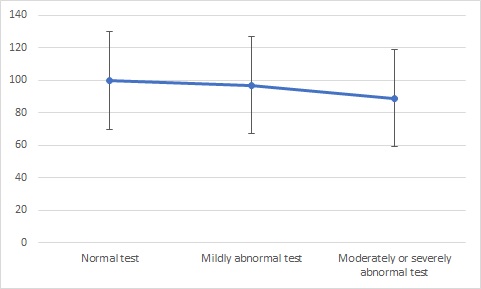
 The 2 randomized groups either had duration of therapy determined by Procalcitonin levels, or by an arbitrary duration, as shown in the figure. Babies who had positive cultures had at least 7 days of antibiotics, regardless of procalcitonin levels.
The group who used procalcitonin levels had shorter duration of antibiotics, a mean of 55 hours versus 65 hours. But of the 1710 babies included in the trial 47% were determined to be “infection possible”, and 41% were “infection unlikely”. Only 27 babies had proven infections or about 1.5%.
My main problem with this trial is that the duration of antibiotic use in infants who are not infected is much too long. Any infant with a risk factor, even with no clinical signs, no other supportive evidence and with negative cultures at 36 hours receives between 36 and 72 hours of antibiotics. Any infant with a risk factor and one other point on the risk scale (for example for respiratory distress, or an elevated CRP) will receive 5 to 7 days of antibiotics. So any infant born before 37 weeks who has respiratory distress will have got at least 5 days of antibiotics in the non-procalcitonin group.
A baby with a history of chorioamnionitis or 20 hours ruptured membranes, respiratory distress, and an elevated CRP would be considered to be “infection probable” and would get 7 to 21 days of antibiotics, even if they improved rapidly, and had negative cultures. The clinical sign that was the most frequent was indeed respiratory distress.
I think that the authors have not shown that procalcitonin reduces duration of antibiotic use compared to a more reasonable approach, in which they would be stopped in the large majority of infants at 36 hours if cultures are negative.
I think most babies in this study should have had their antibiotics stopped at 36 hours, so the results of 55 and 65 hours of treatment that they found are both too long.
Overuse of antibiotics is a big problem, when less than 2% of treated babies can be proven to have an infection. Under-treating a baby who is truly infected is the concern that drives these numbers; the authors tried to evaluate that by looking also at deaths within the first month of life, and re-infection with 72 hours of stopping antibiotics. However, the numbers of those events was tiny (less than 1%) so there is no significant difference between the groups, the actual numbers are identical between the groups.
Many of the infants enrolled in this study, especially those in the ‘infection unlikely” group would not even have qualified for antibiotics if the evidence-based neonatal sepsis risk calculator, that I discussed previously, had been used. (It obviously wasn’t available when these authors were planning theire trial, but it is easily available now!)
There is clearly room for improvement among preterm babies also. It has long been my practice to not perform cultures or give antibitoics to preterm babies born by Cesarean delivery with intact membranes to mothers who were not in labour.If there isn’t a route for a baby to get infected they aren’t likely to be infected!
This new publication confirms that practice to be safe. They reviewed over 5000 VLBW infants admitted to the Brigham and Women’s hospital, of which 109 had culture positive sepsis. There was only 1 case of a positive culture among an infant delivered with the characteristics that I mentioned, and that was almost certainly a contaminant (1 of 2 bottles grew a coagulase negative staph, which was negative on repeat culture despite the antibiotics not covering the germ).
The study also confirmed that cultures were very often positive before 36 hours, and 98% before 48h, so a 36 duration of initial antibiotic prescription is appropriate.
Being preterm is not an infectious disease. Some babies are at very low risk of actually being septic and we can avoid giving them antibiotics.