Weaning from CPAP in preterm babies

There have been very few studies of how to wean babies from CPAP, even though it is something we do all the time.

A recent tendency, which seems to have arisen without any supportive data, and which never made much sense to me, is to take the baby off CPAP for a specified period, such as for one hour every 8 hours,and then gradually prolong the duration of these weaning episodes. The alternative is to wean the pressure to a minimal level (I would call 4 cmH2O minimal, below this there is little or no measurable positive pressure in the posterior pharynx) and then stop the CPAP if the baby is comfortable, only restarting if there are signs of poor tolerance.

David Todd and his colleagues in Australia have just published (on-line first) a trial comparing these 2 approaches. Todd DA, Wright A, Broom M, Chauhan M, Meskell S, Cameron C, et al. Methods of weaning preterm babies <30 weeks gestation off CPAP: a multicentre randomised controlled trial. Archives of Disease in Childhood – Fetal and Neonatal Edition. 2012http://fn.bmj.com/content/early/2012/05/17/adc.2011-300133.abstract

They randomized 177 stable babies, less than 30 weeks gestation who were on CPAP to stopping the pressure and restarting only if there is poor tolerance, compared to 2 groups who had weaning periods as described above, one of the weaning period groups had low flow nasal cannulae during the weaning period (another strange practice that has developed with no physiologic rationale and no supporting clinical data), the other did not.

Although the study was of modest size, with between 50 and 60 in each group, the results were dramatic. In fact it was stopped early by the data safety committee because all of the respiratory outcomes were significantly better in group who had immediate stopping of CPAP without the weaning periods; and the differences were large.

There were fewer days on CPAP (which is probably to be expected by trial design) and this translated into fewer days of oxygen, less BPD, fewer days of hospitalization and in tandem with that earlier postmenstrual age at discharge.

This result is consistent with 2 other trials which have never been fully published, but which both show improved respiratory outcomes with slightly different comparisons. The 2 trials are back-to-back abstracts in the European Journal Of Pediatrics November 2006 supplement, page 48. The first by Singh et al randomized 112 infants less than 1500 gr birthweight to a progressive reduction in pressure or to increasing periods of CPAP. Infants on the weaning by pressure schedule had many fewer days of CPAP, and more successful weaning. The 2nd by Soe et al randomized 98 infants less than 32 weeks to weaning the pressure or weaning by increasing periods off CPAP. Babies in the pressure weaning group were more likely to wean successfully, and had less BPD.

The practice of progressively prolonging weaning periods has no scientific basis, has been shown to be associated with worse outcomes, and should stop.

Posted in Neonatal Research | Tagged , | Leave a comment

Encephalopathy and induced hypothermia

The widespread use of therapeutic hypothermia for infants with encephalopathy has raised several questions.

Prior to this new(ish) technique, the neurological examination of the infant was thought to have a reasonably good predictive accuracy for long term outcomes. Infants who were never worse than a stage 1 encephalopathy did well, infants who were comatose (stage 3) almost all did very badly. For the ones in between, the addition of other findings, such as seizures that were difficult to control, widespread damage on imaging, effects on other organ systems, etc. increased their risks.

Now that we have an effective treatment (induced hypothermia) that reduces mortality, and reduces long term morbidity, does the clinical exam have the same predictive value? The NICHD Neonatal Research Network has published a few articles from the cohort entered into their hypothermia trial to address this question. The most recent is: Shankaran S, Laptook AR, Tyson JE, Ehrenkranz RA, Bann CM, Das A, Higgins RD, Bara R, Pappas A, McDonald SA et al: Evolution of encephalopathy during whole body hypothermia for neonatal hypoxic-ischemic encephalopathy. J Pediatr 2012, 160(4):567-572 e563. http://www.sciencedirect.com/science/article/pii/S0022347611009322

They recorded serial examinations during the study, half of the babies received treatment with hypothermia. 23% of the 100 surviving babies in the hypothermia group had severe encephalopathy at 24 hours, by 48 hours 94 were still alive, and 21% had severe encephalopathy, by 72 hours there were 89 surviving babies, 21% of them had severe encephalopathy.  The authors showed that if a baby still had severe encephalopathy by 72 hours the chance of a poor outcome in both groups, hypothermia and controls, was high.

The cooling trials were launched with many commentators worrying that children would survive with very severe handicap, and that this could be worse than not surviving at all for some children. The trials have been comforting in all showing a decrease in mortality and a decrease in handicap, however some babies already have such severe damage that hypothermia does not help them. This new paper suggests that after 24 hours of cooling, and in particular by 72 hours, if a baby still has signs of severe encaphalopathy the chances of a poor outcome, at least as assessed by a Bayley less than 70 or disabling cerebral palsy as assessed at 18 to 22 months of age, are high.

The Network haf already shown that the neurological exam prior to 6 hours of age is less predictive in infants treated with hypothermia.  Ambalavanan N, Carlo WA, Shankaran S, Bann CM, Emrich SL, Higgins RD, Tyson JE, O’Shea TM, Laptook AR, Ehrenkranz RA et al: Predicting Outcomes of Neonates Diagnosed With Hypoxemic-Ischemic Encephalopathy. Pediatrics 2006, 118(5):2084-2093. http://pediatrics.aappublications.org/content/118/5/2084.abstractIn that study the positive predictive value of severe encephalopathy, at 6 hours of age, for death or severe disability was was 0.85 among control infants and only 0.72 among infants receiving hypothermia. That is a big difference, but the thing that caught my eye is the 0.85. That is, 15% of the babies with severe encephalopathy are not dead or severely disabled (keep in mind that severe disability includes a Bayley MDI of less than 70 at 18 to 22 months, which in preterm babies is not very predictive of long term problems (it may be different in term asphyxiated babies).)

That predictive value is less than in other studies with follow up of babies with HIE, probably because of the early timing of the determination. Other studies ( Reviewed in: Perlman M, Shah PS: Hypoxic-Ischemic Encephalopathy: Challenges in Outcome and Prediction. The Journal of Pediatrics 2011, 158(2, Supplement 1):e51-e54http://www.sciencedirect.com/science/article/pii/S0022347610009662 ) have shown that it is difficult to predict who will do will based on an examination at 6 hours, Yet others have shown that examination later than 6 hours is more predictive. In fact the ‘seminal’ paper of Sarnat and Sarnat which gave us our staging system,  started their evaluations between 12 and 24 hours of age.

So basically we know that examining babies in the first 6 hours of life has some predictive ability, but it is by no means perfect, and that examining the babies 6 hours later is better but they need to be cooled by then, so generally giving the benefit of the doubt and initiating cooling is usually the best approach; a decision that can be revisited later if there is no improvement.

Posted in Neonatal Research | Tagged | Leave a comment

Assisted Reproduction and Neonatology

Assisted Reproductive Technologies have a number of impacts on Neonatology.

By far the most important is the increased risk of prematurity due to multiple gestation. In the USA and Canada (outside of Quebec) the frequency of multiple gestation among IVF pregnancies is about 30%. Pregnancies with more than one baby are much more likely to deliver before term, and the relative increase in extreme prematurity (before 28 weeks) is even more marked.

This is almost entirely due to the transfer of multiple embryos. (There is a slight increase in embryos splitting in two and creating monozygotic twins after embryo transfer, leading to a few identical twins being born.) So the increase in twins is almost completely avoidable. Why do fertility doctors continue to transfer multiple embryos when the risks are so clear? A common response is that women want to have twins. Even after counselling about the substantial increase in risks, women will often request to have (at least) 2 embryos transferred. The image of twins in the public eye is almost universally positive: many celebrities having IVF have had twins, and the cute magazine pictures never mention the increased maternal and fetal/neonatal risks. Women having IVF also have to go through egg retrieval, travel to fertility clinics, time off work, and major costs; all of which increase the attractiveness of having twins.

However, fertility doctors do not have an obligation to increase their patients’ risks, even if those patients request it. They certainly do not have an obligation to increase the risks to the future children of their patients. But the pressures to transfer multiple embryos are substantial; so even though the Canadian fertility society ‘recommends’ single embryo transfer, this is only done less than 5% of the time when there is a choice (I mean when there is more than 1 viable embryo and they decide to transfer only 1 of them, what is known as ‘elective single embryo transfer’). Why is it so rare? Probably because the fertility doctors themselves down-play the risks; after all, most of the time the pregnancy will at least get close to term and the moms and babies will usually come out of it OK. Probably also because there is a risk that the woman will just go elsewhere if they don’t comply and transfer 2 embryos. Probably also because the pregnancy success rates will go down (in fact this is a minor effect, in women under 35 the success rates are just about identical for single and double embryo transfers) and they worry that the advertisements on their web sites will have to be changed, and they will lose business as a result.

We need legislation. Elective single embryo transfer should be enforced. Unfortunately, if this was done by itself it is likely that women will travel somewhere else to have multiple embryos transferred. So infertility should be recognized as a health problem, and treatments covered by insurance programs, and by public health systems. In fact some treatments are already covered: tubal surgery to re-open blocked fallopian tubes is reimbursed (everywhere, as far as I know); the problem is that it doesn’t have a high success rate, nowhere near as high as IVF.

If IVF was regulated, and paid for, then fertility clinics could perform elective single embryo transfer, without the fear that women would go elsewhere for their treatments. This has happened in Québec.

Since the new government program was introduced, which pays for IVF (under certain conditions) and requires elective single embryo transfer (with a small number of exceptions) the twin frequency has dropped from 30% to less than 5%. The savings in neonatal intensive care costs from having fewer preterm twins will pay for this program.  (Janvier A, Spelke B, Barrington KJ. The epidemic of multiple gestations and neonatal intensive care unit use: the cost of irresponsibility. J Pediatr. 2011;159(3):409-13. http://www.sciencedirect.com/science/article/pii/S0022347611001806 ) As well as having major benefits in human terms. The same effect has been seen elsewhere, in Sweden for example.

Advances in the techniques used can also reduce the other adverse consequences of single embryo transfer, for example eggs retrieved can be frozen, and used for a second pregnancy with good success rates;, which means that the unpleasant procedures involved in egg retrieval only have to be suffered once.

But doesn’t all this messing about with human eggs, sperm, and embryos affect the way they develop? (Finally getting to the new publication which stimulated this post) A paper in the New England Journal of Medicine, from an analysis of linked Australian databases, shows no increase in congenital anomalies after most IVF, when other risk factors are adjusted for.  Davies MJ, Moore VM, Willson KJ, Van Essen P, Priest K, Scott H, et al. Reproductive technologies and the risk of birth defects. N Engl J Med. 2012;366(19):1803-13http://www.nejm.org/doi/full/10.1056/NEJMoa1008095.

Women having babies after IVF were older, and with different socio-economic status, ethnic background, and so on. Even though there was an increase in congenital anomalies after IVF this difference disappeared after adjusting for these differences in maternal characteristics. This is consistent with other studies, and a previous meta-analysis. As others have also shown, though, the specific procedure called ICSI (intra-cytoplasmic sperm injection) did increase congenital anomalies, even after correcting for maternal characteristics.  Babies born after ICSI had about a 50 to 60% increase in the risk of congenital anomalies.

They also showed a substantially increased Odds for having cerebral palsy: almost 3 times as many infants born after IVF had cerebral palsy compared to the spontaneously conceived children.

This paper also confirms what I said above, pregnancies from IVF with twins are much more likely to deliver extremely early than spontaneous pregnancies with twins. 14% of the IVF twins delivered before 32 weeks, compared to 9% of the spontaneous twins. This was even true among the singletons (2% before 32 weeks compared to less than 1%). This may be partly responsible for the increase in cerebral palsy with IVF, which is more common among premature babies.

You may notice though, if you read the paper, that the frequency of cerebral palsy among IVF twins was not significantly increased compared to spontaneous twins. You may also notice that the frequency of cerebral palsy among spontaneous twins was about 5 times higher than among spontaneous singletons. This phenomenon is largely due to something which is already known, there is a major increase in cerebral palsy among identical twins, which are quite unusual after IVF.

The take home message of the paper: IVF does not increase congenital anomalies unless ICSI is involved. And do NOT transfer more than 1 embryo!

Posted in Neonatal Research | Leave a comment

Hypocapnia in asphyxiated infants

Some of my posts are not necessarily going to be about very new publications, sometimes a clinical event or question stimulates me to review the literature, and I will share my findings with the readers.

Spontaneous hypocapnia is not rare in asphyxiated infants. Although it is possible to hyperventilate an infant more easily when their metabolism and CO2 production is reduced by hypothermia, they also frequently hyperventilate themselves. This may be in response so a systemic metabolic acidosis, but may go beyond that stimulus and lead to a systemic respiratory alkalosis. Exactly why this happens I am unsure, perhaps there is brain stem acidosis which over-drives respiration.

The well characterized neonatal rat carotid artery ligation and hypoxia model has similar responses. This model, developed by Dr R Vannucci, hyperventilates in response to metabolic acidosis, and will become spontaneously seriously hypocapnic. They may completely correct their acidosis with a mean PCO2 as low as 25 mmHg. In 1995 Dr Vannucci showed that just giving CO2 gas, as a 3, 6, or 9% mixture, prevented much of the brain damage, 3% gave normocapnia and reduced brain injury, the best effect was at 6% CO2 which caused mild hypercapnia (mean PCO2 about 56 mmHg), a slight reduction in the benefit was noted with 9% CO2, (mean PCO2 about 68 mmHg).

Vannucci RC, Towfighi J, Heitjan DF, Brucklacher RM: Carbon dioxide protects the perinatal brain from hypoxic-ischemic damage: An experimental study in the immature rat. Pediatrics 1995, 95(6):868-874. http://pediatrics.aappublications.org/content/95/6/868.full.pdf+html

Subsequently he showed that the rats with normocapnia and mild hypercapnia had better cardiac function and improved cerebral blood flow, and major improvements in cellular metabolism. http://www.nature.com/pr/journal/v42/n1/full/pr19972265a.html

Recent clinical studies show a link between hypocania and severity of brain damage in human infants also.

Pappas A, Shankaran S, Laptook AR, Langer JC, Bara R, Ehrenkranz RA, Goldberg RN, Das A, Higgins RD, Tyson JE et al: Hypocarbia and adverse outcome in neonatal hypoxic-ischemic encephalopathy. J Pediatr 2011, 158(5):752-758 e751. http://pediatrics.aappublications.org/content/95/6/868.full.pdf+html

Klinger G, Beyene J, Shah P, Perlman M: Do hyperoxaemia and hypocapnia add to the risk of brain injury after intrapartum asphyxia? Arch Dis Child Fetal Neonatal Ed 2005, 90(1):F49-52. http://fn.bmjjournals.com/content/90/1/F49.full

It therefore seems prudent to avoid inducing hypocapnia in asphyxiated infants. But what to do when they hyperventilate themselves? After weaning an infant to minimal respiratory support, even to endotracheal CPAP, and finding continuing hypocapnia, what to do next? There are 4 alternatives, either leave the situation as it is and accept hypocapnia, extubate the infant to see if the CO2 will increase a little, add a dead space to the ETT to elevate the CO2, or administer CO2 gas (the latter would be difficult as a source of medical grade CO2 might be difficult to find.) I have not in the past added a dead space in this circumstance. Would a trial be feasible?

Of course the animal model is not exactly what we are dealing with in asphyxiated babies, Vannucci et al give the CO2 during the hypoxic insult,  not afterward, but I think the combination of the animal data, the physiologic rationale, and the human observations make such a trial a reasonable idea.

Posted in Neonatal Research | Tagged | Leave a comment

Predicting outcomes in extremely preterm infants

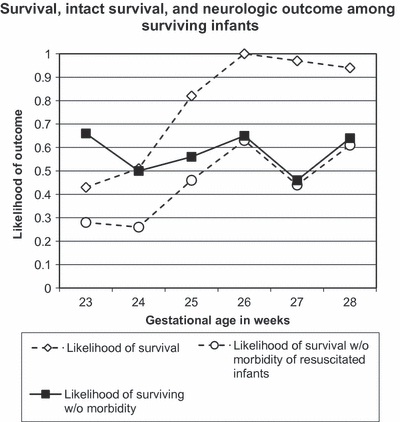
Extremely preterm infants (less than 28 weeks gestation) have an increased risk of adverse neurological or developmental outcomes. A new publication from the University of Chicago emphasizes a feature that has been shown before. That among survivors, there is little difference in the proportion with significant long term problems between 23 and 27 weeks gestation.

 Andrews B, Lagatta J, Chu A, Plesha-Troyke S, Schreiber M, Lantos J, Meadow W: The nonimpact of gestational age on neurodevelopmental outcome for ventilated survivors born at 23–28 weeks of gestation. Acta Paediatrica 2012, 101(6):574-578. http://onlinelibrary.wiley.com/doi/10.1111/j.1651-2227.2012.02609.x/abstract

The figure which illustrates this is shown above. The black boxes show the proportion of survivors who are without  major morbidity (defined as a score on the Bayley scales of infant development, either the mental development index or the psychomotor developmental index of less than 70, that is more than 2 SD below the mean). The authors also analyzed the data for more severe delays in development (scores less than 6o and less than 50) and found the same thing.

How this fits in with other studies

Other investigators have in the past shown similar things. It is possible that the failure of Andrews et al to find an impact of gestational age among survivors who were extremely preterm is due to a lack of power. It is also possible that evaluation of these children in later life could show differences according to the gestational week that they were born.

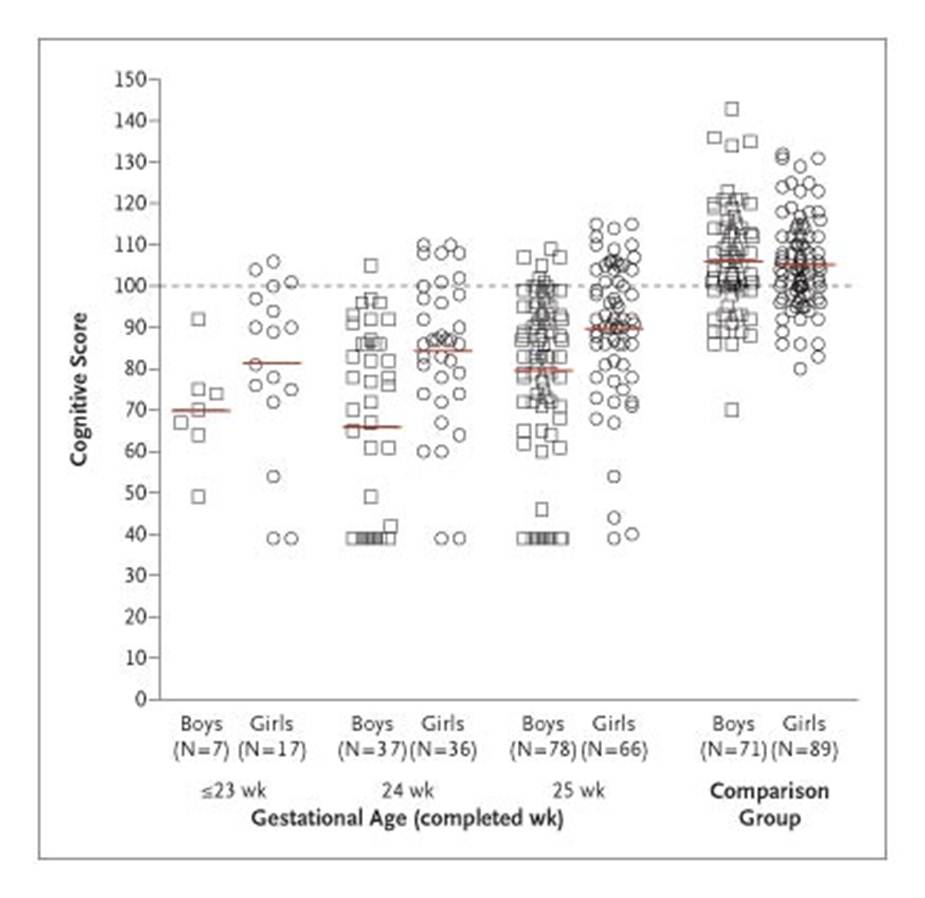
However data from larger cohorts, studied at later postnatal ages such as the EpiCure study, shows generally the same effect. Figure 1 from the 6 year neurologic and developmental outcomes of the EpiCure cohort is below.

Marlow N, Wolke D, Bracewell MA, Samara M, the EPICure Study Group: Neurologic and Developmental Disability at Six Years of Age after Extremely Preterm Birth. N Engl J Med 2005, 352(1):9-19. http://www.nejm.org/doi/full/10.1056/NEJMoa041367

Although the boys, and perhaps the girls appear to have slightly higher mean scores if born at 25 weeks than at 23 or 24 weeks gestation, the differences are not huge, and the numbers with very low scores appear to be about the same (and in fact are very few).

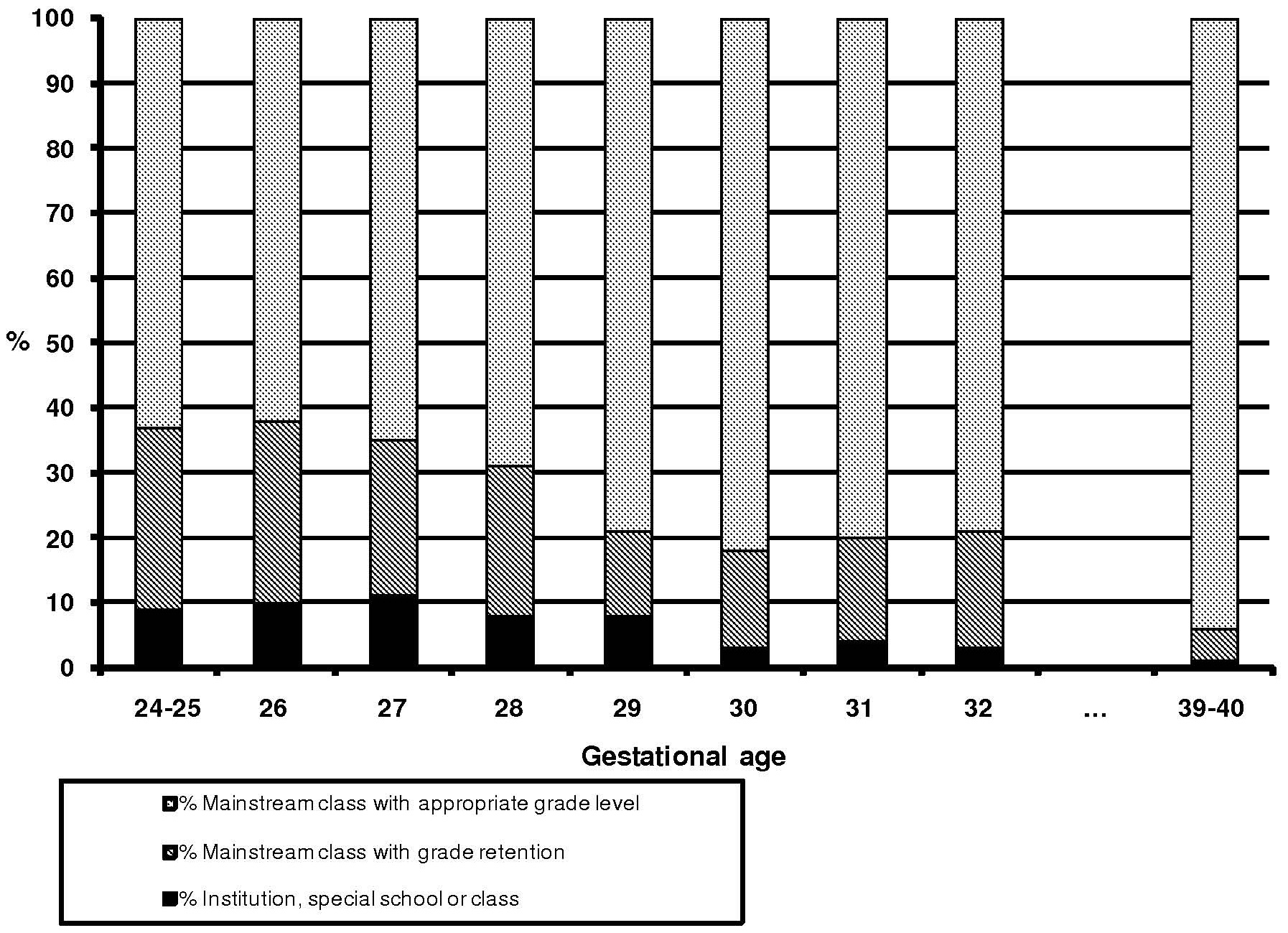
Similarly the Epipage study, a regional cohort from 9 french regions reported outcomes to 8 years of age of very preterm infants, some of whom were extremely preterm.

Larroque B, Ancel PY, Marchand-Martin L, Cambonie G, Fresson J, Pierrat V, Roze JC, Marpeau L, Thiriez G, Alberge C et al: Special care and school difficulties in 8-year-old very preterm children: the Epipage cohort study. PLoS One 2011, 6(7):e21361 .http://www.plosone.org/article/info%3Adoi%2F10.1371%2Fjournal.pone.0021361#pone.0021361-Larroque1

Using a different outcome measure (schooling difficulties) they again show no substantial difference among survivors between 24-25 weeks and 27 weeks. The total number in the extremely preterm cohort was about 300 initially, with only 10 born at 24 weeks gestation.

What are the implications of this?

As discussed by Andrews and her colleagues, these data should have an impact on how we talk to parents before an extremely preterm delivery. As they state: ‘If mortality in the NICU is the outcome that parents most fear, then physician counselling and public policy pronouncements that rely strongly on gestational age are epidemiologically and ethically appropriate. However, if survival of an infant with severe neurologic impairment is the outcome most feared, then reliance on gestational age appears to be misplaced.’

The authors state earlier in their discussion ‘Some parents find moral worth and emotional solace in ‘giving their child a chance’ and ‘not giving up without a fight’.’

They go on to suggest that for such parents the only negative outcome is survival with neurodevelopmental impairment, and here I would disagree. I don’t think this follows from the previous sentence. One could find moral worth in a trial of therapy, but still not necessarily feel that survival with neurodevelopmental impairment is a negative otucome. Survival with profound handicap may sometimes be considered worse than not surviving (although be aware that parents tend to evaluate the situations differently than health care workers: see Saigal et al below), but having a Bayley score of less than 70 at 2 years of age is not equivalent to profound handicap!

Saigal S, Stoskopf BL, Feeny D, Furlong W, Burrows E, Rosenbaum PL, al. e: Differences in preferences for neonatal outcomes among health care professionals, parents, and adolescents. JAMA : the journal of the American Medical Association 1999, 281(21):1991-1997. http://jama.ama-assn.org/cgi/reprint/281/21/1991.pdf)

Posted in Neonatal Research | Tagged | Leave a comment

Hand washing

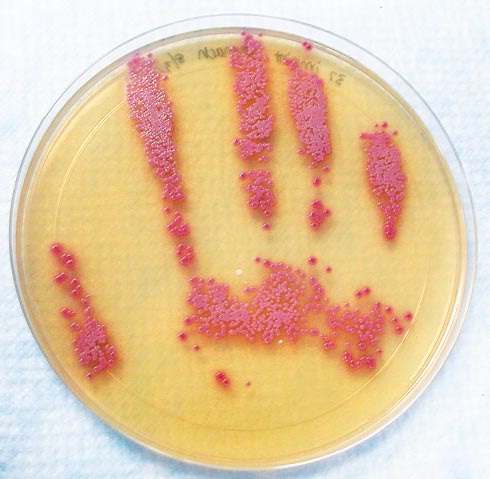
Sometimes our discussion of infection control become somewhat theoretical, we talk about frequencies and methodologies. Here are a sequence of images that are worth a thousand words. the first 2 are from a publication in the New England Journal of Medicine

Donskey CJ, Eckstein BC: The Hands Give It Away. New England Journal of Medicine 2009, 360(3):e3. http://www.nejm.org/doi/full/10.1056/NEJMicm0707259

Which shows the hand prints of a health care worker who had just palpated the abdomen of a patient. The pink colonies are Staphylococcus. the second image is after hand-washing.

Below is the story of a parent, taken from the   ‘Perinatal Quality Collaborative of North Carolina’ http://www.pqcnc.org/?q=node/12878 It is a very eloquent tale of the human costs of nosocomial infections.

I have sought and received permission for the reuse of these items.

Posted in Neonatal Research | Tagged | Leave a comment

Nutrition of very preterm babies

There is a ‘growing’ feeling that we don’t give enough protein to our preterm infants, especially during the enteral phases of nutrition. Fortified maternal breast milk use is associated with lower overall rates of weight gain, despite all its benefits. Also the emphasis on weight gain as the major outcome variable  may be misplaced. Body composition at term of former extremely low gestational age preterms is quite abnormal. A recent RCT investigated whether giving more protein in the fortifier would improve growth.

Miller J, Makrides M, Gibson RA, McPhee AJ, Stanford TE, Morris S, Ryan P, Collins CT: Effect of increasing protein content of human milk fortifier on growth in preterm infants born at <31 wk gestation: a randomized controlled trial. Am J Clin Nutr 2012, 95(3):648-655. http://www.ajcn.org/content/95/3/648

92 infants of less than 31 weeks were randomized, at the end of the study the higher protein infants weighed more, but the length and head circumference was not increased. This may have been a lack of power. So further larger trials will be required to figure out how to improve preterm infants growth and body composition.

An abstract presented at this years PAS meeting in Boston by our group [4510.111] Eliminating Postnatal Growth Restriction with an Aggressive TPN and feeding Protocol. Marianne Lapointe, Josee Mandeville, Keith Barrington, Annie Janvier. Neonatology, Sainte-Justine Hospital, University of Montreal, Montreal, QC, Canada. Showed that we have practically eliminated postnatal growth restriction by having an aggressive TPN and feeding protocol. But we certainly do still see infants who have a good weight, but their length is less than it should be.

Posted in Neonatal Research | Tagged , | Leave a comment

Pain relief for intramuscular injections

Sometimes we can’t avoid giving an IM injection, even though they are painful. Some vaccines should be given IM, and the routine needle in the thigh of every baby for vitamin K is a rite of passage, that has become standard everywhere. There has been very little study of analgesia for this procedure in the newborn, compared to studies of heelsticks, for example.

Liaw J-J, Zeng W-P, Yang L, Yuh Y-S, Yin T, Yang M-H. Nonnutritive Sucking and Oral Sucrose Relieve Neonatal Pain During Intramuscular Injection of Hepatitis Vaccine. Journal of Pain and Symptom Management. 2011;42(6):918-30. http://www.sciencedirect.com/science/article/pii/S0885392411001606

In the neonatal pain literature this is a fairly large study (165 babies in 3 groups, control NNS and sucrose) both the intervention groups were much better than the controls. For other procedures the combination of a soother and sucrose is better than either alone.

As a result, the standard of care should be to give sucrose and a soother before intramuscular injections.

But also, many intramuscular injections can be avoided. Vitamin K can be given intravenously to babies that have an IV, such as many preterm babies.

Finally a question, is it ethically appropriate to include untreated controls in a study of pain relief in the newborn?

Posted in Neonatal Research | Tagged , | Leave a comment

The microbiome of the preterm infant, how it relates to NEC

The intestinal flora of the preterm infant and how it relates to NEC.

The normal pattern of colonization of the intestine is disturbed by: prematurity; by caesarian delivery; by antibiotics; and by feeding formula rather than breast milk. The abnormal colonization of the intestine of the preterm may well be related to the pathogenesis of Necrotizing Enterocolitis. A previous study showed that preterm infants have a reduced variety of organisms in their bowel, and those who develop NEC seem to have an even more disturbed colonization, with a reduction in variety before the symptoms appear (Wang Y, Hoenig JD, Malin KJ, Qamar S, Petrof EO, Sun J, et al. 16S rRNA gene-based analysis of fecal microbiota from preterm infants with and without necrotizing enterocolitis. ISME J. 2009;3(8):944-54. http://www.nature.com/ismej/journal/v3/n8/full/ismej200937a.html)

A new study by Dr Joseph Neu’s group in Florida didn’t find reduced diversity but instead found that babies who develop NEC seem to have a different profile of colonizing organisms, and they may have identified a specific new pathogen which seems to become prominent in the 72 hours before the diagnosis of NEC.

Mai V, Young CM, Ukhanova M, Wang X, Sun Y, Casella G, et al. Fecal Microbiota in Premature Infants Prior to Necrotizing Enterocolitis. PLoS One. 2011;6(6):e20647. http://www.plosone.org/article/info%3Adoi%2F10.1371%2Fjournal.pone.0020647

In this study weekly stool samples were collected and analyzed with high throughput molecular techniques which can identify many thousands of strains. Some of the babies developed NEC, and the samples one week before and within 72 hours before the diagnosis were compared with controls, who did not get NEC.

One of the bacterial signatures detected more frequently in NEC cases (p<0.01) matched closest to γ-Proteobacteria. Although this sequence grouped to the well-studied Enterobacteriaceae family, it did not match any sequence in Genbank by more than 97%. Our observations suggest that abnormal patterns of microbiota and potentially a novel pathogen contribute to the etiology of NEC.

A very elegant series of studies in preterm pigs, (summarized in Siggers RH, Siggers J, Thymann T, Boye M, Sangild PT. Nutritional modulation of the gut microbiota and immune system in preterm neonates susceptible to necrotizing enterocolitis. The Journal of Nutritional Biochemistry. 2011;22(6):511-21. http://www.sciencedirect.com/science/article/pii/S0016508506003374 ) supports the role of Colostrum, abnormal gut colonization and enhanced immune responses in the preterm as factors in the development of NEC, and the role of probiotics in prevention.

Posted in Neonatal Research | Tagged , | Leave a comment

Pain relief and retinopathy screening, part 2.

My good friend Gene Dempsey (a neonatologist and clinical researcher in Cork) reminded me of their trial published in 2010, and suggested that the title of my previous post may be misleading. I guess I really don’t want readers to think that nothing works and therefore we should stop analgesic maneuvers before RoP screening exams. What I meant to imply is that no particular intervention abolishes pain responses. Using several interventions together does give some pain relief and should be standard. Even the local anesthetic eye drops while not very effective do show an effect when the data are analyzed in systematic review. Dr Dempsey gave me permission to copy his comments into a post:

I think the title of this section may be a little misleading. As you point out in the last pargraph, the combination of swaddling, oral sucrose and topical anaesthetic was associated with relatively low scores and I believe should be the standard for ROP screening. Whilst the review you highlight is good, I think the following review is as good

Sun X, Lemyre B, Barrowman N, O’Connor M. Pain management during eye examinations for retinopathy of prematurity in preterm infants: a systematic review.. Acta Paediatr. 2010 Mar;99(3):329-34. http://onlinelibrary.wiley.com/doi/10.1111/j.1651-2227.2009.01612.x/abstract.Also our own rct of sucrose use (O’Sullivan A, O’Connor M, Brosnahan D, McCreery K, Dempsey EM. Sweeten, soother and swaddle for retinopathy of prematurity screening: a randomised placebo controlled trial.. Arch Dis Child Fetal Neonatal Ed. 2010 Nov;95(6):F419-22 http://fn.bmj.com/content/95/6/F419.abstract) showed a reduction in pain scores during speculum insertion and indentation, was not included in Kandasamy review.

The Cochrane review of local anesthetic eye drops is in fact authored by Dr Dempsey. Dempsey E, McCreery K: Local anaesthetic eye drops for prevention of pain in preterm infants undergoing screening for retinopathy of prematurity. Cochrane Database Syst Rev 2011, 9(9):CD007645. http://onlinelibrary.wiley.com/doi/10.1002/14651858.CD007645.pub2/abstract

Posted in Neonatal Research | Tagged , , | Leave a comment