Fetal surgery for diaphragmatic hernias: are we there yet?

This new Australian publication asks the question  in its title that many of us are asking. (Cundy TP, Gardener GJ, Andersen CC, Kirby CP, McBride CA, Teague WJ: Fetoscopic endoluminal tracheal occlusion (feto) for congenital diaphragmatic hernia in australia and new zealand: Are we willing, able, both or neither? Journal of Paediatrics and Child Health 2014).

In case you are wondering, this means doing an amnioscopy, and then doing a tracheoscopy on the fetus to deposit a balloon that occludes the trachea. Not a straightforward procedure! Then in some protocols a second procedure before term to remove the balloon. The article that I cited reviews the literature and notes that there are now 9 reports of various trials including 4 very small RCTs. Recent data show much less prematurity than the older publications, as techniques have evolved. The FETENDO technique does look like there is  a good chance that it decreases mortality in the most severe cases.

In answer to my own question, posed in the title, I don’t think we are ready for widespread adoption, but ongoing studies will be important. I think that perhaps the technique should be available for very high risk cases who are not willing to be randomized, but who will be evaluated prospectively, as an ‘innovative therapy’.

Posted in Neonatal Research | Leave a comment

Preterm twins seem to care for one another

There has been a lot of talk about co-bedding twins in the NICU, but relatively little research.

I was involved in an RCT of co-bedding in preterm twins, looking at responses to painful stimuli (67 pars of twins were recruited). We randomized twin pairs who were between 28 weeks and 36 weeks and needed a heelstick to either stay in their separate cots, or be placed touching each other in the same incubator or cot. The primary outcome of the study was the PIPP scores, which were not different (it is very interesting that all the babies received sucrose adn were offered a soother, so the peak PIPP scores only went up to just over 7 in each group, quite a modest elevation), but a secondary outcome analysis showed that the babies in co-bedding settled down faster than the controls, returning to baseline heart rate and saturation levels faster.

Marsha Campell-Yeo, who was the PI for the study, has just published the analysis of the salivary cortisols in the babies, which were slightly lower at baseline in co-bedding (not significant) and which increased in the controls, but not in the co-bedded twins after the painful event. So 20 minutes after the heelstick the levels were significantly lower in the co-bedded twins than the controls.

We were interested during the planning phase to see if the co-twins might get stressed by the procedure (and a bit concerned that it might be an adverse effect of co-bedding), there wasn’t any sign of that happening. The question of the mechanism is interesting; I think that human contact is comforting, re-assuring and pleasurable, certainly hugging my kids is. I don’t know if it really matters whether it is a co-twin or if the same might occur with another random baby from the NICU, but I don’t think we will do the study to find out.

Posted in Neonatal Research | Tagged , , | Leave a comment

Improving research

A series of articles from a group of the great and the good in clinical research methodology and design. (Including Iain Chalmers and John Ioannidis). They all seem to be open access, and make some very important points and good suggestions, that I can only hope will be followed.

Chalmers I, Bracken MB, Djulbegovic B, Garattini S, Grant J, Gülmezoglu AM, Howells DW, Ioannidis JPA, Oliver S: How to increase value and reduce waste when research priorities are set. The Lancet 2014, 383(9912):156-165.

Ioannidis JPA, Greenland S, Hlatky MA, Khoury MJ, Macleod MR, Moher D, Schulz KF, Tibshirani R: Increasing value and reducing waste in research design, conduct, and analysis. The Lancet 2014, 383(9912):166-175.

Salman RA-S, Beller E, Kagan J, Hemminki E, Phillips RS, Savulescu J, Macleod M, Wisely J, Chalmers I: Increasing value and reducing waste in biomedical research regulation and management. The Lancet 2014, 383(9912):176-185.

There is a striking picture of a researcher standing behind the pile of papers submitted to a regulatory committee (which I must admit was a much more complex undertaking than most research, but is a cute illustration of an extreme version of what we have to deal with).

Research Bureaucracy

The articles are certainly not all about how to reduce paperwork, but also how to improve the relevance and the quality of research.

Posted in Neonatal Research | Tagged | Leave a comment

Comments about ‘More than a Diagnosis’

My recent post about Annie Janvier’s paper, which described the experiences of families who had an antenatal diagnosis of trisomy 13 or trisomy 18 generated a lot of comments (at least a lot for my blog). Many of them are parents recounting their own experiences, and how they illustrate or differ from those described by Guon et al. If you are interested a few brief minutes of reading is quite educational.

I also had a comment (verbal) from Annie, who noted that I described the study subjects as families who had ‘decided not to terminate the pregnancy’. She scolded me (gently) for using that phrase as a negative, rather than stating that they ‘continued the pregnancy’. I certainly didn’t mean to be negative, but she is right that language is powerful, and the automatic assumption that the default response to such a diagnosis is termination, is the source of many of the problems that families may experience. So my apologies.

Also 2 of the responses to the post noted that there is now an international alliance to aid and support families (International Trisomy 13/18 Alliance
http://www.internationaltrisomyalliance.com): as well as the web site and the newsletter, they have produced a series of educational booklets for families, including one for families who experience a prenatal diagnosis (which you can find on this page). In addition to being factually accurate, the booklets are written by families so they give a much more complete description of family experiences.

Posted in Neonatal Research | Leave a comment

Cohort study of Probiotics in our NICU

Our article describing the results of introducing routine probiotic prophylaxis in our NICU has just become available on-line.

Janvier A, Malo J, Barrington KJ: Cohort Study of Probiotics in a North American Neonatal Intensive Care Unit. The Journal of pediatrics 2014.  We had about 300 babies in each of the 2 cohorts, all the babies less than 32 weeks who were admitted during the last 17 months before probiotics, and the first 17 months after introducing routine probiotics (the slightly unusual times were because we had 2 months during which the stuff was being introduced where several babies had probiotics started later in their life, such as after an episode of feeding intolerance, we excluded those 2 months). Our unit, that already had the only other evidence-based practices for reducing NEC already in place, that is we had a feeding protocol and we were actively, and successfully, promoting breast feeding (over 90% of the mothers producing breast milk up to one month of age).

We show that after we introduced routine probiotic prophylaxis into our NICU the incidence of NEC decreased by about 50%. There was a very small and non-significant reduction in nosocomial sepsis, no cases of sepsis with probiotic organisms, and a small and non-significant decrease in mortality. I tried to correct for potential differences in risk profile using logistic regression, which confirmed the results.

The preparation we used is readily available in Canada; it is also available in the USA but I have heard that the components are slightly different in the US, as it contains a prebiotic, please confirm this before you consider using it outside of Canada.

Posted in Neonatal Research | Tagged , , | 2 Comments

NIDCAP, battling systematic reviews.

I mentioned Arne Ohlsson’s review of the NIDCAP studies in a previous post. A new systematic review comes to different conclusions. This review (Fazilleau L, Parienti JJ, Bellot A, Guillois B: Nidcap in preterm infants and the neurodevelopmental effect in the first 2 years. Archives of Disease in Childhood – Fetal and Neonatal Edition 2013) comes to those different conclusions I think because they have mixed together a lot of outcome data that were kept separated by Ohlsson and Jacobs, for example the new review mixes in a single meta-analysis all the Bayley scores between 9 months and 2 years of age, which I think is really questionable.

I think it is important to note that, as often happens in medicine, the earliest tiny trials (with n of 38 or less in 6 of the 9 trials) are very positive, later larger trials, by other independent investigators, have much smaller, or no benefit.

When I was preparing this post, I pulled out my copy of the very first publication about NIDCAP, my marks on the paper copy (gone are the days of useful graffiti and exclamation marks on the photocopy!) reflect my scepticism at the time, the first study only included 38 babies in total, and randomized the infants after 48 hours of age; nevertheless there was a significant reduction in severe intraventricular hemorrhage, and absolutely everything else was better in the NIDCAP group.

Don’t get me wrong, I think that a more developmentally sensitive approach to care of our patients has made huge improvements in how humane our care is, and has probably contributed to the progressive improvement in outcomes over the recent past. I am very happy to see a flexed preterm infant, sleeping soundly cuddled in an incubator and being largely left alone, and the necessary interventions being performed in the least disturbing way possible. On the other hand I think the more recent larger RCTs, with longer follow up are more realistic reflections of the real-life benefits that NIDCAP may give, when compared to routine care which should always include good pain control, and reduction of excessive adverse stimulation.

Maybe some of the diminution of effect of NIDCAP over time, is that the treatment of the control groups has changed.

Posted in Neonatal Research | Tagged | Leave a comment

Stem Cells for BPD, we might be getting there, but without the cells

The development of this field has been fascinating, one of the most productive investigators has been Bernard Thébaud who has just written a very clear review article for non cell researchers in Pediatric Research with his colleague Moses Fung. (Fung ME, Thebaud B: Stem cell-based therapy for neonatal lung disease-it’s in the juice. Pediatr Res 2013.) I know I’ve mentioned this very recently, but I thought I’d go into a bit more detail because of another publication that has just appeared. (And also because Bernard is visiting us tomorrow in Sainte Justine, and we are in the planning stages for a clinical trial!)

Initially it was considered possible that stem cells could be introduced into the lung, and grow there and take over lung repair. Initial results in animals were encouraging, but very few of the cells actually stayed in the lungs and grew. Then it was realized that after growing the stem cells in the required medium you could throw away the cells, just give the medium and have some of the same effects.

The new study (Miranda LF, Rodrigues CO, Ramachandran S, Torres E, Huang J, Klim J, Hehre D, McNiece I, Hare JM, Suguihara CY et al: Stem cell factor improves lung recovery following neonatal hyperoxia-induced lung injury. Pediatric Res 2013.) treated neonatal rats with hyperoxic lung injury, and gave them exogenous Stem Cell Factor, one of the things that you find in the medium when you grow Stem Cells. Now I don’t have a clue what Stem Cell Factor is (apart from what I just said, which I believe is correct) but it is only one of the things that you find in the ‘juice’ as the review article notes 

Besides factors already known to be lung protective, including keratinocyte growth factor, vascular endothelial growth factor, or adiponectin, novel molecules secreted by MSCs have already been identified and shown therapeutic benefit in various disease models, such as stanniocalcin-1 —a potent antioxidant—or tumor necrosis factor-α–stimulated gene/protein 6 (TSG-6)—a potent anti-inflammatory protein.

It is starting to look like there is a real possibility that we will be able to promote lung repair in preterm infants with some combination of stem cells and the stuff that they release into the juice.

Posted in Neonatal Research | Tagged | Leave a comment

More than a diagnosis

The latest from Annie Janvier and team, a publication describing the experiences of families in their internet support group questionnaire study. this particular publication is interested in what happened to families that had a prenatal diagnosis, of trisomy 13 or trisomy 18, and decided not to terminate the pregnancy.

The original study, that this new publication is derived from only included families with live-born children. Surely if a family decides that their decision is to continue the pregnancy, that decision should be respected and supported, and facilitated. Unfortunately that often was not their experience.

Many parents felt judged, and pressured, were treated as if they did not understand the actual situation, as ‘anyone who really understands would obviously choose a termination’. Remarkably and sadly, there were even obstetricians who refused to continue seeing a couple who ‘refused’ a termination, and health care workers who told a couple that ‘the best thing would be if their baby dies’. What an awful thing to say to anybody.

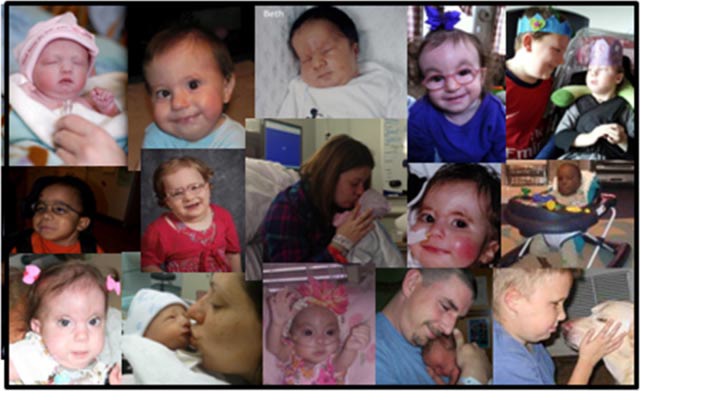
Kids with extra chromsomesAnnie’s collaboration with the parents in the project (one of the authors is a parent, the questionnaire was developed and refined with parent input, and she has remained in contact with some parents, and the support groups) led to some interesting insights, one of them being that the parents didn’t want anonymity, they wanted their babies to be recognized and known by their names, not by their diagnosis. So unusually, the legend to the figure shown above includes their names, and shows a very different image of these children to that shown in textbooks.

Family pictures of children. From top left to right: Gianna, full T18 (died 1 week), Nolan, full T18 (died 2 years), Beth, full T13 (died 3 months), Guiliana, mosaic T18 (2 years), Emma, full T18 (died 5 years), Joey, full T13 (5 years), Sofia, full T13 (6 years), Allison, full T13 (died 1 day), Annie, full T18 (died 12 years), John, full T13 (died 1 year), Caitlyn (3 tri 18), Cathal, full T18 (died 1 day), Sophee, full T18 (died 6 months), Bristol, full T18 (died 2 months), Devon, full T13 (17 years).


Posted in Advocating for impaired children | Tagged , | 18 Comments

Drug shortages

The recent study by Kluckow and his colleagues points out another serious issue in neonatology: drug shortages. In recent times we have had poor or no supplies of dramatically important drugs, including for example indomethacin, phenobarbitone and more recently caffeine. We also had a shortage of betamethasone, another life-saving drug, given to mothers threatening preterm labour.

These are drugs that save lives, (and brain cells) and we should not tolerate a situation where cheap generic drugs are difficult or impossible to source for our patients. This occurs largely because they are cheap and generic, so there are very limited profits to be made. When statins are potentially given to a billion people and Lipitor alone has made 120 billion dollars in sales, how can we convince a company to continue to make a drug which is administered to a very small population of very small people, who consequently don’t pay very much for the tiny quantities that they use?

I think the answer is a government drug production agency, who can control and manufacture the drugs that we need, according to proven benefit, rather than profit margins. I can’t see another way to assure the continued availability of essential drugs, unless we as a collective decide to make it a priority.

Posted in Neonatal Research | Tagged , | 3 Comments

Long term outcomes after Very Extremely Preterm Delivery

Another blog post suggested by a reader, this time from Jim Goodmar from San Diego.

This study of neurological and developmental outcomes of babies born before 25 weeks is remarkable in a number of ways. (Herber-Jonat S, Streiftau S, Knauss E, Voigt F, Flemmer AW, Hummler HD, Schulze A, Bode H: Longterm outcome at age 7-10 years after extreme prematurity-A prospective, two centre cohort study of children born before 25 completed weeks of gestation (1999-2003). The journal of maternal-fetal & neonatal medicine 2013, 0).

Firstly the proportion of infants who survived is outstanding. There were 128 infants born in the 2 centers (Munich and Ulm) over a 5 year period, of whom 107 survived. Some infants at each number of weeks of gestational age had compassionate care from birth, but among those infants at 23 weeks who had pro-active care the survival was 80% to discharge, and 87% at 24 weeks. One interesting point in the description of the patients there were no babies who received pro-active care in the 22 to 23 week group who were growth restricted. It appears (quite reasonably) that birth weight was a factor in deciding whether to start intensive care.

The infants were followed until 7 to 10 years of age, and had a battery of tests performed. The only limitation of this study is the large number of infants lost to follow up. Although it is difficult to follow babies for so long, the generalizability is affected by losing 25%.

The proportion of infants with no impairment is impressive, 76% of the children had either no, or mild impairment. Only 2 of the babies were considered severely impaired, one with severe cerebral palsy, the other blind.

Significantly, there was no difference in long term outcomes between babies born at 22 or 23 weeks, compared to those born at 24 weeks.

The IQ test scores were very similar between groups, being slightly better on all subscales in the more immature group. For example the full scale score in the 22-23 week babies was a mean of 92, with none of them being below 70. It was 86 in the 24 week infants, with 10% being less than 70.

These results have certain specific characteristics, the babies were all inborn in tertiary care centers where a positive attitude prevails, leading to a high prevalence of antenatal steroid use at all the gestational ages represented. Mild impairment included infants with cerebral palsy who were mildly affected with a GMFCS of 1, or with an IQ score between 70 and 84.

These data are entirely consistent with the recent systematic review that I blogged about recently from Greg Moore and colleagues in Ottawa, at early school age among the most immature infants, the proportion of survivors who are impaired does not change with gestational age (and that review included infants of 25 and 26 weeks also). Our antenatal counseling and decisions about pro-active care should be based on survival. Very long term outcomes are not different among extremely immature infants by completed weeks of gestation, if you follow them for long enough. Overall the proportion of impaired infants gets lower as they get older, and the gradients that are visible at 18 to 24 months usually disappear.

If we are to base decision making on long term impairments (and I think that really is an ‘if’ unless we can reliably predict profound impairment), then that requires that we include sepsis, NEC, surgery, BPD, all things that occur after birth. As there is no difference in severe impairment by gestational age, and no effect on quality of life by gestational age, then we should discriminate by survival, which is more related to birth weight at these profoundly low gestational ages than to completed weeks of gestation. Profound impairment is relatively uncommon, and completely unpredictable before birth.


Posted in Neonatal Research, The CPS antenatal counselling statement | Tagged , , , | 4 Comments