Nosocomial infections, “Hospital-Acquired Infections”, and now “Hospital-Onset Bacteremia”

It has been clear for a while that the focus of some groups and some publications on only infections associated with central venous catheters, so-called CLABSI, was missing the point. You could completely eliminate CLABSI by not using central lines, but the babies don’t care what the source of their infection is! Also, most serious infections are Gram-negatives, which are largely the result of blood-stream invasion by organisms in the infant’s own GI tract.

When I first moved to Montréal, to take over the NICU at the Royal Victoria Hospital, we had access to the “Usher needle” a tiny butterfly with a side-loop, inserted by the nurses using a forceps to grasp the side loop, often into scalp veins. There were almost no central lines apart from umbilical catheters (as we had to send the babies to the Montreal Children’s for a picc), and therefore very few CLABSI! We did have what I then called nosocomial infections, the name being derived, I think, from the Greek: nosos meaning something to do with infections, and comial meaning… something else, which I guess had to do with health care. I think Hospital Acquired Infections is a better name, and suggests that the hospital is to blame, so I will call them HAI. Hospital Onset Bacteraemia, is a newer terminology, referring only to blood culture positive cases, and is presumably meant to be more neutral, but maybe being neutral isn’t the best idea. Back at the Royal Vic, with the improved survival and prolonged need for vascular access for some infants, and the disappearance of the Usher needle, I developed a central catheter team, which led to a dramatic increase in CLABSI, but no real change in HAI.

If you look at the CNN reports, for many years there have been data on CLABSI, as well as a report of all Late-Onset Infections. The variations in incidence of CLABSI are much greater than of HAI. It is also important to point out that the CNN reports blood culture positive infections. So-called culture-negative sepsis is not included in the main reports; there are guidelines for deciding which cultures may be contaminants, a consideration which, of course, mostly applies to COagulase Negative Staphylococci, or CONS, but those guidelines are somewhat subjective, as always. The CNN report divides the CLABSI into CONS and other organisms, and just under half of the CLABSI are CONS.

Of the remainder, the majority, as mentioned above, are probably primarily organisms invading from the GI tract of the baby, a few recent publications seem to confirm this. Using the latest metagenomic techniques, (Schwartz DJ, et al. Gut pathogen colonization precedes bloodstream infection in the neonatal intensive care unit. Sci Transl Med. 2023;15(694):eadg5562), with sequencing of multiple stools from 19 preterm infants with HAI, they showed that prior to the development of sepsis with Gram negative organisms or with Enterococci, there was an extremely high relative abundance of the organism in the GI tract, of over 10% in all, and sometimes reaching over 45% of all the bacteria in the gut being the offending germ that went on to cause the bacteraemia. In contrast, babies with Staph Aureus sepsis or with late-onset Group B Strep, had very little of the organism in the stool, except one S Aureus baby with >90%. Which seems to confirm that Enterobacteriaceae and Enterococci sepsis is usually due to blood stream invasion by GI organisms, whereas the other bugs mentioned usually come from elsewhere, probably the skin or pharynx, or from the skin of the health-care team.

Another recent publication, this time from Singapore, (Heston SM, et al. Strain-resolved metagenomic analysis of the gut as a reservoir for bloodstream infection pathogens among premature infants in Singapore. Gut Pathog. 2023;15(1):55) also showed that Enterobacteriaceae causing HAI (with close to 100% DNA identity) were previously found in the GI tract, whereas the S Aureus and 2 of their 4 late-onset GBS were not found.

The team from St Louis have also previously confirmed that giving antibiotics increases the presence of pathogens, and, in particular antibiotic resistant pathogens, in the GI tract of preterm infants in the NICU (Gibson MK, et al. Developmental dynamics of the preterm infant gut microbiota and antibiotic resistome. Nat Microbiol. 2016;1:16024).

Central venous catheters are not, therefore, a frequent source of HAI in preterm infants, low gestational age is the major risk factor, prolonged initial antibiotics, and not receiving probiotics are all as important as risk factors in our population. Indeed just being in the NICU, which has it own microbiome and which interchanges with the infant’s microbiome, is a major risk. A study from a few years ago showed that the highest bacterial abundance was on the floor of the NICU room, just in front of the incubator, (Brooks B, et al. The developing premature infant gut microbiome is a major factor shaping the microbiome of neonatal intensive care unit rooms. Microbiome. 2018;6(1):112) and that there appears to be a dynamic interchange between the infant’s bowel microbiome and the local environment. Brooks B, et al. Strain-resolved analysis of hospital rooms and infants reveals overlap between the human and room microbiome. Nat Commun. 2017;8(1):1814.

Scrupulous technique for insertion and care of central venous lines is essential for any patient with such a catheter. But even the best quality control of catheters will probably not have much overall impact on HAI incidence, unless there are also evidence-driven interventions to reduce other sources of HAI.

This post is actually in response to a recent publication from the Pediatrix group, and 5 other academic NICUs, Prochaska EC, et al. Hospital-Onset Bacteremia Among Neonatal Intensive Care Unit Patients. JAMA Pediatr. 2024;178(8):792-9) which reflects a change in the USA, where the CDC is introducing HAI, specifically bacteraemia with an onset more than 3 days after admission, which is called Hospital Onset Bacteraemia, or HOB, as a quality metric. The publication documents the HOB frequency per 1000 patient days:

As the second graph shows, HAI become less frequent with postnatal age among the very preterm, but become more frequent over time in the term babies. Obviously most term babies who are still in the NICU after 1 month of age are very complex babies with multiple problems:

whereas among the very preterm, they are becoming more stable over time, as well as having progressively more mature immune systems. Presence of a central line is a good marker of these changes, any baby still needing a central line after 6 weeks of age is at very high risk of HAI.

In older patients, some definitions of a true CLABSI require paired quantitative cultures, with a greater CFU concentration in the culture drawn from the line than from a peripheral site. We almost never do that, mostly for technical/logistic reasons (blood volume and risk of catheter occlusion), so definitions of CLABSI are somewhat variable, and not necessarily directly comparable. In the CNN the definition is simple, a positive culture with a central line in place, or within 48 hours of withdrawing the line; I think it is obvious that many such bacteraemias are not due to central line contamination. Recording any positive blood culture, with some filters to eliminate contaminants, is simpler, more likely to be comparable, and is more relevant for the lives of our babies. As one example of how this is pertinent, one site in the CNN 2022 annual report had the highest crude rate of HAI for infants <33 weeks at 6.6/1000 patient days, but had one of the lowest incidences of CLABSI (4/1000 central line days, of which 1.4 were CONS).

We need to focus on maintaining scrupulous had hygiene, limiting unnecessary antibiotics, and trying to manipulate the intestinal microbiome to reduce or eliminate pathogens. Other interventions, attempting to support the immature immune system (IV immune globulin, Colony Stimulating Factors, neutrophil transfusions) have so-far proven ineffective. As the JAMA Pediatrics article shows clearly, HOB are a substantial cause of mortality, fighting them is a priority.

Posted in Neonatal Research | Tagged , , | Leave a comment

Early Exclusive Enteral Nutrition: not Early, not Exclusive, some Parenteral, but interesting anyway.

This could have been part 3 of my recent duet of posts on the potential toxicity of TPN. Those 2 posts referred to the late preterm and the full term newborn. In this study (Razzaghy J, et al. Early and exclusive enteral nutrition in infants born very preterm. Arch Dis Child Fetal Neonatal Ed. 2023) .infants of 28 to <33 weeks GA, who were <36 hours of age were enrolled.

It is not clear in the manuscript if eligible babies could have been already receiving enteral feeding when enrolled, it seems to be assumed that they had not yet started feeds. Babies >1500g had iv fluids with just dextrose, and those <1500g had a dextrose amino acid solution started at birth, prior to enrolment in this trial.

The intervention group, once randomized, were started on enteral feeds of human milk (maternal breast milk MBM, or donor DBM) at 60-80 mL/kg/d, within the first 36 hours after birth. The controls started on 20-30 mL/kg/d within 96 hours after birth. Both groups then increased enteral feeding volumes by 20-30 mL/kg/d, having the IV fluids gradually decreased to achieve the desired total fluid volume.

Again, it is not clear in the publication, but it seems like the intervention group continued to receive the same intravenous fluids as before, i.e. the babies <1500g getting dextrose/amino acid solution continued to get it, as their iv fluids were weaned. What happened to the IV fluids in the controls is nowhere described. Did they all get started on TPN? Did they aim for a standard IV protein intake? Or, what? Surely as a trial of trying to avoid TPN in very preterm babies, the use of TPN in the controls should have been described.

Both groups aimed for at least 150 mL/kg/d of enteral feed volume. All had human milk alone for the first 14 days after birth, and then transitioned to artificial formula if there was insufficient MBM. Fortification was not standardised, and the publication states that the 1st 14 days was an “exclusive human milk” diet, but whether this means that fortification was with DBM-based fortifier or not isn’t clear. Timing of fortification is very variable in the literature, and as this was an unmasked trial it might have been different between groups. If it was decided as part of the study design to not standardize fortification, at least it should have been reported when and how it was commenced, in each group. As it is, we have no idea if the nutritional intakes between groups were different or not.

The primary outcome was the number of days within the 1st 28 days of life that the infant received at least 150 mL/kg/d of enteral feeds. Which seems a strange outcome; the feeding regimes put the intervention group a minimum of 2 to 4 days ahead of the controls by the design of the feeding protocols. So if there was no difference in this outcome that would have been very weird. It is like designing a controlled trial of caffeine vs no caffeine, with the primary outcome being whether they got caffeine or not!

An intervention group baby could be started on 80 mL/kg/d on day one, and increased by 30 mL/kg every day, reaching the outcome volume by day 4. Control babies, at the best, would have taken at least one extra day to get there, and, if started on day 3 at 20 mL/kg/d, then increased by 20 mL/kg/d, could easily have taken until day 10 to satisfy the outcome criterion.

As importantly, who cares? Surely what matters is if there were any clinically important differences between groups, such as sepsis, or NEC, or some index of growth. Much more interesting, therefore are the growth outcomes that were measured, and which included body composition, at between days 15 and 28.

The authors note that a trial with occurrence of NEC as a primary outcome would have required thousands of babies, but, with the previous data about Late Onset Sepsis being much more frequent among term and late preterm infants receiving TPN, a prioritized composite, of death, followed by NEC, followed by Sepsis (as an example) could have had a realistic sample size. A primary growth outcome would also have been feasible.

There were 102 babies enrolled, and full results for 97, the primary outcome showed a difference of 2 days, which is entirely explicable by the differences in the feeding protocols.

There are several other unexplained things in the results: results are presented for the days to “full enteral feeding”, which was 6 days vs 7 days, and other results for “exclusive human milk feeding”, which was 4 days vs 6 days. What those terms mean, and what the difference is between them is not explained. Weren’t all the babies receiving exclusively human milk for the 1st 14 days? Neither term is defined in the methods, there isn’t a published protocol, and the trial registration documentation is very sparse. I might guess that “full enteral feeding” is when the IV was stopped, but then “exclusive human milk feeding” is entirely unclear.

The mean birth weight of the babies was very close to 1500 grams, but by chance the controls weighed about 200g less than the intervention group (1385g vs 1571g). About half of each group should therefore have been getting amino acid solutions when randomized, but this would have been a greater percentage in the controls. What was done with the parenteral nutrition is never described, were AA solutions continued during the weaning of IV fluids? Did any have IV lipids? What were the total calories and protein given in each group over the first few days?

The intervention group also happened to have less growth restriction at birth, z-score -0.08 compared to controls -0.38. In both groups, weight z-scores at 36 weeks were lower than at birth (-0.9 vs -1.2), and head circumference z-scores were below the mean also (-0.8 vs -0.8), there was a difference in the 36 week length z-scores (-0.9 vs -1.5), all of which are intervention vs control, respectively. The fat free mass z-score was also different between groups at 14 days of age, 1.48 vs -2.0. It is important to note, that all the differences disappeared when they corrected for the birth weight z-scores. The only difference that remained “significant” after adjusting for birth weight z-scores was the small difference in length z-scores at 36 weeks PMA.

It seems likely that, total macronutrient intakes in the 1st few days were similar or lower in the intervention group, who presumably had a little less protein intake, at least; Growth was not substantially different between groups.

Control babies were hospitalised for 7 days longer (40 d vs 47 d), it isn’t clear why, but, by chance, the controls were 1 week less mature at birth, 30 weeks vs 31 weeks. That might entirely explain the difference in hospital stay, so they went home at about the same PMA.

I think the Archives peer review failed badly with this article; it is an RCT of a nutritional intervention that presents no data on nutritional intakes. There are very important details of the procedures that are not described. There are outcome terms which are not defined. The abstract, which is all most people read, does not mention that all the differences disappear when adjusted for an important baseline imbalance. And the results were only adjusted for the difference in baseline birth weight z-scores, there remains a difference in GA; my guess is that the residual, non-significant, difference in hospital costs (and perhaps in pre-discharge length z-score) would completely disappear if they accounted for the extra days of hospitalisation entailed by the lower GA in the controls.

As this post’s cynical title suggests, I don’t think this actually qualifies as a trial of early, exclusive, enteral nutrition; enteral nutrition routinely starting before 6 hours, for example, could be reasonably called “early” (compared to before 36 hours) and completely avoiding amino acid solutions could be called “exclusive”. But, as a first step to designing a protocol, to actually test an approach of trying to completely avoid Parenteral Nutrition in many very preterm babies, it does provide some safety data. I think it shows that we could indeed safely design a trial, in babies of 28 to 32 weeks GA, with the goal of investigating whether completely avoiding amino acid solutions, when possible, has benefits in terms of clinical outcomes or growth.

In an actual trial of EEEN, intervention babies would all receive full enteral feeds from birth, that is 60 mL/kg/day from arrival in the NICU, if unable to tolerate that, then a dextrose solution would be started from birth, and enteral feeds started within the first few hours of life, increasing at 30 mL/kg/d, which, for most babies, would cover their total fluid requirements, at 90, 120, then 150 mL/kg/d, thereby avoiding completely iv access for those who did not require antibiotics, and completely avoiding TPN, or an iv amino acid solution, for many babies. Criteria for parenteral nutritional assistance would have to be clear in such a trial, for example, if an intervention group baby had persistent regurgitation, and by day 3 was receiving less than a certain threshold, then a supplemental parenteral nutrition could be added.

Controls would have standard care, with guidelines in place for when to start TPN, and how to commence and advance feeds.

Posted in Neonatal Research | Tagged , | Leave a comment

Mind your ABC’s : Artificial respiration Before Cord clamping?

Delayed cord clamping has, rightly, become the default whenever a newborn infant is born, benefits in term, late preterm, and very preterm infants have been shown. Current guidelines suggest that if the infant “needs resuscitation” then immediate clamping and assisted ventilation is reasonable. But, if the baby does “need resuscitation” then the best approach remains uncertain. I can do no better than quote from the introduction of the published protocol for the ABC3 trial (which was actually an abbreviation for “Aeration Before Clamping”).

Recent meta-analyses, comparing delayed cord clamping (DCC) with immediate cord clamping (ICC) in preterm infants, showed increased haematocrit, fewer blood transfusions, a decrease in mortality and a trend towards fewer intraventricular haemorrhages (IVH). However, in most studies, DCC was performed using a fixed time of 30–60 s, while it can take up to 3 min before placental transfusion is complete. Waiting longer than 30–60 s is not considered feasible, given that respiratory support cannot be applied during this time interval. Additionally, most trials comparing DCC to ICC did not include very preterm infants requiring immediate interventions for stabilisation or resuscitation, while these infants have the highest risk of complications and therefore could benefit most from DCC.

…recent studies in preterm lambs have demonstrated that delaying cord clamping until after ventilation onset prevents a rapid decrease in cardiac output. The observed large fluctuations in systemic and cerebral haemodynamics, and concomitant bradycardia and hypoxia frequently observed in preterm infants after ICC, could be avoided by delaying cord clamping until after aeration of the lung… delaying cord clamping until the infant is stabilised may decrease the risk of cerebral injury and hypoxia-related diseases such as NEC and associated rates of mortality and morbidity.

As you can probably tell by the quotation marks around “needs resuscitation”, I think it is really unclear when a non-vigorous infant who is still attached to the placental circulation should have resuscitation instituted. If the infant is apnoeic at birth, but with a good heart rate, should you clamp immediately or wait for a short time while stimulating the baby, or just wait and watch, if the cord is pulsating, with the hope that the baby is getting adequate oxygenation from the intact placental circulation?

Indeed the current NRP algorithm doesn’t mention cord clamping anywhere!

The most recent European guidelines (Madar J, Roehr CC, Ainsworth S, Ersdal H, Morley C, Rudiger M, et al. European Resuscitation Council Guidelines 2021: Newborn resuscitation and support of transition of infants at birth. Resuscitation. 2021;161:291-326) are clearer on this issue, they have an introductory section as follows

Management of the umbilical cord after birth

  • The options for managing cord clamping and the rationale should be discussed with parents before birth.
  • Where immediate resuscitation or stabilisation is not required, aim to delay clamping the cord for at least 60 s. A longer period may be more beneficial.
  • Clamping should ideally take place after the lungs are aerated. Where adequate thermal care and initial resuscitation interventions can be safely undertaken with the cord intact, it may be possible to delay clamping whilst performing these interventions.
  • Where delayed cord clamping is not possible, consider cord milking in infants >28 weeks gestation.

They divide babies into 3 groups; Group 1 is “satisfactory transition”; babies who should have delayed cord clamping. Group 2 is “Incomplete transition”:

I’m not sure about the inclusion of ‘reduced tone’ in this: what if a baby is hypotonic (and I am not sure how good we are in the DR in evaluating the muscle tone of a baby) but breathing well with a good heart rate? Even ‘breathing inadequately’ is somewhat subjective, it is mentioned elsewhere in the guide that this refers to gasping or grunting. The guideline continues with the following recommendations

  • Dry, stimulate, wrap in a warm towel.
  • Maintain the airway, lung inflation and ventilation.
  • Continuously assess changes in heart rate and breathing If no improvement in heart rate, continue with ventilation.
  • Help may be required

The 3rd group in these guidelines are “poor/failed transition”

Again, although most babies with apnoea and/or bradycardia are floppy, why does that need to be there? Surely it is the respiratory and cardiac status that are important.

The guidelines further note :

Preterm Infants

  • Same principles apply.
  • Consider alternative/additional methods for thermal care e.g. polyethylene wrap.
  • Gently support, initially with CPAP if breathing.
  • Consider continuous rather than intermittent monitoring (pulse oximetry ECG)

It isn’t clear how long the initial assessment of breathing and heart rate should take, and if you can wait for 10 or 20 seconds or longer to see if the infant starts to breathe. There is a section on tactile stimulation which states

  • Initial handling is an opportunity to stimulate the infant during assessment by
  • Drying the infant.
  • Gently stimulating as you dry them, for example by rubbing the soles of the feet or the back of the chest. Avoid more aggressive methods of stimulation

But I can’t see anything about how long to continue the stimulation. I know this is a minor point, but when we start to consider whether, and when, we should progress to more invasive support prior to clamping the cord, it starts to become more important.

There is a later flow chart in these European recommendations which suggests that, for the apnoeic baby, we should have opened the airway and given 5 positive pressure breaths by about 60 seconds of age.

The reason for me nitpicking over these guidelines, and noting that the NRP/AAP/CPS guidelines are unclear on the cord clamping issue, is the publication of a multicentre RCT (Fairchild KD, et al. Ventilatory Assistance Before Umbilical Cord Clamping in Extremely Preterm Infants: A Randomized Clinical Trial. JAMA Netw Open. 2024;7(5):e2411140)

Infants <29 weeks were randomized to the intervention group with assisted ventilation before cord clamping, or control, standard, care. Below are lightly edited extracts from the methods section.

In both study groups, initial steps of infant resuscitation included tactile stimulation and suctioning the airway, if needed.

Immediately after delivery, infants were placed near the perineum for vaginal birth, on sterile-wrapped trays across the mother’s thighs for cesarean birth, or on freestanding platforms for initial steps of stabilization. Warming pads and plastic wrap were used to minimize heat loss. Thirty seconds after birth, the infant received CPAP if breathing well or PPV if not breathing well. Heart rate was checked at 60 and 90 seconds, and if <100, ventilation corrective actions were performed per NRP. The goal cord clamping time was 120 seconds after birth. Equipment used for the intervention varied by site and included face masks, devices to administer CPAP and PPV, oxygen and air tanks to provide blended supplemental oxygen. For cesarean deliveries, equipment was near the sterile field.

For infants randomized to the control group, the umbilical cord was clamped 30 seconds after birth if the infant was not breathing well (apnoeic or gasping), or delayed until up to 60 seconds if the infant was breathing well (audible crying or visible sustained respirations).

The flow diagram of the protocol in the supplemental materials is helpful:

The primary outcome of the trial was survival to 7 days of life without any grade of IVH.

The trial was powered for an Odds Ratio of 0.5 among the “Not breathing well” group of the primary outcome. Although it was an unmasked study, for obvious reasons, the evaluation of head ultrasounds was performed by independent masked radiologists.

The overall findings were of no difference in the primary outcome, as you can see from the weirdly pink visual abstract. In more detail; among the subgroup who were not breathing well, there was the biggest difference in the intervention, with the controls having cord clamping at 30 seconds, transfer to a resusc table followed by further intervention as required, and the VentFirst group who had assisted ventilation, and other manoeuvres, with the cord intact for 120 seconds.

In the ‘not breathing well’ group mortality at 7 days was similar: 11% control, 9% VentFirst; and any IVH among survivors to 7 days was 32% vs 30%. Strangely, the RRs were a little <1 for mortality and a little >1 for IVH, even though both were slightly more common in the controls, I wonder if there is a mistake in those numbers.

In the babies who were breathing well, in whom the difference in intervention was really just in the duration of DCC, the results are reversed, with both mortality and IVH being slightly more frequent in the VentFirst group, and both RRs being >1.0, although with tiny numbers of deaths.

Regular readers will probably guess what I am going to say now, which is “who cares?” Who cares about deaths by 7 days of age, or grade 1-2 IVH? Surely, what is really important is whether the babies were more or less likely to go home alive, and whether they had a brain injury which could increase their chances of a limited long term outcome. For the first part of that concern there is no data presented in the manuscript: but there are data on survival to 36 weeks, which was 26/278 VentFirst babies, and 29/292 controls. As there are usually few deaths between 36 weeks and discharge we can hope that survival to discharge was not different between groups, there were about 1/5 of the babies who were <26 weeks, in whom late death is a bit more common, but I guess we won’t know for sure about survival to discharge unless long-term follow-up is published. As for more serious brain injury, there is a secondary, composite outcome, of grade 3 or 4 IVH, cystic PVL, or cerebellar bleeds. This outcome was, in the subgroup who were ‘not breathing well’, somewhat less frequent in the VentFirst group than controls, 11% vs 18% (RR=0.63, 95% CI 0.35, 1.13), and a little more frequent in the VentFirst group among those ‘breathing well’ (9% vs 7%). After scouring the supplemental material, the frequency of combined grade 3 and grade 4 IVH was 13/150 vs 18/121 (‘not breathing well’, VentFirst vs Control), and 8/128 vs 9/171 (‘breathing well’ groups).

Among other outcomes that were measured, VentFirst babies had higher 1 minute Apgars and were less likely to be intubated in the DR (47% vs 62%). All other usual neonatal outcomes were very similar between groups. Of note the median duration of DCC in the VentFirst group, which was supposed to be at 120 seconds, was actually 105 seconds, with the 25th percentile being 20 seconds in the not breathing well group (75th percentile = 122 seconds). So large numbers of babies were protocol violations. The authors have also, therefore, performed a “per-protocol” analysis, in which the 413 babies who had DCC within 15 seconds of the time prescribed by the protocol are included. As you can see in the figure below, all the confidence intervals cross the 1.0 line, and there were no striking differences in these outcomes either. The babies who really did have more delayed DCC had less anaemia, but the primary outcome was not very different between groups. It looks like there might be a signal there of fewer grade 3 and 4 IVH, at least among the ‘not breathing well’ subgroup, but it could be just a chance difference.

I know it is easy to be critical while tapping away at a keyboard, I also recognize that study design is always a compromise, between what is ideal and what is practically possible. But I do think that outcomes of more interest, such as survival to discharge without major brain injury, or, preferably, a prioritized composite with death before discharge being the worst outcome, followed by major IVH, would have been just as feasible with a similar sample size.

If we were to assume that there were no deaths between 36 weeks and discharge, then the alternative outcome of “death or severe brain injury” occurred in 54/278 VentFirst vs 63/292 control babies, which doesn’t look like an important difference; death before 36 weeks was 26 vs 29, and serious brain injury was 28 vs 34, neither of which are striking differences.

The same investigators previously published a pilot study with 29 babies <33 weeks GA. They don’t present any clinical outcomes in that report, but do mention one death in a baby incorrectly randomized, which makes me think that all the others survived.

The ABC3 trial was presented at the JENS in Rome last September, in that trial eligibility was <30 weeks GA, and the intervention group had resuscitation with an intact cord until the baby was stabilised, rather than for a fixed duration, the planned timing of cord clamping was between 3 and 10 minutes. Stabilisation was defined as a good heart rate, and a saturation over 85% with <40% oxygen. The presentation noted that there was no difference in the primary outcome, which was survival to discharge without IVH of 2 or more and without NEC of stage 2 or 3. JENS doesn’t publish abstracts for all of the presentations, so I can’t give any more details. However, the pilot for that trial has been published (Knol R, et al. Physiological-based cord clamping in very preterm infants – Randomised controlled trial on effectiveness of stabilisation. Resuscitation. 2020;147:26-33). In the pilot 37 infants were included, with the primary outcome being time to stabilisation, which was shorter in the intervention group. In the pilot all clinical outcomes were very similar between the 2 groups.

The ABC trial has also previously been published (Nevill E, et al. Effect of Breathing Support in Very Preterm Infants Not Breathing During Deferred Cord Clamping: A Randomized Controlled Trial (The ABC Study). J Pediatr. 2023;253:94-100 e1), a single centre RCT enrolling babies <31 weeks GA. In that trial, infants in both randomized groups had the cord clamped at 50 seconds, the best way to describe the protocol is with the figure from the published protocol.

As you can see, apnoeic infants (happy to see the correct spelling!) were either ventilated with the cord intact, or just had stimulation and positioning, from 20 to 50 seconds after birth. 113 babies were enrolled and studied, with the primary outcome being transfusion requirements. Neither transfusion need, nor any other clinical outcomes (death, 9% vs 7%, or IVH grade 3 or 4, 11% vs 9%, or the usual clinical outcomes), were different between groups.

It seems to be becoming clear, that the major extra logistic problems associated with providing respiratory resuscitation of very preterm infants before cord clamping, which in ABC3 involved inventing a special table for resuscitation, do not seem to lead to any substantial benefits. Below is a photo of the beast invented for, and used in, ABC3, called the “Concord”.

It is appropriate to wait for the full publication of ABC3, and perhaps other trials, before completely abandoning this approach. For now, the evidence-based approach for the moderately preterm baby, and for the more immature infant, is to evaluate the infant at birth with the cord intact, and if possible to delay cord clamping for 30 seconds, which I think is reasonable even in an apnoeic infant unless they are bradycardic. During that period of DCC the infant should be kept warm, and put in a plastic bag without drying, possibly additional gentle stimulation is reasonable during this 30 second period. If, after 30 seconds the infant is still apnoeic, then clamping and cutting the cord should proceed, and the baby resuscitated on a regular resus surface. If the baby starts to breathe before the 30 seconds, then DCC can be prolonged.

If you have already bought a Concord, or other similar table, then there doesn’t seem to be any harm of starting assisted ventilation prior to cord clamping, and this might decrease the need for early intubation, and shorten the time to stabilisation. However, as far as we can see at present, that doesn’t lead to any other clinically important advantages.

Posted in Neonatal Research | Tagged , , , , | 6 Comments

The role of Ureaplasma in Chronic Lung Disease of Prematurity

There have long been questions about the possible role of ureaplasma in the pathogenesis of BPD. Studies have shown a statistical association between maternal colonization and BPD, between placentas showing evidence of the germ, and between neonatal endotracheal colonization and BPD.

Unfortunately it is not that easy to get rid of it, older therapies such as erythromycin were very poor at eliminating the organism, it often being still present at the end of a course of treatment, and previous RCTs have shown little efficacy of routine treatment with erythromycin. But, there are RCTS which have suggested a benefit of azithromycin, which is much more effective at eliminating the organism. One RCT, which had a null result, suggested a positive impact in the subgroup who subsequently turned out to have been colonized with ureaplasma. A systematic review from a couple of years ago suggested that ureaplasma-colonized babies had a reduction in BPD when treated with azithromycin, but the total sample size of the included studies was only 126, and the RR of the outcome “BPD among survivors at 36 weeks” was 0.8 (95% CI 0.66-1.03), and therefore was consistent with both a potential substantial benefit, as well as with no difference.

There was therefore a need for an adequately powered RCT, with a sample size large enough to include a significant number of babies colonized with ureaplasma. One has just been published, the AZTEC trial. Lowe J, et al. Azithromycin therapy for prevention of chronic lung disease of prematurity (AZTEC): a multicentre, double-blind, randomised, placebo-controlled trial. Lancet Respir Med. 2024. In this 796 trial babies <72 hours of age <30 weeks GA who had received some positive pressure support were randomized to a 10 day course of azithromycin (20 mg/kg/d for 3 days then 10).

The primary outcome was “death or BPD at 36 weeks”, with BPD being diagnosed if the baby was on O2 or respiratory support at 36 weeks. Sigh. I will bore you all again by reiterating that death and needing oxygen at 36 weeks are not equivalent, and, even if they are competing outcomes, it is easy to design and analyze such studies differently. Also, it is not necessary to censor mortality at 36 weeks, death after and before 36 weeks are equally important, and it is easy to include death before discharge, and a more appropriate measure of lung injury, in outcomes.

Nevertheless, the trial was registered in 2018, and therefore designed prior to that, I just hope that things are changing, and that future trials are designed to recognize the relative importance of different outcomes, and include outcomes that are of interest to families and to society as a whole.

Despite that caveat, this was a high-quality masked multi-centre trial, large enough to answer the major question, and large enough to include many ureaplasma positive infants. The results showed absolutely nothing! There was a 1% absolute increase in deaths with azithromycin, and a 2% absolute increase in BPD, which are clearly consistent with random effects. All subgroups, in particular the culture positive babies, of which there were 148, 66 azithromycin vs 82 controls, had no benefit from azithromycin,

All the other common NICU complications were also similar between groups, including late-onset sepsis, NEC and RoP.

Early azithromycin to eliminate ureaplasma and improve pulmonary outcomes in preterm infants is now a dead issue. I guess there could still be a role for azithromycin in infants who are developing BPD, still intubated, and in whom ET cultures are positive. That is something I have a done a few times over the last few years, but even in those infants, these data make me wonder if it is really indicated. In the supplemental data one can see that the primary outcome was only slightly higher among infants who were colonized with ureaplasma (65% in the azithromycin group and 56% in controls), compared to those who were not colonized (59% vs 56%).

Ureaplasma spp, and the less commonly found mycoplasma organisms, seem to have no important role in the pathogenesis of chronic lung disease of the preterm infant, probably being just an innocent bystander.

Posted in Neonatal Research | Tagged , , | 4 Comments

Intravenous Nutrition of the sick term and late preterm infants : part 2.

The other trial is a much larger multicentre trial with clinical outcomes. (Alexander T, et al. Nutritional Support for Moderate-to-Late-Preterm Infants – A Randomized Trial. N Engl J Med. 2024;390(16):1493-504), the gestational ages only overlapped by 1 week with the criteria in the trial I discussed in the previous post; this trial included babies of 32 to 35 weeks and 6 days.

To reiterate, the PEPaNIC trial, and a subgroup analysis of the newborn group, mostly babies who needed surgery, showed that babies receiving early TPN had more nosocomial sepsis, longer assisted ventilation and longer PICU stays compared to the late TPN group, who delayed for 7 days.

The new trial has a multi-coloured summary :

To be eligible for the study the baby had to be admitted to an NICU, have an IV access in place, and have a mother intending to breast feed. I will focus on the IV amino acid vs glucose solution arm of this complicated factorial trial, in which babies after randomization received either an amino acid solution or a glucose solution until they were full enterally fed. IV lipid was added, in either group, at the clinicians’ discretion, and the composition of the amino acid solution was according to local hospital practice. The actual intravenous protein intake averaged 1 g/kg/day over the first week, but, as many were stopped prior to 7 days of age, I can’t tell how much was being prescribed on the days while they were actually receiving the intervention.

The 269 babies in the TPN group over the 1st week of the study therefore received more total protein, averaging 2.6 g/kg/d, compared to 1.8 for the 263 babies in the glucose group. During week 2 the intakes were identical; almost all in both groups were off IV fluids. Fat intakes were also higher during the 1st week at 3.4 vs 2.8 g/kg/d, but carbohydrate intakes were a little lower at 8.6 vs 9.2 (2.8 vs 3.3 of which was intravenous). All of the enteral nutritional intakes were very similar between groups.

The time to full enteral feeds, and therefore discontinuing the TPN intervention, was a mean of 5.7 days in each group.

The primary outcome of the study was a measure of growth at 4 months of corrected age, that is fat-free mass. This outcome was identical between the groups at 4.9 kg.

There were 3 times as many episodes of culture-proven late onset sepsis with early TPN, and 3 times as many episodes of ‘probable sepsis’. Which sounds dramatic, but the actual number of each was 3 vs 1, and 3 vs 1, which, of course, is not statistically significant. Or, in other words, it might have been a chance difference, except that it is consistent with the other data which are accumulating. Other outcomes such as duration of hospitalisation were identical between groups, and most were not on respiratory support, so one cannot comment on duration of such support as an outcome.

In this low-risk group for serious adverse events, there was no sign of an advantage of receiving amino acid solution while enteral feeds were being established. There is a hint of adverse consequences.

Although the trials are not directly comparable, they have in common relatively mature newborn infants, and early versus delayed, or no, intravenous amino acid solutions.

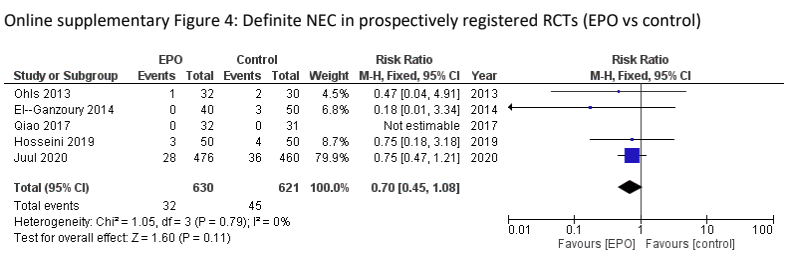
They also have in common, as results, a difference in hospital acquired infections between groups. In the PEPaNIC results there are several different categories of infections, including airway infections which are notoriously difficult to define in newborn infants. So by extracting the culture-positive blood or CSF infections from the 3 trials, and putting them in a meta-analysis (I know this is questionable, but to give an indication rather than bullet-proof data) you get the following Forest Plot:

Alexander 2024 is the new publication of the DIAMOND trial, Moon i2024 s the trial I described in the last post, and Puffelen 2018 is the newborn subgroup of PEPaNIC.

Please note, this is not a formal systematic review or meta-analysis, just an idea of the similarity of the data between the trials, which have major differences. In particular, the babies in Alexander were a very low risk group, and more immature.

But, given the lack of any indication of benefit from early TPN in such babies, I think we must reconsider that approach. Waiting until the babies are clearly in need of parenteral nutrition, after several days, seems to be consistent with the available data. Early TPN is not indicated for babies at or near term, or for late preterm babies who are likely to be fed shortly. Exactly how long to wait, and what the indications are for TPN in such babies, will require more research.

Posted in Neonatal Research | Tagged , , | 2 Comments

Intravenous Nutrition of sick term and late preterm infants : part 1.

There are 2 new trials addressing different aspects of the questions surrounding what to do about TPN for this group of babies.

My readers may remember my post about the PEPaNIC trial, which showed that there were disadvantages of early TPN, compared to TPN starting after 7 days of ICU among PICU patients. And the subgroup analysis which showed that the same results applied to the newborn infants in that trial, who were mostly babies who needed surgery. Babies receiving early TPN had more nosocomial sepsis, longer assisted ventilation and longer PICU stays.

The first of the 2 trials I wanted to discuss is a smallish single centre trial, with some similarities to PEPaNIC. (Moon K, et al. Early versus late parenteral nutrition in term and late preterm infants: a randomised controlled trial. BMJ Paediatr Open. 2024;8(1)) 60 babies of at least 35 weeks, admitted to the NICU, who were expected to not be fed for at least 3 to 5 days were randomized soon after admission to either start immediate TPN or to wait until day 6. The trial is clearly too small for clinical outcomes to be the primary, so the primary outcomes were serum phenylalanine concentrations (to see if the babies were tolerating the amino acids they were given) and F2-isoprostane (as an index of oxidative stress).

The early TPN babies received more protein and more total calories during the randomized period, but by day 8 there were no differences in intakes. TPN babies were more likely to have mild hyperglycaemia (>8.3 mmol/L), both groups had a lower body weight z-score at discharge than at admission, and the fall was greater in the late TPN group (-1.0 vs -0.6).

The publication states “all other clinical outcomes were similar between groups”, but I beg to differ! In the supplemental materials we find : 8/30 early TPN babies developed a hospital acquired infection, compared to 3/30 late TPN babies, 27% vs 10%, or more than double. In the published protocol we note that these are culture-positive blood or CSF infections. Duration of NICU stay was 5 days longer (21 vs 16) with early TPN, and total duration of hospitalisation was 4 days longer, 23 vs 19 d. Duration of respiratory support was 16 hours longer among babies who were on such support. There was also twice as many babies with hypoglycaemia in the early TPN group (4 of them vs 2)

Of course, the authors had to very careful to not make too much of those differences in such a small trial. They are, relatively speaking, large differences, but could have been due to chance. What is striking is that the differences are all consistent with what PEPaNIC showed, (apart from hypoglycaemia, which was more common in the late TPN group in PEPaNIC).

The primary outcomes did show a difference in phenylalanine levels, which were 30% higher in the early TPN group during the randomized period, but almost identical afterwards. Isoprostane levels were similar between groups throughout.

The practice of starting very early TPN was based on a physiologic rationale for the very preterm infant, with the desire to reduce catabolism among infants with very limited energy and protein stores at birth, and evidence that this physiologic goal was attained by immediate, or very early TPN. The practice has slowly spread to other babies in the NICU, and TPN is often started early among other infants, for whom there is no evidence of benefit. Among such infants, however, there appear to be negative impacts, and there is no clear evidence of benefit.

I think that term and near term babies, admitted to intensive care units, who cannot be full fed immediately, can wait several days before TPN is considered. Whether we wait 3 days or a week or even longer is uncertain, and will require larger studies, the current state of knowledge is that there is no need to hurry.

Posted in Neonatal Research | Tagged , , | 2 Comments

Nasal intubation improves feeding outcomes

The title of the post sneakily did not mention that I am referring to a study in a specific subgroup of babies, the paper is a report of an RCT in newborn infants who had heart surgery. Yildirim MI, et al. The Impact of Nasal Intubation on Feeding Outcomes in Neonates Requiring Cardiac Surgery: A Randomized Control Trial. Pediatr Cardiol. 2024;45(2):426-32. Full term babies who needed intubation for cardiac surgery were randomized to an oral or nasal intubation group, 70 babies were included, and 3 of the nasal group actually had oral intubation. There are a couple of problems with the study, the 3 babies randomized to nasal intubation who couldn’t be nasally intubated were analyzed as oral intubations, in other words there was not an intention to treat analysis, also the outcome variable had 3 possible values, completely orally fed, or needing an NG tube, or having a gastrostomy, but each outcome was analyzed independently.

All but one of the nasally intubated babies were fully orally fed at discharge with the other needing NG feeding, compared to 28 of the 37 who were orally intubated being full fed by mouth, with 3 going home with an NG tube, and 5 with a gastrostomy. The authors do mention that eliminating the 3 babies from the nasal group who were orally intubated made the results “non-significant” for full oral independence.

I don’t think there is another similar study available, previous randomized comparisons of oral and nasal intubation have not examined feeding outcomes to my memory; but this sounds like a major advantage for families of nasal intubation in this group of babies.

It would be interesting to see the impacts on oral feeds in preterm infants of route of endotracheal intubation. The tiniest preterm babies, who have the most feeding problems, cannot in my experience be nasally intubated at birth, usually the nostril will blanche around the tube, so I no longer even try below about 800 g. I do think there is a role for an RCT in other term infants and in preterm infants with prolonged intubation. I don’t think a day or two of intubation at 29 weeks (for example) is likely to have differential impacts on long term feeding outcomes between oral and nasal intubation. But babies with severe lung injury, ventilator dependent, and especially those approaching the PMA where oral feeding skills start to progress, might well benefit from having no oro-tracheal tube in place.

There is one older study, by the group in Rhode Island (Bier JA, et al. The oral motor development of low-birth-weight infants who underwent orotracheal intubation during the neonatal period. Am J Dis Child. 1993;147(8):858-62), led by the amazing Betty Vohr, that showed that preterm babies who had prolonged oral intubation had poorer sucking skills at term, and even after 3 months corrected age. It seems likely that oral endotracheal tubes do have an impact on oromotor development, it is unclear in the preterm whether nasotracheal intubation is preferable in this regard, as there are no coparative data I am aware of. Prolonged nasotracheal intubation can lead to distortion of the nose in smaller preterm babies, so it would warrant, I think, a good RCT to determine which route is preferable. What I would do would be to randomize very preterm infants who arrive at 30 to 32 weeks PMA, who look like they will need prolonged intubation, to either oral or tracheal intubation until their final extubation. The development of their feeding skills could then be followed over several months, in addition to investigating whether there were impacts on unplanned extubation, nasal growth and injury, oral/palatal groove development, pulmonary injury, time to discharge, etc.

This also makes me wonder whether there is a difference in feeding development and progression between oro- and naso-gastric tubes. As far as I am aware there are a few small RCTs, which have looked at things like pain scores during insertion, cardiorespiratory stability, and feeding tolerance. One did show that babies with orogastric tubes generated lower sucking pressure than those with nasogastric tubes, but no data about progression of feeding was given.

  1. Upadhyay J, et al. Cortical hemodynamic activity and pain perception during insertion of feeding tubes in preterm neonates: a randomized controlled cross-over trial. J Perinatol. 2021 (cross over trial) showed higher PIPP scores (indicator of more pain) during NG insertion than OG.
  2. Two studies have looked at apnea and bradycardia during oral or nasal tube use, one showed no difference (Bohnhorst B, et al. Oral versus Nasal Route for Placing Feeding Tubes: No Effect on Hypoxemia and Bradycardia in Infants with Apnea of Prematurity. Neonatology. 2010;98(2):143-9), the other showed more bradycardias with nasal tubes (Gupta NP, et al. Nasogastric vs Orogastric Feeding in Stable Preterm (≤32 Weeks) Neonates: A Randomized Open-Label Controlled Trial. Indian Pediatr. 2023;60(9):726-30.
  3. A more recent trial (Badran AT, et al. Nasogastric versus Orogastric Bolus Tube Feeding in Preterm Infants: Pilot Randomized Clinical Trial. Am J Perinatol. 2021;38(14):1526-32) randomizing infants >28 weeks GA to OG vs NG, showed a faster progression of their nutrition with the NG route, among babies who had no respiratory support. They achieved full enteral nutrition at 4.7 days compared to 6 days in the OG group. I am not sure why that would be. As a result they had 2 days less TPN. There is no report of what happened to their feeding competence.

I don’t know of any trials that have looked at whether there is an adverse impact of oral feeding tubes (compared to nasal tubes) on development of feeding competence, or duration of hospitalisation (which is often prolonged by feeding problems) and yet it is an extremely common practice, with potential important impacts that would be of interest to families, I’m sure.

Feeding problems, slow development of feeding competence, oral aversion, and various difficulties feeding are very common. Waiting for full oral feeding is commonly the last thing that keeps a preterm baby hospitalised. After discharge, one of the commonest concerns of families are those feeding issues, yet there is next to nothing in terms of good quality evidence to help improve those problems. Even something as simple as whether we should use oral or nasal endotracheal tubes, or oral vs nasal gastric feeding tubes has never been well studied for impacts on feeding development.

The field is wide open for young investigators to perform studies that could have a big impact on clinically important outcomes that concern parents.

Posted in Neonatal Research | Tagged , , | Leave a comment

Vitamin A for prevention of lung disease in the preterm

Previous studies have shown that vitamin A supplementation can reduce the frequency of BPD, but the practice has not become widespread. In part, I think, it is because repeated intramuscular injections of vitamin A are the route that has been studied, and there is an understandable reluctance to subject the babies to this.

If you could ensure adequate vitamin A status by another route, and show efficacy, then perhaps that would change the common approach.

This new RCT succeeded in enrolling over 900 at-risk preterm infants. (Meyer S, et al. Early postnatal high-dose fat-soluble enteral vitamin A supplementation for moderate or severe bronchopulmonary dysplasia or death in extremely low birthweight infants (NeoVitaA): a multicentre, randomised, parallel-group, double-blind, placebo-controlled, investigator-initiated phase 3 trial. Lancet Respir Med. 2024). Infants were 400-1000g and <30 weeks GA, had been intubated in the first 72 hours of life and were at least starting enteral feeds. Babies all received whatever vitamin A was in the breast milk with fortifier, or formula, and 1000 u/kg of vitamin A as oral drops or in their TPN. They were randomized to receive an additional 5000 u/kg of vitamin A or placebo.

In other words this was an RCT comparing an additional 6000 u/kg/day of vitamin A to an additional 1000 u/kg/day, on top of what was in their nutrition. Breast milk vitamin A is very variable, and varies from somewhere around 300 iu/100 mL in colostrum down to 60 iu/100 mL in mature term breast milk. Breast milk fortifiers tend to give close to 1000 iu when mixed with 100 mL of breast milk in the usual fortification to 87 kcal/100mL. In other words, a preterm baby, on 165 mL/kg/d of breast milk with standard fortification, should get somewhere around about 1700 iu/kg/day of enteral vitamin A.

The study found absolutely nothing. Every single outcome was close to identical between the 2 groups, BPD, and all the other 3-letter outcomes were very similar. Of note, the relative risk for NEC was 0.7, which reflected 6% with the high dose compared to 8% with the less high dose, but this was entirely consistent with a chance effect (95% CI for the RR 0.42-1.18). Which illustrates how many babies would be needed to prove a clinically important reduction in NEC in a prophylaxis RCT.

About half of the babies at each of 3 time points (before, during, and at the end of the trial) had serum retinol concentrations measured, and they were very similar between the 2 groups. It is likely that the mothers in this study were not malnourished, so it is likely that the vitamin A intakes from the basic nutrition that were calculated by the investigators have some accuracy, and they were indeed at least 1500 iu/kg/day in both groups even before the supplements were added.

A previous meta-analysis suggested that vitamin A supplementation was only effective among babies with a baseline vitamin A intake <1500 iu/kg/day. With another suggesting that it was only effective in lower risk babies.

This new RCT confirms that enteral vitamin A supplementation at 6000 iU/kg/day compared to 1000 iu/kg/day in addition to that provided by breast milk and fortifier (which the majority of babies were receiving) or formula, has no impact on BPD, in a population where mothers are likely to have diets sufficient in vitamin A.

As I have described, the control babies did get an extra 1000 iu/kg/day vitamin A already on top of their nutritional intake. I have never done that, I guess it must be frequent in Germany, where most of these centres were located. It probably isn’t necessary, the 1500 or so in regular fortified breastmilk or preterm formula may well be enough.

By now, my gentle readers probably know that I don’t think BPD is a useful measure of lung injury. In the supplemental material for this trial they describe other variables, such as duration of oxygen therapy, and duration of ventilatory support, but I can’t find any data. There have been other studies showing no impact on BPD, but nevertheless an impact on post-discharge clinically important outcomes (such as the SUPPORT trial CPAP arm), if there is funding, longer term follow up would be interesting, but to be honest, I would be very surprised if there was any difference in respiratory outcomes of importance to parents after discharge. Vitamin A is essential for lung growth and development, but once you have enough giving more doesn’t improve them further.

Posted in Neonatal Research | Tagged , , | Leave a comment

PAS meeting 2024: The Silverman Lecture

For those who are unaware, the Silverman Lecture is an annual honour bestowed by the AAP. A neonatologist who has made. or is making, major impacts in neonatology is asked to deliver the lecture. Bill Silverman was one of the early pioneers of neonatology in the USA, and was very outspoken about the need for evidence-based practice (having performed some of the earliest RCTs in neonatal medicine himself).

This years lecturer was Annie Janvier, and, for the first time ever, a second speaker was invited to collaborate on the presentation, a mother that Annie (and I) have worked closely with, Rebecca Pearce. Rebecca and Annie have both had extremely preterm infants, Rebecca recounted, at the start of her part of her talk, that she had twins Lily and Maren at 25 weeks. Lily died within her first few days of life of early onset septicaemia, and Maren, who also had EOS, survived. Rebecca and her husband have written about their experiences with the pre-discharge MRI, and they have become valuable members of our parent resource team at Sainte Justine. One particularly moving part of her presentation was a slide which listed on one side all of the diagnoses that Maren has had from doctors (including various delays and executive function disability), in the middle was a picture of a lovely smiling 14 year old girl, and on the other side a list of her characteristics as seen by her family, “caring”, “warm”, “bubbly” “hard worker”.

Annie’s presentation recounted, a little, our course with Violette, including this briefly shown picture of me doing kangaroo care in the NICU!

It also included pictures of Violette in the PICU, intubated after her tracheal reconstruction at the age of 15. She noted that Violette did not have “BPD”, as she came out of oxygen a couple of days before she hit 36 weeks, but that she certainly had respiratory fragility, and had serious upper airway problems, receiving several courses of steroids for stridor with signs of obstruction during her first few years of life. An outcome which has rarely or never been described in neonatal follow up studies, but which is well known to paediatric ENT surgeons. (As you can see, the image is from a day or two after the surgery when “ça va mieux”, things are going better).

Annie described the work of the “Parents’ Voices” project, which was created to “Engage Parents to Co-create” definitions of what are important outcomes of neonatal care, on which Rebecca is a co-investigator .

One of Annie’s slides, which illustrates that our current measures of “NDI” don’t reflect what parents think about their children, was derived from data in one of the Parents’ Voices publications. It showed that, when we categorize infants as having No NDI, mild-moderate NDI, or severe NDI, parents often disagree with us, a disagreement that increases the more “impaired” we think their child is. Only 12% of parents whose child was categorized as sNDI agreed that their child was severely impaired, a third of parents of such children don’t find them impaired at all. On the other hand there were 25 parents who found their child severely disabled, 22 of them were classified sNDI by the CNN definition, but 3 had either no or mild NDI.

Annie listed some of the publications from the project to date (and there are more to come!):

Jaworski M, Janvier A, Bourque CJ, Mai-Vo TA, Pearce R, Synnes AR, Luu TM. Parental perspective on important health outcomes of extremely preterm infants. Arch Dis Child Fetal Neonatal 2022
Sep;107(5):495-500. doi: 10.1136/archdischild-2021-322711
.

Girard-Bock C, Flahault A, Bernard E, Bourque CJ, Fallaha C, Cloutier A, Janvier A, Nuyt AM, Luu TM. Health perception by young adults born very preterm. Acta Paediatr 2021 Nov;110(11):3021-3029

Thivierge E, Luu TM, Bourque CJ, Duquette LA, Pearce R, Jaworski M, Barrington KJ, Synnes A,
Janvier A. Guilt and regret experienced by parents of children born extremely preterm. J Pediatr 2023
Jun:257:113268. doi: 10.1016/j.jpeds.2022
.

Milette AA, Richter LL, Bourque CJ, Janvier A, Pearce R Terrien Church P, Synnes A, Luu TH. Parental perspectives of outcomes following very preterm birth: Seeing the good, not just the bad. Acta Paediatr 2023 Mar;112(3):398-408

Thivierge E, Luu TM, Bourque CJ, Barrington KJ, Pearce R, Jaworski M, Janvier A. Pulmonary
important outcomes after extremely preterm birth: Parental perspectives. Acta Paediatr 2023
May;112(5):970-976
.

Janvier A, Bourque CJ, Pearce R, Thivierge E, Duquette LA, Jaworski J, Barrington KJ, Synnes A,
Church P, Luu TM. Fragility and resilience: Parental and family perspectives on the impacts of extreme
prematurity. Arch Dis Child Fetal Neonatal Ed. 2023 Nov;108(6):575-58
0.

Synnes A, Chera A, Richter LL, Bone JN, Bourque CJ, Zhang-Jiang S, Pearce R, Janvier A, Luu TM.
Redefining Neurodevelopmental impairment: Perspectives of very preterm birth stakeholders. Children (Basel) 2023 May 14;10(5):880
.

As you can see I am co-author on some of them, being a collaborator, rather than a member of the core group. I am proud to be associated with this group who are making great strides in re-defining what outcomes are of importance to families. The CNFUN is incorporating many of the measures that parents find important, for which validated instruments exist, into the national follow up database.

Here are the 2 Silverman Lecturers on the big day:

The lecture was greeted with a standing ovation from the audience,

This was followed by a Q&A session, which was generally thoughtful and appreciative. Unfortunately it ended with a comment from a retired neonatologist who said two things: Firstly, that quality of life is subjective, so shouldn’t be used as a primary outcome. I’m not sure I agree, you can measure quality of life just as well as you can measure the incredible complexity of child development; the person posing the question led a few very high quality studies (2 of which I was involved in), in which, unfortunately, like so many others, we dichotomised the richness of children’s developmental progress into “pass” or “fail”, “NDI or “no NDI”. I would agree, however, that you shouldn’t divide quality of life into 2 categories, of good or bad QoL. But in a sense, unless an intervention improves some aspect of QoL then what value is it? Secondly, they also stated that it is important that there is link of scientific plausibility between the intervention and the outcome. That is self-evident, and indeed what the Parents’ Voice project is trying to do is to develop more appropriate plausible outcomes: Parent-Important respiratory outcomes for respiratory interventions, Parent-Important developmental and neurological concerns for Neuroprotection studies.

The outcomes that are important to parents are also, often, the outcomes that are important to society as a whole, and that often have an impact on medical resource use. To take an example from the previous post, it matters little to anybody if a baby needs a few more days of oxygen while they are hospitalised. What matters to parents, and has an impact on society and resource use, is if discharge is delayed by pulmonary concerns (such as oxygen dependence), or if the baby needs oxygen at home, or has recurrent admissions post-initial discharge, or has difficulty feeding because of tachypnoea, etc. Until we start to measure such things, we have little idea if our interventions are having an impact on outcomes that really matter.

Posted in Neonatal Research | Tagged | 4 Comments

PAS report 2024: Alan Jobe

There was a hiccup yesterday, I was writing the part 2 and it suddenly got posted as just the title, and the entire post disappeared. I had to start all over (which has never happened before, there are usually automatic and frequent manual backups, but they all vanished). So as I rewrite it, here is an interim, a link to a video about someone I appreciate enormously.

One of the true giants of neonatology, and one of its true gentlemen, Alan Jobe, was honoured at the meeting, being given the Howland Award. Alan has made a huge impact on the care of babies, his achievements are too many to fit in a short video, but this link will take you to a 7 minute video. A full description of what he has done to improve neonatal care and help babies around the world would take far longer than 7 minutes!

Posted in Neonatal Research | 1 Comment