Longer-term outcomes of very preterm babies, what should we measure, when and why?

Two recent articles have discussed the issue of what outcomes we should measure to analyze neurological and developmental progress in the preterm baby. Both are thoughtful critical pieces that say many things that we need to think about as we follow our patients.

McCormick MC, Litt JS. The Outcomes of Very Preterm Infants: Is It Time to Ask Different Questions? Pediatrics. 2017;139(1).

This review/opinion piece describes some of the limitations of our current approach, and how many important outcomes are not routinely evaluated. It does, unfortunately, refer to many studies that have evaluated Bayley scores as if they measured IQ (for example Betty Vohr’s 2004 study, comparing outcomes between NICHD network sites on 20 month Bayleys, is referred to as showing variations in IQ. IQ, which has major limitations as a measure of outcomes itself, does at least have some correlation with school success and difficulty, it should not be confused with developmental quotients from a BSID exam, which have no clear correlation with functional outcomes). Near the end they state the following:

there is a need to shift to multifaceted conceptual frameworks accounting for physiologic and environmental influences on health and development. Broadly construed, such models should incorporate longitudinal observations of function and changes in function due to maturation, family dynamics, and social environmental contexts. Of particular importance is the
identification of appropriate interventions to buttress the child’s
ability within his or her familial environment.

In other words, trying to reduce outcomes to a single number (such as a Bayley cognitive composite score), is a reductionist approach that is absurd, we need to examine the range of the childs abilities, functions, behaviour and emotional life in order to help them.

Kilbride HW, et al. Prognostic neurodevelopmental testing of preterm infants: do we need to change the paradigm? J Perinatol. 2017.

This second article reiterates many of the issues I have been ranting about on this blog for a while, they start with discussing why one might want to do neurodevelopmental testing of preterm infants

(1) the results can help determine which children  should receive early intervention or enhanced educational services; (2) the assessments can be used as outcome measures in research protocols to determine whether specific neonatal interventions lead to better results and (3) such information may also be used to inform clinicians and parents about the appropriateness of providing care for certain groups of infants.

I think there are also other reasons for performing such testing, preparing parents for the future, and increasing the understanding of the patterns and developmental trajectories of very preterm babies, are 2 examples.

The authors then describe some of the tests that are used, focusing on the various editions of the Bayley tests of infant development, and the 3 editions of that test. They note the now well-publicised shifts in the norms of those tests, and then after a short section discussing the adult and adolescent outcomes of the very preterm baby, discuss whether early developmental testing can be used to predict later intellectual function test scores.

In general, the ability to predict cognitive outcomes at school age from infancy and preschool ages has been described as a conundrum. The elusive nature of estimates of IQ stability may be due to differences in sample selection, data analytic approaches, the presence of appropriate control groups as well as validity of assessment instruments, as discussed earlier. Even in the best of testing circumstances, defining impairment in early childhood is imprecise and is likely to over-estimate level of disability.

They note that there are major socio-economic impacts on development of the very preterm baby, and that those factors become more important over time; the CAP study cohort was a good example of this, the change in scores between the 18 month Bayleys and the 5 year WPPSI was greater in children whose parents had more social advantages.

IQ scores, from testing close to school age, are more closely associated with school performance than earlier developmental testing, but we should ask whether even those scores can, or should, be used as a way of determining whether a child’s life is worthwhile or not. For that is the implication of our use of developmental or IQ testing as a way of dichotomizing the lives of the survivors of NICU into those who are impaired and non-impaired, or intact and non-intact, or disabled and non-. Whatever the terminology the outcome calculators have the advantage of not just relying on gestational age to predict outcomes, but the huge disadvantage that they are used by practitioners to predict which side of the dichotomous outcome “survival without disability” compared to “dead or disabled” a baby will likely fall.

In reality the outcomes of our babies are not dichotomous, being dead is not the same as being disabled, all types of disability are not the same, and how a child with impairment experiences their own life and how they impact a family are not dichotomous phenomena, good or bad, either.

Telling a parent-to-be that a child has a predicted 21% chance of ‘survival without profound impairment’, in the example they use, actually means that they have a 33% chance of survival, and among survivors 64% do not have very low scores on Bayley-II testing at 20 months of age or disabling cerebral palsy. Saying that to parents requires that we know something about the outcome data that our statements are based on, and the major imitations of those data,

Categorization of children based on composite findings should be limited to outcome measurements for research purposes. Providers who counsel families prenatally regarding risk for
extreme preterm or other difficult newborn conditions need to
fully understand the implications of 24-month  neurodevelopmental findings to avoid using terminology that overstates what is known.

I don’t fully agree with the first sentence there though, I think we need to rethink how we use composite outcomes when we design research, as I’ve mentioned previously the SUPPORT oxygen targeting trial was actually a negative trial, the composite outcome of “death or severe retinopathy” was not significantly different between groups, only the individual parts of that outcome were different, with death being higher and retinopathy being lower with the lower saturation targets. But to demonstrate that authors have done 3 analyses, the composite and individually, RoP, and survival, which inflates the risk of a type 1 error, and it has been suggested that should be taken into account in the analysis. Other ways of analyzing trial outcomes with potentially competing outcomes have been proposed, instead of creating potentially confusing composites. I don’t actually think anyone really wanted to know what was the impact of different oxygen saturation targets on “survival without severe RoP” we wanted to know, was it safe to aim for lower targets that some people were already targeting (we were really asking that question about longer term outcomes, not expecting a difference in mortality), and did it really further reduce RoP.

To return to the comment about prenatal counselling, I have to agree with the authors, we should completely avoid presenting outcomes as a risk of a composite outcome compared to not having that composite outcome. The risks of death and of potentially life-affecting impairments must be presented separately, some parents will want to explore the different kinds and severities of various potential outcomes, some will want much less detail, or only focus on the chances of the most severely limiting outcomes.  It is important that we don’t just note something like “parents do not want a handicapped child” without exploring what that means to them. In studies when parents have been asked what they meant by phrases such as that one (and there aren’t many such studies), they generally state that to them an outcome which would make them accept withholding or withdrawal of life-sustaining interventions is a child that ‘cannot think’, or has “no ability to communicate”. In other words, certainly not a low Bayley score or learning difficulties at school, but the most profound limitations.

A brand new publication by parents of an extremely preterm baby and Mark Hudak, a neonatologist from Florida has just appeared. The father writes a blog “They don’t cry” that I have often visited (which is unfortunately not mentioned in the article, and includes a great video of the baby, now a 4 year old child, reading a dinosaur book). The article recounts the experiences of the parents, and is well worth reading, if you don’t have access to the article Eric Ruthford (the dad) recounts some of the same experiences in the early posts on his blog. One horrifying interaction came just before his son, Gabriel was born:

When birth became imminent at 22 weeks and 6 days, 2 neonatologists counseled us that standard practice was to not resuscitate infants born before 23 weeks and 0 days and that many neonatologists in our region believed that resuscitation was unethical in the 22nd week.

The neonatologist who arrived 30 minutes after Miri’s water broke said, “At this stage, I don’t recommend that babies should be intubated because the results are so poor. If you give birth after midnight—that’s just the line for when we’ll intervene—I’ll be the one who comes and resuscitates the baby, but my heart won’t fully be in it.”

I hope the neonatologist who said that, and suggested that the approach would change at midnight (is that on the first stroke of midnight, or was he going to wait until the 12 chimes had all rung?) is embarrassed by that now. Apparently he did finally come to resuscitate Gabriel at 11:20 pm at 22 weeks and 6 days, and did a good job according to the parents. Who offer the following advice:

  • Physicians should seek to understand the values and motivations that underlie the wishes that parents express. If parents ask the physician to not resuscitate their infant, the physician can probe this by saying, “What, in your mind, are some reasons for this decision?” Although some may think this is insensitive, an honest response will help illuminate underlying parental concerns and allow the physician to speak directly to them.

Our motivations were driven both by our religious value that all life, no matter how brief, glorifies God and by our belief in Gabriel’s autonomy—if he could survive, we owed him that chance.

  • When an infant is going to be born in to the “gray zone” in which resuscitation is a parental choice, the physician can say, “Your child will be welcome in our nursery.” Such an approach would have greatly diminished our stress without introducing bias either way and would have affirmed Gabriel as a person. Miri remembers being especially frustrated during the antenatal counseling that the doctors talked about him as a medical condition, not as Gabriel—we had picked his name at that point—or even as, “your baby.” Miri viewed 22 weeks and 6 days as a description of her condition, not as a way of describing Gabriel, and she regarded the statistics relating gestational age to outcomes as being similarly impersonal.

  • The physician can talk about the differences between a child who lives an hour in the delivery room versus one who lives for a few days or weeks in the NICU. Some parents might believe that a short goodbye would be easier. Other parents might feel worse if they did not give their child a chance to survive. We were in the latter camp, and were sobered but not dissuaded when the doctor who recommended against resuscitation told us that setbacks and failures in an infant’s treatment become harder to take later on. In our 5-month NICU stay, Gabriel did have setbacks that frightened us and we often feared that he might not survive: but we never had second thoughts about our decision to offer him a chance for life.

  • For some parents, statistics about functional outcomes will influence decisions. Optimally, outcomes should be more robustly descriptive. “Profound to severe disability” and “severe to moderate disability” sounded to us like “life without parole.” It would be helpful to hear directly from the parents of a premature infant about their perception of their child’s happiness—and their own. For parents concerned about their child’s future abilities, a visit from a pediatric neurologist or developmental specialist who can provide first-hand knowledge about the daily lives of former premature infants could be similarly instructive. For parents concerned about the expense of care and about their inability to leave money in their wills to a potentially disabled adult, a visit from a financial case worker could help. Alternatively, an online system or binder with printed materials might convey information in all 3 areas.

The parents’ thoughts are accompanied by a thoughtful discussion by the neonatologist who states :

They suggest that parents have an opportunity to talk with other parents of premature infants who survived with disability. Perhaps neonatologists should have the same opportunity to challenge their biases. An increasing literature attests to the fact that many disabled survivors of prematurity self-report an acceptable quality of life and do not regret their survival. And should not that be a key consideration for all of us?

The final section is written by the 3 authors together, it ends:

Exploring the fundamental motivations behind parental desires can guide information sharing to be more illuminating than a recitation of survival statistics or graded descriptions of long-term neurodevelopment that do not meaningfully convey a child’s potential abilities. Under similar circumstances, 2 sets of parents may reach different but nonetheless supportable informed decisions. A physician often has these discussions thinking what he or she would decide in a similar circumstance. Yet in the gray zone, the physician is obliged to put aside personal bias to forge a partnership with the parents and to support their most informed decision on behalf of themselves and their child.

That picks up some vitally important issues, policies and position statements have in the past focussed on ensuring that we tell parents all of the bad things that can happen, and all the potential limitations of extremely preterm babies. When do we tell them the positives? What most preterm babies can do, how they positively impact the lives of their families, along with the difficulties?

The outcomes that we should be measuring should be broader and related to function and abilities. They should be reported in ways which describe the range of capacities of our graduates, and show their abilities, not just their disabilities. We should not lump together outcomes which have very different implications for parents, and for the child themselves. As Saroj Saigal and I wrote in an editorial once, (Barrington KJ, Saigal S. Long-term caring for neonates. Paediatr Child Health. 2006;11(5):265-6) we should be proud of the way that neonatologists invented the field of outcomes research, but we need to do still more, to ensure that we don’t just identify and measure problems but study ways to lessen their impacts and further improve the lives of our patients.
Posted in Neonatal Research | Tagged , | 4 Comments

Single Family Rooms in the NICU

We have just moved to a brand new NICU, with 80 beds, in 60 single family rooms, and 10 twin rooms. It is enormous, and beautiful, each room has a parent space with a smallish pull out bed (not enough room for a couple to sleep, maybe that was the idea!), at the same time as moving we had to renew all our monitors, and we added some ventilators and got rid of others, so that we now have only 2 kinds of ventilator, the VN500 and a few creaky Sensormedics, with the others that we occasionally used no longer in service.  We also, around the same time, changed the way we constitute the teams doing service, so we now have 5 teams instead of 4 and divide up the babies differently.

All of which is a preamble to saying that if we compare differences between our previous outcomes, in our mostly double-room setup before the move, and our future outcomes, in the mostly single rooms with much more space for families; even though we have the same group of neonatologists, and we haven’t made any huge change in clinical protocols, so many things have changed that to ascribe them to just the NICU environment would be questionable.

This means of course that observational studies are very limited, any study comparing outcomes with historical controls needs to be viewed with a touch, or more, of scepticism, even though we might ascribe any improvement in BPD incidence (for example) to the move to single rooms, it might well be a combination of other unrelated factors which are responsible.

It is also important, I think, to distinguish between single patient rooms, and single family rooms, some single room NICUs have very limited space for families, and the impacts maybe very different to the NICUs with family-room concepts.

I really like our new unit, even though I say that having been involved in much of the planning (not right at the beginning with the choice of a single family room design, nor right at the end with some of the final details being settled): but is an NICU like that good for babies? and for families?

How to answer a question like that scientifically? Clearly we can’t randomly admit babies to an NICU with single family rooms, single patient rooms, or an NICU with larger rooms having several babies in them. We can either do historical control studies (with limitations such as those I have already discussed) or we can study contemporary groups in different NICUs and try to correct for all the potential differences between the groups. We might be able to look at a single group or region where they have both types of NICU, and where patient admission was pseudo-random (i.e. not based on patient characteristics, but based on other factors such as bed availability).

There are two publications that demonstrate the problems with these approaches,

Pineda RG, et al. Alterations in brain structure and neurodevelopmental outcome in preterm infants hospitalized in different neonatal intensive care unit environments. J Pediatr. 2014;164(1):52-60 e2.

Vohr B, et al. Differential Effects of the Single-Family Room Neonatal Intensive Care Unit on 18- to 24-Month Bayley Scores of Preterm Infants. The Journal of pediatrics. 2017.

The first study, from Terrie Inder’s time in St Louis, compared outcomes between babies admitted to the single room wing of a new NICU and those admitted during the same period, but to the traditional “airplane hangar” NICU. Admission was based on bed availability, and the outcomes the group studied were brain imaging, short term functional outcomes (aEEG and neurological exams), and neurodevelopmental progress, including language, at 2 years of corrected age. 136 infants less than 31 weeks gestation were included, with 127 having most of the measures, and then 107 being eligible for follow-up (after deaths and dropouts) of whom 86 were seen. At 2 years the language scores were 5 points lower among the babies in the single rooms (1/2 a standard deviation). Why would this be? An important new study from the same group has analyzed the type of noise that preterm babies are exposed to, in the two types of environment, they used an automated analyzer which divided periods of noise into those with speech, distant voices, electronic sounds, other noise and silence (Pineda R, et al. Auditory Exposure in the Neonatal Intensive Care Unit: Room Type and Other Predictors. The Journal of pediatrics. 2017). Each recording episode lasted 16 hours, starting before 10am in the morning. There were more periods of silence in the single rooms, and less distant words, the duration of exposure to meaningful words was very short in both types of environment, and increased towards discharge, only around 8 minutes per 16 hour period at birth, up to about 30 minutes per 16 hour period at term.

This certainly all suggests to me that there is a great opportunity in single rooms, to increase exposure to parental, and other positive human voice sounds. Encouraging parents to talk to, sing to, and read to, their babies, and even to record their voices doing those things so the baby can hear sounds that might encourage speech development should be studied more. Is there a saturation effect? Should voice exposures be limited to when the baby is awake?

The study by Betty Vohr, compares human milk intake and developmental outcomes before and after their group moved to a single patient room, about 300 babies under 1250 g birth weight are compared.

Human milk provision increased after the move, particularly after the first 3 weeks, and Bayley III language and cognitive scores improved, with a correlation between those 2 outcomes.

A previous study from this group showed that language outcomes were critically dependent on parental involvement (Lester BM, et al. 18-Month Follow-Up of Infants Cared for in a Single-Family Room Neonatal Intensive Care Unit. The Journal of pediatrics. 2016). When they analyzed hours spent in kangaroo care, breast-feeding and involvement with other care procedures, they found that there was more parental involvement in the single rooms, and the babies with higher parental involvement had better cognitive and language scores at 2 years.

I guess what we need is a systematic review, et voila! (Servel AC, Rideau Batista Novais A. Les chambres familiales en néonatologie : effets sur le nouveau-né prématuré, ses parents et l’équipe soignante. Revue systématique de la littérature. Archives de Pédiatrie. 2016;23(9):921-6). This group searched pubmed for studies in the last 15 years that have evaluated impacts of a single family room design on babies, families and staff. They eliminated studies of single patient rooms without extra family space. They found 12 publications with varying designs and sample sizes, including one randomized trial, despite my comments at the top.

That randomized trial was in two level 2 nurseries in Sweden, who had built new spaces for families, patients were randomized if there was a bed available in both the new and the older 4 bedded spaces, and if a parent could stay for 24 hours a day for the hospitalisation. Babies were admitted either after birth or from the local level 3 NICU. That study showed shorter hospitalisation in the single room, by about 5 days on average (mostly among the babies under 30 weeks on subgroup analysis).

All the other studies were observational with differing designs; the authors of the review note that there seems to be improved weight gain in two studies, and increase in exclusive breast-feeding at discharge in one study, another study showed decreased nosocomial sepsis. From the parents point of view there was an increase in satisfaction in one study, had a greater sense of intimacy with their baby in another study. In contrast parents in one study had a greater sense of isolation, having fewer interactions with other parents, and fewer with the care team.

The nursing and medical staff felt that they worked in a better environment (3 studies) they had higher satisfaction scores (1 study) and had higher quality of work life (1 study).

These results are possibly subject to all sorts of biases: it isn’t clear often which were the primary outcome variables, and which were chosen after the data were collected; there are response biases, staff who have no choice about the NICU design (it is impossible to go back to a large multi-patient room once you have built a new single family unit) might well score their new circumstances better, because they have no choice really but to make the best of their new situation; and so on.

Nevertheless this review suggests mostly improved outcomes in single family rooms, with concerns about family isolation, and decreased aural stimulation.

Finding ways to overcome the downsides of these rooms, while maintaining those advantages might well help to improve many different outcomes of our premature infants.

Posted in Neonatal Research | Tagged , , , | 1 Comment

Running for Neonates, and their families

On April the 23rd I will be running a half marathon, as part of the PAF-Néonat team of Sainte Justine Hospital.

We are raising funds for the partnering with families program, which involves parents in clinical care, research and education in our neonatal service.

We have a quite innovative program and want to expand it further.

Our team for the run includes children, parents, and professionals, who will be running anything from 0.5k (children only!), 5k, 10k or the 21 kilometer half marathon.

To make a donation click on this link neonat-paf.ca, at least 95% of the funds raised go directly to support our program.

Posted in Neonatal Research | 2 Comments

Reading Research: Subgroups and Observational studies

In publications of randomized controlled trials, subgroup analyses are frequently performed. The idea behind such analyses being to determine whether one group or another has a different result to the overall results, for example, whether boys or girls have more benefit from an intervention. Sometimes this is done to try to salvage some possibly positive results when the overall result is negative, sometimes to try to refine indications for interventions based on the results.

The first thing to realize is that it would be bizarre if every subgroup had exactly the same result from an intervention, just based on random effects. Simply because, to use my own example, girls had more improvement in a particular outcome than boys, does not mean that the difference is due to some biologic difference between them, it may just be chance, and the next trial might show more impact in boys than in girls.

Interpretation of subgroup analyses always has to be taken with a grain (or even a handful) of salt.

When you examine the results of your trial and then decide to do a subgroup analysis based on a suspicion that the girls did better, you are entering dangerous territory. Such post-hoc subgroup analyses should be avoided like a plague, it is far too easy to be led astray; if by chance blond babies did much better with the intervention and brunettes only did slightly better, and you notice in your data set that this is the case, and then do statistical analysis to show that the results are significant in blonds, and not in brunettes, what should you do? The best idea is to not do such analyses. Stick with subgroup analyses that were decided before the study was started based on a reasonable supposition that one group or another might have a different response. Deciding a priori on a small number of subgroups that might feasibly have different responses, (and not a priori listing every subgroup that you can think of) is the first step. Then the statistical analysis requires an evaluation of the interaction between the intervention and the subgroup, it is not enough to show a significant result in one group and not in another, it requires a statistical test to show that the responses are actually different, and that such a difference is unlikely to be due to chance.

Even when you do all that, the only way to be sure that the difference is real, is to do a prospective trial, which might only include the group who had the apparent benefit, if the overall study was a null trial. Post hoc subgroup analyses are not usually strong enough evidence to even do that, which is why a clear statement of whether a subgroup analysis was decided before or after commencing the trial is important, and why publication of protocols, including a description of planned subgroup analyses, is important.

Sometimes things change during a trial, I remember a trial of an established medication, and the company changed the preparation part way through the trial, which changed bio-availability dramatically, which mandated a subgroup analysis that was not planned before starting. Of course in such a circumstance the publication should describe exactly what was done and why, and why the subgroup analysis became important. Something similar happened in the oxygen targeting trials, when Masimo recalibrated the oximeters in use in several of the trials, the changes in saturations actually achieved required a subgroup analysis.

A publication from 2012 investigated claims of significant subgroup effects in RCTs, and showed that only 50% reported a significant test of interaction (and only 2/3 of those actually reported the test or gave the data). Sun X, et al. Credibility of claims of subgroup effects in randomised controlled trials: systematic review. BMJ. 2012;344:e1553.
That study included a list of criteria for deciding whether a claim of a subgroup effect might be reliable:

Ten criteria used to assess credibility of subgroup effect

Design
  • Was the subgroup variable a baseline characteristic?

  • Was the subgroup variable a stratification factor at randomisation?*

  • Was the subgroup hypothesis specified a priori?

  • Was the subgroup analysis one of a small number of subgroup hypotheses tested (≤5)?

Analysis
  • Was the test of interaction significant (interaction P<0.05)?

  • Was the significant interaction effect independent, if there were multiple significant interactions?

Context

  • Was the direction of subgroup effect correctly prespecified?

  • Was the subgroup effect consistent with evidence from previous related studies?

  • Was the subgroup effect consistent across related outcomes?

  • Was there any indirect evidence to support the apparent subgroup effect—for example, biological rationale, laboratory tests, animal studies?

A new publication in JAMA Internal Medicine (Wallach JD, et al. Evaluation of Evidence of Statistical Support and Corroboration of Subgroup Claims in Randomized Clinical Trials. JAMA internal medicine. 2017) specifically looked at subgroup analyses in published RCTs. The investigators examined whether such analyses were performed, whether appropriate statistical tests of interaction were performed, how common significant differences were, and then whether any follow-up studies had been done. They found 64 RCTs with 117 analyses making claims of important subgroup differences and :

Of these 117 claims, only 46 (39.3%) in 33 articles had evidence of statistically significant heterogeneity from a test for interaction. In addition, out of these 46 subgroup findings, only 16 (34.8%) ensured balance between randomization groups within the subgroups (eg, through stratified randomization), 13 (28.3%) entailed a prespecified subgroup analysis, and 1 (2.2%) was adjusted for multiple testing. Only 5 (10.9%) of the 46 subgroup findings had at least 1 subsequent pure corroboration attempt by a meta-analysis or an RCT. In all 5 cases, the corroboration attempts found no evidence of a statistically significant subgroup effect.

Most claims of a subgroup difference, then, are not supported, even by the evidence in the actual publications where the claims are made (note to anyone involved in peer review, make sure that statistical tests of interaction are reported before accepting that subgroup differences might be real). In the few cases where later randomized trials are performed which tried to determine whether there really were subgroup differences, they were all negative.

In neonatology, one study which answered most of the above criteria is from the CAP trial: Davis PG, et al. Caffeine for Apnea of Prematurity Trial: Benefits May Vary in Subgroups. The Journal of pediatrics. 2010;156(3):382-7.e3. That secondary analysis showed that age at starting treatment (a baseline characteristic, but not a prespecified subgroup, or a factor for stratification) had a significant impact on the age of  extubation and the age of stopping oxygen. Starting treatment before 3 days had a greater impact than after 3 days, and the interaction was significant, at least for postmenstrual age at last extubation and post-menstrual age of finally stopping CPAP. That publication also showed that the infants who were receiving positive pressure ventilatory support at randomization also had a greater impact on their neurodevelopmental outcome. Both of these findings are biologically plausible, and both are accompanied by subgroup differences for other outcomes which (even if not statistically significantly interactions) were in the same direction, such as a reduction in bronchopulmonary dysplasia.

Observational studies also need to be carefully interpreted. Methods for adjusting for baseline risk differences in cohort studies, such as multivariate regression, propensity analysis and instrumental variable analysis, might help to balance groups for prognostic variables, but there will always remain the potential for unknown prognostic variables to bias the results. A fantastic new addition to the “Users’ guides to the medical literature” series in JAMA has just been published.   Agoritsas T, et al. Adjusted analyses in studies addressing therapy and harm: Users’ guides to the medical literature. JAMA. 2017;317(7):748-59.  A great read for anyone who uses the medical literature and sometimes reads observational studies, which I think is most of us. They describe the various methods of adjustment (in non-statistican language, thankfully) including the “instrumental variable analysis” which was new to me as a term, but the concept is simple. When variations in the application of a treatment occur which are not related to prognosis, then you can use that variation as a substitute for randomization. In other words if a treatment is applied differently in one hospital compared to another (such as inhaled NO in the very preterm) but the hospitals treat the same kind of patients, with the same risk characteristics, then you can use that fact to mimic cluster randomized allocation. The problem is that even the statisticians can’t agree exactly how to do that, and there is still a possibility of unbalance in other prognostic factors.

The authors of the article end with a list of major publications that reported observational studies showing a positive or negative effect of a medication, which was disproved by prospective randomized trials

Comparative effectiveness research relying on observational studies using conventional or novel adjustment procedures risks providing the misleading effect estimates seen with hormone replacement for cardiovascular risk, β-blockers for mortality in noncardiac surgery, antioxidant supplements for healthy people, and statins for cancer. If RCTs cannot be conducted, it will remain impossible to determine whether adjusted estimates are accurate or misleading

The abstract ends with this sentence “Although all these approaches can reduce the risk of bias in observational studies, none replace the balance of both known and unknown prognostic factors offered by randomization.”


Posted in Neonatal Research | Tagged | Leave a comment

Survival of extremely preterm babies, part 3. A regional European comparison. If you don’t treat them, they will die.

Hard on the heels of the publication discussed in the previous post, a new publication comparing interventions and outcomes for babies at the same sort of gestational ages from 12 regions in 5 different European countries (if we can still call the UK European!)

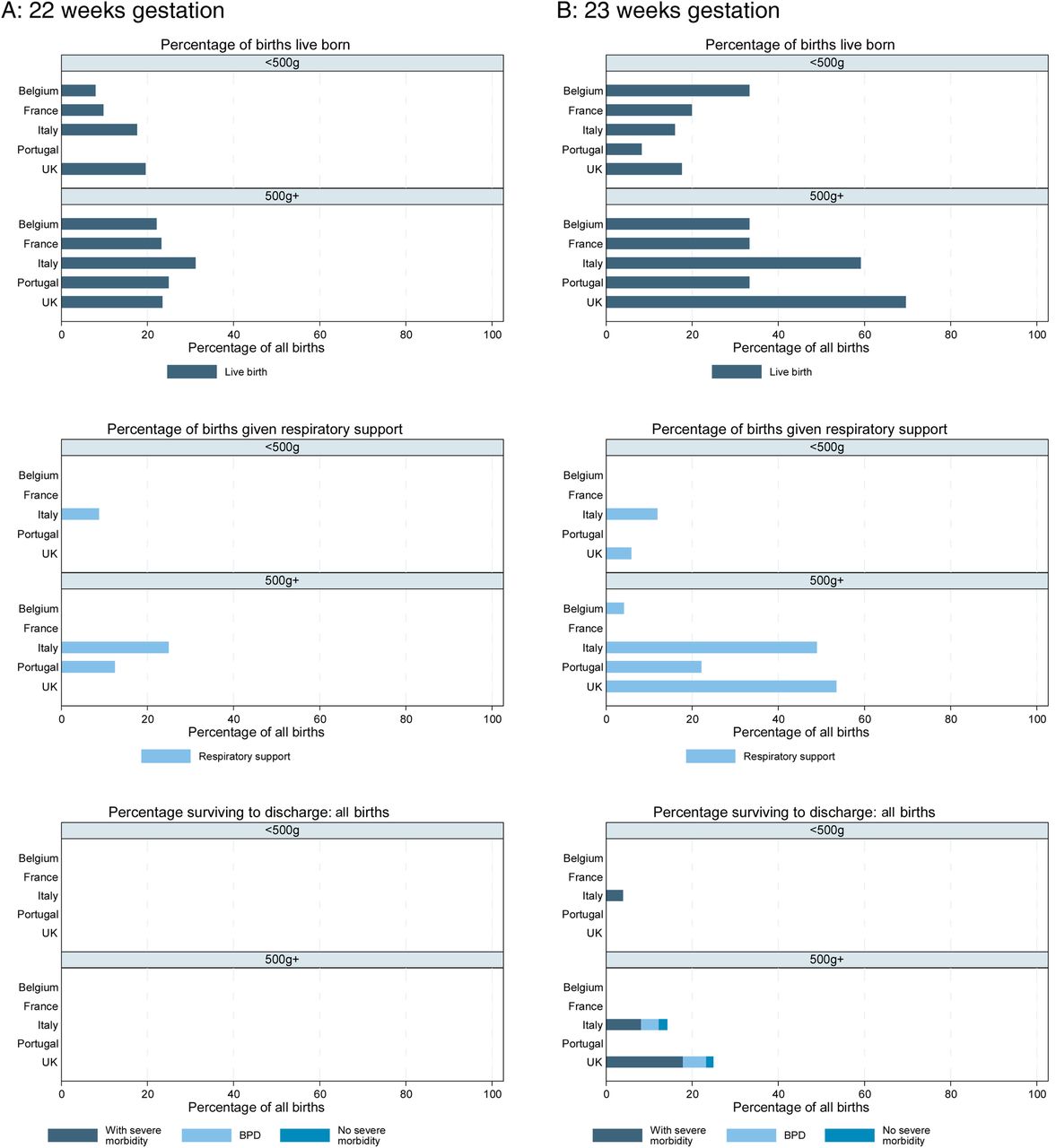
You have to do some of your own arithmetic to find out what is going on here, the denominator for all the presented data is the total number of births, which includes stillbirths, and babies not receiving active care. For example, at 22 weeks and less than 500 g, there were 3 babies in the Italian regional cohort (of 34 births) that received respiratory support, which is 9%, but there were only 6 live births in this category, which mean that 50% of live births received such an intervention, in none of the other regions did any such babies (under 500g and 22 weeks gestation) receive respiratory support.

Over 500g there were 4 babies in Italy, and 1 in Portugal that received respiratory support, and no survivors in any of the regions.

I really don’t see the point of reporting survival and the other data among all births, when many were stillborn, but not presenting survival among live births or among those who received active care. It is not surprising for example that the Portuguese region did not provide respiratory support for any of the 22 weekers of less than 500g because they were all stillborn!

The authors suggest that this was to “improve comparability between countries where there are differences in whether a birth is reported as live or not” which implies that they did not have a common definition of a live birth between the regions, and means that the data become much less useful. It is also in contrast to an earlier statement in the methods “the use of the common EPICE recruitment criteria allowed to overcome these differences and provide comparable data across the five countries”.

Here is one figure from the publication:

graphic-1-large

You can see at 23 weeks gestation that the only survivors are in Italy and the UK. Under 500g there was one baby in the UK that had respiratory support, who died, and 3 in Italy with one survivor. You can calculate therefore that survival at 23 weeks and under 500 grams is actually 25% if you institute active intensive care! Not bad… but that percentage would be almost as meaningless as the number in the table 3 which calculates a survival of 1%, among all the 88 births in that weight and gestation category, live births, still births and babies not receiving respiratory support included.

At 23 weeks and over 500 grams there were no babies receiving intensive care in the French regions, 1 in the Belgian region, 1 in the Portuguese region, 24 in the Italian cohort and 30 in the UK. The only survivors were in Italy and the UK with 7 and 14 survivors respectively.

The conclusion in the abstract of this study ends like this:

Universally poor outcomes for babies at 22 weeks and for those weighing under 500 g suggest little impact of intervention and support the inclusion of birth weight along with gestational age in ethical decision-making guidelines.

Er, No. “Universally poor outcomes for babies at 22 weeks and for those weighing under 500g who did not receive intervention suggests that if you don’t actively treat babies in the periviable period, they all die.”

I do think there is useful and interesting information in this publication, but I think you should take the statistical significance of some of the testa with a grain of salt, the 2 babies treated in the Italian region under 500g at 22 weeks is “significantly” different to the zero treated everywhere else, but does it mean anything?

I think the authors are right that birth weight is as important as gestational age in decision making and should be taken into account when estimating survival, and counselling parents. Birth weight is only known with accuracy after birth, however, and I don’t think that these data give a real justification for using a universal cutoff of 500 grams, chosen arbitrarily for this article. Why not 550 grams? or 454? I think it is unlikely that there is any step-wise sudden improvement in survival between 499 grams and 501 grams, just like gestational age, which doesn’t come in distinct 7 day bundles, and is never known with certainty (except after IVF), we should nuance our counselling, with the real uncertainties in our data and the gradual improvements in survival with increasing hours and days of gestational age and increasing grams of birth weight.

Posted in Neonatal Research | 2 Comments

Survival of extremely preterm babies in a national cohort, and a comparison of nations.

As a follow up to my last post, a new article from Norway details the survival to one year of age, and the neonatal morbidities of babies born at 22 to 26 weeks gestation in the whole country in 2013-2014. (Stensvold HJ, et al. Neonatal Morbidity and 1-Year Survival of Extremely Preterm Infants. Pediatrics. 2017).

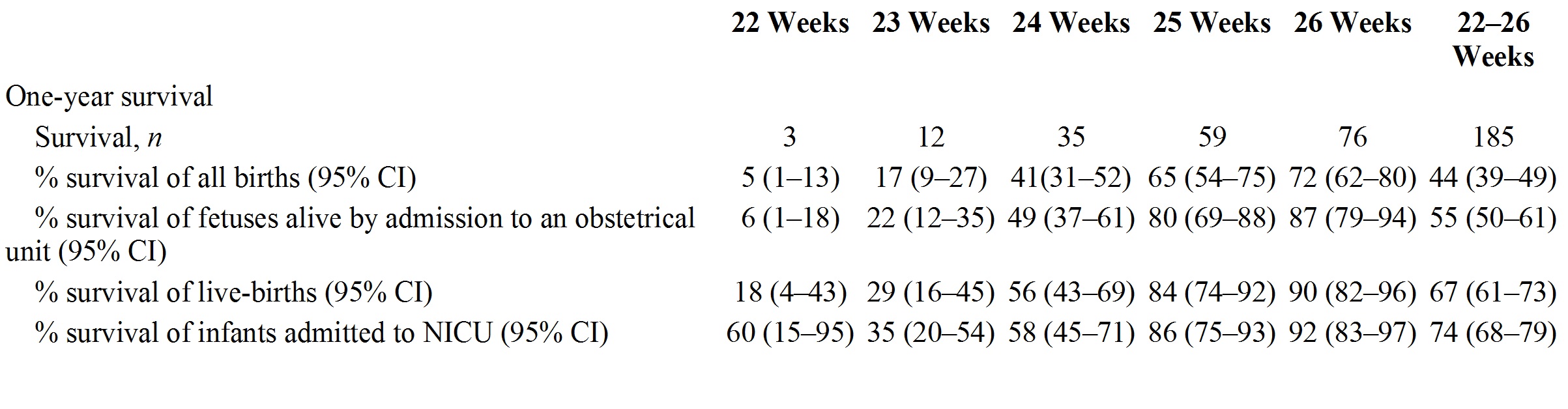
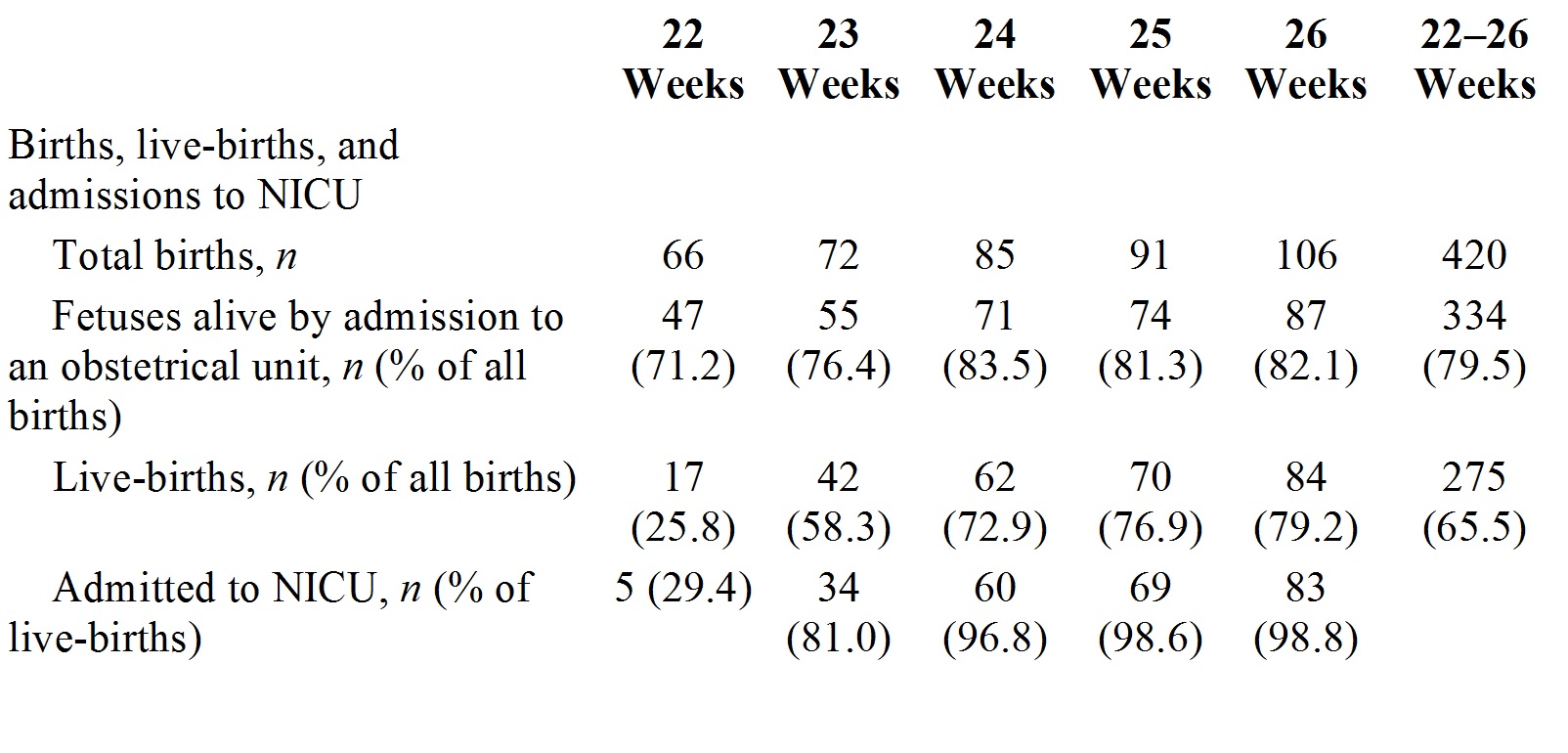
A great thing about this article is that the numbers of fetuses/babies alive at each point are detailed in the first table, of the 420 babies delivered. 335 were alive when the mother was admitted to hospital, 145 were stillborn, leaving 275 who were liveborn, and 251 admitted to a neonatal unit.

As you can see from the data below, more babies are stillborn at 22 and 23 weeks than later, after being alive on admission to obstetrics; probably a major part of that difference is an unwillingness to actively intervene, especially to perform cesarean deliveries, when the expected mortality is very high.

norway-survival

What is quite obvious is that survival is very different depending on which denominator is used, these data are a very clear example of that; changing from 5% among all births to 60% among those admitted to NICU at 22 weeks gestation (60% being 3 of the 5 babies actively treated).

norway-survival-2

Another nice feature of this article is that the modes of death are reported: of the 66 deaths there were 34 that followed a decision to redirect care. The authors don’t report these data by gestational age, but I wouldn’t be surprised if redirection of care occurred more rapidly in the most immature babies. Seventeen of the 34 redirections of care occurred because of severe intracranial hemorrhage, which, given the poor predictive value of head ultrasound, is a practice we should re-consider.

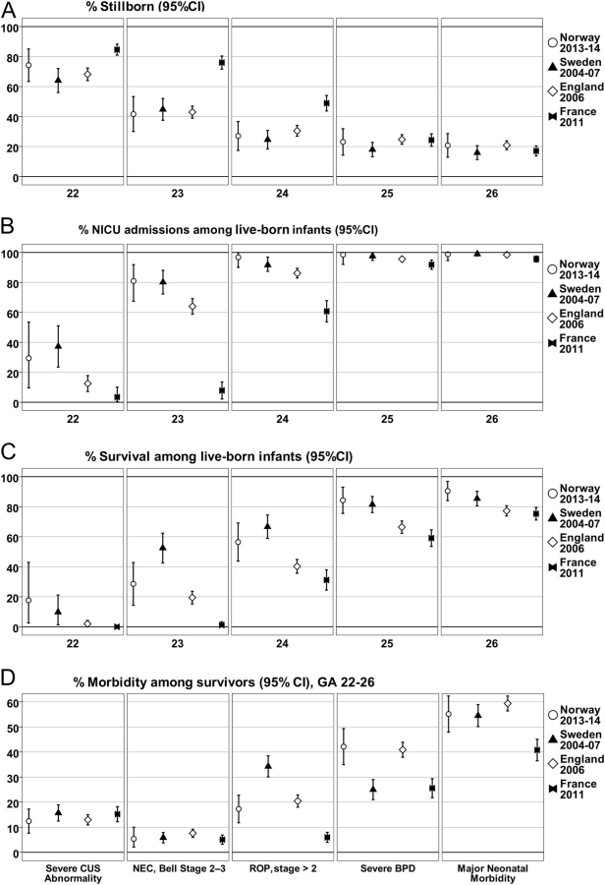
The authors then compare their data to recent European publications of national cohorts of extremely preterm infants. As you can see the percentage of babies admitted to intensive care was similar in Norway and Sweden, lower in the UK at 22 and 23 weeks, and a little lower at 24 weeks, and very different in France, with almost no admissions at 22 or 23 weeks, and many fewer at 24 weeks gestation. As for survival, despite a similar proportion receiving intensive care, babies in Sweden were more likely to survive at 23 and 24 weeks, than the Norwegian babies. In the UK the survival was almost non-existent at 22 weeks and much lower at 23 weeks, and the French babies never survive before 24 weeks, and even at 24 and 25 weeks survival is lower.

image1

Finally the authors of this study compare their outcomes to a previous national cohort from 1999-2000, and suggest that, although the proportions dying before obstetric unit admission increased, and the NICU admissions increased overall, (putting together the 22, 23 and 24 week gestation babies) there was no increase in overall survival. But in the first cohort there were only 2% of babies born at 22 weeks admitted to the NICU (1 baby) and 23% of live births at 23 weeks. With the change in the distribution of gestational age among babies admitted to the NICU, and many more of the most immature babies being actively treated, the fact that the survival among live born infants did not change (44% to 41%)  and the survival among infants admitted to NICU was also unchanged (44/83, 53% compared to 50/99, 51%) is to my mind a trend in a positive direction.

Posted in Neonatal Research | Tagged | Leave a comment

Improved survival and improved Bayley scores among infants born in the periviable period.

If you were to report survival and other outcomes among infants with a very high risk of dying or having long-term impairments, why would you include babies for whom a decision was made to let them die?

Let me put it this way, if 1000 babies are born in each of 2 epochs, and 900 are left to die, and the survival rate was 40% in the first epoch, and 60% in the second, among the 100 babies who were treated, then this is either not significantly different p=0.051 or highly statistically significant p=0.0072, depending on whether you analyze the data using the denominator as all live births, or only the live births who received active care with an attempt to have them survive.

In a brand-new report in the FPNEJM, almost all of the data regarding survival and long-term outcomes are presented as proportions of live births. The denominator used for almost all of the analyses was the 4274 live births, of whom over 1000 did not receive active care, leaving 3158 for whom neonatal intensive care was instituted.

I can see reasons for doing some of the analyses like this: if the decision not to intervene was made based on an analysis of risks, and only the very highest risk babies were not actively treated, then leaving them out could skew the data, and make them look more positive. But in reality we know that the major determinant of whether you get intensive care in this gestational time period (in the NICHD NRN, and I am sure in many other places also) is the hospital that you are born in, not their risk profile necessarily.

However, in those hospitals that are selective in treating the most immature babies, if the babies who were not treated did indeed have a higher risk of mortality, then leaving them out would make the data look better than they would be if all infants received active treatment.

That is indeed what the previous NRN data seem to show. In the paper from 2015, examining data from 2006 to 2011, it was the centers that treated all the babies who had the best survival when expressed as a proportion of live births, ranging from 10 to 20% at 22 weeks, for example. But if you look at survival among all those who received active treatment (including the babies from the universal treatment hospitals) at 22 weeks 23% survived, which is a little better than the survival in the centers that treated all the babies. Those hospitals that treated none of the 23 week infants had no survivors.

So how should we calculate survival rates? If there are many babies not receiving active treatment, then a shift to treating more babies might decrease the proportion of survivors among those treated, but increase the total survival among the  live born.

I think that both numbers should be reported, as well as the numbers not actively treated, that is the only way you can really understand what is happening.

The new publication from the FPNEJM (Younge N, et al. Survival and Neurodevelopmental Outcomes among Periviable Infants. The Formerly Prestigious New England journal of medicine. 2017;376(7):617-28.) concentrates on survival among all live births of less than 25 weeks gestation, and barely reports survival and outcomes among those infants who received active care: only the Odds Ratios for those outcomes being reported in one section at the end of table 4.

It is possible to calculate some of the other outcomes, with the proviso that the exact numbers could be slightly different  to the numbers I present below, depending on rounding errors, and other sources of variation.

The article reports outcomes from 3 non-overlapping epochs, infants born in 2000-2003, 2004-2007, and 2008 to 2011. They include data from 11 centers that were part of the Neonatal Research Network (the NRN) in all of those years. The previous study I mentioned had data from 25 centers that were members of the NRN from 2006 to 2011, so these new data include a subset of the data from Rysavy MA, et al. (Between-Hospital Variation in Treatment and Outcomes in Extremely Preterm Infants. The New England journal of medicine. 2015;372:1801-11) and add to that data from earlier years, and give more information about outcomes at about 2 years, the Bayley scores from version 2 for the earlier epoch, changing to Bayley 3 during the second Epoch. They use different thresholds for developmental delay for the different versions of the BSID, and concentrate on the cognitive composite from version 3.

The data show an improvement in survival (a small improvement but not likely to be due to chance) and an improvement in survival without the famous NDI (which, from here on, I will call neurological impairment or developmental delay, NDDI. I continue to insist on the fact that a low Bayley score is NOT an impairment, but a screening test showing a potential delay in development). For example at 23 weeks the frequency of that outcome increased from 7% to 11% to 13%, when calculated based on all live births, but increased from 9% to 16% to 19% when calculated based on babies who received active treatment.

Overall survival at 23 weeks is reported as 20%, 20% and 24% in the 3 epochs as reported in the article, but, when based only on those who received active treatment, it is 27%, 28% and 35%.

I have seen comments that these data show absolutely no improvement at 22 weeks, but in fact, expressed as survival among those who received active treatment, survival increased from 10% to 21 % and 17%, which may not be statistically significant, but is about a doubling of survival from the first epoch to the 2 later epochs.

Survival does seem therefore to be improving, the proportion receiving active treatment has not changed, however; in this study the improvement in survival is therefore probably a real improvement in our capacity to look after these babies, rather than a change in who we select for intensive care.

Among survivors, the proportion with NDDI has decreased somewhat, the discussion of the article puts it like this

the rate of survival without neurodevelopmental impairment and the rate of survival with neurodevelopmental impairment increased similarly (adjusted relative risk, 1.27; 95% CI, 0.99 to 1.65).

I guess ‘increased similarly’ is the way that is stated because the lower 95% CI is 0.99, I think you could put that differently and state that, among survivors, the Odds of not having NDDI increased from the 1st to the 3rd epoch, by a factor of 1.27. Although the CI include 1.0, I think that is very reassuring.

With this improvement in survival, I think there should be a reconsideration of hospital policies, and a lower threshold for intervening, an overall survival of about 1 in 5 at 22 weeks about 1 in 3 at 23 weeks (among babies who received active care) would both seem to make intervention more reasonable for more infants; not necessarily for everyone, as always, family values and wishes are extremely important in these decisions, but as survival improves, it makes sense that our willingness to try for survival should also improve.

The most encouraging thing about these data is that there is no evidence at all that increased survival increases the proportion of impairment among survivors, with the limitations of the data presented, the opposite is much more likely to be true.

Posted in Neonatal Research | Tagged , | 3 Comments

Fluid restriction to prevent BPD?

In response to my previous post, one of the comments was a question about fluid volumes in the first few days of life, and whether fluid and/or sodium intake was important for the development of BPD during the early neonatal transition.

In response I will share a slightly edited preprint version of a section of an article I published in Seminars in Perinatology a couple of years ago. Barrington KJ. Management during the first 72h of age of the periviable infant: An evidence-based review. Seminars in Perinatology. 2014;38(1):17-24.

Even though it is a couple of years old, I don’t think there are new RCTs addressing the issues that I reviewed in this section. That article also had sections on cardiovascular support, respiratory management, nutrition, neurologic interventions, protocolized care and research networks.

Also it is important to note that the “systematic reviews” were performed according to the usual standards, but they do NOT conform to the PRISMA guidelines. With the limited space available I couldn’t have done that.

Fluids, electrolytes and renal function

Renal vascular resistance is high immediately after birth, and falls rapidly in the first 24 hours. This fall is associated with a major increase in glomerular filtration rate, and urine output, which is usually clinically evident as an increasing diuresis by the end of the 1st 24 hours of life. After this transition, preterm renal function is marked by a low ability to excrete a sodium load, but little restriction in maximal water clearance.

There are few studies on which to base a decision regarding total fluid management in the extremely immature newborn (EIN).  The skin of the very immature infant is very permeable, and huge trans-epidermal water losses (TEWL) occur if they are placed in a dry environment, the evaporation of water from the skin of the infant leads to cooling due to the latent heat of vaporisation, and it may be impossible to keep the EIN warm in a dry environment under a radiant heater. Most centers have now moved to placing EINs in incubators, although there is no RCT evidence that this is preferable to being under a radiant heater, it seems likely to be the case. If a radiant heater is used it must be combined with an arrangement to keep the humidity around the infant at a high concentration, such as covering the infant with plastic.

One problem with keeping EINs in a high humidity environment is that whenever they are accessed to give care (for example by opening the incubator portholes) the humidity drops precipitously. This is even more evident when the ‘roof’ of an incubator with a retractable cover is lifted. Therefore further methods to reduce trans-epidermal water loss have been examined, including using ointments or semi-permeable membranes. Ointments such as Aquaphor can reduce trans-epidermal water loss, but whether they can improve overall water balance or improve clinical outcomes is uncertain. The only large study in ELBW infants enrolled infants (500 to 1000 g birth weight) starting at an average of about 24 hours of age, and showed an increase in late-onset coagulase negative staphylococcal sepsis during prolonged treatment . Maturation of the epithelial barrier after preterm birth occurs rapidly, a briefer period of barrier treatment could potentially have benefits without this risk. Semi-permeable membranes have also been tried, in a small pre-post study TEWL appears to have been reduced, fluid requirements and peak sodium was lower, and there may have been less BPD, (n=69 birth weight <1000g) but there is no data from adequately powered RCTs examining other clinical outcomes.

Total fluid intake

What should the total fluid intake be? Clearly this will depend on overall fluid losses. But the interaction between the physical environment, and subsequent TEWL, and fluid administration requirements has not been well studied. Several studies have randomly compared infants by total volume of fluid administered. The results are very inconsistent. Those studies have varied in design, in particular by how sodium intake was controlled.

Although the Cochrane review “Restricted versus liberal water intake for preventing morbidity and mortality in preterm infants” suggests that restricted fluid intake improves several clinical outcomes, this result is marked by significant heterogeneity, also one of the better studies did not enrol babies until the 3rd day of life, and therefore is of little relevance to the current review. After the initial period of adaptation as mentioned above, the preterm kidney has a relatively good ability to clear a fluid load. Thus there is little reason to hypothesize that variation in total free water administration, within reasonable limits, will affect total body water.

One of the 5 trials of water restriction gave fluids with identical sodium concentrations in each 100mL of the intravenous fluid, another was designed to examine a relatively complex protocol allowing either 10% or 15% body weight loss and therefore varied both water and sodium intakes. These 2 studies were therefore studies of combined sodium and water restriction.

I have performed a systematic review of RCTs of different fluid administration rates starting on the first day of life, which I have meta-analyzed using the RevMan software, fixed effects model. I found 5 controlled trials (a table showing the articles is at the bottom of this post, followed by a list of references), 3 of which had similar sodium intakes in each group, 2 varied both the fluid and the sodium intake.

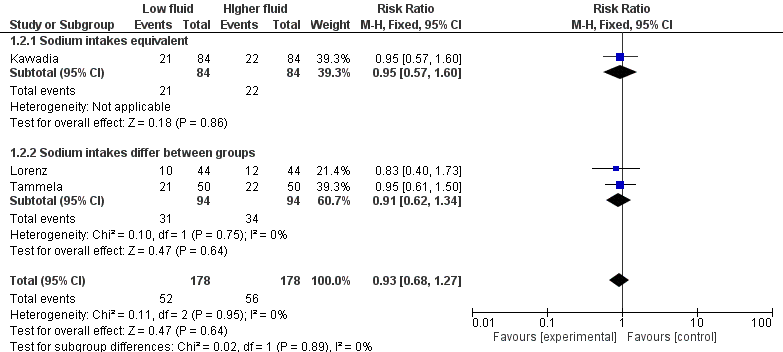
Figure 1.Effects of varying fluid intakes on mortality.

figure-1-fluid-restriction

As can be seen, the studies with varying water intake, but no difference in sodium intake showed no effect on mortality, whereas those which varied both showed a reduction in mortality with restricted water and sodium intake. Of note this second result is largely the result of a single trial with a very high mortality in the high water/high sodium group, and this subgroup shows substantial heterogeneity, an I2 of 72%.

Figure 2. Effects of varying fluid intakes on BPD

forest-plot

Clearly there is no effect on BPD, RR 0.93 (95% CI 0.68, 1.27). Survival without BPD was also not different overall.

Sodium intake

In contrast the preterm kidney has a limited ability to excrete a sodium load, and excessive sodium administration may lead to increases in total body water and increases in water content of vital tissues. This is true even though there is a natriuresis in the first few days of life, at least after the first 24 hours, which accompanies the postnatal diuresis. Administration of sodium during this period may well upset the postnatal progressive decrease in extra-cellular fluid which is a normal phenomenon in more mature infants.

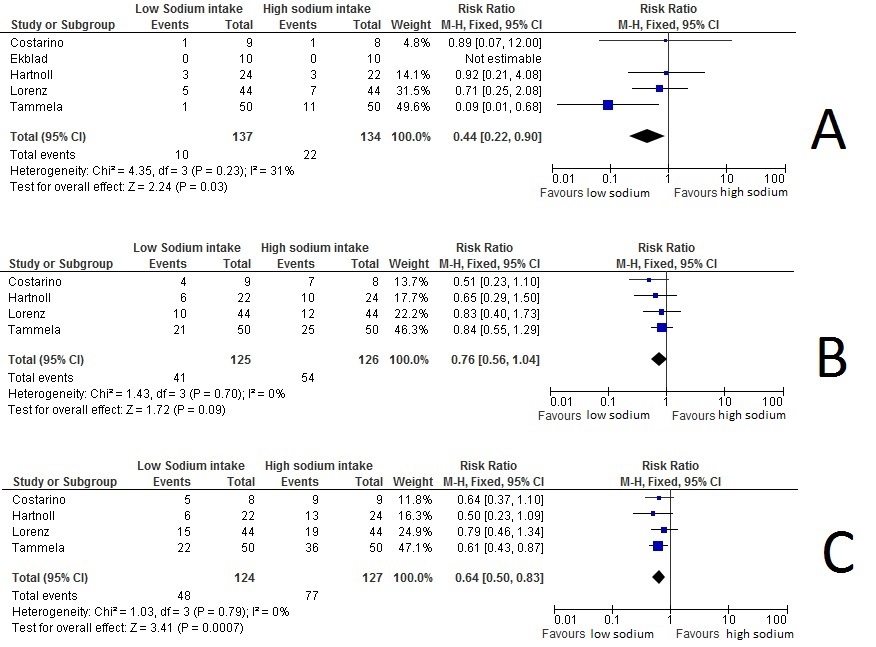
I performed a systematic review and meta-analysis of RCTs in preterm infants which compared 2 regimes of sodium administration starting on the first day of life (see the table below). The search found 5 studies, two of which are as mentioned also studies of varying water intake and are mentioned above, and one with very limited description of clinical outcomes (other than death). The total numbers of infants in these trials is a disappointing 271. Nevertheless there appears to be a reduction in mortality RR 0.44 [95% CI 0.22, 0.90] with reduced sodium intake, a possible reduction in BPD, RR 0.76 [95% CI 0.56, 1.04] and a reduction in the combined outcome of death or BPD, RR 0.39 [95% CI 0.23, 0.67].

Figure 3. Effects of different sodium intakes on A. mortality, B. Bronchopulmonary Dysplasia, and C. combined outcome of death or BPD.

figure-2-sodium

The data are therefore probably best interpreted as showing that delaying all sodium intake until after either 3 days of life or after a 5% weight loss improves outcomes whereas restricting free water intake by itself has little or no effect. The major limitation of these data being that very few extremely immature babies have been included in any of these studies.

Table Randomized trials comparing 2 levels of fluid intake or 2 levels of sodium administration in the preterm.

Study ID
n
Characteristics of included infants
Comparison, fluid intakes
Sodium intakes
Primary Outcome
Tammela9
100
<1751 g BW, >23 wk
50,60,70,80,90,100,120 then 150 ml/kg/d vs
80,100,120,150 then 200 ml/kg/d
3 mM/100 mL Na in all the fluids
BPD
Lorenz12
88
750-1500 g BW, day 1 of life
Designed for 10% birth weight loss vs 15%, initially
1,000-1,500g 70 ml/kg/d 750-1,000g 80 ml/kg/d. Thereafter varied according to weight loss.
Higher in high fluid group, 1 mM/kg/d on day 1 increasing to 3 in high fluid group or decreasing to 0.5 in low fluid group, by day 4
No clear primary outcome
Von Stockhausen13
56
Premature, day 1 of life
60 mL/kg/d vs 150 mL/kg/d for 3 days
unclear
No clear primary outcome
Kavvadia14
168
<1501 g BW, day 1 of life
70 increasing to 150 by day 6, 40 increasing to 150 by day 7
Adjusted to achieve serum concentration of 135 to 145 mM/100mL, no difference between groups
Survival without BPD
Costarino15
17
<1000g, <29wk, day 1 of life
Individualized, not different overall  between groups
0 vs 3 to 4 mM/kg/d
Risk of hypernatremia and large fluid volumes
Hartnoll16
46
25 to 30 wk with RDS
Individualized, not different between groups
4 mM/kg/d starting on day 2 vs 0 until weight decreased by 6%
Risk of continuing oxygen dependency
Ekblad11
20
<35 wk
50 increasing to 110 in each group
0 increasing to 2, vs 4 mM/kg/d
No clear primary outcome

References

  1. Lorenz JM, Kleinman LI, Ahmed G, Markarian K. Phases of fluid and electrolyte homeostasis in the extremely low birth weight infant. Pediatrics. 1995;96(3 Pt 1):484-9.
  2. Pabst RC, Starr KP, Qaiyumi S, Schwalbe RS, Gewolb IH. The effect of application of aquaphor on skin condition, fluid requirements, and bacterial colonization in very low birth weight infants. J Perinatol. 1999;19(4):278-83.
  3. Knauth A, Gordin M, McNelis W, Baumgart S. Semipermeable polyurethane membrane as an artificial skin for the premature neonate. Pediatrics. 1989;83(6):945-50.
  4. Nopper AJ, Horii KA, Sookdeo-Drost S, Wang TH, Mancini AJ, Lane AT. Topical ointment therapy benefits premature infants. The Journal of pediatrics. 1996;128(5 Pt 1):660-9.
  5. Edwards WH, Conner JM, Soll RF, for the Vermont Oxford Network Neonatal Skin Care Study Group. The Effect of Prophylactic Ointment Therapy on Nosocomial Sepsis Rates and Skin Integrity in Infants With Birth Weights of 501 to 1000 g. Pediatrics. 2004;113(5):1195-203.
  6. Bhandari V, Brodsky N, Porat R. Improved Outcome of Extremely Low Birth Weight Infants with Tegaderm[reg] Application to Skin. 2005;25(4):276-81.
  7. Bell EF, Acarregui MJ. Restricted versus liberal water intake for preventing morbidity and mortality in preterm infants. Cochrane database of systematic reviews (Online). 2008(1):CD000503.
  8. Bell EF, Warburton D, Stonestreet BS, Oh W. Effect of fluid administration on the development of symptomatic patent ductus arteriosus and congestive heart failure in premature infants. The New England journal of medicine. 1980;302(11):598-604.
  9. Tammela OKT, Koivisto ME. Fluid restriction for preventing bronchopulmonary dysplasia? Reduced fluid intake during the first weeks of life improves the outcome of low-birth-weight infants. Acta Paediatr. 1992;81:207-12.
  10. Drukker AMDP, Guignard J-PMD. Renal aspects of the term and preterm infant: a selective update. Current Opinion in Pediatrics. 2002;14(2):175-82.
  11. Ekblad H, Kero P, Takala J, Korvenranta H, VÄLimÄKi I. Water, Sodium and Acid-Base Balance in Premature Infants: Therapeutical Aspects. Acta Pædiatrica. 1987;76(1):47-53.
  12. Lorenz JM, Kleinman LI, Kotagal UR, Reller MD. Water balance in very low-birth-weight infants: relationship to water and sodium intake and effect on outcome. The Journal of pediatrics. 1982;101(3):423-32.
  13. Stockhausen H, Struve M. Die Auswirkungen einer stark unterschiedlichen parenteralen Flüssigkeitszufuhr bei Früh- und Neugeborenen in den ersten drei Lebenstagen. Klinische Pädiatrie. 2008;192(06):539-46.
  14. Kavvadia V, Greenough A, Dimitriou G, Hooper R. Randomised trial of fluid restriction in ventilated very low birthweight infants. Archives of disease in childhood Fetal and neonatal edition. 2000;83:F91-F6.
  15. Costarino ATJ, Gruskay JA, Corcoran L, Polin RA, Baumgart S. Sodium restriction versus daily maintenance replacement in very low birth weight premature neonates: a randomized, blind therapeutic trial The Journal of pediatrics. 1992;120(1):99-106.
  16. Hartnoll G, Betremieux P, Modi N. Randomised controlled trial of postnatal sodium supplementation on oxygen dependency and body weight in 25-30 week gestational age infants. Arch Dis Child Fetal Neonatal Ed. 2000;82(1):F19.
Posted in Neonatal Research | Tagged , , , , | Leave a comment

Fluid restriction as treatment for BPD? This time with the summary of findings table.

I realize that many of my gentle readers may not have access to the Cochrane reviews in full text as soon as they are published. The NICHD do provide free access to the neonatal reviews, (together with a useful introduction to the value, limitations and methodology of the Cochrane reviews) but it seems to take a couple of months for them to catch up with a new review arriving. Even OVID, one of the ways of accessing some of the Wiley content, which is how I access the reviews from my university, hasn’t updated the Cochrane Library to include the fluid restriction review yet. Which means I can’t even access the full text on-line myself yet!

I will re-post about the 3 latest reviews that we have published as soon as full text is available from the NICHD web-site.

I thought therefore I would re-post this, about the fluid restriction SR, and add a slightly edited version of the Summary of Findings table, with the secondary outcomes of the systematic review that we included. You will note that I could not calculate the confidence intervals for the duration of oxygen therapy, the standard deviations weren’t included in the original article (rather they included the ranges). Nevertheless the means are so similar that the confidence intervals are likely to be wide, and certainly to be ‘not significant’.

fluid-restriction

I have never been convinced that fluid restriction is a good thing for kids with BPD. I think the common practice came about because of the short-term improvements in lung function that sometimes follow if you start diuretics. The idea being that if diuretics improve lung function, then giving less fluid will also.

But this is a false equivalency, diuretics cause sodium depletion, and therefore decrease total body water, and probably lung water content also. Fluid restriction in contrast leads to a reduction in urine output, and, within clinically reasonable limits, will not have an impact on total body water, and there is no reason to believe that they will reduce lung water content either.

Diuretics may have other direct effects on pulmonary function, that will not occur with fluid restriction. Inhaled furosemide, for example, improves pulmonary mechanics in BPD, presumably by acting on the same sort of ion pump that loop diuretics block in the kidney.

Even in adults with fluid overload (those with oedematous congestive heart failure) RCTs of fluid restriction show no effect, unless sodium intake is also severely restricted. Sodium restriction alone works as well, so the fluid restriction adds nothing.

Despite this, there are recommendations from usually reliable people that babies with BPD should have their fluid intake restricted, such recommendations are often accompanied by a reference, usually a reference to another recommendation or to a narrative-type review article.

I have been planning for years to do a systematic review for the Cochrane library, of fluid restriction as treatment for early or established BPD. We have finally finished the review and it has just appeared. (Barrington KJ, Fortin-Pellerin E, Pennaforte T. Fluid restriction for treatment of preterm infants with chronic lung disease. Cochrane Database of Systematic Reviews. 2017(2).)

Using the usual search procedures we could only find one relevant trial. In fact the initial search didn’t find the article (Fewtrell MS, et al. Randomized trial of high nutrient density formula versus standard formula in chronic lung disease. Acta Paediatrica. 1997;86(6):577-82.) even though I knew it existed; the Pubmed key words did not mention fluid volumes or restriction, so we tweaked the search to ensure that we found the article, and to make sure that we would find any others that exist.

So the only RCT evidence addressing fluid restriction is a study of 60 preterm babies with early chronic lung disease (needing oxygen at 28 days of age) who were randomized to either get 180 mL/kg/day of a regular formula, or 145 mL/kg/d of a concentrated formula. Unfortunately they didn’t report on one of our outcomes, oxygen requirement at 36 weeks, as it wasn’t, at that time, the standard outcome that it has since become.

That study showed no benefit of fluid restriction on any outcome. The fluid restricted group had more apneas, a finding unlikely to be due to chance, and also had more babies who needed more than 30% oxygen during the trial, a difference which may have been due to chance.

Fluid restriction risks nutritional restriction also; even though the idea may be to reduce the free water intake, babies often get fewer calories and less protein when fluid restricted, while babies with BPD actually need more calories. They will also produce more concentrated urine, which might increase the risk of nephrocalcinosis as well.

The final message is that there is no evidence to support the practice of fluid restriction of babies with early or established BPD. There is no physiologic rationale either. There are potential risks to the practice.

We should stop doing it.

Posted in Neonatal Research | Tagged , , , | 2 Comments

New Publication: Does fluid restriction improve the clinical status of babies with BPD?

I have never been convinced that fluid restriction is a good thing for kids with BPD. I think the common practice came about because of the short-term improvements in lung function that sometimes follow if you start diuretics. The idea being that if diuretics improve lung function, then giving less fluid will also.

But this is a false equivalency, diuretics cause sodium depletion, and therefore decrease total body water, and probably lung water content also. Fluid restriction in contrast leads to a reduction in urine output, and, within clinically reasonable limits, will not have an impact on total body water, and there is no reason to believe that they will reduce lung water content either.

Diuretics may have other direct effects on pulmonary function, that will not occur with fluid restriction. Inhaled furosemide, for example, improves pulmonary mechanics in BPD, presumably by acting on the same sort of ion pump that loop diuretics block in the kidney.

Even in adults with fluid overload (those with oedematous congestive heart failure) RCTs of fluid restricion show no effect, unless sodium intake is also severely restricted. Sodium restriction alone works as well, so the fluid restriction adds nothing.

Despite this, there are recommendations from usually reliable people that babies with BPD should have their fluid intake restricted, such recommendations are often accompanied by a reference, usually a reference to another recommendation or to a narrative-type review article.

I have been planning for years to do a systematic review for the Cochrane library, of fluid restriction as treatment for early or established BPD. We have finally finished the review and it has just appeared. (Barrington KJ, Fortin-Pellerin E, Pennaforte T. Fluid restriction for treatment of preterm infants with chronic lung disease. Cochrane Database of Systematic Reviews. 2017(2).)

Using the usual search procedures we could only find one relevant trial. In fact the initial search didn’t find the article (Fewtrell MS, et al. Randomized trial of high nutrient density formula versus standard formula in chronic lung disease. Acta Paediatrica. 1997;86(6):577-82.) even though I knew it existed; the Pubmed key words did not mention fluid volumes or restriction, so we tweaked the search to ensure that we found the article, and to make sure that we would find any others that exist.

So the only RCT evidence addressing fluid restriction is a study of 60 preterm babies with early chronic lung disease (needing oxygen at 28 days of age) who were randomized to either get 180 mL/kg/day of a regular formula, or 145 mL/kg/d of a concentrated formula. Unfortunately they didn’t report on one of our outcomes, oxygen requirement at 36 weeks, as it wasn’t the standard outcome that it has since become.

That study showed no benefit of fluid restriction on any outcome. The fluid restricted group had more apneas, a finding unlikely to be due to chance, and also had more babies who needed more than 30% oxygen during the trial, a difference which may have been due to chance.

Fluid restriction risks nutritional restriction also; even though the idea may be to reduce the free water intake, babies often get fewer calories and less protein when fluid restricted, while babies with BPD actually need more calories. They will also produce more concentrated urine, which might increase the risk of nephroclacinosis as well.

The final message is that there is no evidence to support the practice of fluid restriction of babies with early or established BPD. There is no physiologic rationale either. There are potential risks to the practice.

We should stop doing it.

Posted in Neonatal Research | Tagged , , , | 2 Comments